Review 2016: Post after Post-Mortem

The over-achieving Surray family is getting together for a birthday when oldest brother Richard learns that both his sister Ruth and his youngest sister Naomi may be involved romantically with the same man—a famous mountain climber named Keith Brandon. He knows Brandon for a womanizer but warms Naomi away on other grounds.

Later the Surrays have a small house party that includes Vernon Montague, Ruth’s publisher; Geoffrey Stanwood, a writer for whom Ruth helped get recognition; and Charlton Fellowes, an essayist. The next morning Ruth is found dead in bed, an apparent suicide.

After the inquest rules the death a suicide, Richard receives a letter from Ruth that she mailed the night of her murder showing she was in good spirits. Richard goes to Inspector Robert Macdonald hoping he will look into it unofficially. Macdonald refuses to do it unofficially but ends up assigned to the case.

He finds the case frustrating because he has an idea that the death is a murder but isn’t getting any cooperation from the witnesses, who are more concerned about protecting Ruth’s legacy than finding her killer. Fellowes said at the inquest that he had heard no one moving around the house after he went to bed but confesses to Stanwood that he thought he heard Montague talking to Ruth downstairs. Macdonald learns that Fellowes lied, but Stanwood refuses to repeat what he said and then Fellowes is injured after having a talk with Montague. Montague also refuses to say what Fellowes said.

Macdonald thinks someone cut a page from the end of a short story that Ruth was writing and then trimmed it to look like a suicide note written on her notepaper. But finding proof is difficult. He also hasn’t lost sight of Keith Brandon, who proves to have been in the area that night and has lied about his relationship to Ruth.

This novel is one of the best of the British Library Crime Classics series that I’ve read so far. It has an intriguing setup and interesting characters. The solution was difficult to guess. If I have any critique, it’s that the motive was fairly unbelievable. However, the novel is interesting and cleverly written.

I received this book from the publisher in exchange for a free and fair review.

Related Posts

Two-Way Murder

Fell Murder

Murder in the Mill-Race

Review 2015: A Girl Called Rumi

In 1981, nine-year-old Kimia is a strong-willed girl having problems with the restrictions of post-revolution Iran. Her parents’ fight for freedom has ironically ended in an almost total lack of it. Kimia hates her chador and prefers roaming around with her cousin Reza, despite it being a crime for girls and boys to play together.

One day the two children find a trap door that leads to the home of Baba Morshed, a storyteller. As he tells an ancient Persian story about the Simorgh, a mythical creature like a bird, the children can see the figures in the tale. Kimia continues to return to hear Baba Morshed’s cryptic tales.

In 2009, Kimia lives in California and works as a life counselor. She is still traumatized by events from 1981 and sometimes cuts herself. She is also full of anger against her mother. She is horrified when her mother tells her she wants to return to Iran and Kimia and her brother Ammad must come, too. The trip to Iran reveals family secrets but also involves unexpected dangers.

I liked this novel for its glimpses into Persian culture and descriptions of its food. However, some of you will not be surprised to learn that I wasn’t as comfortable with the magical realism, especially as it isn’t completely clear whether it’s the children’s imagination, rendering the ending less believable.

Related Posts

Song of a Captive Bird

Shah of Shahs

Tales from the Queen of the Desert

Review 2014: Something to Hide

Tani Bankole, a teenage boy of NIgerian descent, believes that his father, Abeola, has arranged a marriage for Simi, his eight-year-old sister. He begins making preparations to flee with her, because his mother, Monifa, seems totally subservient. Soon, though, he is horrified to realize that Simi is being prepared for female circumcision to “cleanse” her in preparation for marriage.

DS Teo Bontempi is found unconscious on the floor of her apartment after being bashed on the head and dies later in the hospital. When DCI Lynley and his team begin investigating, they find that her boss, DCI Mark Phinney, had her transferred shortly before, out of a project she loved, trying to shut down female genital mutilation in London. Phinney reports that she tended to do too much on her own instead of working with the team. But it soon comes out that he was having an affair with her. Phinney’s wife Pete is wholly subsumed with caring for their severely disabled daughter and is so afraid of having another child that she refuses sex, encouraging Phinney to look elsewhere. Only Phinney had fallen in love with Teo.

Teo also had a husband, although they were separated, who wanted to get back with her. He, Ross Carver, discovered her injured but acceded to her request to help her to bed instead of calling an ambulance. Teo’s sister Rose has her eye on Ross and has become pregnant by him during the separation.

These are the immediate suspects in the murder, but suspense is added when Tani flees with his sister from their abusive father.

Although as usual Linley is having romantic problems, this series continues to be really good. George takes her time getting to the crime, but the preceding background is necessary and interesting. Although the series went astray for several books after Linley’s wife Helen’s death, it has improved again with the last few books and is getting even better. We find out more about DS Winston Nkata’s home life in this one, too.

Related Posts

The Punishment She Deserves

A Banquet of Consequences

Just One Evil Act

Review 2013: Touch Not the Nettle

Touch Not the Nettle is not necessarily a sequel to Molly Clavering’s Susan Settles Down, but it features the same locations and some of the same characters. The Armstrongs get a call from Jed’s cousin asking if her daughter, Amanda Carmichael, can come to stay. Amanda’s husband, Cocky, an explorer, has been lost in Brazil, and Amanda is being driven crazy by her selfish mother, who is demanding that she behave like a widow when they don’t know if he is dead. Although Amanda, rather brittle from her struggles in an unhappy marriage, doesn’t really want to go stay with strangers, she soon finds herself happy to be with Jed and Susan and loving the beauty of the borderlands of Southern Scotland.

Like Susan Settles Down, Touch Not the Nettle contains many descriptions of the lovely landscape and many of the same delightful or irritating characters. It is darker, however, and I’m not sure (spoilers!) how happy I am with the love interest for Amanda, Larry with the angry temperament and drinking problem. The couple’s problems are also too magically cleared up.

Perhaps this is a deeper novel than Susan Settles Down, but it is also more facile, and I didn’t like it quite as much.

Related Posts

Susan Settles Down

Music in the Hills

Winter and Rough Weather

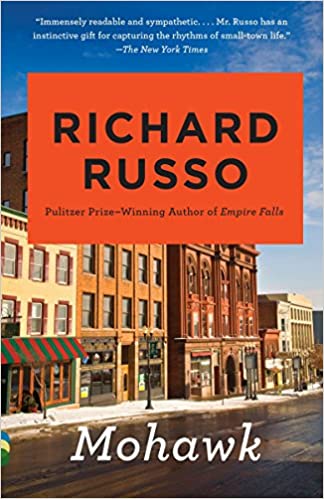
Review 2012: Mohawk

The town of Mohawk, New York, seems very similar to Empire Falls, the setting of another Russo novel. It’s another rustbelt town on the skids supported by the leather industry, which is now being found responsible for polluting the town. Of Russo’s works, it is these tales of ordinary people in rustbelt towns that I think are best.

This novel centers mostly around one extended family but with plenty of auxiliary characters. Dallas Younger is a feckless, unreliable but kind mechanic divorced from Anne, who has moved back to Mohawk from New York largely because she’s in love with Dan Wood, the wheelchair-bound husband of her cousin. Anne’s father, Mather Grouse, is known for his upright life, but he has a secret involving Wild Bill Gaffney, a mentally handicapped young man who was in love with Anne when they were in high school.

Russo’s characters are flawed but mostly likable and fully realized. This novel has a complex plot that is masterfully handled. The novel skips from 1967, when Anne’s son Randall is unhappily attending middle school in Mohawk, trying to avoid a group of bullies and purposefully scoring a bit low on his homework because it doesn’t do to be so smart, to 1971 when he is 18, has quit college, and is avoiding the draft.

For a long time, I avoided reading Russo’s novels because they sounded depressing. They are not. Instead, they demonstrate a warm understanding of and fondness for human nature. This novel sustains me in my belief that his rustbelt novels are his best.

Related Posts

Empire Falls

Everybody’s Fool

Bridge of Sighs

Review 2011: Green for Danger

The details of an operating military hospital during World War II are meticulously recounted in Green for Danger. The novel begins with the postman, Higgins, delivering six letters about the writers’ postings to the hospital. The readers then learn that one of the six people will become a murderer.

The military hospital in the Kent countryside is busy one night, because an air raid in the nearby town has caused the hospital in town to send some civilians there. Among them is Higgins, the postman, who is also a member of the local rescue, most of whom have just been killed or injured.

Higgins’s femur is due to be set in surgery the next morning. It’s a relatively straightforward procedure that shouldn’t be dangerous, but as soon as he starts to go under the anesthetic, he dies. The operating team is shocked.

What seems to be an unusual but unsuspicious death from the anesthetic has Inspector Cockrill wondering. However, there seems to be no way that the canisters containing oxygen, which are black and white, could have been switched for the green carbon dioxide canisters, and no poisonous substances could be forced into a canister. If the death was murder, only the six people in the operating room could have done it.

That evening, Sister Bates, who is jealous of womanizing surgeon Gervase Eden, has a little snit during which she announces that she knows the death was a murder and she has evidence. Later, she is found dead in the surgery, stabbed and wearing a surgical gown and a mask.

This mystery is purposefully claustrophobic and quite suspenseful at times, although the explanations at the end are a bit long. I thought I knew the motive and the murderer all along, but I was fooled! I am happy to be seeing more and more women writers represented in this crime series.

I received this book from the publisher in exchange for a free and fair review.

Related Posts

The Tiger in Smoke

Death Has Deep Roots

Juggernaut

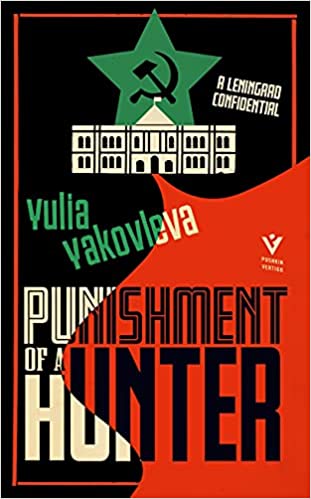
Review 2010: Punishment of a Hunter

When Zaitsev and his homicide team in 1930 Leningrad investigate the death of Faina Baranova, he knows there is something odd about it. Although all her clothing is practical, she is dressed in velvet and posed before red curtains the neighbors in her communal apartment say are not hers. There is something theatrical in the scene. However, after months, the team finds no clues.

In a meeting at work of the OGPU, Zaitsev is accused of hiding bourgeois origins. He claims he knows nothing about his father, having grown up in an orphanage. Pasha, his building janitor, shows up in support and claims to have known his mother; nevertheless, some days later he is arrested.

After a few months, he is released without explanation. Zaitsev soon figures out he is to solve another murder, this time of a group of people on the site of a new park planned by Kirov, head of the party in Leningrad. The unspoken message is solve the case or go back to jail. However, because he’s been released, his colleagues no longer trust him and won’t speak to him about work.

Aside from presenting an intriguing mystery, Punishment of a Hunter evokes 1930 Leningrad, beautiful but gray and tired, the atmosphere paranoid, citizens poorly clad and fed. I was convinced by this post-revolutionary world as I was not by the popular A Gentleman in Moscow. I hope Pushkin Press will be publishing more books by Yakovlevna.

Related Posts

A Gentleman in Moscow

Sofia Petrovna

The Revolution of Marina M.

If I Gave the Award

Having just reviewed the final shortlisted novel for the 2010 James Tait Black Prize for Fiction, it’s time for my feature where I decide whether the judges got it right. Most of the shortlist left me unsatisfied for this year, but it contains two wonderful books.

The novel I found least interesting was Strangers by Anita Brookner. The story of a lonely man and his unsatisfying relationships, I found it slow moving and repetitive, although it was well written.

I have loved some of Kazuo Ishiguro’s novels and applaud him for seeming to try different things, but I found his collection of short stories about music and fame, Nocturnes, unsatisfying. I also found some of the situations frankly unbelievable.

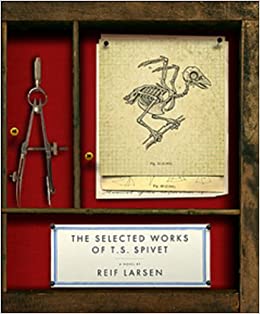
The Selected Works of T. S. Spivet by Reif Larsen is probably the most unusual of the entries. It is a boldly illustrated story about a boy genius and his trip to the Smithsonian to accept a fellowship. I found some of the aspects of the story unlikely, but my biggest problem with it was the narrator’s voice. There was no time that the voice sounded like a 12-year-old boy, genius or not.

Cover for Wolf Hall

The winner of the prize that year was The Children’s Book by A. S. Byatt. I can understand why it won, because it is an ambitious novel that tries to paint a portrait of Victorian society against the microcosm of one family’s experience. It is also completely absorbing, so I think it deserves the award.

However, the other shortlisted book was Wolf Hall by Hilary Mantel, a fascinating novel about the life of Thomas Cromwell and one of my favorite novels of all time. I’m not saying that the judges got it wrong this time, but the choice between these two would be difficult for me. I’m guessing The Children’s Book won because of its larger scope.

Review 2009: The Selected Works of T. S. Spivet

Tecumseh Sparrow Spivet is a 12-year-old boy who spends most of his time on a Montana ranch mapping things. Not just making geological maps but mapping the everyday activities on the ranch—his sister’s technique of shucking corn, the regularity of his father’s sip of whiskey, as well as numerous scientific subjects. In fact, his mentor, Dr. Yorn, has encouraged him to submit drawings to various journals, and he has had some published.

T. S. does not feel comfortable at home. He is mocked by most of his schoolmates. He feels he is a disappointment to his rancher father, and his scientist mother, whom he calls Dr. Claire, seems to be completely obsessed by the search for a particular beetle. Worse, his oldest brother has recently died.

One day he gets a call from the Smithsonian. It appears that Dr. York submitted one of his diagrams as an entry in a prestigious fellowship and he has won. Dr. Jibsen, unaware of his age, informs him he is expected at the Smithsonian on Thursday to give a speech.

At first T. S. hesitates about accepting the award, but then he decides to go to Washington. He packs up some things and hops a freight train east.

Liberally decorated with T. S.’s drawings and musings, this novel is inventive and sometimes funny. In a way, it is meant as a wild romp with a philosophical dint, so maybe we’re meant to overlook the truly implausible aspects of the story, such as that a recipient of an important award would have someone on the Smithsonian end immediately organizing his flight.

I was drawn along at first and ready to suspend my disbelief, but first, what can your hero do while he spends several days on a freight train getting to Chicago. Nothing, right? If you are expecting a picaresque series of adventures like I was, you’ll be disappointed. But T. S. has brought along one of his mother’s notebooks, which is how he discovers she is writing a novel about one of his father’s ancestors. Larsen inserts the entire contents of the notebook into the middle of the novel, with a few interruptions. At first, it was interesting, but after a while I sighed every time I saw the typographic clue that the novel was restarting.

This is all fairly unimportant, though, against the criticism that T. S.’s voice is never convincing as that of a 12-year-old, genius or not. Yes, he is childish at times, but then his voice is much too young for a 12-year-old. But most of his musings and concerns are those of an adult.

Is the book fun to read? Yes, mostly. But I tired of it after a while.

I read this book for my James Tait Black project.

Related Posts

The Sweetness at the Bottom of the Pie

The Invention of Hugo Cabret

The Case of the Missing Marquess