Review 1847: #ThirkellBar! Marling Hall

Lettice Watson, the Marling’s older daughter, has moved back home with her two little daughters after the death of her husband at Dunkirk more than a year ago. The younger Miss Marling, Lucy, is one of those bouncing, hearty girls that Thirkell depicts so well. Brother Oliver, whose poor eyes don’t allow him to serve, has a job in the regional government offices. Mr. Marling is aggressively deaf and likes to play what his children call “the olde squire.” Mrs. Marling is a bit silly.

From the beginning of Marling Hall, we realize we’re going to encounter some familiar characters. The Marlings, along with Miss Bunting, their former governess (who gets her own book later in the series), go to call on the Leslies at Rushwater. It was David and John Leslie who made up two thirds of a love triangle in Wild Strawberries, and David very soon is trying his charm on Lettice. Soon after, Lucy brings home Captain Tom Barclay, a much steadier young man, who is also attracted to Lettice.

Because of this visit, we meet again the charming but disorganized Lady Emily as well as her daughter Agnes, so besotted with her own children that she can talk of nothing else. And we continue not to meet Agnes’s husband Robert. The efficient Miss Merriman also reappears on the scene. We hear about characters from Pomfret Towers and other books in the series.

Some newcomers to the area are the Harveys, who both work in Oliver’s office. Geoffrey Harvey is one of the artistic types that Thirkell likes to make fun of. His sister Frances is Oliver’s very organized assistant. The Harveys have been living with the Nortons and wish to find a house for themselves, but housing, along with everything else, is difficult to find during these days of war. They find the Red House, a repulsively decorated place owned by Mrs. Smith. A lot of the comedy of this novel comes from their encounters with Mrs. Smith, who, after she leases them the house, continues to return to it to remove one object after another, including the beans from the garden and the eggs from the chickens the Harveys purchased, and eventually the chickens themselves.

Unfortunately for me, more humor is derived from the visits of Harvey’s old French teacher and later her nephew. Although Thirkell has poked fun at the French before, she hasn’t actually included so much dialogue in French, which I don’t really know. Last time, it was little enough for me to type into my iPad and get a translation or simple enough for me to muddle out myself, but this time there was a lot more, also, I think, including some mocking of the quality of one character’s French. The part with the nephew was funnier because of being told the gist of what he was saying rather than the exact words.

In this novel, the difficulties of life during the war become more apparent, especially in regard to food and clothing shortages. However, it continues on in the Thirkell vein—funny, with its little side comments directed at the reader, insightful, touching, and certainly snobbish, but more as if she is laughing at her own and her characters’ snobbery. Another good one.


Related Posts

Wild Strawberries

Pomfret Towers

Cheerfulness Breaks In

Review 1846: Classics Club Spin Book! The Dead Secret

The latest Classics Club Spin ended up with The Dead Secret as the book I should read. It is Wilkie Collins’ first full-length novel but unfortunately not his best.

Mrs. Treverton is on her deathbed at Porthgenna Tower, but she has a secret. She wants to disclose it to her husband but can’t bring herself to do it. So, she forces her maid, Sarah Leeson, to write it down. She makes Sarah promise not to destroy the confession or remove it from the house, but she dies before she can make her promise to give it to her husband. So, Sarah hides it in a ruined wing of the house and then flees.

Fifteen or sixteen years later, Mrs. Treverton’s daughter Rosamond is a young wife. She and her blind husband, Leonard Frankland, are on their way to Cornwall to take up residence at Porthgenna Tower, where Rosamond has not lived since she was five. They intend to renovate the house, including the ruined north wing, but they have had to stop their journey because Rosamond has gone into premature labor.

The local doctor, in seeking a nurse for the new mother and son, consults a householder only to have her housekeeper, Mrs. Jazeph, unexpectedly volunteer to do it herself. However, Mrs. Jazeph’s odd behavior that evening causes her to be dismissed. Before leaving, she tells Rosamond to stay out of the Myrtle Room.

With a ruined old mansion on the coast of Cornwall that is possibly haunted and a secret too awful to tell, this novel promises to be all that a sensation novel should be. However, Collins is clearly learning here, for this novel is dripping with sentimentality and soppiness. Moreover, the behavior of the maid (it’s not hard to guess who she is) is so exaggerated that I could hardly stand to read about her at times. Collins took Dickens for his model, and Rosamond is a typical type for Dickens—sweet, a little foolish at times, loving, needing the guidance of her morally correct husband. Without having spent enough time with Sarah for us to care much for her—in fact, at times her behavior is extremely irritating—he spends too long a time with a supposedly heart-rending scene.

The secret isn’t very hard to guess, nor are the events of the plot difficult to predict. This isn’t a terrible novel, but Collins has written better ones.

Related Posts

The Haunted Hotel

Hide and Seek

The Moonstone

Review 1845: The Nickel Boys

The Prologue of The Nickel Boys is chilling in and of itself. The novel is based on investigations into the Dozier School for Boys in Florida, which turned up evidence of mistreatment, torture, and even murder of young boys.

Set mostly in the early 60s, the novel follows Elwood Curtis, a black boy who has been taught to do what is right and who has been inspired by the speeches of Martin Luther King, Jr. His attitude seems to be working. He is doing well in high school, he has a job with a good boss, and his presence at some demonstrations for equality has earned him an invitation to take college courses.

He is on his way to college for the first night of classes when he accepts a ride from a stranger. Next thing he knows, the car has been pulled over as stolen and he’s been sentenced to the Nickel Academy for Boys.

On his second day, still trying to make sense of things, Elwood steps in to stop some bullying and ends up being beaten senseless by the Director. He spends some time in the infirmary, where the doctor only prescribes aspirin no matter what the problem is.

When he gets out, Elwood is befriended by Turner, who tries to show him how to get by. Turner gets him on Community Service detail, where Elwood observes all the food for the school being sold to restaurants, boys being sent to homes of the board members to do yard work and painting, and other signs of graft and corruption. Elwood writes them all down.

This novel is a searing record of the recent racial history of our country as well as being a story of friendship. It’s a powerful book. It makes me wonder why I haven’t read any Whitehead before.

Related Posts

NW

The Cold Millions

The Goldfinch

Review 1844: Karolina and the Torn Curtain

I was interested in reading more foreign novels, so for some reason I picked Polish and then just googled a list of books. I picked a novel I thought was written by a woman only to find out that Maryla Szymiczkowa is the pseudonym for two gay men. I would scold myself for sloppy research, but I enjoyed this mystery, although it is second in a series and I prefer to start with the first. However, I don’t think you miss much if you start with this one except maybe more introduction to the main characters.

The novel is set in 1895 Crakow. Zofia Turbotyńska is the respectable wife of a professor at the Jagellonian University. However, she has another occupation—solving crimes.

Zofia’s maid Karolina has disappeared from her house without explanation, and later her body is found in the river, where she has been thrown after being shot. The autopsy reveals she has also been violated.

When Zofia investigates, she learns that Karolina had met a young man, an engineer, who wanted to marry her and take her to America. Looking into it further, it appears that Karolina was lured by a white slaver, and the police claim to have identified him and shot him during an attempted escape. But then Zofia’s other maid Franciszka sees Karolina’s boyfriend in a crowd.

This mystery is quite convoluted and also fairly witty. One of the things modern audiences will find funny are some of the “scientific” ideas of the time—for example, that educating women affects their organs so that they can’t give birth. Another is the chapter subtitles, reminiscent of those in older novels except facetious.

I enjoyed this novel but didn’t feel the characters were that compelling. I’m not sure whether I will read another one.

Related Posts

Drive Your Plow Over the Bones of the Dead

A Most Extraordinary Pursuit

Death on the Nevskii Prospekt

Review 1843: The Shape of Darkness

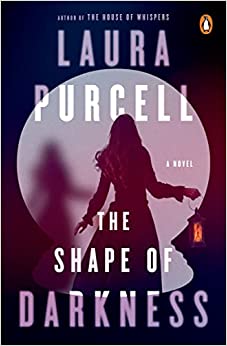
Newly recovered from a vicious bout of pneumonia, Agnes is still weak, but she is so poor she has returned to her job as a silhouette maker. Her mother is ailing, and she also has her nephew Cedric to support. Then she notices that her last few customers have been murdered—their throats slit.

Pearl is an 11-year-old albino who up until recently has been appearing as a ghost in her sister Myrtle’s seances. But Pearl seems to have a gift herself, so Myrtle has been advertising her as the White Sylph. Certainly something happens when she attempts to contact the spirits. She, though, doesn’t know what, because she passes out.

Agnes, worried that someone is targeting her business, decides that Pearl can help her.

Although I have been enjoying Purcell’s novels and this one is creepily Gothic, set as it is in old, dilapidated houses in Victorian Bath, it took me a while to get into it. However, I had patience that paid off. I had lots of theories about what was going on, but there’s no way I could have guessed the truth.

Related Posts

The Silent Companions

The Poison Thread

Sleep, Pale Sister

Review 1842: #1954 Club! Nectar in a Sieve

I don’t usually post on Saturdays, but I had one more book that I read for the 1954 Club.

When I saw that Nectar in a Sieve qualified for the 1954 Club, I was excited to read this landmark novel. It depicts the life of poor Indian peasants, and as the Afterword of my Signet Classics edition states, nothing much has changed for them in the 80 years since it was written.

As the daughter of the village headman, Rukmani might have expected a more memorable wedding, but she is the youngest daughter, so no dowry was forthcoming and she is plain. So, Rukmani is married at the age of twelve to a poor rice farmer, Nathan, who does not even own his own land. But, she thinks as an old woman recollecting her life, her parents made a good choice, for Nathan was good and kind.

Rukmani remembers her life, a precarious one where they were never able to afford to buy the land, where one misfortune could mean disaster—and they had several.

Rukmani thinks things start to go wrong with the arrival of the tannery, which turns their village into a town and brings in many strangers. But one year of flood followed by one of drought cause starvation and worse problems when Rukmani and Nathan are middle-aged.

By coincidence, just before I read this novel, I read The Year of the Runaways by Sunjeev Sahota, about the life of Indian illegal immigrants in London. In all these years, nothing much seems to have changed except the ultimate outcome.

In some ways, Nectar in a Sieve is more like social reporting than a character- or plot-driven novel. The only character we really get to know is Rukmani herself. However, the novel is poetically written and tells a powerful story.

Related Posts

The Lowland

Sea of Poppies

The Lives of Others

Review 1841: #1954 Club! The Bird’s Nest

When I saw that a Shirley Jackson novel I hadn’t read qualified for the 1954 Club, I knew I had to read it.

Twenty-three-year-old Elizabeth Richmond is a quiet girl with very little affect. Her mother died a few years ago, and she lives with her aunt Morgen. When she reluctantly seeks help for debilitating headaches, she is referred to Doctor Wright. After a series of baffling hypnosis sessions, Dr. Wright realizes that Elizabeth is exhibiting multiple personalities.

Elizabeth herself is restrained and has difficulty expressing herself. Another personality, which Dr. Wright calls Beth, is sweet and melancholy. Eventually, a third teasing and raunchy personality, Betsy, appears, and after a disastrous trip to New York, there is Bess, obsessed with the money she is due to inherit. Wright believes he can fuse these partial personas into a whole person, but soon they are fighting for their existence.

I don’t know how likely this novel would be considered now by those in the mental health profession, but it seems to be right up there for the 1950s. The novel is both bizarre and a little frightening and weirdly, macabrely funny, both effects which are probably intended. As to the novel’s resolution, well, that’s less likely but entirely 50s in nature.

I can see why some other of Jackson’s works are better known and more widely read, but The Bird’s Nest is still very good.

Related Posts

Hangsaman

Let Me Tell You

Turtles All the Way Down

Review 1840: #1954 Club! Destination Unknown

I read Destination Unknown for the 1954 Club, and it is really more of a suspense/espionage novel seemingly based on Cold War politics than it is one of her usual mysteries. It is also not nearly as effective.

Thomas Betterton is just the latest of a series of scientists and researchers who have seemed to drop off the face of the earth. Although his wife Olive says she doesn’t know where he is, Jepson and his colleagues in a labyrinthian government office building think he has defected. When Olive asks for permission to travel for her health, they decide to have her followed.

Hilary Craven has left England for Morocco in the hope that a change of scenery will lessen her despair after first her husband left her for another woman and then her only child died of meningitis. But it doesn’t help, and she soon is going from pharmacy to pharmacy collecting sleeping pills. She is about to take them when Jepson bursts into her room with an alternative. The plane she was supposed to take to Morocco has crashed. She missed it and got another one, but Olive Betterton was on it. Both women are physically similar and have red hair. Will Hilary take Olive’s place and hope to be contacted, to try to find out where the scientists are even though it’s likely she won’t survive this mission? She agrees.

Although there are some complicated strands to the plot, not only is the novel not a mystery but it doesn’t feature the deft characterization or humor that are usually part of Christie’s books. Not one of her best, I’m afraid.

Related Posts

Appointment with Death

By the Pricking of My Thumbs

Taken at the Flood

Review 1839: #1954 Club! Go Tell It on the Mountain

Reading Go Tell It on the Mountain checked off some boxes for me. Not only does it qualify for the 1954 Club, but it is on my Classics Club list. In addition, it’s been a long time since I’ve read anything by Baldwin.

Fourteen-year-old John Grimes is in rebellion. His stepfather, Gabriel, is a deacon in a Black Pentacostal church. Gabriel is a man who believes himself bound for heaven, but John sees his faults. He is self-righteous and treats John harshly while he is kinder to his own scapegrace son. He is cruel to John’s mother, Elizabeth, because she had John out of wedlock. He has other faults that John doesn’t know about but Gabriel’s sister Florence does. John sees his hypocrisy and that of the “saints,” as the novel calls the church faithful, and stands aloof from the frenzied religious services.

The novel is divided into three sections. The first explores John’s frame of mind. The second is divided into thirds, which explore the thoughts of Florence, Gabriel, and Elizabeth. Finally, in the third section, John is forced to confront his feelings in a service at church.

This novel is powerful, and its language is masterful. As I am an atheist, it’s hard for me to conceive of the characters’ mindset, in which everything is about the acceptance or rejection of God and all others are sinners. I thought it was interesting to explore this world, but I found especially the last, hallucinogenic section, and the resolution of John’s dilemma, to be a bit too much.

Related Posts

Gilead

Religion and the Decline of Magic

The Brothers Karamazov