
 This period’s Best Book is The Clockmaker’s Daughter by Kate Morton! Also recommended is In the Light of What We Know by Zia Haider Rahman!
Category: books
Day 1290: Literary Wives! The Stars Are Fire
 Today is another review for the Literary Wives blogging club, in which we discuss the depiction of wives in fiction. If you have read the book, please participate by leaving comments on any of our blogs. Be sure to read the reviews and comments of the other wives!
Emily of The Bookshelf of Emily J.
Eva of Paperback Princess
Lynn of Smoke and Mirrors
Naomi of Consumed By Ink
* * *
After a winter that seemed like it would never end, the autumn in Maine of October 1947 is in severe drought. Grace Holland is pregnant and the mother of two small children. She feels that her marriage is in jeopardy. Her husband, Gene, never loving or communicative, has barely spoken to her since his mother died. Soon, though, she has the very existence of her family to worry about as fires threaten their small beach community.
Grace is able to save her children and her neighbor’s family, but Gene, who went out to fight the fire, doesn’t return. Everything she owned is gone, so now Grace must learn to live an entirely different life.
Anita Shreve knows how to tell a story, and this one drew me right in. Her characters are vibrant and believable. A few of her books have brought me to tears. This is not one of them, but it is still an absorbing novel to read.
What does this novel say about wives or the experience of being a wife?
At the beginning of the novel, Grace’s life as a wife is one of loneliness. Her husband barely speaks to her or touches her. We get the feeling he blames her, as does his mother, for getting pregnant so that he had to marry her. Left all day without a car, she can walk to shop, see her mother, or visit her girlfriend, Rosie. In her own house, however, she is treated as someone to keep the house, care for the kids, and occasionally provide sex.
Spoilers ahead . . . . Sorry, they’re unavoidable.
After she learns independence when Gene disappears during the fire, her marriage changes with his return. Now, he begins to behave with the more classic traits of an abusive husband. He speaks to her cruelly, tries to isolate her in their home, and eventually becomes threatening and physically abusive. Since the fire, Grace has had to learn to survive, and she has to figure out how to do that in an abusive marriage.
Related Posts
Day 1289: The Clockmaker’s Daughter
Best Book of Five!
The first character we meet in The Clockmaker’s Daughter is the ghost of the clockmaker’s daughter. Although she used the name Lily Millington, we don’t find out her true name, or why she haunts Birchwood Manor, until the end of the novel.
The novel begins in the present, though, with Elodie, an archivist. She is about to be married, but she is having trouble concentrating on the wedding. That is because, in going through the archive of James W. Stratton, a philanthropist, she has found the belongings of a Victorian artist, Edward Radcliffe, in particular, a sketchbook. This discovery is of interest because inside it is a picture that she realizes is of a house from a children’s story handed down in her own family.
 While Elodie begins exploring this link between Radcliffe and her family, we slowly hear the stories of Lily Millington, of a beloved house, and of a long-lost family heirloom. We also learn the stories of a series of inhabitants of the house.
Although I love a good ghost story, I wasn’t sure whether I would appreciate the ghost being one of the narrators. And this is not a traditional ghost story, for the ghost is not one that frightens. Kate Morton is a masterful storyteller, however, so that I was engrossed as always. Although this is not my favorite book by Morton, which still remains The Forgotten Garden, I really enjoyed it.
Related Posts
Day 1288: Seven Keys to Baldpate
 Just as a side note, the Classics Club Spin number is #1, which means I will be reading Virginia Woolf’s To the Lighthouse for the end of January. That’s quite a coincidence, because I just checked it out of the library to read last week. I haven’t started it yet, though, and will be interested to see what I think of it more than 40 years after I read it the first time.
* * *
I heard about Seven Keys to Baldpate during a news story about its namesake, Baldpate Inn in Colorado. Written in 1913, the novel was made into a successful stage play and three movies. It is not exactly a mystery as we think of it, since no detection occurs. Simply, the main character is trying to understand what is going on.
Billy Magee is a successful writer of pot boilers, but he feels he is capable of writing something more serious. To get away from interruptions, he travels to upstate New York to stay in his friend’s summer hotel, Baldpate Inn, which is closed during that season, winter.
In the train station at Upper Asquewan Falls, he falls in love on sight with a young woman. He attempts to help her find a place to stay, but after he puts her in a cab, he never expects to see her again.
He has no sooner gotten settled in his room at the abandoned hotel when people begin to arrive. Finding him there, they each tell him a story that is patently untrue to explain their presences at the hotel. Among them is the girl from the railway station. It is especially disturbing because Billy has been told he has the only key to the inn, but each successive arrival lets himself or herself in with a key.
Soon the hotel has almost a dozen people staying there, all of whom seem to understand what is going on except Magee. The mystery seems to involve an envelope of money in the hotel safe, however.
This novel is ridiculous but entertaining, written in a breezy style that is occasionally overly florid. It is meant to be ridiculous, however, sort of a satire against the potboilers that Billy writes, which is probably why it was so popular in its time. Although it is sometimes a little long-winded, it is a quick, fun read.
Related Posts
Day 1287: In the Light of What We Know
 In the Light of What We Know is a novel teeming with ideas and stories. It is filled with conversations about mathematics, politics, religion, philosophy, which makes it sound intimidating. Instead, it is thought-provoking and absorbing.
The nameless narrator is an American of Pakistani descent and privileged upbringing. When the novel opens in 2008, he has been fired from his position as an investment banker and is separated from his wife. At his door appears an old friend from his school days, a man he hasn’t heard from in years. Zafar was born in Bangladesh and raised in poverty in London. But he made his way to a degree in mathematics at Oxford, becoming first an investment banker and then a human rights lawyer. Zafar has been adrift, though, and the narrator barely recognizes him when he arrives.
Although the narrator has occasional remarks to make, most of the novel is Zafar telling about his life in anecdotes and ideas that wander and are loosely connected. Gradually, then, we understand the events that trouble and particularly anger him. All along there are hints of a massive disclosure.
Occasionally, when involved in the many circumlocutions and digressions in this novel, I felt myself on the verge of irritation, but I never actually entered into it. Instead, I found it fascinating. This novel is about exile, the feeling of not belonging, and so much more. It pins itself on the story of an unhappy love affair and on deception in the wake of 9/11. It also has something to say about the financial collapse, the war between Pakistan and Bangladesh (which I didn’t know about), Afghanistan, and many other subjects.
The title is ironic, because Zafar has a fascination with Gödel’s Theorum, which says that there are things in mathematics that are true but cannot be proven to be true. The novel is about truth, knowledge, and belief. What are they, and how do they interact?
This is a novel I read for my James Tait Black Fiction Prize project.
Related Posts
Classics Club Spin #19
 The Classics Club has announced a spin for the end of this month. If you post a numbered list of 20 of your Classics Club books by November 27th, the club will spin to pick the number of your next read for the club. The deadline for reading the book and posting a review is January 31, 2019, so the club has challenged us all to put our biggest tomes on the list because of the extra reading time.
So, with no further ado, here is my list. I will say ahead of time that I have no idea whether some of these books are tomes are not:
- To the Lighthouse by Virginia Woolf
- The Expedition of Humphry Clinker by Tobias Smollett
- Challenge by Vita Sackville-West
- Aurora Floyd by Mary Elizabeth Braddon
- The Viscount de Braggalone by Alexandre Dumas
- Madame de Treymes by Edith Wharton
- The Old Man’s Birthday by Richmal Crompton
- The Good Soldier by Ford Madox Ford
- Oroonoko by Aphra Behn
- Owls Do Cry by Janet Frame
- Evelina by Frances Burney
- The Lady and the Unicorn by Rumer Godden
- Joanna Godden by Sheila Kay-Smith
- Mary Lavelle by Kate O’Brien
- Kenilworth by Sir Walter Scott
- The Last of the Wine by Mary Renault
- The Prince by Machievelli
- The Brothers Karamazov by Fyodor Dostoevsky
- Memories: From Moscow to the Black Sea by Teffi
- The Winged Horse by Pamela Frankau
Happy reading to everyone, and I hope the spin selects a good book for you.
As it is Thanksgiving Day here in the U. S., Happy Thanksgiving to everyone!
Day 1286: The Murder of My Aunt
 I’ve read quite a few of the British Library Crime Classics and enjoyed their beautiful covers, but The Murder of My Aunt is the first that has been darkly comic. Edward sees himself as fashionable and too good for the sleepy Welsh village of Llwll where he lives with his aunt. His aunt supports him but not well enough for him to live in London and indulge himself.
Edward is not a nice person, but he turns malicious after his aunt pulls a prank to get him to walk into the village instead of driving his car, La Joyeuse. He decides to murder her to get control of his life and her fortune.
Indeed, if we are to believe Edward’s version, his aunt is not much more likable than he is. But are we to believe him?
The novel is very entertaining until it bogs down a bit with a change of narrators. The Murder of My Aunt was considered a genre breaker in its time and was praised for its freshness and originality. Certainly, I found Edward’s machinations amusing, but the barbs directed at his effeminate nature are also mean-spirited.
Related Posts
Best Book of Five!
 The Best Book for this period is Snowdrops by A. D. Miller!
Day 1285: Miss Buncle’s Book
 Miss Buncle’s investments have not been providing her an income, so she realizes she must do something. She decides to write a book. She submits it to a publisher, Mr. Abbott, who can’t decide whether it is a sly satire or a story written by a rather simple person. Nevertheless, he likes it and decides to publish it. In particular, he is impressed by the lifelike characters.
Miss Buncle always says she has no imagination and has simply described the people she knows. When the book comes out, all of her neighbors begin to recognize themselves, and many of them are not pleased. But no one knows who the author, John Smith, is. Some of the less likable people in the village decide to find out. The topper is that Miss Buncle has imagined futures for some of her characters, and they start to behave as she predicted.
This is a delightful novel, a fun, light read. It’s the perfect thing to go with a cup of tea on a rainy afternoon. I can see why so many people have loved it. I read it for my Classics Club list.
Related Posts
Day 1284: Hot Milk
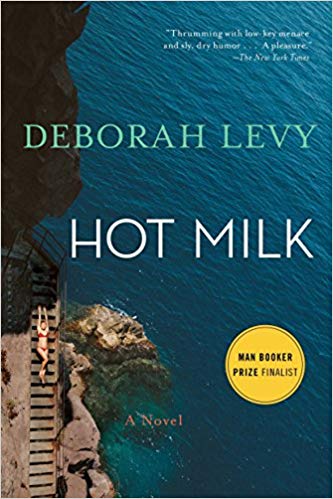 Sofia is an anthropology graduate student who has given up her job and her room in a storage cupboard to care for her mother, Rose, as she seeks medical help at a clinic in Spain. Rose has a myriad of symptoms, but no one has been able to diagnose a problem. Mostly, she is concerned about her legs. She can’t walk, at least when she doesn’t want to. She can’t feel anything, except when she does. She complains constantly, and nothing is ever right.
Sofia is unhappy with her life—her unfinished dissertation, her job as a barrista, the cubbyhole she lives in, her subservience to her mother. Her father left them when she was five and despite being wealthy, seems to feel no responsibility for them, even in the days when they could barely afford to eat. He has made a religious conversion and now has a young wife and baby daughter.
Sofia is dabbling in an affair with a German girl, Ingrid, from Berlin, but they seem to be at cross purposes.
This novel is intelligent and sometimes almost hallucinogenic as it explores Sofia’s attempts to wake up and take responsibility for herself. At times, I found it a little confusing and its incidents unlikely but mostly I was engaged in Sofia’s journey.
This is another book I read for my Man Booker Prize project.

