
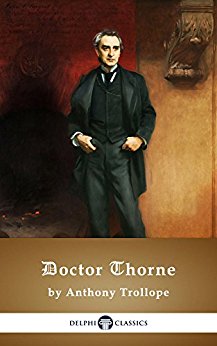
 This week’s Best Book is Doctor Thorne by Anthony Trollope!
Category: books
Day 1000: High Dive
 Well, today I post my thousandth review, so I guess it’s sort of a red letter day. I thought I’d celebrate by reviewing a book recommended to me by John Warner, the Biblioracle. If you send him a list of the last five books you read, he’ll recommend a book to you. I thought it sounded fun and got this recommendation.
As it is about an attempted assassination of Margaret Thatcher in 1984, an actual event, High Dive didn’t seem like the type of novel that would appeal to me. Yet it is full of empathy as it examines the lives of several people affected by the bombing. Jonathan Lee was inspired by the rumors that a second man, besides Patrick McGee, who was arrested for the bombing, was involved.
That man is Dan, a young member of the IRA who specializes in explosives. We first meet him on his initiation at the age of 19, when he refuses to kill some dogs just because the IRA members tell him to. He volunteers for the big job years later without knowing exactly what it is and is taken aback when he learns it will probably involve the death of civilians.
The plot is to plant a bomb at the Grand Hotel in Brighton days before the start of a conference that Thatcher will attend. The bomb will be set to go off after she is in the building.
Moose Finch, the assistant general manager of the hotel, is proud that he managed to attract the conference away from the Metropole. His boss is retiring, and he hopes to be promoted to general manager if the conference goes well. Moose is an ex-athlete who seemed as a young man to have a brighter future. He blames his lack of opportunities on not being able to attend university, and he wants his daughter Freya to have the advantages he feels he missed.
Freya isn’t sure what she wants to do. She knows her summer job at the hotel bores her stiff. She is still trying to figure out her goals, learn who are her true friends, and work out her relationship to boys.
The tension of the novel comes from wondering what will happen when the bomb goes off, but we spend a lot of time getting to know the characters, including Dan, the bomber. The insights into the characters are subtle, their personalities interesting. I found this a compelling novel.
Related Posts
Day 999: Beloved
 On some occasions after reading a novel, I find my thoughts about it are not clear. Did I enjoy it? Did I completely understand it? Did I think it was powerful or overpowering? This doesn’t happen very often, but these are my thoughts after reading Beloved.
The novel, when looked at straightforwardly, is a ghost story. Sethe escaped from slavery with her children, although the plan went wrong. Most of the other escaping slaves were killed or captured, including her husband, and Sethe had to come later, giving birth to her daughter Denver on the way.
These events happened 16 years ago, but shortly after Sethe made it across the Ohio River, Schoolteacher, the despotic overseer, came after her. To keep her children from being dragged back into slavery, Sethe decided to kill them. She was stopped, but not before she slit the throat of her daughter, Beloved. (Her name isn’t really Beloved, but that’s what’s on her tombstone; we don’t know her name.)
Sixteen years later, Sethe’s house in Cincinnati, referred to as 124, is haunted. Sethe lives there with Denver, her mother-in-law having died and her sons having left. Denver is a sulky, needy young woman who craves her mother’s attention, but that is all for the ghost of her baby.
The action begins when Paul D. arrives. Paul D. had been one of the young male slaves at Sweet Home, where Sethe was a slave. He has been wandering since the war. When he realizes the house is haunted, he drives the ghost out and lives with Sethe as her lover.
But Beloved comes back, now embodied as a girl the age she would have been if she’d lived. Denver and then Sethe become enslaved to her.
But is Beloved a ghost or just a young girl damaged by slavery? Someone in the text makes a reference to a lost girl enslaved since a child, and I think that’s who Beloved is meant to be. Denver and Sethe have just mistaken her from their own needs. There is only one chapter where we see things from Beloved’s point of view, and it is incoherent.
That is what I think, but I was confused because everyone else seems to take the novel as a straight ghost story and of course, an indictment of slavery. I finally ran across a reference to an article by an academic who believes the same thing, but I never found the original paper.
In any case, Beloved is an unusual work. It uses an unusual combination of storytelling techniques, some of which I enjoyed and some I did not. It is powerful, depicting emotions and events that we can barely comprehend. Did I like it? I don’t know. Does it make me think? Yes. Do I understand it? Not completely.
Related Posts
Day 998: The Girl with the Dragon Tattoo
 A while back I read the third book in the graphic novel series based on Stieg Larsson’s Millenium Series. I found myself a little confused because it had been so long since I read the original books. So, I decided to get the other two.
Of the three original novels, The Girl with the Dragon Tattoo works best as a stand-alone. We meet the two protagonists. Mikael Blomkvist is a journalist who has just been found guilty of slandering a powerful businessman, Wennerström, and must face a jail sentence. Lisbeth Salander, the eponymous heroine, has found some evidence that Wennerström is actually guilty and has led Blomkvist on to make allegations he suddenly finds he can’t support so as to ruin him and his magazine.
Blomkvist quits his job on the magazine to save it, but he is offered investigative work by Henrik Vanger, another powerful industrialist. Forty years ago, Vanger’s niece Harriet disappeared during a get-together on the family island and was never found. Henrik assumes that someone in the family killed her, since no one could get on or off the island at the time. In exchange for Mikael’s help, Vanger promises to turn over the goods on Wennerström.
This graphic novel was easy to follow and beautifully illustrated. I find that the genre doesn’t allow for the extreme build-up of suspense that Larsson was able to create in the novels. It could be my imagination, but I also thought some scenes were moved around and the ending was slightly different than the book. I also felt that Lisbeth’s role in the graphic novel was minimized as compared to the novel. Her scenes are more likely to be visual rather than to have dialogues and so go more quickly. Still, this is a rendition of the story that has much to offer.
Related Posts
Day 997: Doctor Thorne
 Best Book of the Week!
In this third of Anthony Trollope’s Barsetshire Chronicles, the main character, Doctor Thorne, is presented with a dilemma. The outcome of the novel is fairly easy to predict, but the pleasure is in getting there.
Trollope begins the novel by explaining the situation of the Greshams of Greshambury, a proud but declining family. Squire Gresham has done his best to waste the family fortune, aided by his wife, Lady Arabella. When the novel begins, it is an acknowledged fact among Lady Arabella and her de Courcy relatives that young Frank Gresham, just of age, must marry money. Unfortunately for their plans, Frank has just declared himself to Mary Thorne, Doctor Thorne’s niece, who hasn’t a penny.
Mary has not encouraged Frank. In fact, she believes he is too young and injudicious to make such a decision. She refuses to listen to him, but she does begin to wonder about her own position, for she knows nothing about her own parentage. She has been brought up by Doctor Thorne to have a pride in breeding without understanding her own.
In truth, the story is not a good one. Her mother was the respectable sister of a stone mason until Doctor Thorne’s disreputable brother seduced her with promises of marriage. When Mary Scatcherd got an opportunity to marry and leave the country—only without her daughter—Doctor Thorne promised to raise the child as his own. This he has done without the knowledge of Roger Scatcherd, the child’s other uncle, who is now a wealthy member of parliament.
Doctor Thorne has continued to treat Roger Scatcherd, but he fears the man’s dedication to drink will soon put him in his grave. Since Scatcherd’s son Louis looks to follow in his footsteps, Doctor Thorne thinks that neither of them will live long. So, he is taken aback when Scatcherd confides that he will put his money in trust for Louis until he is 25, but if both of them die, he leaves his fortune to his sister Mary’s oldest child. Doctor Thorne urges Scatcherd to be more particular, because of course Mary’s oldest child is his own girl, Mary Thorne, whom Scatcherd thinks died as a child.
In any case, the Greshams find that Frank cannot be dissuaded from Mary Thorne. Although Mary has been raised with their daughter and is the best friend of Beatrice Gresham, Arabella banishes her from the house and eventually asks Beatrice not to see her. When Doctor Thorne, already sore because Mary is being punished for something she didn’t encourage, realizes that Mary actually does love Frank, he thinks it will all come right but is unable to tell anyone so because perhaps it will not.
Doctor Thorne is written in a different vein from the first two Barsetshire novels. For one, it is looking at a different strata of people. Some of the characters from the other novels are mentioned but do not appear. To be frank, I missed the delicacy of good old Mr. Harding. Dr. Thorne is rougher but no less principled, though. I did not enjoy as much the descriptions of Scatcherd’s doings, but after a while, I got to like Dr. Thorne and be interested in the outcome.
Related Posts
Day 996: World Light
 As much as I have enjoyed other novels by Halldór Laxness, I just couldn’t get into World Light. I think it was its allegorical qualities that put me off, as that is not my genre.
Olaf Karason is a foster child who has been brought up on a remote Icelandic farm. He is so badly treated there that in his teenage years he takes to his bed as an invalid. He is sadly aware of his own history, in which his father abandoned him, and his mother sent him away in a bag. He hears she is now doing well, but she shows no interest in him.
Olaf has a spiritual turn of mind and believes he has experienced some knowledge of God. He also wants to be a poet and is hungry for knowledge. But to the people surrounding him, this all just makes him seem more peculiar. He is almost ridiculously innocent, too, and because of his innocence and his hunger for love, he keeps thrusting himself into situations where he is misunderstood.
While Olaf is on the farm, I stayed with him, but more than 100 pages into the book, he loses his home and the parish sends a man to fetch him. That man, Reimar, takes him to a farm where he is miraculously cured before taking him to his destination in a convalescent home. But Olaf is cured, so no one knows what to do with him.
This section seemed to begin an entirely different book, and here it started to lose me. Because I felt as if I didn’t understand something, I began to read the Introduction, something I usually don’t do before finishing a novel, if then. Unfortunately, that told me enough about what was coming for Olaf that I developed a sense of dread. I struggled on but finally decided to stop.
Laxness’s novel is apparently an indictment of all the forces in the world against gentler souls. Certainly, the social climate and behaviors he depicts are brutal. As with some of his other novels, I had to keep reminding myself that it was set in the 20th century, because it seems to be several centuries earlier.
I hope my review doesn’t stop anyone from reading Laxness. Generally, I find him wonderful, with a keen, dark sense of humor. If this doesn’t sound like your kind of book, try Independent People (my personal favorite of the ones I’ve read) or Iceland’s Bell.
Related Posts
Best Book of the Week!
 This week’s Best Book is The Promise by Ann Weisgarber!
Day 995: The Promise
 Several years ago, I read Erik Larson’s Isaac’s Storm, a nonfiction account of the terrible Galveston hurricane and flood of 1900. So, when one of the books on my Walter Scott Prize list turned out to be set in that time and place, I really wanted to read it. It did not disappoint.
Catherine Wainwright has behaved badly, and the result is a scandal that has resulted in her ostracism from her home town of Dayton, Ohio, and cost her livelihood as a performing pianist. In desperation, she writes to an old friend, Oscar Williams, who is a dairy farmer on Galveston Island. Although she has always considered herself his social superior, years ago he proposed to her. She did not accept him, but he is now a widower with a young son. He proposes again and she accepts. She has barely enough money to get to Galveston.
Nan Ogden is a much less sophisticated woman. She was the best friend of Bernadette, Oscar’s wife, and promised her she would take care of Andre, Oscar and Bernadette’s son. Truth be told, she has her own feelings for Oscar. Until Catherine appears, she has hopes that some day she might be Oscar’s wife. Instead, she finds herself a housekeeper for a woman who can barely boil an egg.
We don’t like Catherine at first, but she quickly grows on us as she develops more empathy for other people. As Catherine, Oscar, Andre, and Nan try to sort out their various feelings and relationships, the tension in the novel builds toward the storm. Then the novel becomes truly riveting.
The Promise is especially strong in its sense of place. I’ve been to Galveston when it was so hot I wondered how anyone could live there before air conditioning, let alone wearing corsets and tight clothes. Weisgarber really makes you feel the heat and stickiness.
Related Posts
Day 994: The Lovers of Yvonne
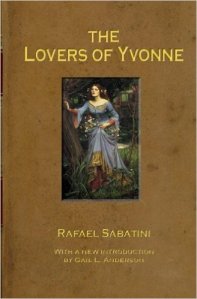 The Sieur Gaston de Luynes is a soldier of fortune whose fortunes haven’t worked out so well at the beginning of The Lovers of Yvonne. Almost destitute, he was lucky enough to be hired by Cardinal Mazarin to teach his nephew Andrea de Mancini arms. But in the first chapter of the novel, the Cardinal fires Luynes after Andrea becomes drunk, blaming Luynes for his nephew’s behavior.
More dangerously, Andrea, who is a very young man, has been challenged to a duel. The Cardinal orders Luynes to make sure the duel doesn’t occur. The only way Luynes can see to honorably do that is to injure the other combatant, Eugène de Canaples, first. So, he duly insults Canaples and then handily beats him in a duel, making sure to wound him.
However, this fight attracts a mob, which chases Luynes with the object of hurting him. He is only able to escape by jumping into the carriage of a woman passing by. He falls madly in love with this woman, who unfortunately is Yvonne Canaples, the sister of his victim.
If this weren’t bad enough, the Cardinal informs him that he has arranged a marriage between Yvonne and Andrea. He tells him he will see him hanged if he finds him anywhere near Choisy, where the de Canaples live. But Luynes likes Andrea, so when invited to go along with him, he does. It’s a good thing, too, because several other suitors are on the way there, most notably the Marquis de St. Auban.
This novel is Sabatini’s first, and it is full of intrigue, sword fights, and kidnappings. Sabatini had only lived in England ten years before writing it, but the English is impeccable, his sixth language. Although Sabatini was himself disappointed in this novel, it is entertaining.
Related Posts
Day 993: Slipping
 I have read two novels by Lauren Beukes and greatly enjoyed their mashup of crime fiction and science fiction. So, I thought I’d love Slipping, a collection of short stories, essays, and other writings.
Beukes’s writing is energetic and her ideas unusual, often gruesome. Her stories are often bizarre. But, oddly enough, after a while they seemed to be very similar. Most of them are set in South Africa in what appears to be the near future, although some are set on other planets. Many are violent; many have characters leading glitzy but vapid lives. They feature a lot of slang that may be invented. There is a glossary, but I didn’t notice it until it was too late.
“Muse” is a short poem about the difficulty of writing, in which the writer receives gloves made of “muse skin” with barbed hooks in the fingertips.
 “Slipping” is about athletes who are artificially enhanced competing in a race. One of them is even a dead body. “Confirm/Ignore” is about catfishing. “Branded” offers advertizers a brand new idea for sponsorship. “Smileys” is a dystopian tale about a street vendor defending herself against extortion. “Princess” puts a startling interpretation on the story of the princess and the pea.
I don’t know why I felt this sameness, as the stories are obviously varied in nature, but I found myself not wanting to read more. I think some of the images were just to grotesque for me.
Related Posts
St. Lucy’s Home for Girls Raised by Wolves

