Review 2543: The Feast

At the beginning of The Feast, we’re informed that a cliff came down near a resort town in Cornwall, obliterating a bay and a hotel beneath the cliff. Some of the people from the hotel survived.

With that information in hand, Kennedy begins the novel a week before the cataclysm. So, she cleverly sets out a source for some suspense while the readers form an opinion about which people they hope will survive.

The small hotel is owned by the Siddal family, run somewhat incompetently by Mrs. Siddal. Mr. Siddal is an educated man who has done nothing for years. They have three grown sons, the oldest of whom, Gerry, is the most helpful and least appreciated.

Other characters do almost nothing, too. Miss Ellis is supposed to be the housekeeper, but she does nothing but spread vicious gossip and order the maid around. A character who acts like an invalid is Lady Gifford. The Giffords have adopted three children, but Lord Gifford works all the time and Lady Gifford spends all her time in bed. She seems to dislike her mischievous daughter Hebe.

Mrs. Cove has three young daughters who yearn to give a feast like one they’ve read about in books. In reality, they have very little. Their mother is so stingy that she sells any candy they’re given, saying it is to buy children’s books. But they have no books. Blanche, the oldest, has problems with back pain but has never seen a doctor.

Two women are abused by their male relatives. Evangeline is at first so shy that she can barely utter a sentence. But her father, a Canon, accuses her of chasing after men and berates everyone else. At the beginning of the novel, they have been tossed out of another hotel because he is so obnoxious.

For his part, Mr. Paley seems to be holding something against his wife, but she doesn’t know what it is. Instead of talking to her about it, he bullies her.

These are a few of the characters, which also include a lady author who likes to take on younger male writers as protégés, her chauffeur being one. And there is Nancibel, the housemaid who does most of the work in the hotel . . . and others.

Despite pending fate, I enjoyed this novel very much. It shows a lot of insight into human nature. I have only read one other book by Kennedy, but I enjoyed it as well.

Related Posts

Troy Chimneys

A Wreath of Roses

Grand Hotel

Review 2542: The Scapegoat

It’s been some years since I read du Maurier’s The Scapegoat, so when I saw it filled a hole in my A Century of Books project, I took it down from the case and placed it on my project pile. I find I remembered the plot fairly accurately.

John, an English lecturer in French history, is finishing his yearly vacation in France. This year, he feels dissatisfied with his life. He has no close connections and lives alone. He suddenly feels a lack of purpose in life and decides to drive to a monastery. But first he stops for the night in LeMans.

There, he bumps into a stranger who looks exactly like him. This man introduces himself as Jean and invites him for a drink and then to spend the night at his hotel. When John awakens, he is in the other man’s room with his things. The man is gone and so are all John’s own things, including his car. John finds a chauffeur has arrived to collect him in the new identity of Jean, Comte de Gué. He realizes that he has no proof of his own identity to convince the police, so he goes along.

At the Comte’s home, no one suspects a thing. He must guess who all these people are, but when he makes mistakes, he finds that no one expects him to behave nicely. His counterpart is apparently prone to cruel jokes.

John finds himself slowly becoming involved in the lives of the Comte’s family, who have secrets and problems from events during World War II. In addition, the family fortunes depend upon the Comte’s pregnant wife bearing a boy—or dying.

As usual with du Maurier, there aren’t very many unshadowed characters in this novel. It’s quite dark despite John’s intentions to do good for the family. The plot is interesting and involving, though.

Related Posts

Jamaica Inn

Rebecca

Daphne Du Maurier: The Secret Life of a Renowned Storyteller

Review 2541: Erasure

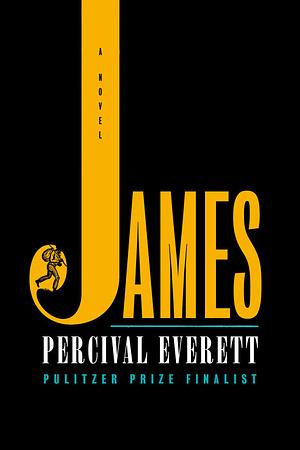
If you’ve seen the movie American Fiction, you already know the plot of Erasure. I haven’t seen it yet, and I read this book for my A Century of Books project.

Thelonius (Monksie) Ellison is a writer of high intelligence whose dense, uncompromising novels have failed to make a hit with the general public. He has just put out his latest book, but his agent, Yul, is having difficulty placing it and has been told that Ellison is too far from his ethnic origins as a Black man.

Ellison lives in California, where he is a university professor, but on a visit to Washington, D. C., for a conference, he finds that his mother isn’t doing well. Eventually, he is forced to move back to D. C. to take care of her. That means taking a leave of absence, but he hasn’t sold his book. His mother’s affairs are in poor shape, so he finds he needs money.

He is infuriated by a recent book that is making a splash, We’s Lives in Da Ghetto. It’s written by a middle-class midwestern Black woman based on one week that she spent with relatives in New York, and it employs every known cliché about the lives of Black people.

On a whim, Ellison sits down and writes a parody of this kind of novel, which he titles My Pafology. He submits it to Yul, who is horrified, and asks him to submit it to publishers under the name of Stagg Leigh. Shockingly, Random House takes it as straight and offers him lots of money.

This novel produces spoof upon spoof. Even Everett’s character Ellison takes himself so seriously that I think he’s being mocked. Certainly, he starts out mocking academia with the learned talk he gives at the beginning of the novel. This talk is incomprehensible, and yet it makes another academic leap up and shout, “Bastard!” at him. He also hits the publishing industry, the reading awards organizations, and television interview programs.

The novel is presented as Ellison’s diary, so it includes learned jokes (most of which I didn’t understand), imagined conversations between various dead people in the arts, recollections from his past, especially about his father, and the entire text—about 50 pages—of My Pafology.

As My Pafology gains attention, Ellison begins to lament that he ever compromised his standards. Forced occasionally to masquerade as Stagg Leigh, he feels as if his own persona as a cultured Black man is being erased. Maybe he feels that that whole culture is being erased.

Parts of this novel were above my head, particularly some of the little scribbles in the diary. Also, when I say Everett is heaping on the satire, I’m not saying that the novel is funny (although some of it is). Most of the time I felt sorry for Monksie, who is too unyielding for his own good and knows it, but cannot stop.

Percival Everett is having a moment lately, which has resulted in four of his books being in my pile, of which this is the second. I’m not sure if I like his work, but it is at least interesting.

Related Posts

The Trees

Flights

Ferdydurke

Classics Club Spin #40!

It’s time for another Classics Club spin! How does it work? You post a numbered list of 20 of the titles from your Classics Club list. The club picks a number, and that determines which book you read before the end of the spin.

If you want to participate, post your list before Sunday, February 16, and read the book and post your review by Sunday, April 11. That gives you two months to read the book. If you’re not a member of the club, all you have to do is post a list of 50-100 classic books you would like to read and set a deadline for yourself. Then sign up for the club at the Classics Club blog site. If you are having a hard time thinking of that many classic books, the reviews on our website or the Big Book List will help.

And here’s my list, with repeats, because I have fewer than 20 titles left to read:

  1. Les Misérables by Victor Hugo
  2. Love’s Labour’s Lost by William Shakespeare
  3. The Passenger by Ulrich Alexander Boschwitz
  4. Incidents in the Life of a Slave Girl by Harriet Jacobs
  5. Tis Pity She’s a Whore by John Ford
  6. The Methods of Lady Walderhurst by Frances Hodgson Burnett
  7. The Deepening Stream by Dorothy Canfield Fisher
  8. Cecilia, Memoirs of an Heiress by Frances Burney
  9. Our Mutual Friend by Charles Dickens
  10. The Princess of Cleves by Madame de La Fayette
  11. The Three Musketeers by Alexandre Dumas
  12. The Tavern Knight by Rafael Sabatini 
  13. The Passenger by Ulrich Alexander Boschwitz
  14. Love’s Labour’s Lost by William Shakespeare
  15. Incidents in the Life of a Slave Girl by Harriet Jacobs
  16. The Tavern Knight by Rafael Sabatini 
  17. Tis Pity She’s a Whore by John Ford
  18. Our Mutual Friend by Charles Dickens
  19. The Methods of Lady Walderhurst by Frances Hodgson Burnett
  20. The Deepening Stream by Dorothy Canfield Fisher

I’ve got some hefty ones in there, and I have been reading a series of tomes, so I hope I get one of the shorter ones!

Review 2540: Elizabeth and Essex

Years ago, I read Lytton Strachey’s Eminent Victorians and found it both informative and entertaining—full of scandalous information about some of the Victorian age’s most prominent citizens. I was hoping for something similar from this book, but it is a little more serious, although Strachey gets some zingers in.

The book is the 1928 version of history written for the general public. There are a very few footnotes and a couple of pages of bibliography at the end. It is written in Lytton’s liquid, sometimes sardonic style.

This book is about Queen Elizabeth and her last favorite, Robert Devereaux, Earl of Essex. He was more than 30 years younger than she and the stepson of her earlier favorite, Robert Dudley, Earl of Leicester. Elizabeth’s relationships with her favorites, at least with this one, seemed more like volatile love affairs than anything else, with fulsome compliments expected and fiery spats, which usually resulted in Essex stomping out and being forgiven after an apology. In fact, considering her own temper, I’m surprised that Elizabeth put up with him, because he certainly treated her less respectfully than he would if his sovereign was a man.

You have to get used to Strachey, because he starts out right away by making assertions about Elizabeth’s character without giving examples or showing how he is right, as a modern historian would do. And his depiction seems pretty sexist. Over time, he demonstrates some of these characteristics, though. Still, Elizabeth’s main problem with Essex seemed to be that he didn’t behave as if she was his sovereign. I think he had an inherent assumption that he was superior because he was a man, not surprising in that time.

Without going into all the details of the story, which Strachey labels “tragic,” I’ll say that it boils down to temperaments. Essex was proud and fiery, and he valued his family name. He had poor judgement about who to take advice from and was actually incapable of taking any that involved caution and circumspection. He was brave in battle and pictured himself as a great war commander, but he was not. In fact, he seemed to me like a charismatic, well-liked bear of little brain. But he wrote wonderful letters.

Strachey clearly didn’t like Sir Walter Raleigh, but I don’t know why. He just hinted around about him. According to Strachey, no one liked him.

Essex was a loyal friend to many, among them Francis Bacon. It was Bacon’s Machievellian advice that Essex was unable to follow. Despite Essex having supported him for several positions, Bacon did his best to put the nail in Essex’s coffin when he was tried for treason.

This is an interesting book and even though Essex seemed to me like a spoiled baby most of the time, I saw by the end that indeed it was a tragic story.

Related Posts

The Marriage Game

Hunting the Falcon: Henry VIII and Anne Boleyn and the Marriage That Shook Europe

Mary Boleyn

Review 2539: A Morbid Taste for Bones

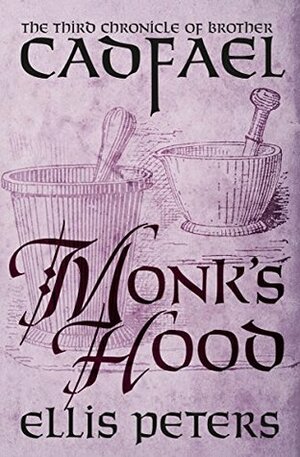
I didn’t really like the Cadfael series on TV, and I thought I had read at least one book long ago and decided not to pursue it. However, I saw that the first book filled a hole in my A Century of Books project, so I thought I’d give it another try. Now, I’m not sure I ever read any, because this book is pretty good!

In 1137, Brother Cadfael is a Welsh monk in a Benedictine order in Shrewsbury. He has led an exciting life, but now a quiet one taking care of the monastery garden suits him. He has two young assistants. Brother Columbanus is from a family of high Norman blood who seems almost too devout and eager to please. Brother John is practical and full of mischief.

Brother Columbanus is stricken with something that seems like epilepsy, so Prior Robert, an ambitious, proud man, suggests sending him to the Shrine of Saint Winifred in nearby Wales. When Brother Columbanus is miraculously cured, Prior Robert suggests that what the order needs are some relics, and Saint Winfred’s bones may answer the case.

Although Prior Robert wouldn’t normally include Cadfael in his expedition to get the bones, he needs him as a translator. Brother Columbanus is allowed to go as the subject of the miraculous healing, and Brother John offers to take care of the livestock. After getting permission from the Welsh authorities to remove the bones, the party encounters opposition from Rhisiart, the major landowner in the area, and thus from the rest of the locals.

Prior Robert meets with Rhisiart to try to talk him around, but he mishandles this discussion badly by trying to bribe him. They schedule a second meeting, but Rhisiart never arrives. Once they learn he left home for the meeting and never returned, everyone goes out to look for him. They find him shot in the chest with an arrow that belongs to Engelard, a Saxon boy who wants to marry Sioned, Rhisiart’s only child and his heir.

Suspicion immediately focuses on Engelard, but to Cadfael that doesn’t make sense. Even though Rhisiart opposed the marriage, he has treated Engelard like a son since he arrived, in a country where you usually must belong to a family to get work.

Does the murder have to do with the marriage? with Sioned? a love triangle? the monk’s expedition?

I enjoyed this mystery. It seems well-researched and is written with a wry sense of humor. Although I did guess the murderer, Peters tricked me enough to move my guess to two other people before I returned to my original suspect just about the time Cadfael did.

Related Posts

A Murderous Procession

Grave Goods

The Serpent’s Tale

Review 2538: The New Life

The New Life was a slow read for me. It took me almost a week, which is unusual for me with fiction. I read it for my Walter Scott Prize project.

The novel is loosely based on two men, John Addington Symonds and Havelock Ellis, who in the early 1890s wrote a book together. When I looked them up, it didn’t seem as if it was very loosely based—Crewe gives his characters almost identical names. But then I realized it is set after Symonds’ death in order to bring in the trial of Oscar Wilde.

John Addington is a gay man who is married and has three grown daughters. He is known for writing about a vast array of subjects. Henry Ellis is an idealistic, naïve younger man, a doctor. He marries a good friend, Edith, and their intention is to lead the way to the New Life. I wasn’t exactly sure what that entailed, but at minimum it seems to be that spouses are equal partners. Unfortunately for Henry, they never discussed the sexual side of marriage. He thought there would be consummation; Edith, a lesbian, did not. So, Henry continues a virgin with a fascination for the subject of sex. They live separately, and soon Edith has a new friend, Angelica.

Henry wishes to make a scientific study of sex and publish the results, and since he knows some gay friends, referred to at that time as “inverts,” he decides to start with them, having a theory that rather than an illness or perversion, inversion is natural. He decides to invite John Addington to join him in his project, not because he thinks he is gay, but because of his reputation as a writer about various topics.

John has been getting more tired of keeping his secret as an invert. He has confessed to his wife and occasionally has brought a man home for sex, an action that I thought was breathtakingly cruel. Now he meets Frank, a much younger, lower-class man who wants to be his friend. When John sees Henry’s proposal, he thinks such a project will change people’s ideas about inversion so that he can be free to do what he wants.

The men write the book and begin looking for a publisher. However, just at that time, Oscar Wilde is found guilty of inversion and is sentenced to jail. The backlash is such that the two fear their work is unpublishable.

If you are not a fan of graphic sex scenes, this won’t be the book for you, especially the first few hundred pages. The novel opens, for example, with a very explicit and detailed wet dream. I am not really a fan of explicit sex scenes in novels, so I found the first half of the novel hard going, despite it being well written and having vivid descriptions of life in Victorian London. (It has a wonderful description of a day that is so smoggy no one can see where they’re going.)

The novel picked up for me after the book, entitled Sexual Inversion, is published and the police go after a bookseller for selling indecent material, their book. Then it becomes about the reactions of the various characters once there is a threat to their own lives.

Related Posts

After Sappho

Murmur

The Children’s Book

Review 2537: Levels of the Game

Although John McPhee is best known for his work in the 1960s through 1990s, he is still going at 93. He is known for being a pioneer in a style of writing called “creative nonfiction” or “literary journalism.” Years ago, I read his four-volume work Annals of the Former World, about the geology of the United States, basically the formation through time of various areas of the country, which was absolutely fascinating. Later I picked up a copy of his Coming into the Country, about homesteaders in the wilds of Alaska in the 1970s. So, when I saw he had written a book that could fill a hole in my A Century of Books project, I got it.

Levels of the Game is not really my subject matter. It cleverly combines a play-by-play description of a tennis game at Forest Hills in 1968 with profiles of the players. This is an amateur game between Arthur Ashe and Clark Graebner. Although I used to watch tennis a bit when Ashe was further along in his career, I couldn’t really follow the subtleties of the play-by-play that well. I’m sure for tennis lovers it might have been climactic.

Ashe at the time was the only Black player of the U. S. circuit, and there were no others following behind. A lot of what McPhee says in his profile is interesting and a lot is dated. Coming up, Ashe ran into situations where he was barred from clubs. Yes, it was still like that.

If you’re a sports fan, particularly of tennis, you’ll probably get more out of this book than I did. Still, I didn’t really understand the important place Ashe holds in the game until I read this book.

P. S. The description of Ashe, who at the time was a lieutenant at West Point, putting on love beads to go on a date, cracked me up.

Related Posts

Open: An Autobiography

Coming into the Country

Annals of the Former World: Basin and Range

WWW Wednesday!

It’s the first Wednesday of the month, so it’s time for WWW Wednesday, an idea I borrowed from David Chazan, The Chocolate Lady, who borrowed it from someone else. For this feature, I report

  • What I am reading now
  • What I just finished reading
  • What I intend to read next

This is something you can participate in, too, if you want, by leaving comments about what you’ve been reading.

What I Am Reading Now

Actually, at this writing I haven’t started it, but by the time this is posted tomorrow, I’ll be in the midst of September by Rosamunde Pilcher. I already checked this book out once from the library, to fill the 1990 gap in my A Century of Books project, but I knew I wasn’t going to finish one of the four library books I checked out, and unfortunately, chose one of the others to be the last one I read. Unfortunately, because it turned out someone else had put a hold on this one. But now I have it back. I haven’t read anything by Rosamunde Pilcher except The Shell Seekers, years and years ago, so I’m curious.

What I Just Finished Reading

I finally got to read Lessons in Chemistry by Bonnie Garmus for my Literary Wives club. It has been sitting on my pile for over a year, waiting for its turn to come up for the club. I enjoyed it very much. Review coming at our next club meeting, Monday, March 3!

What I’ll Be Reading Next

I was glad to get a little heaviness break by reading the above two books (although September is very long), because I made the mistake of putting my books for A Century of Books into a pile by length, shortest first, in an effort to get as many read as possible before the end of last year. (Obviously, I haven’t met my goal for this project.) The result is that the heftiest are all waiting for me. And I haven’t yet found a book for every year. I have four more years to find books for and some books on hold at the library that are taking a long time to get here. Anyway, my next book falls into the middling hefty category, both in length and seriousness. It’s Angle of Repose by Wallace Stegner. It’s been a long, long time since I read any Stegner, and I’m not sure if this was one that I read or not, way back then.

Of course, my reading plans sometimes get thrown off. They did in January, when I suddenly decided to reread Sense and Sensibility for ReadingAusten25 instead of How Green Was My Valley, and that could happen this time, too, if some of those books that I’ve had on hold for ages arrive from the library.

What about you? What have you been reading or plan to read next?