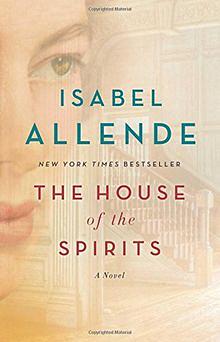
Review 2562: The House of the Spirits

The House of the Spirits fills another hole in my A Century of Books project, and although I believe I’ve read at least one book by Allende, it isn’t this one.

For a long time, you don’t have any sense of when this novel is set. Even when it mentions a big war in Europe, you’re not quite sure if it’s World War I or II. (It’s I.) It took a lot of attention to establish a time setting for this expansive, wandering account that, although generally written in chronological order, sometimes skips forward and sometimes backward. I finally figured out that the novel takes place from shortly before World War I until 1973.

Although the novel contains some information about previous generations, it concentrates mostly on Clara, her children, and her granddaughter Alba. It is narrated mostly by Clara and Alba, with short passages by Esteban Trueba, Clara’s husband.

Clara lives in the house of the spirits, where she can see and hear the wandering spirits and is herself clairvoyant. When Clara is still quite young, Esteban Trueba falls in love with her older, green-haired sister Rosa, and they become engaged. But Rose dies, and Trueba goes off to reclaim the family estate, ruined by his father. There, if he wasn’t one already, he becomes a brutal man with an uncontrollable temper.

Clara grows up in her eccentric family performing experiments in the supernatural with her mother and some of her friends. When Trueba returns years later, having accomplished his goal of making his estate the most prosperous in the area, he asks if the family has any more marriageable daughters. There is Clara.

The novel follows the couple’s story and that of its descendants, their eccentricities and fates, in a wandering way. It ends shortly after Chile’s brutal military coup in 1973.

This is an eccentric, enthralling novel. Although I am not usually a fan of magical realism, in this novel it seemed almost organic. I think once you start it, you just can’t help being pulled along.
Related Posts

In the Time of the Butterflies

Great House

The Ten Thousand Things

WWW Wednesday

It’s the first Wednesday of the month, so it’s time for WWW Wednesday, an idea I borrowed from David Chazan, The Chocolate Lady, who borrowed it from someone else. For this feature, I report

  • What I am reading now
  • What I just finished reading
  • What I intend to read next

This is something you can participate in, too, if you want, by leaving comments about what you’ve been reading or plan to read.

What I am reading now

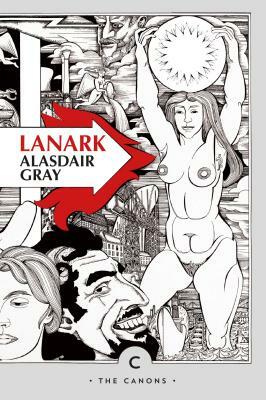
People who can remember my WWW Wednesday for last month may be amused, because what I am reading now is finally Lanark by Alastair Gray. That’s because this book was the one I was planning to be reading next that month. However, since I was dreading it for its length, a bunch of library books came in and saved me, plus I squeezed in some books for ReadingIreland25 and ReadingWales25. So now I am finally getting to it. It’s going to fill the position as second-to-last book in my A Century of Books project.

What I just finished reading

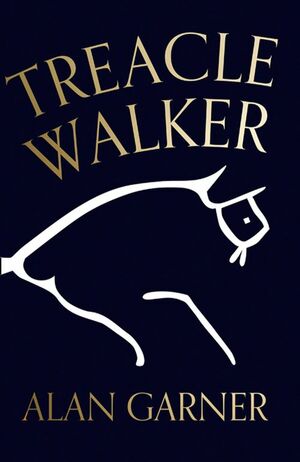
I took a break from the tomes that are the remainder of my A Century of Books project and read a very short book for my Booker Prize project. It was Treacle Walker by Alan Garner. It reads like a myth or fairy tale, and I wasn’t always sure what was going on. But it was beautifully written and interesting. And a plus at this time, it was only about 140 pages long!

What I will read next

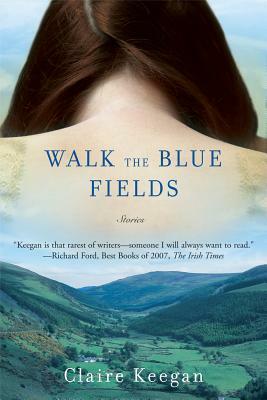
If I live through Lanark, which is almost 600 pages long, I’m planning on reading another short book that is not related to any of my projects. It’s been quite a while since I did that. The book is short stories, Walk the Blue Fields by Claire Keegan.

What about you? What are you reading now or have read recently?

Review 2561: Cultish: The Language of Fanaticism

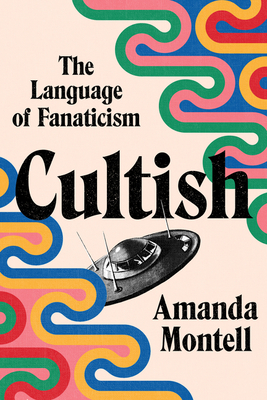
In February, I decided to take a break from trying to finish A Century of Books and revisit my intention to read more nonfiction books that I formed during Nonfiction November. I realized I hadn’t read any nonfiction at all in 2025, so I picked Cultish, which I read about last November.

Montell is a writer and language scholar, although, taking a note from her own approach, I wonder what “language scholar” means. This book is written for the general public and takes an entertaining rather than scholarly approach.

Although I noticed at the time I was reading that I was unable to summarize the topic of any chapter (each of which is unhelpfully named with something like “Repeat after me”), Montell makes clear what she means by a cult, broadens that definition to explore whether some organizations are cults or not (hence, “cultish”), and shows how true cults use language to attract and hold followers. She starts with some of the usual suspects, moves to the death cults, and then examines the cultish qualities of marketing companies like Amway and the niche health businesses like Peleton.

This is an interesting book, but it felt a little muddled to me, probably because I didn’t feel I could single out, except by the type of business or group, the central ideas of each section of the book.

Also, I saw some evidence of sloppiness. The first was simply a syntax issue. It says on page 28, “If you subscribe to an astrology app or have ever attended a music festival, odds are that in the 1970s, you’d have brushed up against a cult.” Now, what does that mean, given that there were no astrology apps in the 1970s? or any apps for that matter. I think she meant, “If you . . . app or attended a music festival in the 1970s, odds are . . . .” To make that sentence crystal clear, you’d start the pairing with the music festival.

That’s fairly minor (except that she’s a language scholar), but she twice brings up the Branch Davidian incident and both times slightly misrepresents what happened. I lived in Texas then and remember what happened, but just in case my memories were false, I looked it up. On pages 38 and 39, she says that the FBI showed up in response to concerns expressed by families of the members. I thought, what? The FBI would never show up en masse for a reason like that, and I remembered that it was actually the ATF who came first. They came based on reports from neighbors and a gun sales business that the Branch Davidians were stockpiling weapons. Of course, everyone was shocked by the incident, especially its outcome, but it is interesting that Montell left that out, because it minimizes the role of the Branch Davidians in how the incident started. And that is also an interesting use of language.

Related Posts

The Girls

Arcadia

The Miracle on Monhegan Island

A Century of Books: How Am I Doing? March Report

I forgot to post this on Wednesday, like I usually do.

In January 2024, I foolishly decided to join Simon Thomas’s Century of Book Challenge, even though I knew that reading 100 books, one for each year in a century, from 1925-2024, would be tough because last year I only read 169. So, how am I doing? I was trying to finish by the end of December, but I clearly didn’t make it.

Here are the holes in my project with the books listed for this month below. If you want to see the details, see my Century of Books page.

  • 1925-1934: complete!
  • 1935-1944: complete!
  • 1945-1954: entry needed for 1948
  • 1955-1964: complete!
  • 1965-1974: complete!
  • 1975-1984: entry needed for 1981
  • 1985-1994: complete!
  • 1995–2004: entry needed for 2003
  • 2005-2014: complete!
  • 2015-2024: complete!

Only three books to go! They are all big honkers!

Since February 26, I read the following books. The ones for this project are listed in bold. As you can see, I concentrated this month on books for this project:

  • Incidents in the Life of a Slave Girl by Harriet Jacobs for 1861
  • The Unfinished Clue by Georgette Heyer for 1934
  • Mrs. McGinty’s Dead by Agatha Christie for 1952
  • The Price of Salt by Patricia Highsmith for 1952
  • Excellent Women by Barbara Pym for 1952
  • The Quiet American by Graham Greene for 1955
  • Girl, Interrupted by Susanna Kaysen for 1993
  • Moo by Jane Smiley for 1995
  • Mad Madge: The Extraordinary Life of Margaret Cavendish, the Duchess of Newcastle by Katie Whitaker for 2002
  • Looking for Alaska by John Green for 2005
  • Sarah’s Key by Tatiana de Rosnay for 2006
  • Animal, Vegetable, Miracle: A Year of Food Life by Barbara Kingsolver for 2007

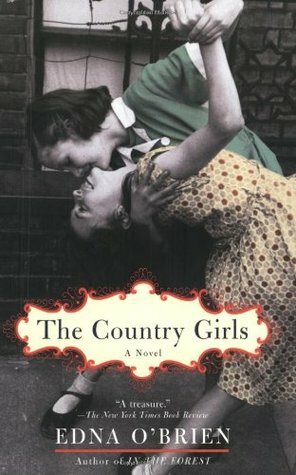
Review 2560: #ReadingIrelandMonth25! The Country Girls

I have read many very long books lately, so I was relieved when I realized that I could read the first novel, The Country Girls, in my big volume of The Country Girls Trilogy for 1960 for my A Century of Books project. Not only that, but it would qualify for Reading Ireland, too! I will certainly read the other two novels at some time after I finish my project.

Just as another indication of the unreliability of Goodread’s list of books published for specific years, it had listed the trilogy for 1960, but all three novels as a single volume were not published until 1986.

Caithleen is 14 at the beginning of the novel, a naïve, gawky girl from Western Ireland. She adores her mother, but they both fear her father when he is drunk. Their house is falling apart, because her father routinely blows all their money when he is drunk and returns angry and violent.

The other girl is Baba, Caithleen’s frenemy, who bullies her in public and pulls nasty tricks on her but sometimes shows she likes her. Otherwise, her friends are older men—Hickey, who has worked for the family for years; the inappropriately behaving Jack, a pub owner; and Mr. Gentleman, who is middle aged and married but whom she likes.

Caithleen has won a scholarship to a convent school and is dismayed to learn that Baba is going, too. She tells Caithleen that scholarships are stupid, and her parents are paying her way, which obviously is better. Both girls are dreading going. Caithleen is suffering through a party at Baba’s house when People come to tell her that her mother is dead, having drowned crossing the Shannon when a boat sank.

The novel follows the two girls until they are 18 and get a room together in Dublin. All the while, Baba specializes in talking the more sensible and cautious Caithleen into situations where she gets into trouble.

This novel is a bit sad, a little funny, and true-to-life, as the naïve Caithleen follows more worldly Baba in their unusual friendship. Some tension is evoked by Caithleen’s continued friendship with Mr. Gentleman. I liked the novel very much and intend to read the other two of the trilogy.

Related Posts

Girl

Wild Decembers

A Girl Is a Half-Formed Thing

Review 2559: What Sheep Do in Iceland When Nobody’s Around

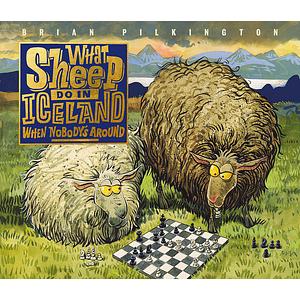
A friend of mine has family in Denmark, and she brought back this little novelty book that came from Iceland. It has great illustrations and is silly and funny, and very imaginative.

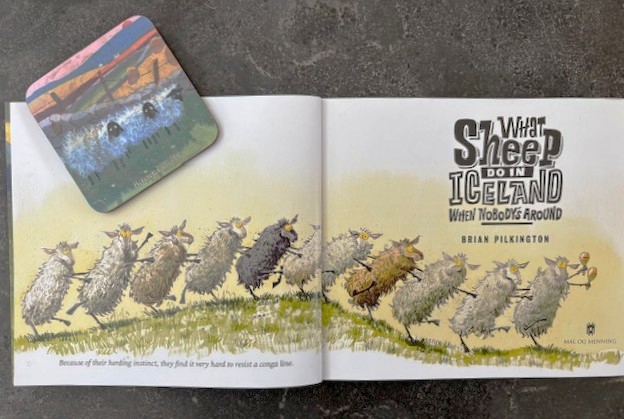
The tone of the book is set right away by the cover and title page. I took a photo of the title page, and here is its caption, in case it’s unreadable in the photo, “Because of their herding instinct, they find it very hard to resist a conga line.”

The book starts out with a more-or-less straightforward history of how sheep got to Iceland and of Icelandic sheep-keeping details, but then it just becomes silly and full of puns, with great illustrations. Perfect for a lighthearted quarter hour of reading.

I jumped into this book from a great pile of tomes I accumulated for my A Century of Books project. In fact, I interrupted my reading of Angle of Repose because I was so behind in my number of books read (I usually am reading at least 20 books ahead of my blog, and I was only in at about 13) that I wanted to dash something off and also relax. Angle of Repose is good but for some reason I kept getting distracted from it, so it took me more than a week—an unheard-of rate for fiction, even at 600+ pages.

The bad news about this book is that from the U. S. I ended up ordering it from Iceland! I assume my friend got it in Denmark, so maybe European readers will be able to find it. Anyway, it’s a hoot! I’m categorizing it as children’s literature, because I have no other suitable place for it, but I think it is probably just as funny for adults. Maybe even more so.

Related Posts

Moominsummer Madness

Summer Lightning

The Flying Books of Mr. Morris Lessmore

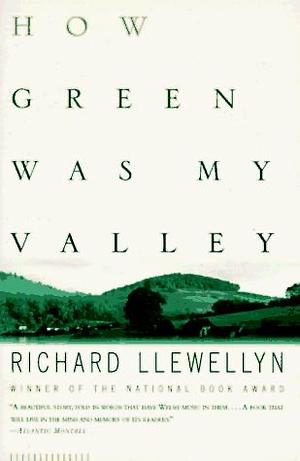
Review 2558: Reading Wales Month ’25! How Green Was My Valley

I didn’t intend to participate in Reading Wales Month ’25 this year, but when this novel fit into my A Century of Books project, I decided to fit it in for Reading Wales, too.

Such a lovely book this is, especially in the music of its language. It’s the story of the Morgans, a family of Welsh coal miners, told by one of its youngest members, Huw.

Huw is six when the novel begins. His family and those of the others in the valley are relatively prosperous, but there are signs that with the mine owners, profits are becoming more important than the lives of the men. Huw’s older brother Davy has been reading socialist literature and is talking about a union, but his father is against it.

It’s difficult to summarize this book because it’s full of family events, one of the first being Huw’s brother Ivor’s marriage to Bronwen. And there is the arrival of Mr. Gruffydd, the new preacher. But overarching everything for the men is the work, as pay gets lower and the valley begins experiencing periods of hunger and want.

I was as entranced by this novel as I ever was, the family so upright, god-fearing, and loyal, Huw’s experiences as he grows up. All the while, the fate of the valley is foreshadowed as Huw speaks from his 60s, returning just as his house is being destroyed by a mountain of slag.

It’s a real page-turner, not in terms of action, but for other reasons.

Related Posts

Germinal

That Lass O’Lowries

Country Dance

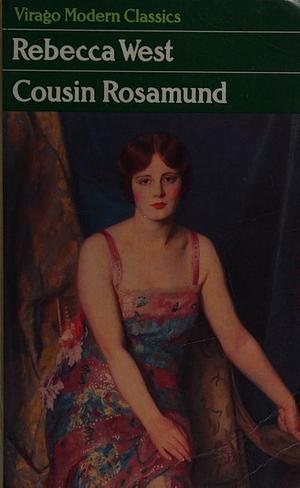
Review 2557: Cousin Rosamund

Cousin Rosamund is the third book in West’s Aubrey family series, and another was planned. I couldn’t tell when reading it, but apparently West died before finishing the second book, This Real Night, so it was finished from fragments and notes. Cousin Rosamund was assembled the same way, although West’s style was certainly captured.

The novel begins sometime after World War I. The three Aubrey girls, Rose, Mary, and Cordelia, are the only ones left of their immediate family, but they still have Nancy, their old neighbor; their beloved cousin Rosamund; and the folks at the pub on the river. Cordelia, always the odd girl out, has become less hostile since her marriage.

Cousin Rosamund comes to tell Rose and Mary that Nancy is getting married. Mary especially is upset that Nancy didn’t tell her herself, but Rosamund’s intercession, they see later, is needed so that they will not judge Oswald on sight, for he is gauche, awkward, unattractive, and a man-‘splainer. But he loves Nancy and she him, and that is all that counts.

Rose and Mary are now both successful and famous pianists, but neither is interested in marriage. Mary, in fact, seems to find the idea distasteful, although they are glad to see their friends happily married.

Inexplicably, Rosamund, who has been working as a nurse, marries one of her patients. The girls are all hurt not to be invited to the wedding, and once they meet the groom, they are horrified. His name is Nestor Ganymedios, and he is rich, extremely vulgar, ugly, and probably dishonest in his business dealings. Further, they see almost nothing of her after the marriage.

This novel is about marriage, which West examines in several incarnations. Unfortunately, it ends before we learn the explanation for Rosamund’s choice, but at least West’s intentions for the entire series are explained in the Afterword of my Penguin edition.

All of these novels are beautifully written and show a profound knowledge of music. The girls have such pure affection for the small number of people they love, yet the characters are realistically drawn.

One caveat: In this novel some characters express outdated ideas about homosexuality, and some homosexual characters in the book are not depicted positively, but it is not clear when she wrote this. The first book went to the publishers in 1956, at which point she said she planned three more, but though she finished most of the second, she seemed unable to finish this one. It ends about 1929, but her original plans were to encompass World War II.

Although it doesn’t fit the context of what I’ve discussed, I wanted to give just one quote because it’s so lucid and poetically spare. Rose has seemingly been disgusted with her long-time friend Oliver after he told her the story of his first marriage despite its end not being his fault. She is really fighting a battle with herself. She enters a room where he is.

He came toward me and I became rigid with disgust, it seemed certain that I must die when he touched me, but instead, of course, I lived.

Wow.

Related Posts

The Fountain Overflows

This Real Night

They Were Sisters

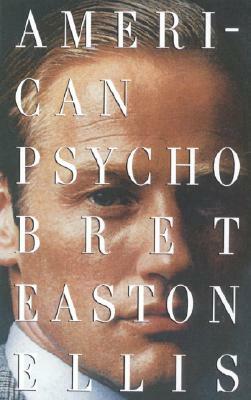
Review 2556: American Psycho

Is American Psycho a satire? a commentary about the manners and morals of young, wealthy Wall Street workers? a faithful depiction of New York City in its seedy 1980s days? a horror story? Or is it all of these things? Whatever it is, it was a DNF for me, although I made it almost halfway through.

I avoided this novel when it first came out, because it caused so much buzz that I knew what it was about. However, when I saw it filled a hole in my A Century of Books project, I was curious enough to get it from the library.

Patrick Bateman is a twenty-six-year-old Wall Street executive who is obsessed by the condition of his body, what everyone around him is wearing, what he eats and drinks, and how wealthy he is. (In a scene halfway through the book, he is angry because two prostitutes he has hired don’t care what he does for a living or how much he makes.) He is exactly like all his friends and coworkers. In fact, a running joke is that they all look so alike that they keep mistaking one guy for another. There is one difference for Patrick. He is a serial killer.

As far as I could tell, there’s no plot to this novel, just one scene after another of he and his friends at dinner or in a club trying to impress each other, and then going out to score drugs or sex. Every outfit he and his friends wear is described, especially including brand names. (In the first scene with two girls in it, they are wearing clothes by the same designers in the same colors.)

There is nothing to like in any of these people. They are racist, sexist, homophobic monsters who think it’s funny to hold money out to a homeless person and then snatch it back. The only seeming difference between Patrick and his friends at first is that he occasionally says something extremely hateful and violent, sometimes to his friends, that they don’t seem to hear (possibly because they’re almost always in loud places or they are so self-absorbed that they’re not listening). At first, these utterances and similar thoughts seem to be just very strange fantasies, but anyone who has heard anything about the book knows they are not.

The novel faithfully depicts late 1980s New York, in all its glitter and grit. It also includes conversations that, unless the men are being crass, hateful, or rude, read as if they’re taken verbatim from stereo brochures, etiquette and travel books. One chapter, thankfully short, is about the musical artistry of Genesis, and two pages are devoted to describing Patrick’s stereo system. The technology passages, meant to show how up-to-date and expensive his equipment is, now just seem dated.

The serial killer part doesn’t come out right away, but I don’t feel like I’m writing spoilers because this book is so famous. There are hints that something else is up besides partying, especially when he describes his expensive overcoat streaked in something dark or is furious because he can’t communicate with his Chinese laundry about getting the blood off his clothes. Finally, after about a hundred pages, he brutally murders a homeless man and cripples his dog. That’s just the first one he describes (although apparently not the first one he commits) and I read another 50 pages but ultimately couldn’t face the nail gun (which I only know about from seeing a picture from the movie).

I hated, hated, hated, this book.

Related Posts

Bright Young Women

Famous Trials

The Midnight Assassin: Panic, Scandal, and the Hunt for America’s First Serial Killer