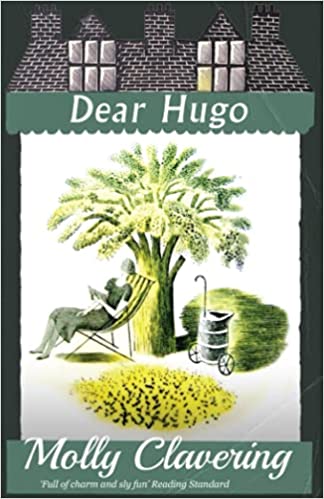
Sara Montieth has purchased a cottage in a small Scottish border village because she wants a quiet life. She has chosen the village because it was the boyhood home of her young man Ivo, who was killed in the war, and his brother Hugo.
Dear Hugo is an epistemological novel, consisting of Sara’s letters to Hugo, whom she has never met and who lives in Nairobi. It is about her daily life, the people she likes and dislikes, the events in the village. Although she wanted a quiet life, hers becomes eventful, especially after her cousin, who is newly remarried, asks her to take his 13-year-old son Arthur during his school holidays. It’s even more so after Hugo sends them a puppy.
The letters are written with gentle humor and describe all the village characters, including Miss Bonaly, a disapproving spinster who urges Sara not to hire Madge Marchbanks, an unwed mother, to help with the housework, and kindly, perceptive Mrs. Keith, who knew Ivo and Hugo as boys.
This is a nice, gentle novel of village life. It didn’t end quite the way I was hoping for, but I enjoyed it very much.
I enjoyed Mary Lawson’s Crow Lake a great deal, but I can say for A Town Called Solace that at some point, I became so interested in it that I had a hard time putting it down to get other things done. This novel is set in 1972 and in memories of 30 years earlier.
Eight-year-old Clara is nearly stunned with anxiety. Her 15-year-old sister Rose ran away from home several weeks ago. Clara’s mother is prostrate from grief, and Clara stays looking out the window, because Rose told her she’d send her a message and she doesn’t want to miss it. She takes comfort in going next door to feed Mrs. Orchard’s cat, as she asked her to do when she went into the hospital. The only thing is, a strange man has appeared in Mrs. Orchard’s house.
That man is Liam. Clara’s parents haven’t told her that Mrs. Orchard died and left everything to Liam, a neighbor from her previous home she took care of when he was four. Liam has recently split from his wife and on hearing of his inheritance, quit his job and traveled all the way to far northern Ontario to Solace. His plan is to fix up the house and sell it, but he slowly becomes involved with people in the community.
Liam, who has always had trouble forming relationships, understands that Clara believes her parents are liars because they didn’t tell her about Mrs. Orchard, so he extends her the peace of his home when he is out so that she can feed and play with the cat, and the courtesy of not lying to her. Periodically, the novel returns a few months in time to Mrs. Orchard’s last few days and her memories of that time when Liam was four years old.
I absolutely loved this book. It is about loneliness and the difference that love and understanding can make in a life. It is empathetic without being mawkish or manipulative. It’s also about ordinary people trying to make their way through life. It’s lovely.
Crook O’Lune is named for a crook of the Lune River in the remote fells of Lancashire. Here, Chief Inspector Robert Macdonald has chosen to take his holidays, staying with his friends Giles and Kate Hoggett. Macdonald is looking for a farm to buy for his retirement.
For his part, Gilbert Woolfall has just inherited his uncle’s farm at High Glimmerdale, called Aikengill, and is trying to decide what to do with it. His commonsense tells him to sell it, since his career is in Leeds, but he wants to keep it.
Almost as soon as he settles down to examine some old papers, he has a series of visitors. Betty Fell wants to marry Jock Shearling, but they don’t want to live with her parents. She asks if she and Jock can look after the house for him, but in Gilbert’s mind, that depends on the housekeeper, Mrs. Ramsden, who can’t decide whether to return to her family or stay. Then the Rector, Mr. Tupper, arrives indignant that Gilbert’s uncle left nothing to the church. Gilbert knows that his uncle felt there was something suspicious about an ancient grant by the family to the local school and church that was reappropriated for another community, so he is not inclined to help Mr. Tupper. Finally, his neighbor, Daniel Herdwick, wants to buy some property.
Although it seems that we’re never to learn much about Macdonald (except that he wants to own dairy cows), I enjoy Lorac’s books because they focus a little more on characters than the usual Golden Age mysteries do and because the crimes aren’t over-complicated and unlikely. This one also has a lot of descriptions of this area of England, enough to make me want to go there. In that respect, It reminds me of some of the Molly Clavering books and their setting in the Scottish borderlands.The night after Gilbert returns to the city, two things happen: there is a fire in his cellar that kills Mrs. Ramsden, who was supposed to be away for the night, and some sheep are stolen from the valley.
Macdonald begins investigating certain aspects of the case, like who the stranger seen in a wild area of the fells might be or which way the sheep could have been driven out of the area.
I received this book from the publisher in exchange for a free and fair review.
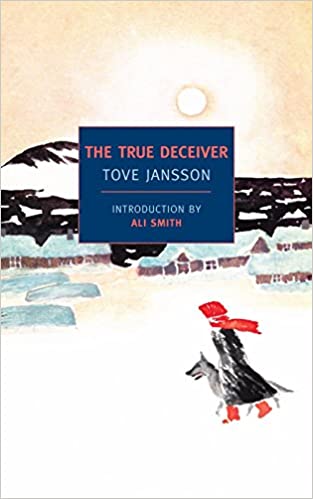
Katri and Mats Kling are village outcasts. Katri has strange yellow eyes, and although she is very intelligent, she is brusque and has no people skills. Mats, her younger brother, is more accepted but seems lacking intellectually and is treated like the village idiot.
Katri wants two things—to find a stable home for Mats and get enough money to build the boat he wants. To do so, she has her eye on Anna Aemelin, an elderly illustrator of children’s books who is known for her drawings of fluffy bunnies.
By offering to deliver Anna’s mail and supplies, Katri begins to strike up a relationship with Anna and is soon working in her house as a servant. Katri sees herself as scrupulously honest, and when she begins managing Anna’s finances, she sees that Anna is being cheated by almost everyone. But Anna doesn’t want to see some things.
This is an odd little book about deception and self-deception but also about an unusual kind of friendship. Katri is accompanied everywhere with a wolf-like dog, while Anna is compared to the fluffy bunnies covered in flowers that she draws all over her meticulous forest floorscapes. But by the end of the novel, the dog has run away, and Anna has stopped painting bunnies.
For a good example of a narrator who doesn’t understand social cues, read Eleanor Oliphant Is Completely Fine and try harder.
P. S. Do you think it’s likely that a person being questioned by the police would, when asked about another person, sit there and think about every conversation they had with them, taking about six pages to do so? I don’t.
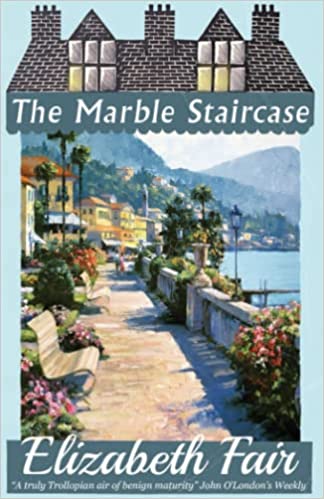
Charlotte Moley’s life has always been dominated by others—first by her mother, both before and after her marriage and widowhood, and lately by her grown daughter Alison. Her only periods of happiness were the summers she spent in Italy with Mrs. Gamalion and her friends, long ago before the war.
Now Mrs. Gamalion has left her a legacy—a run-down old house in the coastal town of Nything. It is full of souvenirs of the old lady’s life, and Charlotte decides to keep it and stay there, much to Alison’s disapproval. She also begins making friends, meeting Mrs. Bateman her first night on the esplanade.
Charlotte has old memories to deal with, both of her mother and her disappointment in love one Italian summer. It is Mrs. Gamalion’s gift that helps Charlotte let go of the past and make herself a new life.
I have read and enjoyed every Elizabeth Fair novel that Dean Street Press has reissued. This is another very pleasant light read in this imprint.
I received this book from the publisher in exchange for a free and fair review.
I’ve been enjoying Elly Griffiths’ Ruth Galloway series, so I thought I’d give her Brighton series a try. This first novel takes place in 1950.
Detective Inspector Edgar Stephens has always felt a little self-conscious about part of his war work. After helping the Finnish army, he was part of a group of illusionists called the Magic Men, whose job was to fool the Germans that Scotland was well defended. After a disastrous accident in which their commanding officer, Charis, was killed, they were disbanded. Edgar had been in love with Charis.
Edgar’s best friend in the service was Max Mephisto, a well-known magician. Although Edgar hasn’t seen Max since the Magic Men were disbanded, the murder of a young woman reminds him of Max. She has been cut in three, like the illusion of the Zig Zag Girl, which Max created. Edgar consults with Max, who is still working the magic circuit, and his old army group members begin showing up. There is Diablo, an old magician who spends most of his time drinking; Bill, the carpenter who constructed the illusions; and Tony Mullholland, a magician whom no one much liked.
But before the rest of these characters reappear, Max recognizes the murder victim as Ethel, his assistant who left the act to get married. When Tony Mullholland is also killed, Edgar begins to believe that the crimes are connected somehow to the Magic Men.
Although I feel I need to get to know Edgar better and he didn’t really figure out much in this case, the series promises to provide more entertainment. Max is an interesting character, and I’m curious how he’ll be brought into the upcoming mysteries.
I know I’m losing participants, but thanks to those who are keeping up or made comments about Private Enterprise, the first post-war book in the series. Those who participated were
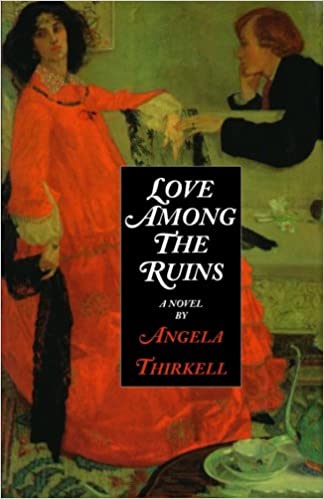
Our book for October is Love Among the Ruins. I will be posting my review on Monday, October 31. I hope that one or two people will read along with me, as I am getting into completely uncharted waters.
It’s hard for me to start this review without a swear word. A lot of discussion goes on in this novel about the nature of love and the difference between men and women, but to my mind, neither Maupassant nor his characters have a clue. But maybe that’s what I should expect from a man who died of syphilis at 43.
André Mariolle is a young, rich dilettante who is introduced into the salon of Madame de Burne, who is known for her flirtations that only go so far. Her salon is peopled with artists and musicians, and Mariolle is an outlier, but she embarks on a flirtation as she would with any new man in her circle. However, this time the two fall in love and begin an affaire.
Mariolle isn’t happy for long, though, because he wants her to be as madly in love with him as he is with her. We get lots of descriptions of heart rendings.
The Introduction to the novel includes a quote about it from Tolstoy: “In this last novel the author does not know who is to be loved and who is to be hated, nor does the reader know it, consequently he does not believe in the events described and is not interested in them.” Yes.