Review 2622: The Adversary

The Adversary is a powerful book, about a 19th century Newfoundland community and the feud that affects everyone. It is a brutal story about brutal people.

The novel begins at a wedding. Abe Strapp, the son of the richest man in town, is due to marry Anna Morels, the daughter of a powerful man from further down the coast. This match was made by Abe’s father in the hopes it would steady Abe, who is a vicious coward and bully. But there is an objection. The Widow Caines brings forward her servant, Imogen Purchase, claiming she is pregnant after being raped by Abe. Mr. Morels removes his daughter, and the Widow suggests Abe marry Imogen instead. Strapp and the Widow clearly hate each other, and it is with surprise that we learn they are brother and sister.

The Widow’s hatred stems from watching her brother being spoiled and given anything he wanted. While she had a head for business and worked for years at her father’s side, the business went to Abe when he died. Before that, he arranged his daughter’s marriage with Caines, a wealthy old man. She married him but split with her father. Upon her husband’s death, she took to wearing men’s clothes and running his business.

Abe has an employee and godfather, Beadle Clinch, who tries to keep him from his worst excesses. He is revolted by the Widow’s daring to dress like a man and run a business. So, even though he is supposed to be a religious man, he connives with Abe to try to bring her down. Despite appearances, he is the adversary. One of the things he does is to get Abe made a magistrate, hoping that will bring him a sense of responsibility. Instead, with two henchmen the Beadle put with him to restrain him, he runs rampant. Almost immediately, he murders a man for having signed a statement against him. Nothing happens to him.

For a long time, I was sympathetic to the Widow, thinking she was being misrepresented because she was different. There are some innocent people in town, but they are pulled into the maelstrom of this feud. And the Widow turns out to be as bad as her brother.

The novel is written more like a chronicle of the town, so that many of the characters are one-sided. The most developed are the two siblings, whose feud affects everyone. But even without the hatred for his sister, Abe is a vile person indeed, and his antics affect a lot of people.

Related Posts

Galore

River Thieves

Sweetland

Review 2621: #RIPXX: The Body in the Road

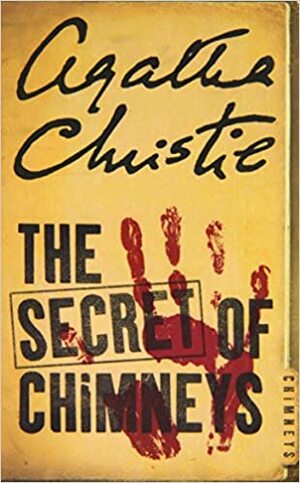
I saw this book labeled Hermann Glide #1, but he actually appeared in Moray Dalton’s previous novel. Both times, he came in at the end. Or maybe I read them out of order by mistake.

Linda Merle takes a job playing the piano in a tearoom, and performing with her is the beautiful but not very talented Violet Hunter on the violin. The girls become friendly right away, and when Linda learns that Violet hates living with the oppressive friend of her mother, she invites her to move in with her. Miss Coleman has already taken a dislike to Linda and hates her when Violet moves out.

When Linda inherits a small sum, she decides to purchase a cottage in the country and open a tearoom, but she only feels she can do it with Violet’s help.

She and Violet spend a weekend working at the cottage. But Violet doesn’t help much and finally tells her she can do better for herself by going to London. Linda is angry that she didn’t tell her earlier, so they argue. Then on a walk they find a dog that’s been hit by a car. Linda sends Violet up to the main road to get help while she goes the other way, to a large house. Outside the house she meets a small, furtive man who says she’ll get no help at the house, where he works, and another man, David Chant, who is the new Lord Haringdon. Chant goes back with her, but the dog is gone and so is Violet.

Linda assumes Violet got a ride into town, but when she returns to their room, Violet isn’t there and she has taken nothing. Linda wants to go to the police, but Chant advises her to wait while he looks into it. He suspects that Violet’s disappearance may have something to do with the large house Linda went to. It is occupied by a Dr. Saigon, who is rumored to be running a mental hospital there.

While he is looking into that, the police get involved, and they clearly have trouble with Linda’s story. Then they find Violet’s body, buried in back of Linda’s cottage.

I thought that part of this novel was going to go way off the rails, but it didn’t. It becomes suspenseful as things start to stack up against Linda. It also does a good job of misdirection.

I received this book from the publishers in exchange for a free and fair review.

Related Posts

One by One They Disappeared

The Night of Fear

The Warrielaw Jewel

WWW Wednesday

It’s the first Wednesday of the month, so it’s time for WWW Wednesday, an idea I borrowed from David Chazan, The Chocolate Lady, who borrowed it from someone else. For this feature, I report

  • What I am reading now
  • What I just finished reading
  • What I intend to read next

This is something you can participate in, too, if you want, by leaving comments about what you’ve been reading or plan to read.

What I am reading now

I just started Long Island, Colm Tóibín’s sequel to Brooklyn, which picks up 20 years later. It’s been a year or so since I read Brooklyn, and I find myself struggling to remember where it left off, but so far I am enjoying it. I just started it yesterday. Eilis is now a mother of two, living on Long Island in the same street as her husband’s Italian family, and right away she finds out something disturbing.

What I just finished reading

I just finished the fourth book in Ellis Peters’ Cadfael series, Saint Peter’s Fair. I am enjoying this series, particularly because of the characters and the time setting, as I have read about this period before. The series is definitely getting more political, but we’ll just see where it goes.

What I will read next

Sometimes I change my mind at the last minute, and this time, when I was looking through my pile of books to read, I picked out The Western Wind by Samantha Harvey, only to realize that I read it some time ago for my Walter Scott project and somehow picked up a copy of it later. So, I went back to the shelf and picked out Shakespeare: The Man Who Pays the Rent by Judy Dench. I was in Ashland, Oregon, two years ago for the Oregon Shakespeare Festival and picked up this book at the town’s excellent bookstore. It has finally worked its way to the top of the pile, and it’s about time I read it.

So, what about you? What’s going on with your reading?

Review 2620: The Librarian

In the 1950s, Sylvia Blackwell arrives in the town of East Mole to take on the job of children’s librarian. She finds no fault with the dingy, musty cottage her landlady shows her. She is excited to start her new job and life.

Although she and her boss seem to dislike each other on sight, she fits into the town fairly quickly, reorganizing and making improvements to the library, making friends with her neighbors, all but one, and tutoring her landlady’s granddaughter, Lizzy, for the 11+ exams with the help of her whip-smart, eleven-year-old neighbor, Sam.

By and large, she is a creature of good will, happy to help the children learn and become interested in books. And she is succeeding but has not reckoned with the effects of envy and ill-will. And she makes the mistake of falling in love with a married man.

I thought at first that this book was going to be a standard romance, but it deals with some more complex issues. I was interested in the story and ultimately found it somewhat touching. I felt, though, that Part Two, the last 40 pages, was a little too concerned with trying to tie up every little loose end and takes too long to do it.

Related Posts

The Bookshop

The Library Book

The Sentence

Review 2619: Literary Wives! Novel About My Wife

Today is another review for the Literary Wives blogging club, in which we discuss the depiction of wives in fiction. If you have read the book, please participate by leaving comments on any of our blogs.

Be sure to read the reviews and comments of the other wives!

My Review

We learn that Tom’s wife Ann is dead, but we don’t know the cause for some time. Tom looks backward and forward along the length of their marriage trying to figure things out. Occasionally, there are scenes from a book manuscript he’s writing in which he tries to guess what happened in Fiji the weekend they got married.

Tom is a script writer, and Ann makes models of cancer patients’ body parts at a hospital. Feeling as if things are going well financially, they have bought a house in Hackney with a lot more space than in their flat. They love it, but when Tom’s job writing a script falls through because the producer leaves the field, he begins having trouble finding another job.

Ann comes home from work one day and tells Tom that she saw her stalker at work. Tom didn’t know she had a stalker, but she says she has spotted him in various places.

Ann is Australian, but she has lost her accent and doesn’t want to talk about her past. She also has a history with drugs that she doesn’t seem as secretive about.

It’s hard to explain what this book is about without giving away too much, although the blurb just goes ahead and gives away a major plot point. Let’s just say that the tension level rises as Ann becomes pregnant, Tom still can’t find a job, and Ann’s behavior becomes manic at times. Ann has secrets, but she’s not telling.

Without being a thriller but more an intense examination of a relationship, Perkins’ book skillfully builds up quite a bit of suspense. It liked it a lot.

What does this book say about wives or about the experience of being a wife?

Literary Wives logo

The relationship described here is so complex that it’s hard to answer that question. Or maybe Ann is complex and unknowable. At first, I was annoyed at this couple and their dismissive attitude to many people and things, but after a while I began to like them. Still, Tom doesn’t seem to notice that Ann’s behavior is getting more bizarre, that she keeps going after ant infestations, for example, when Tom doesn’t see any ants or staying up all night rearranging things into weird configurations. In the meantime, he is both spending money and worrying about debt. Both of them seem to be subject to compulsive behaviors.

Secrets seem to be a big problem. Although the two love each other, they both keep their secrets—Ann about her life in Australia and the events in Fiji, Tom about the state of his work, and the level of their debt. The culmination comes when she finds out the truth about another secret he’s keeping.

Related Posts

Euphoria

The Amateur Wife

Happenstance

If I Gave the Award

With my review of English Magic, I have completed reading the shortlist of the 2022 James Tait Black Fiction Prize. That means it’s time for my feature, where I decide whether the judges got it right. This year is particularly difficult for me, because none of the books really clicked with me.

I’ll start with the winner, A Shock by Keith Ridgway. In my review, I quoted its pretentious back cover: “a rondel of interlocking stories . . . both deracinated and potent with place, druggy but shot through with a terrifying penetration of reality.” I reviewed this book two years ago, and frankly, I can’t remember a thing about it. It is a collection of short stories that I did not find engaging, centered around a pub.

English Magic by Uschi Gatward is another collection of short stories. I found it a mixed bag, although all of its details are minutely observed. Again, I didn’t connect with many of the stories, several of which were about political activism. Unlike A Shock, they didn’t seem to have any common themes or settings.

Libertie by Kaitlyn Greenidge would seem to be more my style, about a black young woman in pre-Civil War Brooklyn whose mother wants her to become a doctor. However, Libertie behaves like a spoiled modern young woman, and one of my pet peeves is a historical novel that has its characters behave out of their time. Libertie makes one bad decision after another, wasting her opportunities.

That leaves Memorial by Bryan Washington, about the relationship between two gay young men, one a black American and one Japanese, and their relationships to their families. Although its humor went over my head and I don’t like explicit sex, I found it perceptive and sometimes touching.

I am winding up this project, and I think I only have three books to read for the 2021 shortlist. My library hasn’t had any of them.

Review 2618: English Magic

I read English Magic for my James Tait Black prize project, which I have been trying to wrap up—or let’s say intending to wrap up but not doing much about it. The book is a slim volume of 12 short stories.

Repeat readers of my blog may know that I sometimes have problems with short stories. Generally, this is because if I am enjoying something, I want it to last. I had problems with some of these stories for other reasons.

“The Clinic” is a mysterious story. It seems to be set in a dystopian future. A couple has a baby who is very advanced, and they are trying to hide that from the clinic at which they apparently have mandatory visits. Their plan is to run away and hide somewhere in the woods. I think this story was intentionally written to leave readers with lots of unanswered questions, but I found it frustrating, and I can handle a lot of ambiguity.

“My Brother Is Back” continues the air of mystery. It’s about a Muslim being returned to England after years of imprisonment in the U. S. It’s written like a snapshot of time.

I stopped reading “Oh Whistle And” because of its style. It’s a fairly long story written in snippets of reports about surveillance of unions and socialists and about whistle blowing, mentioning Edward Snowden. All the characters, if you can call them that, are referred to by single letters of the alphabet. I lost track of who was who almost immediately, and the snippets were driving me crazy.

And skipping way ahead, Gatward uses almost the same approach for “Lammas,” except the snippets are pieces of conversations. This story is about a man’s long life in activism. It was difficult for me to track what I took to be real events, but I think it went back and forth in time. I finished this story.

“Beltane” is a slightly surreal story about a couple who join a Beltane ceremony, and related to that is the story “Samhain,” about a woman’s unique way to celebrate Halloween. Or is it a sinister way? I found both stories interesting.

“The Bird” is about a bird trapped in a couple’s chimney. Both it and “On Margate Sands” are vivid snapshots again, just capturing small events.

I won’t cover all the stories, but I will mention two that feature the same character. In “Lurve,” Ollie is an artist, not a successful one, who hangs out with Lottie and Jeanie, two party girls, and occasionally writes art reviews. He and his friends live in squalor. He is in love with Jeanie, but she doesn’t care.

We meet Ollie again in “Backgammon,” in which he is hanging out with his old girlfriend Ria. Ria used to be an addict, but she is getting her act together. Ollie is not an addict, but he realizes his act is not together.

Overall, I felt indifferent to many of the stories, although they are minutely observed and well written. I’m guessing the title is ironically intended.

Related Posts

The Candy House

In a Strange Room

Sudden Traveler

Review 2617: James

I read James for both my Booker Prize project and my Pulitzer Prize project, which it won. As most people know by now, it is a retelling of Twain’s Huckleberry Finn from the point of view of the slave Jim.

Aside from generally following the plot of the original novel about halfway, James lives in a world that is much more violent than Huck Finn ever had a clue about. Everett has taken a liberty and placed the novel in the 1860s instead of the 1830s or 40s, when the original is set. He also uses a striking conceit: when among themselves the black characters speak more correctly—and sometimes with erudition—than most of the white characters.

Jim—or James, as he prefers to be called—hears that Judge Thatcher is going to sell him away from his wife and daughter, so he escapes and hides on a small island on the Mississippi. Unfortunately for him, Huck Finn has heard that his dreaded father is in town, so he fakes his own death and runs away, ending up on the same island. James realizes right away that he will be blamed for Huck’s “death.”

The two stick together and encounter what Huck thinks of as adventures and James knows to be deadly peril. After all, a slave is lynched later in the book for being suspected of stealing the nub of a pencil from his master. That he did steal it to give to James is beside the point.

The book follows the same basic outlines as Huckleberry Finn until James gets away from the Duke and the Dauphin, but all of the situations are much more deadly. Eventually, James’s inner anger is set aflame.

Everett’s books are witty, but they are also very angry. And he has some surprises for us.

This novel is fast moving and really interesting. It shows facets of the “institution” of slavery in all its ugliness.

Related Posts

The Trees

Erasure

Incidents in the Life of a Slave Girl

Review 2616: The Stone Door

Leonora Carrington was a surrealist painter (that’s her work on the cover) and obviously also a surrealist writer. I first encountered her when I read Down Below, her memoir about her escape from Nazi-occupied France across the Pyrenees to Spain while she was hallucinating from mental illness. That book was hallucinatory for certain, but The Stone Door is even more so.

I don’t think I can describe the plot, if there is one, but it involves several groups of people, a lot of symbolism, a series of bizarre fairy-tale-like stories, and attempts to open a stone door. Gabriel Weisz Carrington, the author’s son, doesn’t attempt to provide a synopsis in the introduction, just mentions scenes in it and quotes from it. There is an afterword by Anna Watz that analyzes it, but trying to read that analysis made me tired.

Frankly, if this hadn’t been a very short book, I wouldn’t have finished. It was difficult to follow and meant very little to me.

Related Posts

Down Below

Owls Do Cry

Giving Up the Ghost