Review 1630: Scot & Soda

I love Catriona McPherson’s creepy psychological thrillers mostly set in small Scottish villages, and I like her Dandy McGilver mysteries set in the early 20th century, but I wasn’t that enamored with the first of her Last Ditch mysteries, set in present-day Northern California. However, I thought I’d give the second one a try before giving up.

One of the jokes of this series is a Scottish woman as fish out of water. That woman is Lexie Campbell, a therapist. She and her friends from the Last Ditch Motel are on the houseboat she inherited in the last book having a Halloween party. When Lexie tries to haul up the beer she has been cooling in the water, up comes a corpse with a wig and tam on its head. Lexie also spots a ring on his finger.

Detective Mike Rankinson is not exactly Lexie’s friend, so after Lexie has a brain wave when she reads a newspaper story about a horse having its tail cut off, Mike isn’t very receptive. Lexie thinks the events remind her of the poem “Tam O’Shanter.” In pursuit of this idea, she and some friends visit a derelict farm that has a burial mound in it, and they find some women’s clothing with blood on it.

The hallmarks of this series are Lexie’s tiffs with the police, the plethora of eccentric friends, and the confusing myriad of clues. One of the things I like about McPherson’s other books is the atmosphere of small Scottish villages, with some eccentric characters but ones that are mostly believable. In this series, McPherson has tried to create the same atmosphere with the eccentric inhabitants of the Last Ditch Motel. First, there are so many of them that I can’t keep them straight. Second, this doesn’t really work in a big city setting, even in California. Finally, I find her making mistakes about the American side of things, having her characters say things Americans wouldn’t say, for example. I think I won’t be reading more of this series.

Related Posts

Scot Free

As She Left It

Strangers at the Gate

Review 1629: The Guest List

A wild Irish island seems the perfect place for the wedding of Jules and Will. The only building on it is an old mansion that has been fabulously restored and is just big enough for the wedding party and the hosts, Aoife and Freddie. The high-society guests will be boated in the day of the wedding.

The bride and groom seem to be a golden couple. They are both physically attractive, and Jules runs a fashion magazine while Will is a rising star in television. However, someone in the wedding party is a sociopath who has ruined many lives, and future victims are on the guest list.

The novel begins in a tumultuous storm during the wedding reception when a waitress thinks she sees a body outside. From there it flashes back to the points of view of several characters beginning the day before the wedding. And the plot thickens.

I recently read Foley’s The Hunting Party and thought it was excellent. So, I was happy to read The Guest List. At first, though, it seemed awfully familiar—a remote island instead of a remote forest, the same kind of upper crusty characters. However, I was soon sucked in, because Foley is great with a suspenseful plot.

I did have one caveat. If there are several narrators in a book, they should not only have different concerns, which these characters do, but they should sound like different people. I don’t think Foley is quite so successful at that.

Related Posts

The Hunting Party

Strangers at the Gate

In a Dark, Dark Wood

Review 1628: My Brilliant Career

My Brilliant Career is the very singular story of the life of an Australian teenage girl in the bush in 1901. It isn’t so much singular in its plot as in the personality of Sybilla, the main character.

Sybilla’s childhood was spent in comfort, as her father was a prosperous horse breeder. However, well before this novel starts, her father decided his talents were wasted, so he sold his property and began a career selling livestock. He was unsuccessful, and he drank heavily in entertaining prospective clients. When the novel opens, the family is struggling to run a dairy with their father drinking away the money he makes selling butter.

Sybilla at 15 is admittedly a difficult person. Her mother never gives her a kind word, and her mother and brother twit her about her lack of good looks. She angrily resents their life of endless labor for no good result. In fact, she is ambitious to become more but doesn’t know how to go about it. She is an unusual mixture of self-confidence and self-hatred and is angry and rebellious.

Sybilla’s mother becomes so angry with her that she arranges for her to go live with her grandmother farther into the bush. There, Sybilla blossoms under the kind treatment of her grandmother, her uncle, and her Aunt Helen. Her aunt helps her look more attractive, but she never gets over believing she is ugly. Romance even seems to be on the horizon.

I thought that the view this novel gives of Australian frontier life is really interesting, and I was particularly struck by the amount of traffic going by the grandmother’s house and the number of homeless, wandering men. However, I was unsatisfied with this novel, and to explain why, I have to include spoilers, so be warned.

A feminist interpretation of this novel might be that the heroine chooses to write a novel instead of getting married, but that would be ignoring Sybilla’s difficult personality. Continually, she seems to bite off her nose to spite her face, and in the case of marriage, really declines out of a sense of inferiority rather than anything else. She decides not to marry Harold and stays in a life she hates because she can’t believe he loves her and she thinks she is not good enough for him. I find that really frustrating. It’s not that I wanted a romantic ending so much as it bothered me how she never really sees herself or is able to get past being told how worthless she is by her mother.

I read this for my Classics Club list.

Related Posts

I Await the Devil’s Coming

My Mortal Enemy

The Vet’s Daughter

Review 1627: Hamnet

Hamnet explores the impulses that went into the writing of Hamlet as well as important moments in the marriage of Anne Hathaway and William Shakespeare. It focuses on grief from the death of a beloved son.

The similarity in the name of Shakespeare’s son to that of his most famous protagonist is obvious, but I wasn’t aware until this book came out that they were essentially the same name. O’Farrell’s newest book parallels scenes from the beginning of Shakespeare’s relationship with Anne (called Agnes in the book) with the hours leading up to Hamnet’s death from bubonic plague. Then she deals with the aftermath.

At first, I wasn’t sure how much I liked all the invention going on, as O’Farrell depicts Agnes as a sort of wild child/wise woman. Then I reflected that little is known of the couple and that I was reading fiction, after all. I don’t like it when a fiction writer knowingly distorts the truth, but O’Farrell stuck fairly closely to the few known facts. The result I found extremely touching. I admit that my initial reluctance to buy in changed to my being completely rapt. This is a deft, sensitive story that concentrates mostly on Agnes’s feelings and reactions.

Related Posts

The Vanishing Act of Esme Lennox

Instructions for a Heatwave

The Secret Life of William Shakespeare

Review 1626: The Overstory

Best of Ten!
When I read Richard Powers’ Orfeo a while back, I remember thinking he was quite a bit more intelligent than I am, perhaps a little intimidatingly so, yet I enjoyed his book. Reading The Overstory hasn’t changed my impression of that, except that it blew me away.

The novel is about trees. When am I ever going to write that sentence again? The metaphor for its structure that I’ve seen used is that it’s like the rings around a tree as you go inward, but that’s not the metaphor Powers actually uses. He starts in a section called “Roots” and works his way up the tree.

That doesn’t sound very interesting, but it is. He starts with a group of characters who have all formed an interest in trees. Nick Hoel’s ancestor planted some chestnuts on their farm in Iowa, and his father began a giant project of photographing the last one standing every month for years so that you could see its growth if you used the photos like a flip book. Nick, an artist, has re-created these photos as drawings. Mimi Ma’s father Winston brought with him from China an ancient scroll about trees and took his family out to enjoy the national parks. Adam Appich is a budding natural scientist until judges in a science fair think he cheated and he ends up in psychology. Still, his father planted a different tree for each of his children. Douglas Pavlicek is saved by a tree when his plane crashes in Vietnam, and so on. These lives are described as fables on the cover of the book, but the characters felt authentic, which they seldom do in fables.

In the next section, “Trunk,” Powers begins to intertwine the lives of these characters with each other and with the issue of what is happening to the trees in our world and what the consequences will be. Along the way, Powers tells us all kinds of interesting and astonishing things about trees.

The novel takes place between about the 50’s and 60’s to the present, but the meat of it is in the 70’s or 80’s when there was a lot of activism around the protection of our forests. Some characters’ stories begin earlier with their parents or ancestors.

But the novel is really about the trees, and as Powers’ sections go up the tree, the view becomes a little more abstract, while not losing sight of the human characters. I had a few issues with it. The role of Neelay Mehta, a boy of Indian descent who becomes a master computer programmer, doesn’t really fit well into the story. I understand his role but find it unconvincing. Finally, the last section is so abstract, it’s a bit above my head, although I enjoy Powers’ tendency to present readers with lots of ideas.

Overall, though, I was just entranced by this novel, so much so that I fear for our species. If anything is going to make you pay attention to climate change, it’s this book. Now that I live in a state where clear cutting is going on all around me, not just in the national and state forests but by the purchasers of practically every plot of land, who think nothing of devastating their lots for the money, I have been more struck by what we are doing to our forests. This is an incredible novel. I read it for my Booker Prize project, and it won the Pulitzer.

Related Posts

Orfeo

The Sunken Cathedral

Oryx and Crake

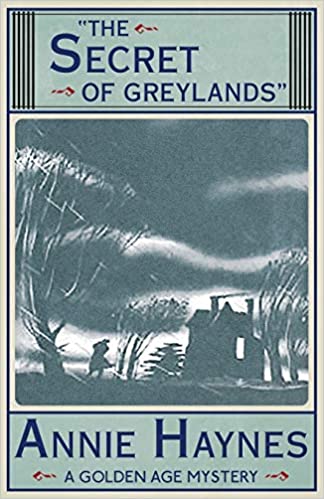
Review 1625: The Secret of Greylands

The Secret of Greylands is 219 pages long, and I realized the secret about 200 pages before the main characters did. Nevertheless, I found it an entertaining gothic novel, atmospheric and with a likable heroine.

Lady Cynthia Letchingham flees her new marriage when she finds out her husband ruined her best friend. She has nowhere to go, but she recently received a curious letter from her older cousin Hannah asking her to visit, so she goes to Hannah’s home at Greylands.

Hannah has married a much younger man, Mr. Gillman, who tries to send Cynthia away when she arrives, only to become a little more welcoming after he finds out she is friendless and hasn’t seen her cousin since she was a little girl. He doesn’t allow her to see Hannah, who he says has fallen and is paralyzed in bed, until the arrival of another cousin, Sybil. Cynthia has to admit Sybil looks a lot like Hannah when she finally meets her.

Hannah seems excitable and demanding but not fearful as she was in her letter except of having her door unlocked. Nevertheless, Cynthia can’t help feeling something is amiss, as she confides to the neighbor, Mr. Heriot.

There are plenty of hints about the true state of affairs at Greylands, including an outspoken parrot, a neglected pet, mysterious goings on at night, and Hannah’s hands, but the characters can’t quite put two and two together. However, it’s a fun read, and I enjoyed it. This is another good older (1924) mystery from Dean Street Press.

Related Posts

The Haunted Hotel

The Grey Woman

Dark Enchantment

Review 1624: The First Bad Man

The First Bad Man reminds me of Eleanor Oliphant is Completely Fine except on steroids, because while Eleanor is one eccentric character, all of the characters in The First Bad Man are eccentric. I read this novel for my James Tait Black project.

Cheryl Glickman is a bit out of touch with normal human behavior. She is a manager at Open Palm, a martial arts/exercise company, but she has been directed to work from home and is only allowed to come to work one day a week. She has long been in love with Phillip Bettelheim, a much older man who is on the company’s board, and she consults a chromotherapist to treat her Globus hystericus simply because Phillip recommended him and so she can report back to him about it.

When she gets up enough nerve to show some interest in him (she tells him “When in doubt, give a shout”), he responds by asking her whether she thinks it is okay for an older man to be interested in a much younger woman. Of course, Cheryl takes this question as an interest in herself, when he is really in love with a 16-year-old schoolgirl. He continues to update her on the progress of the relationship, using explicit language.

As if this weren’t enough, the owners of the business, who routinely help themselves to supplies and the employees’ food when they come in, force her to let their daughter Clee stay with her until she gets a job. Clee is surly and unresponsive and then physically abusive when Cheryl tries to set her eccentric limits.

Cheryl herself is positive and upbeat most of the time, although she has arranged her house so that it doesn’t get dirty during occasional depressions simply by having almost no possessions. But Cheryl finds a way to respond to Clee that is unusual but ends up lightening the atmosphere.

Cheryl has some surprises for herself in this bizarre but touching novel. I liked it very much.

Related Posts

Eleanor Oliphant Is Completely Fine

Where’d You Go, Bernadette?

This Is Your Life, Harriet Chance!

Review 1623: Miss Buncle Married

How delighted I was to find out there are actually three Miss Buncle books, since I so enjoyed the first one. This second book continues in the first one’s gently comic, frothy tradition.

Barbara Buncle, now Mrs. Abbott, and her husband Arthur discover that neither of them has been enjoying their active social life. There seems to be no way to get out of it, however, because they’re such a popular couple. So, they decide to move.

It takes Barbara quite a long time to find a house she likes. When she visits a solicitor’s office in Wandlebury to view a house, Mr. Tupper, mistaking her for another client, has her read a will in which Lady Chevis Cobbe leaves her estate to her niece, Jeronina Cobbe, on the condition that she isn’t married before Lady Chevis Cobbe’s death. When Mr. Tupper discovers his mistake, he is horrified and asks Barbara to tell no one.

Of course, Barbara discovers the perfect house in Wandlebury, and after extensive renovations, it makes a comfortable home. Shortly after moving there, Barbara meets Jeronina Cobbe, who goes by Jerry. She is an industrious young woman who has been running her own stables to keep afloat financially and is worried about her brother Archie. Archie has been living beyond his means because he thinks he is Lady Chevis Cobbe’s heir.

Barbara and Arthur have been enjoying their new home immensely when Barbara discovers that Arthur’s nephew Sam has fallen in love with Jerry. So, without telling anyone about the will, Barbara feels she must keep the two apart until ailing Lady Chevis Cobbe dies, so as not to deprive Jerry of her inheritance.

If anything, I enjoyed this novel more than I did Miss Buncle’s Book. It’s a lot of fun.

Related Posts

Miss Buncle’s Book

Vittoria Cottage

The Baker’s Daughter

Review 1622: Literary Wives! Every Note Played

Today is another review for the Literary Wives blogging club, in which we discuss the depiction of wives in fiction. If you have read the book, please participate by leaving comments on any of our blogs.

We’re sorry to lose Cynthia, who is discontinuing her blog.

Be sure to read the reviews and comments of the other wives!

Eva of Paperback Princess
Lynn of Smoke and Mirrors
Naomi of Consumed By Ink

* * *

Lisa Genova has certainly identified her niche, which is, with her knowledge of neuroscience, to write a compelling story that also allows readers to understand what it is like to suffer from a neurological disease. In this novel, the disease is ALS.

After a difficult divorce, Karina and Richard have had little to do with each other. Both are harboring a great deal of anger and resentment.

Richard, a world-class pianist, has put his career ahead of his marriage and family. However, he has been diagnosed with ALS and is becoming less able to care for himself.

Karina has avoided the friends the two had as a couple, but she finally attends an event and feels she is being blamed for the breakup. It is there she learns about Richard’s condition. She goes to see him, but the visit is toxic.

Eventually, though, she visits him again, only to find that even with home health care, he needs help, round-the-clock care. He broke with his family years ago, so he has no one. Karina arranges for him to move in with her.

Although at times I felt that some of the descriptions of the illness or the treatment were a little too detailed, I was ultimately very touched by this novel. Genova gives herself a tougher job this time by making the patient a less likable character, but she handles the situation insightfully.

What does this book say about wives or about the experience of being a wife?

This is a novel that saves some of its insights into Karina’s character for the end. We know that both Karina and Richard are angry with each other, but it is much clearer why Karina is angry than why Richard is until well into the novel, so I don’t see how I can discuss this without spoilers.

The immediate causes of the breakup of their marriage seem to be Richard’s serial infidelities and his neglect of Karina and daughter Grace over a period of years. However, as the novel progresses, we learn of Karina’s contribution to the failure of their marriage. First, she changed from classical piano, in which she was more gifted than Richard, to jazz piano, partly because she loved jazz but partly so as to not compete with Richard. She made a place for herself playing in clubs in New York, but then Richard took a position in Boston without consulting her, and there was no jazz scene in Boston.

Literary Wives logo

Passive aggressively, Karina made excuses for herself not to try to continue her career—pregnancy, motherhood, resentment of Richard—and then more resentment as he began neglecting them and womanizing. Finally, there is the aggressive act of making sure she can’t conceive while pretending to try to conceive.

What makes the novel more than a litany of marriage complaints is how the situation causes both characters to understand the other, to acknowledge their own faults and trespasses, and to forgive.

Related Posts

Still Alice

The Dutch House

The Blazing World

Review 1621: Bewildering Cares

Camilla Lacely has been asked by a friend to tell her more about her life in a letter, so she decides to keep a diary for a week. Aside from daily entries, though, this diary reads more like a first-person narrative.

Camilla is the wife of a vicar running a household on very little money, attempting to attend numerous meetings every day, and trying to help parishioners so they don’t all bother her husband with concerns as silly as what the railroad schedule is. Her cares range from how to afford a new hat to how to provide dinner for an unexpected visit by the archdeacon to how to be more attentive to her religious thoughts and prayers.

This novel is touching and amusing, although I occasionally found it bewildering. As an unreligious American from another time, I didn’t always understand the references or jokes. Because of its focus on religion, I had more difficulty with it than with other novels from this period.

The novel does have a plot. It concerns the furor of the village residents when the unbending, self-righteous curate gives a sermon preaching pacifism. Since this novel takes place in the early days of World War II and many villagers have relatives in the war, this sermon causes an uproar.

Related Posts

Chatterton Square

Somewhere in England

The Splendid and the Vile