Review 1611: Flights

Olga Tokarczuk’s Drive Your Plow over the Bones of the Dead was unusual, but Flights is in another category altogether. It is an attempt to escape the boundaries of the conventional, linear novel.

It is written in snippets. Some of them are stories, some little vignettes or descriptions, some philosophical discursions, some lectures. Some of the snippets are observations from the narrator, an unnamed Polish woman who likes to be constantly traveling, often to visit museums of curiosities, particularly those that show the workings of the human body. Others are stories about people she meets on her journeys or just stories about people. Some of the threads recur in the novel; most do not.

Anchoring all this is the theme of movement. Most of the stories are about people on their way somewhere else, occasionally to another stage of being.

This novel was widely acclaimed by reviewers and won the Man International Prize. How it will strike ordinary readers is hard to guess. It’s not easy. I found parts of it interesting and other parts, particularly the lectures on travel psychology, which I doubt anyone would ever listen to, incomprehensible, as if someone were reading from a dense professional manual.

Related Posts

Drive Your Plow over the Bones of the Dead

Outline

Ducks, Newburyport

Review 1610: The Talisman

The Talisman is one of Sir Walter Scott’s adventure novels set during the Crusades. In terms of how much it’s based in actual history, I would say not much. For one thing, Scott has bought the myth of the Knights Templar being evil and makes the Templar Grand Master the villain of this novel. However, my 1907 edition of the novel is being marketed as a boys’ adventure story, so its roots are more in the tradition of the old-fashioned romance, in the medieval sense of the word, than based in actual history. I know very little about the Crusades but enough to have spotted several things that were wrong. However, I also don’t know what sources Scott may have been using for his historical background.

On the crusade with Richard the Lion Heart, Sir Kenneth is a poor Scottish knight of no illustrious family who has fallen in love with Edith Plantagenet, a lady far above his station. King Richard being ill, Sir Kenneth travels to see a holy man and healer whom the court ladies are visiting. While he is there, Edith gives him a sign of her favor.

He returns to the Christian camp bringing Saladin’s doctor with him to cure Richard. Richard is quickly cured and almost immediately gets involved in a dispute about his banner. The jealous Austrian Duke has placed his banner next to Richard’s and Richard is furious. He removes the Duke’s banner quite rudely and orders Sir Kenneth to guard his own.

Sir Kenneth is guarding the banner when he receives a message from Lady Edith asking him to come to her immediately. At first, he refuses, but then he thinks this may be his only chance to see her, and he will be gone only a few minutes. He decides to leave his dog to guard the banner. But when he arrives, he finds out that Queen Berengaria has summoned him in Edith’s name as part of a bet and a joke. Kenneth returns to his post to find the banner gone and his dog wounded. Now he’s in big trouble for disobeying orders.

Aside from this silly plot, there is also the one where King Richard’s Christian rivals are plotting against him. Eventually, they send an assassin after him.

This novel is a farrago of nonsense that just gets sillier as it goes on, and it is also written very floridly, combining archaic-sounding speeches with the flowery, elaborate speech of the East. Interestingly enough, Scott was heavily criticized for inventing a Plantagenet (Edith) but not for the more egregious historical errors in this novel. It is not Scott at his best.

Related Posts

Guy Mannering

Waverly

The Templars: The Rise and Spectacular Fall of God’s Holy Warriors

Review 1609: A Literature of Their Own: British Woman Novelists from Brontë to Lessing

When I began reading A Literature of Their Own, I expected it to be more like Showalter’s A Jury of Her Peers, which is a recounting of the achievements and short biographies of American women writers, many of whom have been ignored by academics, critics, and editors. A Literature of Their Own, however, is Showalter’s dissertation, one of the first feminist literary studies, published originally in 1977 and revised in the 90’s.

As such, it is a bit scholarly and outdated and at times felt mired in its feminist analysis. Showalter divides 19th and 20th century works by women into three categories: female, feminine, and feminist. When she first made this distinction, it seemed artificial and overly finicky, but as she described the fiction, it clearly belonged in three categories, becoming more likely to be feminist in later times.

This book was a bit of a struggle at times. I have two lit degrees, but I don’t necessarily enjoy reading more academic works. Some sections were very interesting while others devolved into a sort of classic early feminist analysis. Still, for those interested in feminism and literature, this is probably a must read. And I’m not implying I am not, just that sometimes the analysis from such a limited viewpoint seems stretched and overdone.

Related Posts

A Jury of Her Peers: American Woman Writers from Anne Bradstreet to Annie Proulx

The Possessed: Adventures with Russian Books and the People Who Read Them

My Life in Middlemarch

Review 1608: Tea Is So Intoxicating

Tea Is So Intoxicating is a froth of a novel with silly characters but comments to make about marriage, snobbery, and class. No one here is very likable, but quite a bit is funny.

Retired Commander David Tompkins has purchased a picturesque but inconvenient thatched cottage and decides to run a tea shop from it. His wife Germayne thinks it’s a terrible idea, but nothing can dissuade him. He thinks he is a wonderful cook and has visions of a first-class tea shop; however, his pilot meal, meant to induce an investment from his friend George, is a disaster. In fact, David can’t cook, but he is convinced that he can produce his estimated 240 delicious teas a day.

There is some hope for the cooking, because a friend at his previous job sends along Mimi, a Viennese cake baker. Mimi does know how to bake a delicious cake, but she is the type of woman whom all men want to protect and all woman distrust on sight, apparently with cause.

Mrs. Arbroath used to run the village in 1910 and thinks it is still 1910, not 1950. She is determined to keep the tea shop from opening, claiming it will attract lots of riffraff. In addition, the owner of the local pub, who has opened a small tea garden (also opposed by Mrs. Arbroath), thinks they’ll be too much competition so has barred the Tompkins from his pub.

As all this becomes (I can’t help it) a tempest in a teapot, Charmayne begins to wonder if she shouldn’t have stayed with her first husband, Nigel.

I received a copy of this book from the publishers in exchange for a free and fair review.

Related Posts

The Diary of a Provincial Lady

Nightingale Wood

The Bookshop

Review 1607: Classic Club Spin Result! Oroonoko

Oroonoko was the book I read for the most recent Classics Club Spin.

There are a few issues with Oroonoko, written in 1688, that might make it difficult for modern audiences. One is its acceptance of slavery (although the novel is viewed as an anti-slavery work), which in the 17th century was common. The other is its graphic violence, albeit off-stage, that has caused it to vary in popularity over time. (Apparently, even the publishers of the edition I read disagree about that, because the introduction says it was Behn’s most popular work, while the cover says it was not popular because of its violence.)

Oroonoko has been considered a novella rather than a biography, because there is no proof that such a man as Oroonoko existed. However, Behn writes the story in first person as herself, and she is known to have traveled to Suriname, where it is set, shortly before the country was ceded to the Dutch. So, you have to wonder.

Oroonoko is the prince of Coramantien, an area of present-day Ghana, the grandson of the king and a great warrior. He falls in love with a beautiful girl named Imoinda, and she becomes his betrothed. However, his grandfather sends her the veil, which means she is to join his harem, even though because of her betrothal that is a break in custom. Oroonoko must accept this or die, so he accepts it with the thought that the king cannot live long. However, the king regrets his actions and sees no way to recover the situation except if Imoinda was dead. He is unable to have her killed, though, so he sells her into slavery and tells Oroonoko she is dead.

Next, an English slave trader whom Oroonoko has sold slaves to invites him for a party. When he and his men have passed out from drink, the trader enslaves them and puts them on a ship for Suriname. It is when Oroonoko arrives there that he meets Behn and her traveling companions and they learn his tale and witness the rest of the action.

Oroonoko might be the first anti-slavery novel, although it is subtle about it, showing some of its abuses while not really commenting on the institution. Behn reveals the dastardly behavior of a series of Europeans, either slavers or owners, and contrasts it with the image she builds up of a handsome, brave, forthright black hero and his beautiful and virtuous lady. The novel was interesting, but I found what happened to Imoinda through Oroonoko’s hands distressing and the reflection of a type of thinking I did not find admirable—and the ending was just plain gruesome.

Related Posts

Merivel: A Man of His Time

Washington Black

Sugar Money

Review 1606: Things in Jars

Best of Ten!
Imagine a combination of Victorian London, eccentric Dickensian characters, a ghost, a supernatural being of myth, hints of Jane Eyre, a lady detective, and a fascination with grotesqueries. If you can imagine that, you might go a little way toward a hint of this unusual novel.

Bridie Devine, the lady detective, has been summoned to a graveyard to examine a dead body found shackled in a crypt. On her way there, she meets a scantily clad ghost, a prizefighter named Ruby Doyle who claims to know her and follows her on her investigation.

But her real case comes when a baronet, Edward Berwick, hires her through a Doctor Harbin to find his daughter, who has been kidnapped. As she investigates, though, she learns the girl was kept alone in the west wing of the house, and there are rumors that she is some kind of unusual creature. Bridie begins to believe that the kidnappers, who probably include the girl’s nurse, mean to sell her to some freak show.

Bridie has had a difficult path in life that includes encounters when she was a girl with Gideon Eames, the sociopathic son of a man who rescued her from poverty. She thought he was dead but finds he is very much alive.

With an entourage that includes a seven-foot-tall bearded maid, Bridie braves dead bodies, attacks, and visits to a freak show as she pursues the child. We know from the beginning that the girl was taken by her nurse and Dr. Harbin, but more people who want to possess or sell this valuable child get involved.

Not quite at first but very soon I got so involved with this quirky novel that I dropped everything until I finished it. Bridie is an interesting, likable character, Ruby Doyle is endearing even though he is constantly hitching up his drawers, the novel was exciting at times. What’s not to love?

Related Posts

Big Sky

A Long Way from Home

The Storied Life of A. J. Fikry

Review 1605: The Hunting Party

Before I start my review, just a little note to let you know I am so far ahead on my reviews (lots of reading going on and not much else) that for a while, at least, I am returning to posting four times a week. I picked now to do it since it’s right after my anniversary post. The new posting day will be Friday, so that you can expect posts on this blog on Mondays, Tuesdays, Thursdays, and Fridays for at least the next few months.

_______________________

The setup of The Hunting Party felt an awful lot like Ruth Ware’s In a Dark, Dark Wood—a group of old friends getting together in a modern open-plan house out in the middle of nowhere, mayhem to follow. However, I found this book to be much more suspenseful.

For one thing, almost immediately upon the novel’s opening, a death is reported by Heather, an employee of the lodge. But we don’t know who has been killed or under what circumstances. Then the novel alternates in time—in the present with Heather’s point of view and in the past with that of the others.

I won’t enumerate all the guests, because there are nine, and some of them also seem oddly familiar if you’ve read Ware’s novel. There’s Miranda, beautiful but accustomed to getting her own way and horribly bitchy at times, and her husband Julien, who has some secrets. Emma is Miranda’s imitator and admirer, and her boyfriend Mark has a thing for Miranda. Katie, Miranda’s best friend, has been remote of late, to Miranda’s resentment. Aside from several other members of this party, there are an Icelandic couple, described as feral. Oh, and in case that’s not enough suspects, the gamekeeper, Doug, has periods of memory lapse and a violent past, and there is the Highland Ripper out there somewhere.

In any case, this novel pretty much nails you to your seat as it proceeds at a rip-roaring pace. Lots of nasty characters, lots of fun to read.

Related Posts

In a Dark, Dark Wood

The Body Lies

The Vanishing

Ninth Anniversary! Top Ten Books of the Year!

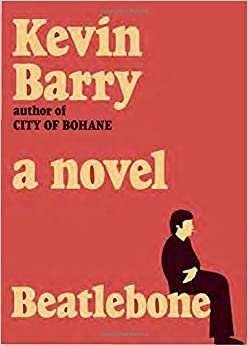
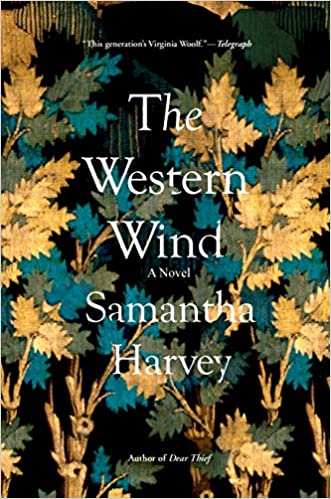
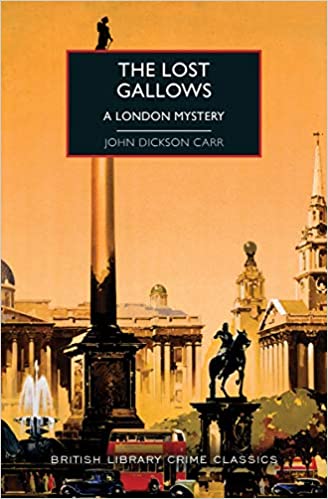
Here it is my ninth anniversary for this blog, and as is my custom, I am posting my top ten of the books I reviewed this year.

This year is much more of a mixed bag than last year. I have selected a classic science fiction novel, several contemporary novels, several historical novels, a couple of older classic novels, and even one ghost story. Although a few nonfiction novels made it to my periodic best book posts, I selected all fiction books this time. I read one of the books on the list for the Literary Wives blogging club and another for one of my projects, the Booker prize project.

So, with no more ado, here is my top ten list, in the order that I reviewed the books:

Review 1604: The Stone of Chastity

The Stone of Chastity is a bit of comic froth, poking fun at small village life. It is a farrago of nonsense populated by eccentric characters.

Nicholas Pounce is a recent Oxford graduate who has yet to find a purpose in life and isn’t trying very hard to find one. So, his uncle, Professor Pounce, announces that Nicholas can be his unpaid research assistant in a special project.

Professor Pounce has found an intriguing reference to folklore in an old diary. It asserts that there is a stone in a brook in the village of Gillenham, the Stone of Chastity. If a chaste woman steps on it, she can get across the brook, but if an unchaste woman steps on it, she will fall into the water. Note that no one seems to be testing the men.

When Nicholas and his mother arrive at the Old Manor in Gillenham, the house the professor has taken, they find Professor Pounce already in residence along with a sultry beauty, Carmen Smith, whose presence is unexplained.

The first thing Professor Pounce does is make up a questionnaire and have Nicholas distribute it throughout the village. Although the professor asks if people have heard about the stone, he also asks about the recipients’ chastity and seems unable to understand that the villagers may be offended.

They are, and a lot of resentment begins to build, especially among the cohorts of Mrs. Pye, an angry and fanatical Nonconformist. Also offended is the vicar’s wife, who has the Boy Scouts collect all the surveys and destroy them. The professor only gets one back, but it contains electrifying information: not only has the recipient heard of the Stone of Chastity, she has it in her scullery!

I have to admit this novel is funny, although much of its humor is slightly politically incorrect these days. It is funny enough that even this recap is making me laugh. Aside from the silly subject matter, it pokes fun at the rustic villagers as well as the researchers, although it bases a lot of its humor on class.

Full disclosure: I received a copy of this book from the publishers in exchange for a free and fair review.

Related Posts

All Done by Kindness

Not at Home

Love in a Cold Climate