 Best of Ten!
Today is another review for the Literary Wives blogging club, in which we discuss the depiction of wives in fiction. If you have read the book, please participate by leaving comments on any of our blogs.We would like to welcome a new member, Cynthia of I Love Days, who joins us for the first time today!
Be sure to read the reviews and comments of the other wives!
Cynthia of I Love Days
Eva of Paperback Princess
Lynn of Smoke and Mirrors
Naomi of Consumed By Ink
* * *
I seldom have been disappointed by Ann Patchett even when I’m not sure the book sounds interesting. The phrase “dark fairy tale” was used on the blurb of The Dutch House, which inclined me not to read the book, as that is not my thing, but I’m glad I did.
Danny and Maeve Conroy live in the Dutch House with their father. The house has this name not because of its style but because a Dutch family lived there. It is an astounding house, glass throughout the first floor and enormous, with a third-floor ballroom.
Danny and Maeve’s mother left when Danny was four. He doesn’t remember her, but Maeve, who is seven years older, wishes she could see her mother again. Living with an aloof father, Cyril, they become dependent upon each other. Still, they are happy in the Dutch House.
At first, they don’t pay much attention to Cyril’s friend, Andrea. She is around for a while then disappears for months, then reappears. They don’t like her, but their father doesn’t seem to like her that much, either. However, they realize later as adults, Andrea wanted the Dutch House, and Andrea gets what she wants. Eventually, their father marries her, and she moves in with her small daughters, Norma and Bright.
When Danny is still in high school, Cyril unexpectedly dies, and the events following his death provide the meat of this novel. Told by jumping backward and forward in time, the story is about how Cyril’s miscalculation in buying the Dutch House for a wife who is appalled by it echoes across three generations of the family. It’s a warm novel about cruelty and kindness, rage and forgiveness. It’s really good.
What does this novel say about wives or about the experience of being a wife?
I liked this book much more for our purposes in this club than some of the others, because it provides a nuanced and insightful look at marriage, although not necessarily at the individuals who are part of the marriage. Warning that this section contains spoilers, although I have tried to be suggestive with them rather than stating exactly what they are.
Although the primary focus of this novel is on the relationship between Danny and Maeve and how it is affected by the losses of first their mother and then their inheritance, there are three marriages that are secondary but still important to the book. The first is the marriage between Danny and Maeve’s parents, Cyril and Elna, which we don’t understand until the end of the book.
Cyril marries Elna immediately after removing her from a convent and never really understands what she is like. Elna, who is dedicated to serving the poor, thinks she is married to a poor man, while Cyril has been amassing money through building purchases and development. Cyril surprises Elna twice with disastrous results that reveal how little he understands her, once when he buys her the Dutch House, which she finds overwhelming, and once when he decides to get her portrait painted, an activity she will not suffer. Elna leaves the marriage when she finds no role for herself in her own house because of loving servants who won’t allow her to do anything. The purpose of her life is service, so she cannot bear this purposelessness. I don’t think she intends to desert them, but when Maeve develops diabetes from stress after she goes to India, Cyril tells Elna never to return and divorces her.
Cyril is never communicative, but he seemingly shuts down after she leaves, to the point where both his children believe that he doesn’t like children. I think this shows that he loves Elna but is incapable of understanding her. Elna realizes she has made a mistake by going to India but is too embarrassed to return home. I think Cyril believes that the way to cherish her is to shower her with things, when really she needs a voice, a role, and a feeling of being needed.
The next marriage is that of Cyril and Andrea. This marriage is almost always filtered through the perceptions of Danny and Maeve, who dislike Andrea. To their minds, Andrea marries Cyril to get the house, and while that is certainly true, we learn at the end of the book that there was more to it. Why Cyril marries Andrea is more difficult to comprehend, especially when we realize that Cyril believes Andrea married him for the house, too. He doesn’t understand her any better than he understood Elna. That becomes clear when he fails to protect his children’s interests because “Andrea is a good mother.” We can guess that Andrea’s looks, youth, and interest in the house are the attractions, and her sheer force of will results in a marriage that has disastrous results for her stepchildren. It’s hard to force myself to see this marriage from Andrea’s side because of her behavior, though, to her stepchildren. I suspect that, like Celeste does with Maeve, Andrea has blamed all her problems with Cyril on his children.
The final marriage is that of Danny and Celeste. A revealing scene takes place after they have been married for years, when Danny says he sees her clearly for just a second and then stops seeing her. Danny marries her because she’s the least trouble of any women he’s dated, and he continues the family tradition of paying little attention to her. Celeste, for her part, wants to marry a doctor and assumes he will become one because he is in medical school, even though he has no intention of doing so (but doesn’t tell her that, because he’s as communicative with her as Cyril was with everyone). She also is very jealous of Maeve and blames her for everything she doesn’t like about their marriage. Although her objections often seem demanding and irrational, it is clear that Danny is much closer to Maeve than to Celeste, which would be frustrating to any wife.
 Again, it’s hard for me to see the situation clearly from her point of view, because although Danny marries her, perhaps like Cyril marries Andrea, out of some weird sort of inertia, the kind that continues along a path even though the path is clearly the wrong one, she is also super self-adapting until they are actually married. And that’s the quality he marries her for, so the change in adaptability seems like a deception. Although he claims to spend a lot of time defending Maeve to Celeste and vice versa, he doesn’t seem to see Celeste’s positive characteristics except in a few situations.
So, what does this novel say about wives? A wife, like anyone else, needs to be seen and understood and needs a purpose that is fulfilling to her. Also, it is clear that for two of the wives, it was easier for them to blame their marital problems on other people than to look more closely at the person they married. So, in this novel, neither the husbands nor the wives truly see each other.
Related Posts
Commonwealth
State of Wonder
The Glass Room

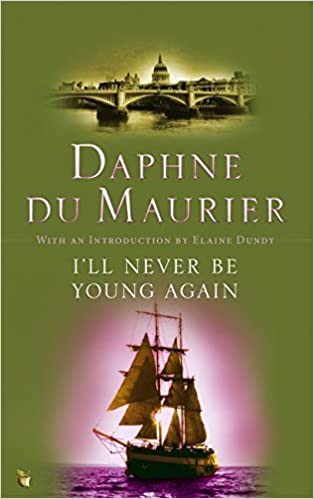 Richard is a young man who has always felt his famous poet father disdained him. He is about to throw himself into the Thames when he is stopped by an older man named Jake. With Jake, he sets out as a common seaman on a Norwegian barque.





 What? Me Read?