Review 2607: Girls in Their Married Bliss

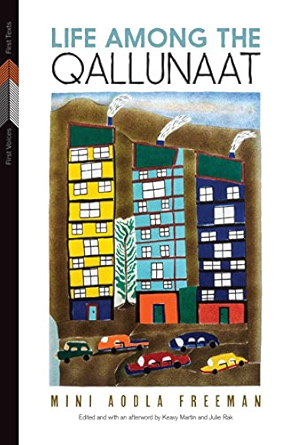
Girls in Their Married Bliss is the third book in O’Brien’s Country Girls trilogy. It is unusual in that the book is narrated partially by Baba instead of only by Kate (once Caithleen). Baba is much more cynical, and she lets us know right away that neither of them is happy.

At the end of the last book, Kate seemed to give up on her older married boyfriend Eugene and moved to England with Baba. However, she was pregnant, so, in the interim between the last book and this one, she and Eugene eventually married. But Kate felt ignored in their marriage except for Eugene’s myriad of rules, so she began a romantic relationship with another man. They have just broken up at the beginning of this novel when Eugene discovers his love letters. He turns cruel and nasty and threatens to take away Kate’s little boy.

Baba has married a rich, crude builder for his money. After she has an unsatisfying encounter with a drummer, she becomes pregnant. Despite her knowing attitude, neither she nor Kate have any idea what to do, and they must do something, as Baba’s husband is not big on sex.

This is an affecting trilogy, but I thought this book was the most affecting. I don’t want to say any more about what happens, though.

Related Posts

The Country Girls

The Lonely Girl

Wild Decembers

Review 2606: The Episode at Toledo

I have read two books before by Ann Bridge, and although the second was more action-oriented, they were both about women discovering themselves. When I looked for another book by Bridge, I wasn’t aware that she had a series of books around the character of Julia Probyn. This is one of them, about the sixth or seventh in the series, but Julia is a fairly minor character.

Although not necessary, it might have helped me to have read the series in order. I say this mostly because of the beginning and ending of this book, where Julia is ensconced in Scotland among a throng of characters who are briefly introduced but who I couldn’t keep straight.

Julia receives a guarded letter from her Hungarian friend, Hetty, who has married Richard Atherley, British Counsellor in Madrid. Hetta has asked that Julia send either her husband or another friend in Intelligence out to Madrid but doesn’t explain why. However, her friends speculate that it might have to do with a visiting admiral from the U. S. Understand that this is definitely a Cold War novel, and that in an earlier novel Hetta was kidnapped and drugged by Hungarian Communists.

Hetta is worried because she thinks she has recognized the American ambassador’s chauffeur as a Hungarian Communist who years ago closed down the Catholic school that Hetta attended and took delight in harassing the nuns. However, when Hetta’s friends check into it, they find he has been vetted by American security, so they dismiss her fears.

Of course, he is a bad guy, so Hetta does her best to keep the American admiral out of the ambassador’s car. On a tour to Toledo, Hetta suffers a broken arm after she delays the car, which has an accident trying to get to a rendezvous in time to be blown up.

After that, Hetta’s husband arranges for her to go to Portugal to stay with friends, as she is pregnant. But danger follows her.

For a suspense novel, there is a lot more inactivity than activity. Somehow the balance wasn’t right. There is also a lot of repetition as one group after another discusses the same incidents. Frankly, the last 20 pages or so, in which Hetta’s husband arranges for her to return to Scotland and she does, seem to have no relevance except to return to Julia and her confusing pack of relatives and friends. I would estimate that 50-75 pages of this novel are unnecessary.

Was Bridge tired of writing this series? She seems to have been trying to replicate the kind of books Mary Stewart wrote, combining suspense with lovely descriptions of the country. But Stewart did it better. This book also reminds me of the Cold War books of Helen MacInnes, only they have more romance.

To really evaluate this series, I think I would have to start with the first one, which I plan to do. In the meantime, I prefer her other books.

Related Posts

Illyrian Spring

A Place to Stand

Station Wagon in Spain

If I Gave the Award

With my review of Absolutely & Forever, I have finished the shortlisted books for the 2024 Walter Scott Prize for Historical Fiction. That means it’s time for my feature, where I decide whether the judges got it right.

This year was quite an international event, with books set in England, Trinidad, Italy, Malaysia, and Canada making the shortlist. As has become my usual approach, I’ll start with the books I liked least.

It’s almost a toss-up between two books as to which I should start with, but I think that will be Hungry Ghosts by Kevin Jared Hosein, which for this year was the winning novel. Although I was interested in the setting, the brutality in the book made me comment that if I wasn’t reading it for the prize, I wouldn’t read it at all. This was a novel about a young boy growing up in 1940s Trinidad, his feud with town boys and his father’s affair with a rich woman.

The other book I didn’t like as well was The New Life by Tom Crewe. I thought the subject matter was interesting, loosely based on the lives of two collaborators on a book about sexuality, but I don’t really like explicit sex scenes, and this book had lots of them.

In the Upper Country by Kai Thomas is about Canada’s history with slavery and treatment of indigenous peoples. I commented that Thomas’s approach of telling stories to fit in as much information as possible didn’t work very well for me. I thought there were too many characters, and he was trying to fit in so much in that it got confusing.

My Father’s House by Joseph O’Connor is about a real group of people in Rome during World War II who helped Allied soldiers escape from Nazi-occupied Italy. Although the subject matter was interesting and I enjoyed the book, I commented that as the first of a trilogy, I wondered where the material was going to come from for two more books.

Now, I have got to my two favorites, and I am having a hard time deciding which one to pick. Absolutely & Forever by Rose Tremain is a coming-of-age story, sort of, set in 1960s England. I just loved the voice of its narrator and was captivated by it (although since the 15-year-old heroine was the same age as Tremain in the 1960s, it doesn’t really fit my definition of a historical novel). However, I think I’m going to pick The House of Doors by Tan Twan Eng about, among other things, Somerset Maugham’s visit to Malaysia in the 1920s.

Review 2605: Absolutely & Forever

I have been on the fence about or even disliked some of Rose Tremain’s books, so I wasn’t really looking forward to reading Absolutely & Forever for my Walter Scott Prize Project. I especially wasn’t because I’m not that fond of coming-of-age novels in general. However, I found this little novella to be truly touching and insightful about human emotions. And the coming-of-age part is only the beginning.

It’s the late 1950s and Marianne is 15 years old. She has been in love with beautiful 18-year-old Simon Hurst for some time, and he finally pays attention to her the night of a friend’s party. He has just been given a new Morris Minor car, so he takes her for a ride and they have sex. Marianne says she will love him absolutely and forever.

I thought I knew where this was going, but it wasn’t. Simon and Marianne go off to their respective schools and plan to get married when they are older.

However, Simon fails his Oxford exam. Everyone is shocked, and the next thing Marianne knows, he has moved to Paris to be a writer. Marianne tries to buckle down to her French so that she can move there as soon as possible, but she is clearly not good at studying. Her parents tell her they are certainly not going to allow her to visit Simon in Paris when she is only 15.

Simon’s letters eventually fall off, and in the last one she gets the bad news. Simon has gotten his landlady’s daughter pregnant and married her.

The novella follows Marianne as she grows into womanhood, works at some jobs but seems to have little purpose in life. She marries her good friend Hugo (who I felt was a much better person than Simon). But she continues to love Simon.

The heart wants what it wants is the theme of this touching novel. And it tells the story beautifully, narrated by the distinctive voice of Marianne.

The book blurb hints at some secret, and it’s not very hard to guess. But that’s not the point. I found this book to be wise and deeply touching.

Related Posts

The Gustav Sonata

Merivel: A Man of His Time

Lessons in Chemistry

Review 2604: The Safekeep

In 1961 Utrecht, Isabel lives in the house her uncle bought for her mother during the war. Her mother died, and Isabel is very protective of the house’s contents, although she doesn’t own them. Her uncle intends to leave the house to her oldest brother Louis.

Isabel is in her thirties—particular, with a dislike of things that are different, stiff, unfriendly, and solitary. She has no sexual experience. She doesn’t like people to touch the things in the house, and she frequently thinks the help is stealing.

Isabel, Louis, and her other brother Hendrik have periodic dinners in the house, although both men now live in The Hague. Louis often misses the dinner, though, or if he comes, he brings his latest in a long string of girls he’s been in love with. These relationships only last a short while, however, so Isabel and Hendrik resent the inclusion of the women. Isabel, though, refuses to invite Hendrik’s partner, Sebastian.

Louis comes to dinner with a new girlfriend, Eva, whom Isabel thinks is low-class and treats with hostility. To her dismay, Louis tells her he must travel for business and wants Isabel to have Eva for a guest while he is away. He points out that the house isn’t really Isabel’s but is intended for him.

So, Isabel reluctantly takes Eva in, but she is not nice about it even though Eva tries to be friendly. The atmosphere is charged.

I found a lot of this novel very interesting, especially in its revelation of how The Netherlands treated Jews returning from the concentration camps after the war. Yes, mild spoiler, this novel does have to do with the aftermath of the war. I am not a fan of explicit sex, however, no matter who it involves, and there was a lot of that going on for about 100 pages.

The novel takes an unexpected turn at the end, and I think, besides the character study of Isabel, I found that part the most interesting.

I read this book for my Walter Scott Prize Project.

Related Posts

Sarah’s Key

The Postcard

A Town Like Alice

Review 2603: Babel: An Arcane History

Knowing that this wasn’t my genre, I still decided to read Babel because it sounded interesting. I tried very hard, but it was a DNF for me at about 150 pages. I’ll tell you why in a bit.

A Chinese boy, later called Robin, is dying from cholera when he is mysteriously cured by the application of a silver rod by a stranger named Dr. Lovell. It is too late for Robin’s mother, however.

It is the first half of the 19th century, the height of the British Empire. It seems odd to Robin that once he is well, Dr. Lovell offers to make him his ward and have him educated. The doctor is not warm in his manner, but Robin accepts, suspecting it’s the doctor who has been sending his family books all his life and provided a Scottish nurse. For Robin is now fluent in both Cantonese and English. He also sees a strong physical resemblance between himself and Dr. Lovell.

Robin is educated in Latin and Ancient Greek for the next few years living in Dr. Lovell’s home in Hampshire. The doctor continues to be cold and in one case beats the boy badly for forgetting to go to a lesson.

Finally, Robin is sent to Oxford to study in the translation school, Babel. Besides translating books into English and writing grammar books, Babel’s mission is to handle silver, which can process magic spells through language. Robin makes friends with the other first years—Ramy, Letty, and Victoire, yes, girls at Oxford 100 years before they were let in. I’ll get to that in a minute.

Almost immediately, just as he’s introduced to this new, exciting life, Robin meets a man who looks almost identical to him. This is Griffin Lovell, an early protégé of Dr. Lovell’s, and he belongs to the Hermes Society, a secret group that steals Babel’s silver to give to the more deserving. And Robin helps them.

Before I get into my general problems with the historical angle, I thought it was a shame that Kuang brought the Hermes Society into the novel so soon. I would have liked to see what was going on in Babel without the distraction of the resistance movement. Kuang doesn’t even let Robin go to school for one day before he gets involved with them. That may turn out to be important for the plot. I don’t know, because I quit reading very quickly afterwards.

OK, here’s my problem with some of these genre-bending books. If you’re going to put a magical realism book or speculative fiction in a historical setting, at least get the details right. You can’t cheat by saying this is your alternate reality. Having girls in Oxford might squeak by as part of this invented school if the girls acted even remotely like 19th century women. Having some of the characters with social attitudes closer to 21st century ones I give a reluctant pass to, since some of these characters are from suppressed populations.

However, having the characters use words or think thoughts using words that are anachronistic—no. In one case, for example, Robin thinks about huffing a scent, that is, inhaling it. At that time, though, huffing meant breathing out. The word didn’t start meaning breathing in until the late-ish 20th century, and then it referred to breathing in drugs, although the usage may be more general now.

Another wrong detail is Robin’s casual use of a fountain pen. The problem is that although fountain pens had just barely been invented by then, they were not in general use until much later in the century. In the 1830s, they cost about £2000, although I don’t know whether that’s an amount that is adjusted for 2025 or not.

Historical novels need to get the details right, whether they’re genre bending or not. In my opinion, it’s only fair to change the details that apply directly to the alternate reality. Otherwise, writers are just being lazy.

Related Posts

The Water-Dancer

Aurorarama

The Cartographers

Six in Six

I think I paid attention to the Six in Six post on She Reads Novels for the first time and decided to give it a try. It’s a sort of review of reading for the last six months, in which you pick six categories with six books. I see I have read 80 books, so it’s not going to cover mine very well. You can make up your own categories if you want. I have plagiarized from Helen for most of mine and from Annelies of In Another Era. Oh, I see I have the logo, so I must have done this at least once before.

If the title isn’t linked, I haven’t posted my review yet.

Six Set in a Different Century

Six Originally Written in Another Language

Six about Real People

Six with a Mystery

Six with Elements of Fantasy or Supernatural

Six Favorites

What about you? Have you read any of these books? Which books stand out from your first six months of reading this year?

Review 2602: One Corpse Too Many

It’s 1138 during the war between King Stephen and Queen Maud, which became known as the Anarchy. King Stephen is besieging Shrewsbury, which is soon to fall. FitzAlan and Adenay, the castle defenders, wait until the last minute to flee with their men, but rumor has it that Adenay’s daughter and FitzAlan’s fortune are still inside the castle.

In the monastery, Cadfael is assigned a new helper, a boy named Godrik, who is a hard worker. It doesn’t take Cadfael long to figure out Godrik is a girl, Adenay’s daughter Godith, whom Stephen is searching for to use as leverage.

Stephen has the remaining defenders of the castle executed after he takes it, and Cadfael takes charge of identifying and burying the bodies. However, he finds there is one corpse too many. In looking more carefully at the corpses, he sees that one man has been garroted. So, he reports to the king the information that someone has tried to hide a murder by mixing the body with the executed and is given permission to try to identify the body.

A young lady of the town, Aline, identifies the body as Nicholas Faintree, a squire of FitzAlan. She has recently also identified one of the executed men as her brother.

Meanwhile, Godrik, whom Cadfael has sent reaping to escape the attentions of a mysterious man, Hugh Beringer, who has been following him, finds a wounded man. It turns out that the wounded man Godith finds is Torond Blunt. He was sent off with Nicholas Faintree to carry FitzAlan’s fortune into Wales. However, they were ambushed at night. Briefly separated, Torond returned to find Nicholas dead and then someone attacked him from behind, but he managed to get away and hide the fortune.

Now Cadfael is hiding Godith and Torond and trying to make arrangements to get them both to Wales along with the fortune. Meanwhile, it’s clear that Beringer is dogging his steps ever since he visited Godith’s old nurse to tell her she is safe. Incidentally, Beringer is engaged to Godith, although they haven’t seen each other for years. And she has fallen in love on sight with Torond.

Beringer seems to be playing a game with Cadfael, so he decides to play back. But is Beringer a friend or foe?

Although this mystery doesn’t really give clues to the murderer’s identity until the end, it does a good job of misdirection. This book is the second of the Cadfael series, which I would describe as Medieval cozy. It has likable characters and seems to be well grounded in its time period.

Related Posts

A Morbid Taste for Bones

A Murderous Procession

Grave Goods

Review 2601: #ReadingAusten25! Emma

After rereading Emma, I can understand in a way why Austen called her her favorite heroine. She has a long way to go in self-awareness, and I think that’s something novelists enjoy.

Although Emma has been played as a sparkling beauty by such actresses as Gwyneth Paltrow, when I began this reread, I found a lot to dislike in her. Fortunately, she is also easy to come to like. Rich, charming, somewhat spoiled, and managing, she is also bored, because her beloved friend and ex-governess, Miss Taylor, has recently married Mr. Weston. Since she prides herself on having made the match and has recently befriended Harriet Smith, she decides to make a match for her.

Now, Emma’s biggest fault—besides trying to arrange the lives of other people—is that she decides something and then sees nothing that doesn’t support that decision (despite hints by her brother-in-law, Mr. Knightly). Harriet is a beautiful girl, but she is the illegitimate daughter of who-knows-who. Emma, based on no evidence, decides she is the daughter of someone important, and the first harm she does to the suggestible Harriet is convince her she’d be throwing herself away by marrying Robert Martin, a farmer who has proposed to her. Emma intends her for the vicar, Mr. Elton, ignoring Mr. Knightly’s warning that Elton is looking for a marriage that will advance him. In fact, Emma, having decided for the match, takes his attentions to point at Harriet when in fact he is courting Emma herself. Harriet would never consider Mr. Elton without Emma’s management, so she develops affections where there will be no return.

Then there is Jane Fairfax, a lovely young woman who has recently returned from years of living with friends to the home of her impoverished aunt and grandmother. Jane Fairfax’s friend being recently married, Jane has returned home for a few months before seeking a position as governess. Although Jane is the only young woman of Emma’s age and birth in the neighborhood, Emma says she finds her too reserved to like. Emma is jealous of Jane’s accomplishments but doesn’t know it.

Mr. Weston has a son who was adopted by his wife’s family after she died. Although Frank Churchill is now a young man, he has never visited his father, having many times promised to come. He finally arrives, and Emma, who has not taken a hint about his character from his continual nonarrivals, finds she likes him very much.

As usual with Austen, there are lots of comic characters who echo people we know in real life. Mr. Woodhouse, Emma’s father, worries continually about his and everyone else’s health, and if Emma isn’t around when they entertain, he’ll have guests eating gruel instead of their dinners. Mr. Weston is so open and sanguine that if he knows something is a secret, he’ll only tell five or six particular friends. Mrs. Elton, once there is one, is full of self-importance, despite coming from an inferior background, and tries to patronize people, especially poor Jane Fairfax.

Of course, class difference is important in this novel, maybe more so than in much of Austen (except maybe Persuasion). So, some of the problems may not be obvious to modern readers.

Even if you don’t like Emma’s managing at first, she is such a sparkling and witty creation, fond and gentle with her silly father, and she is truly repentant of her faults once she comes to see them. This is a great book.

Related Posts

Pride and Prejudice

Mansfield Park

Sense and Sensibility