Review 1411: The Crossing Places

Even though I often tire of series fiction, I still enjoy finding a promising series, and Elly Griffiths’ Ruth Galloway series is off to a good start. I selected this mystery to have a suitable review near Halloween and also for Readers Imbibing Peril.

Ruth Galloway is a forensic archaeologist who lives by the Saltmarsh near Norfolk and teaches at the nearby university. Detective Inspector Harry Nelson asks her to help him with some bones that were found on a beach near where she participated in a dig five years ago. Harry Nelson was involved in the case of the disappearance of five-year-old Lucy Downey several years ago and fears they are her bones, but Ruth finds they are from the Iron Age.

A few months later, another little girl disappears from the area. Nelson begins consulting Ruth about the case, showing her the letters he received during the first case. Now, new letters are arriving.

Around this time, friends from the dig five years ago begin to resurface. Ruth’s professor Erik travels in from Norway, and her old boyfriend, Peter, reappears.

This novel is very atmospheric, using the bleak Saltmarsh effectively as a setting. The characters also are colorful yet believable. Although I guessed the identity of the criminal fairly early, Griffiths threw in some interesting red herrings. I’ll gladly read another Ruth Galloway book.
Related Posts

The Child Garden

Quiet Neighbors

Go to My Grave

Review 1410: The Catherine Wheel

Jacob Taverner, a rich eccentric, invites some of the cousins of his extensive family to the family inn, The Catherine Wheel, for a reunion. He seems to have an ulterior motive, though, because he questions several about the stories of a hidden tunnel.

The inn has a past as a smugglers’ nest, and Detective Abbott thinks it is still so used, for drugs and stolen jewelry He asks Miss Silver to take a room at the inn to observe activities.

Jane Heron and Jeremy Taverner are among the cousins invited to the inn. It is cheaply furnished, ill kept, and creepy, and Jane’s misgivings are furthered when she recognizes Miss Silver as a detective she met before. She makes sure Miss Silver gets a room. That night, Luke White is found dead. Luke is a cousin on the wrong side of the blanket who worked as a waiter at the inn. Earlier, he was overheard telling Eily, the maid, that he was going to have her whether she wanted him or not, and if she tried to marry her sweetheart, John Higgins, one of the cousins who chose not to attend the reunion, he would murder him. Eily was discovered near the body, but so was another cousin, Florence Duke.

The dull-witted Inspector Crisp is ready to arrest John Higgins, but Miss Silver is quite certain something else is going on.

Wentworth is good at creating eccentric or likable characters, but she also telegraphs the bad guys fairly obviously, so that you know who was likely to be involved, just not why. The problem of repetition that irritated me in The Arlington Inheritance isn’t quite so pronounced in this one. Overall, the book is entertaining enough but not a great mystery.

Related Posts

The Arlington Inheritance

Mischief

Laura

Review 1409: Brookland

Prue Winship grows up the oldest daughter of a gin distiller in 18th century Brooklyn. Her father having failed to have sons, he brings her into the distillery as an apprentice when she is 14, and she learns to run it. She doesn’t expect, though, that her father’s early death will leave her and her sister Temperance in charge of it.

Despite the preoccupations of running a business, Prue has another dream—to build a bridge across the East River into New York. Many have tried to design one, but nothing has been proposed that would not obstruct water traffic for hours. Prue thinks she has an idea that would work.

This seems like it would be a book I would enjoy, but I could not get going in it. I gave it an effort, but after six days of reading, I still wasn’t into it and hadn’t reached the halfway mark. (Usually six days is enough for me to read most works of fiction, no matter how long. Often in six days I have read two or three novels.) I still had about 300 pages to read when I decided to stop. I couldn’t put my finger on my problem. The novel was well written and on an interesting subject. However, it was very slow moving and kept relating the heroine’s dreams. There is nothing more boring than a dream in fiction, I think. Finally, I dimly remember reading a book on this same subject, the distillery and the bridge, years ago, although I am fairly sure it was not this one. So, not the book for me despite its good reviews in the press.

Related Posts

Golden Hill

Seven Locks

Parrot and Olivier in America

Review 1408: Love Is Blind

Although generally speaking, I love William Boyd, I should have known better than to read a book named Love Is Blind. Even from the title, I could tell it was about a man who falls in love with a woman who is trouble, a plot that I hate. Although men love to write books upon this subject, most of the women incarcerated in the United States are there because of a man. Of course, it happens for both sexes, but a man enthralled by a lethal siren is the least of it and, for me, not interesting.

In 1894 Edinburgh, Brody Moncur is a piano tuner of significant skills. He is offered a position of assistant manager in his company’s Paris office which he takes, determined to get away from his controlling father.

In a promotional effort, Brody makes a deal with John Kilbarron, a famous pianist, to play only his company’s pianos. Soon, he has fallen in love with Lika, Kilbarron’s mistress, who is an opera singer. They begin an affair, and his life becomes a series of efforts to win her away safely from Kilbarron.

Disturbingly, we get very little sense of what Lika is like as a person. She serves pretty much as Boyd’s MacGuffin. The novel just focuses on Brody’s obsession and its consequences. It’s obvious that Lika has her secrets, and to me, it was even obvious what the major one was.

As well written as it is, I simply didn’t enjoy the theme of this book. As with Boyd’s other recent books, it takes in a sweep of history and visits many places while it meanders to its denouement.

Related Posts

Sweet Caress

Euphoria

The True Heart

Review 1407: Murder at the Vicarage – #1930Club

I decided to reread Murder at the Vicarage for the 1930 Club, but it also applies to Readers Imbibing Peril. It is the first Miss Marple book, and for much of it she seems like a minor character.

The novel is narrated by Len Clement, the vicar of St. Mary Meade. He is called away one evening by what proves to be a false call for help. He arrives home late for a meeting with Mr. Protheroe, a wealthy man who is disliked by many. In his study he finds Protheroe dead, shot in the head.

Of course, there are lots of suspects and red herrings. Mr. Hawes, the curate, is behaving oddly. Mrs. Protheroe had just decided to part from Lawrence Redding, who is in love with her. Lettice Protheroe has inconsistencies in her alibi. Rumor reports that a local poacher has a grudge. A team exploring the local barrow seems to be up to something besides archaeology.

No sooner does Inspector Slack appear on the scene when first Lawrence Redding then Anne Protheroe make confessions of guilt. Miss Marple lives next to the vicarage so has some testimony to offer about its comings and goings. And she also has some interesting ideas about who may be guilty.

Related Posts

4:50 from Paddington

At Bertram’s Hotel

A Caribbean Mystery

Review 1406: Strong Poison – #1930Club

There are those who feel that Dorothy L. Sayers ruined her Lord Peter Wimsey series with the introduction of the character Harriet Vane. I am on the fence about this. On the one hand, I don’t really enjoy Peter’s sappiness as he courts and marries Harriet. On the other hand, I like Gaudy Night, the mystery that Harriet solves herself.

I also enjoyed Strong Poison, the novel in which Harriet is introduced. Harriet, a mystery writer, is accused of poisoning her ex-lover, Philip Boyes, with arsenic. In 1930, when the book was published, no one quite understands why Harriet broke off with Philip. Philip convinced her, against her principles, to live with him without marriage, stating that he did not believe in it. Then he turned around and asked her to marry him, which Harriet views as his having tried her out. Her resulting anger seems to be the police’s motive. Lord Peter doesn’t believe it for a moment. He thinks Harriet is innocent and wants to marry her himself. Luckily, there’s a hung jury, so Peter has a month to investigate.

At first, Peter can’t get anywhere, because he can find no motive. Yet he is struck by the precautions Philip’s host at dinner took when Philip was taken ill to preserve the food. Peter is even more struck by the precautions he took not to be left alone with Philip or give him medicine when he was ill. But this host, Mr. Urquhart, Boyes’s cousin, had no opportunity to administer the poison, and Harriet did. Moreover, Harriet purchased arsenic as research for her book.

About halfway through, this mystery becomes more a puzzle about motive and opportunity than the identity of the killer. It skillfully unwinds, however, and does not cheat by hiding information from the reader.

I reread this novel for the 1930 Club and Readers Imbibing Peril, and was glad I did. I had forgotten the witty dialogue and the deft characterization.

Related Posts

Busman’s Honeymoon

Whose Body?

Unnatural Death


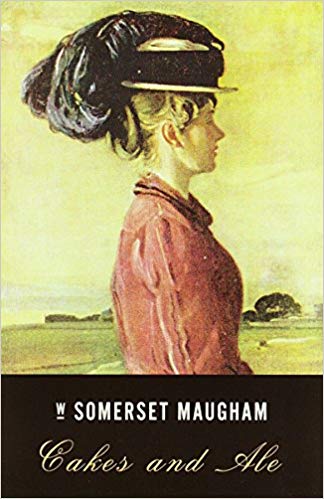
Review 1405: Cakes and Ale – #1930Club

I previously read only one book by Somerset Maugham, The Razor’s Edge. Frankly, I did not enjoy that book about two frightful people tormenting each other.

That was a long time ago, though. So, when I saw Cakes and Ale listed under books published in 1930, I thought, Why not give the guy and another chance and read it for the 1930 Club?

Another book I have already reviewed for 1930 is As I Lay Dying by William Faulkner.

* * *

William Ashenden, a moderately successful writer, unexpectedly hears from Roy Kear, another writer. Although Kear is a perfectly pleasant fellow, Ashenden knows he wouldn’t be hearing from him unless he wanted something. But Kear doesn’t come directly to the point.

Around the same time, Ashenden receives an invitation from Mrs. Driffield, the widow of Ted Driffield, widely considered Britain’s most important late Victorian novelist. He ignores this summons as he doesn’t know Mrs. Driffield. Finally, Kear admits he wants to pick Ashenden’s brain. He is writing an authorized biography of Driffield, and Ashenden knew Driffield and his first wife, Rosie, when Ashenden was a young man. Rosie was a beautiful, vibrant force of nature who was massively unfaithful to Driffield. The second Mrs. Driffield has dragged Ted into respectability and is concerned for his legacy. She wants Kear to leave Rosie out of the biography even though Driffield’s most important work was written during their marriage.

This novel about class snobbery is also a character study of an unusual woman. Because of Rosie’s promiscuity, the novel was highly controversial in its time. I wondered whether Ted Driffield was supposed to be Thomas Hardy and found out that others had supposed that at the time, although Maugham denied it. He did admit that Kear was modeled after Horace Walpole, however.

I enjoyed this novel and am willing to give Maugham another trial. The movie of The Painted Veil that came out a few years ago was beautiful, so I may try it next.

Related Posts

Tess of the D’Urbervilles

Consequences

Someone At a Distance

Review 1404: All’s Well That Ends Well

Although All’s Well That Ends Well is grouped with Shakespeare’s comedies, the introduction to my edition says that, like Measure for Measure, it is a problem play. I wasn’t sure what that meant, but Wikipedia says it applies to ambiguity and a shift in tone between darkness and light.

The actions in this play by Count Bertram bear many resemblances to those of Shakespeare’s patron, the Earl of Southhampton, who was made to marry a girl he didn’t want. Helena, the ward of the Countess of Rousillon, is the daughter of a physician and so is inferior in position—or at least he thinks so—to Count Bertram, the Countess’s son. Yet, she is in love with him.

When the Count goes to the court of France, Helena follows. The King is deathly ill, and she offers him a cure of her father’s. He agrees, if it works, to marry her to the single lord of her choosing.

Of course, the cure works, and she chooses Count Bertram. Forced to marry her, the young man leaves for war in Italy vowing never to consummate the marriage.

Frankly, this later play is not one of Shakespeare’s best. Its main theme is the disagreement between young and old, as everyone in the play who is older thinks Bertram is an idiot to reject such a virtuous, lovely bride, and also the part that status plays in marriage as opposed to character. The play has no rolling speeches, however, and pretty much just gets down to doing its job.

From the modern viewpoint, it’s fairly easy to see why this play isn’t presented as often as others. I read it before I went to see it at the Oregon Shakespeare Festival. Mainly, Count Bertram is pretty despicable despite his change of heart at the end. First, he rejects Helena just because of her social status, even though she is beloved by his mother and the King. Later, he attempts to seduce a virtuous Italian girl of good family, Diana, even promising to marry her despite being already married. When she pursues him to France, he lies about her, saying she is a camp bawd. What a great guy. Obviously, all would be well if Helena didn’t end up with him at the end, at least for Helena. But that’s the 21st century view.

Related Posts

Antony and Cleopatra

Othello

Macbeth

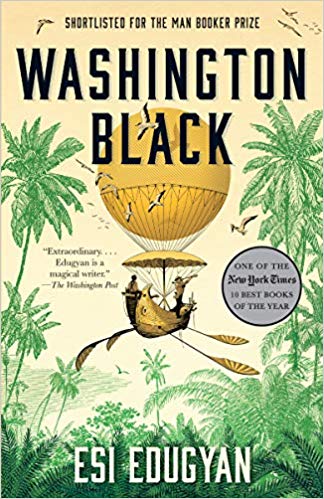
Review 1403: Washington Black

Best of Ten!
Washington Black is a twelve-year-old field slave on the Barbados plantation of Faith in 1830 when a new master arrives. Masters are to be feared, but it soon becomes clear that the new master is cruel and thinks nothing of the death of a slave.

Washington and his protector, the old woman named Kit, are alarmed when one evening they are summoned to the master’s house. They are expected to wait table while the master entertains his brother, Christopher, although they have no training. After the dinner, the brother asks for Washington to wait on him personally.

Christopher, or Titch, as he asks to be called, is a man with a scientific mind. He is working on an airship he calls Cloud Cutter, which he plans to launch from a mountain at the top of the plantation. Once Titch sees how exactly Washington draws, he begins to involve him in his experiments.

The master is away when Titch’s cousin Philip arrives. He brings some news that disturbs the plans of both Titch and the master. Then a terrible event occurs. Because Washington is present for it, he knows it means his death. Titch knows it, too, and the two flee the plantation in the Cloud Cutter.

Washington’s life becomes one of adventure overshadowed by fear. Although during the novel he travels to the Arctic, Upper Canada, England, and eventually Morocco, for years he fears being recaptured.

This novel is part adventure story, but it has the more serious aim of exploring the bonds between the exploiter and the exploited. Titch is a mystery to Wash, a seemingly compassionate man who yet abandons him in the Arctic. For years, Wash believes him to be dead, but then he hears he is alive. This sends him on more journeys to try to find and understand his mentor.

I thought this novel was fascinating, especially the descriptions of sea creatures when Wash begins studying them in Upper Canada. Later on, he begins to build the world’s first public aquarium.

I liked Edugyan’s Half-Blood Blues, but I was really caught up in the story of Wash’s life. This novel applies to my Man Booker Prize project, but I would have read it anyway.

Related Posts

Half-Blood Blues

The Known World

The Good Lord Bird