Review 2584: Walk the Blue Fields

Walk the Blue Fields is a collection of short stories by Claire Keegan that I think was published earlier than another collection I read. It contains seven stories, one of which I already read.

In “The Parting Gift,” a girl is leaving home for the first time, headed to New York. She is leaving an unhappy life with dark secrets, but she wishes for some indication of affection.

In “Walk the Blue Fields,” a priest presides at a wedding and goes through his daily business. But the bride was a girl he loved.

Brady’s behavior has caused a split with his wife in “Dark Horses.” Still, he tries to believe she will come back.

In “The Forester’s Daughter,” Deegan cares more for the lands and his old house than he does for his family. Before he married, he talked about the house to Martha as if it were a castle, but it is dark, crumbling, and damp. She considers leaving but stays, even after he does an unforgivable thing to her daughter—gives away her dog for money.

“The Long and Painful Death” is the story I read before, about a writer whose stay in a revered writer’s home is interrupted by an unwelcome visitor.

“Surrender” is about an IRA man, a sergeant, a man who other men fear. He receives a letter from his girlfriend calling it off because of his delays in marrying her.

“Night of Quicken Trees” starts out realistically enough, about an older woman who has inherited a cottage on the west coast of Ireland from her cousin, a priest. She is entirely alone, and her story is a sad one, but then it slowly becomes a mythic one.

I liked most of these stories very much. Keegan is a fluid writer. Her stories are spare without being bone bare. You never quite know where they are going.

Related Posts

Antarctica

Small Things Like These

So Late in the Day

Review 2583: The Magician’s Assistant

Sabine was very much in love with her husband, Parsifal, when he died unexpectedly. A handsome, affectionate, and charismatic man, he was also gay. For Sabine, it was love at first sight, which he hired her as his magician’s assistant.

Sabine lived with Parsifal and his lover Phan before Phan died from AIDS. Parsifal was also diagnosed with AIDS (this was the 90s when it was a death sentence), but he died unexpectedly of a brain aneurysm. Sabine is devastated and finds it hard to get out of bed. Phan was wealthy, so she is alone in a large house with Rabbit.

Although Parsifal had told her he was from Connecticut and had no family, Sabine has a shock coming. He does indeed have a family, a mother and two sisters in Nebraska, and his real name is Guy Fetters. She learns from his lawyer that Parsifal has been sending them money and left them some in his will. Sabine hypothesizes reasons why she has never heard of them but decides to call Mrs. Fetters. Eventually, she agrees to take her and her daughter around a visit of L. A. Sabine’s parents think she should have nothing to do with them.

Sabine likes Dot Fetters and her youngest daughter, Bertie. She begins learning new things about Parsifal. When they are leaving to go home, she agrees to visit them and attend Bertie’s upcoming wedding.

This story is an absorbing and touching one. Sabine learns to deal with her grief and finds out more about Parsifal. His family hears stories from her about their exotic-seeming life. The truth about why he left Nebraska is a difficult one, but Dot Fetters has regretted not trying to find him.

I love this novel. I thought I had read it before when I picked it up for A Century of Books, but it was unfamiliar. Patchett knows a lot about human nature.

Related Posts

The Dutch House

Tom Lake

Commonwealth

Review 2582: #ReadingAusten25! Mansfield Park

I decided to reread all of Austen for Reading Austen 25, even the books I had already reviewed. That said, I looked at my original review of Mansfield Park and thought it was still valid, so I thought I’d write about something else—the modern perception of Fanny Price.

The Introduction to my Folio Society edition by Richard Church asserts that the novel was written as a “self-disciplinary work imposed by Jane to exorcise grief and rebellion” after a promising courtship was cut off by the death of the suitor. Church himself rates Mansfield Park either 2nd or 3rd of Austen’s books, depending on where you put Emma (with Pride and Prejudice first).

A brief glance at Goodreads, however, tells me exactly what I expected to see—that of the six books counted as Austen’s oeuvre, (Sanditon isn’t usually included) Mansfield Park is the lowest rated. I suspect that’s because of Fanny Price, who is not at all a modern heroine. In fact, a few years ago someone made an “updated” movie that depicted Fanny as more of an Elizabeth Bennett- or Emma Woodhouse-like character, full of wit and energy. That movie missed the point. We have to view Fanny with early 19-century eyes, not 21st-century ones.

First of all, think how Fanny was raised. She is brought from her poor family to a wealthy one when she is only 10. She probably already has a retiring and timid disposition. Then for seven years she is treated with no regard for her feelings or wants except from her cousin Edmund. In fact, she is purposefully meant to feel the difference between herself and her cousins and is largely treated as a hanger-on, especially by horrible Mrs. Norris. In fact, it’s shocking to me that such a close relation is so treated, but we’re looking at money and class distinctions that may have been common in families. Think of Jane Eyre in exactly the same position.

But more difficult for the modern mind to deal with are the principles she’s been brought up with. To us, some of the distinctions that Fanny makes seem finicky, to say the least. (Others, like her reaction to Mary Crawford’s remark about the fate of Edmund’s very sick older brother, are not.) But to most of the early 19th century population, at least among the middle class or well-born (excepting, probably, the fashionable), they were not. As far as Henry and Mary Crawford are concerned, they have revealed too much of themselves, Henry in his dalliances with both the Bertram sisters and Mary in her remarks.

Fanny is growing up in this novel, learning to become herself. Much of her improvement comes from being able to develop a sense of self-worth after Sir Bertram returns from his travels and is happy to see her, and Lady Bertram discovers how useful and comforting she is, and different characters suddenly turn to her for advice. She may have learned her principles from Sir Bertram and Edmund, but by the middle of the novel, she is the one who recognizes principled behavior and speech, as Edmund becomes more in love with Mary Crawford and not only makes excuses for Mary’s remarks but is convinced to break his own principles.

Of course, the ultimate behavior of the Crawfords shows that Fanny was right all along, but before that, when Crawford decides he’s in love with her, she has the difficult task of sticking to her principles when everyone else disagrees with her. She may be gentle and retiring, but she resists all pressure. Think how much more difficult that would be for a person of her nature than for Emma or Elizabeth.

This has been rather a wandering post, but I hope that readers will look at Fanny differently.

Soon, we’ll be reading a book with a heroine much more like Fanny than the others, in Persuasion.

Oh, and I just have to say one more thing about the book in general. Edmund takes orders and has a parish, and then we never see him paying any attention to his job. He doesn’t stay in his parish; we don’t see him working on sermons. It’s like he’s completely forgotten about his work. I don’t think I ever noticed that before. There might be something about that which I don’t understand, though.

Related Posts

Mansfield Park

Pride and Prejudice

Persuasion

Review 2581: Murder at Gulls Nest

I messed up a bit with this book. What happened was that as soon as I heard about it, I pre-ordered it because I love Jess Kidd’s books. Then a few months later, although I am no longer active on NetGalley, I received an email from a publicist asking if I would like a review copy. I answered, as I have for other books, that I would love to if I could get a paperback rather than an ebook.

As usual when I make this request, I got no reply, so I dismissed it from my mind. Then, when I received a copy quite a bit later, I assumed it was my pre-order, not even noticing that it was a review copy. I put it at the top of my pile, which I have been ignoring while I try to finish A Century of Books (now complete!). I apologize to that publicist, because I have missed the dates. It wasn’t until my pre-order arrived that I realized my mistake, but then I read it immediately. So, here’s my review—better late than never.

It’s the 1950s. Nora Breen, looking disheveled, arrives in a seaside town in winter. She is a middle-aged ex-nun who has renounced her vows, and she has arrived because her friend Frieda, sent from the monastery for her health, has stopped writing. That is unlike Frieda, and Nora is worried about her.

Nora has taken a room at Gulls Nest, a sad rooming house, where she finds she is to occupy Frieda’s room. She learns that Frieda just disappeared one evening, no one apparently being surprised by it.

The occupants of the house are a mixed crew. Helena Wills, a widow, is the owner, but she spends almost all her time in bed and lets Irene Rawlings, the grim housekeeper who has lots of rules, run it. Helena also has a young daughter Dinah, who is all but feral. As she arrives, Nora watches a young couple from afar, Teddy and Stella Atkins, and notices them appearing to quarrel. She also sees another lodger, Karel Ježek, stomp on Teddy’s hat. Other lodgers are Bill Carter, an ex-Navy cook who works as a bartender, and Professor Poppy, an old Punch and Judy puppeteer who is rumored to be an aristocrat.

Although Nora goes immediately to the police, Inspector Rideout thinks there’s nothing unusual about someone who was living at Gulls Nest disappearing without warning. Nora has decided not to reveal to anyone else her friendship with Frieda, hoping she will learn more if no one is aware of it. However, she is feeling frustrated when Teddy is found dead in Poppy’s workshop behind the house, poisoned with cyanide in his coffee. Teddy often had coffee with Poppy before work. Inspector Rideout is thinking suicide, but Stella says not. She has just told him she is pregnant. So, did Teddy commit suicide or was he murdered? If he was murdered, was he the intended victim or was Poppy? Finally, is Teddy’s death related to Frieda’s disappearance?

Like Kidd’s other books, this one has some eccentric characters, although it is perhaps not as unexpected as her others. Still, it has some likable characters and some twists, as Nora begins to blossom out into this new world. A secret about the relationship between two characters was one I guessed fairly quickly, but I was unable to figure out a motive for what turns out to be not just one murder.

Fun stuff!

I received this book from the publisher in exchange for a free and fair review.

Related Posts

The Night Ship

The Hoarder

Things in Jars

If I Gave the Award

Having read all of the shortlisted books for the 2022 Booker Prize, I see that it is time for my feature in which I decide whether the judges got it right. For this year the choice is difficult for me because I didn’t like many of the books.

As I sometimes do, I’ll start with the book I liked least. That is Glory by NoViolet Bulawayo. Bulawayo’s intent was to explain events in the recent history of Zimbabwe, but her choice to make the characters animals did nothing for me. In fact, it made the characters flat. I also had little tolerance for all the religious and political speeches, and the book’s repetition. I did not finish this book after reading more than half of it.

There was something strange to me also about the approach Percival Everett takes with The Trees. This novel is about the lynching of Black people that took place for centuries in the American South and in particular, the murder of Emmett Till. However, Everett makes it a mystery about some grotesque murders and creates Southern white characters who are almost caricatures of themselves. On reflection, for such a serious subject it seems to indicate an odd sense of humor.

The winner for this year was The Seven Moons of Maali Almeida, about a dead man who is trying to reveal photographs he has taken of the Sri Lankan civil war. I was very interested in the history of Sri Lanka, which is not a country I know about, but I didn’t enjoy his depiction of a grotesque afterlife. (The book reminded me a bit of the afterlife depicted in George Saunders’s Lincoln in the Bardo, although I found that book ultimately more touching.)

Alan Garner’s Treacle Walker is a fantasy novella about a boy left alone in an unusual world. It was interesting and imaginative, a fast read that resembled a fairy tale, but it didn’t do much for me.

I always like a book by Elizabeth Strout because of the writing and the gentleness with which she treats her characters. However, Oh, William!, about Lucy Barton’s ex-husband and his family secrets, seemed slight to me when compared to some of the other books.

The book I enjoyed most for its writing and its theme was Small Things Like These by Claire Keegan, about the Magdalen laundries. Keegan is another excellent writer. I guess I’ll pick it for its beautiful, pared-down prose.

Review 2580: Treacle Walker

I read Treacle Walker for my Booker Prize project. It is an unusual novella that reads a bit like a fairy tale or myth.

Joseph Cappock is a young boy with a lazy eye who wears an eye patch and lives by himself. One day a rag and bone man named Treacle Walker comes to the door, and Joseph trades a pair of used pajamas and a bone for his choice of one thing in a box. He chooses a jar. Treacle Walker also gives him a stone.

When he leaves, Treacle Walker tells him to clean his front step with the stone. The stone turns the dirty step white.

Joseph finds that he sees different things with his good eye than he sees with his bad eye. One day he sees the characters in one of his favorite comic books climb out of a cel and disappear through a mirror in his room. Using the stone, Joseph finds he can go through the mirror himself.

This is an imaginative novel told in some kind of vernacular. I wasn’t always sure what was going on, but the telling was enjoyable.

Related Posts

Neverwhere

Sealskin

Under the Harrow

Review 2579: A Short History of Nearly Everything

I picked out A Short History of Neary Everything because it filled one of the last holes in my A Century of Books project and I generally enjoy Bill Bryson. I don’t know what I thought it was about—I think I expected it would be something like At Home, which told the histories of objects and rooms in an ordinary house. But silly me, it’s all science.

It’s not that I never read about science, but I have a limited tolerance for it.

When I first began reading it—actually for the first few chapters—I wondered who the audience for it was. It seemed to be telling about things I supposed most people know, so I wondered if it was for middle grade readers. But it certainly was never marketed that way.

It took a while before Bryson got to subjects that I wasn’t as familiar with, but in any case one of his strengths is finding out strange facts or biographical details of the scientists who made discoveries, so that he makes the material more interesting. And he writes with a lively style. However, he also really likes numbers, which are in general fairly meaningless to me (although he does make good comparisons to make them at least imaginable).

But this is a very long book, nearly 600 pages, and after a while I found myself skipping material. The first thing I skipped was the end of a chapter after it started getting too far into particle physics. Later, I skipped the entire chapter on cells. The geology chapter was interesting, but I was less than 100 pages from the end of the book when I finally pooped out. It didn’t even work to take a break and read a different book. It also didn’t help that such a book becomes rapidly out of date.

As a side note, I found the format of the library’s fancy version a little annoying. It used magazine-style callouts. That is, they didn’t provide additional information but just included quotes from the text. The purpose of such callouts in a magazine is to attract attention to the article, but in a book that you’re already reading?

Related Posts

At Home: A Short History of Private Life

The Body: A Guide for Occupants

Annals of the Former World: Assembling California, Basin and Range, Crossing the Craton, In Suspect Terrain, Rising from the Plains

Review 2578: Catherine the Ghost

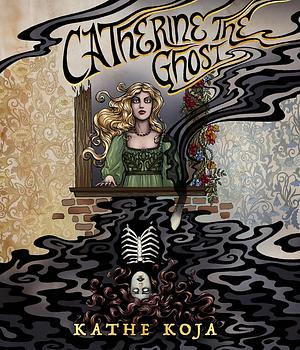
I took a break from reading A Short HIstory of Nearly Everything to read this novella. After putting it on my list, I had forgotten that it was based on Wuthering Heights. If you’ve read that book, you should be okay, but otherwise Catherine the Ghost may be hard to follow.

Like Wuthering Heights, Catherine the Ghost begins with the arrival to the house of Mr. Lockwood, who is stranded and spends the night in Catherine’s bedroom. The ghost Catherine demands to be let in.

The novella begins there but goes forward with glimpses into the past instead of the other way around. It focuses on Catherine’s haunting of Heathcliff and ends at about the same place as the original novel. The ghost is one narrator.

The other narrator is the other Catherine, Catherine the ghost’s daughter, who was tricked into marrying Linton, her cousin, the son of Heathcliff’s enemy, Hindley.

Koja’s style of writing is poetical and unusual, as she frequently uses sentence fragments. However, it is easy to follow. This is a haunting novella. I liked it a lot.

Related Posts

The Tenant of Wildfell Hall

The Solitary House

Murder at Mansfield Park

Review 2577: The Unfinished Clue

Georgette Heyer can write such likable characters, and I remember that for the first Heyer mystery I read, it was obvious who the murderer was because the person was the only character in the book, besides the victim, that I didn’t like. It didn’t matter, because it was fun to read anyway.

She isn’t so obvious about it in The Unfinished Clue, because there are several characters to dislike or feel neutral about. In fact, the title is more of a giveaway than the characters’ behavior, because it tells you what to focus on. If you can guess what it means, though, you get a gold star.

Dinah Fawcett arrives at her sister’s house to be met with an enraged brother-in-law. General Arthur Billington-Smith is often enraged, and he takes it out on his fragile second wife, Fay. This time, his son, Geoffrey, has become engaged and is bringing home his fiancée Lola de Silva, a cabaret dancer.

The house party consists of these people plus Arthur’s nephew, Captain Francis Billington-Smith, who wants a loan; Camilla Halliday, an attractive young woman who is letting Arthur take liberties in the hope of a generous gift; her jealous husband Basil; and Stephen Guest, a friend who is in love with Fay. Geoffrey turns out to be kind of a wimp and an idiot, and Lola completely self-absorbed.

Arthur rages throughout the weekend, which culminates in a stormy Monday morning. He tells Geoffrey he will cut him off if he marries Lola. Geoffrey goes to Lola vowing eternal love, and she tells him of course she can’t marry him if he doesn’t have any money. He storms off. Fay is lying down from a headache. There is a short visit by Mrs. Chudleigh, the vicar’s wife. Then Mrs. Twinings arrives, an old friend, to try to get Arthur to treat Geoffrey better, and she finds Arthur dead in his office, stabbed in the neck with a dagger from his desk. The crime boils down to where everyone was between 12:30 and 1. Only Dinah, who was on the terrace the whole time, has an alibi.

In most of Heyer’s mysteries, her detective team is Hannasyde and Hemingway, but in this novel the detective is Inspector Hardy. She hasn’t thought up Hannasyde and Heminway yet, I don’t think, but there’s another good reason why this book is different.

I was completely fooled by this mystery. I had some idea of the motive but was mistaken about the identity of the killer.

Georgette Heyer is just as gifted as Christie in creating vivid characters, and her mysteries tend to be a bit funny. In this case, Lola is a hoot. I had lots of fun reading this to take a break from A Century of Books.

Related Posts

Behold, Here’s Poison

A Christmas Party (Envious Casca)

They Found Him Dead