Day 1177: Song of a Captive Bird

Cover for Song of a Captive BirdI have this little quirk. I’ll pick out a book, but when I actually get around to reading it, I don’t look at the blurb to remind myself what it is about. If I’d done that, I would have known that Song of a Captive Bird is about an actual person, and that knowledge may have affected my reaction to it. On the other hand, a novel should stand or fall on its own merits, not because of what you know or don’t know about it before you begin reading it.

In the 1950’s and 60’s Iran, Forugh Farrokhzad is having a difficult time with the strictures of her culture. She wants to be a poet, but the role of women in her country is still only that of a wife and mother. She has always been a difficult child, and as a young woman, her first act of rebellion is in trying to select a husband for herself. She chooses her cousin Parvez because of a shared interest in poetry.

She marries Parvez but at the cost of losing the regard of her father, a powerful general under the Shah. But marriage isn’t what she expected. Instead of staying in Tehran, her husband takes her home to his small village where they live with his disapproving mother. In the village, her every action is scrutinized.

link to NetgalleyThe novel follows Forugh as she pursues her career as a poet and later a film director despite being slandered, attacked, and viewed as a prostitute by most of Iranian society. It is interesting in its evocation of this time and culture, especially the details of everyday life and the build-up to the Iranian revolution. However, something was missing for me. The novel did not seem particularly successful as an inspiring and moving story of one woman’s courage.

I think my reaction was because of Darznik’s choice to write this novel in first person. There was something about that perspective that didn’t work, particularly at the end of the novel. Although I think I would have ordinarily been touched by this woman’s story—she was certainly gifted and courageous—something about the novel kept me from getting fully involved.

Related Posts

Shah of Shahs

Tales from the Queen of the Desert

The Shadow of the Crescent Moon

Day 1176: The Native Heath

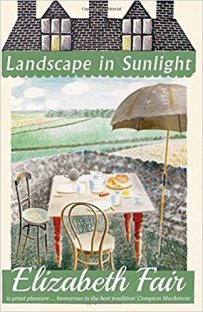
Cover for The Native HeathJulia Dunstan is delighted to have inherited her uncle’s Belmont House in Goatstock. Belmont House was the place of her fondest memories of childhood, when she and her cousin Dora would visit there. Dora, too, she is meeting for the first time in years, since Julia’s widowhood and return from life in the colonies. As Julia is given to impulsive and kind acts, she invites Dora to live with her at Belmont House, Dora having had such a hard life.

In Goatstock, the neighbors are all agog to set eyes upon Julia. And eccentric neighbors there are aplenty. Mrs. Minnis dresses like a juvenile and borrows from the neighbors; if returned, the objects are broken. Mrs. Prentice is so embarrassed at being caught looking into the house from the street that she fails to call. The vicar and Miss Pope are being preyed upon by Miss Briggs, who sees Alaric Pope as a future husband. Lady Fincy is the expert on food and gives lectures about eating nettles.

Of young people, there are only three. Julia has brought along her nephew, Robert, just qualified as an engineer. Marian Prentice is engaged to a missionary in Africa, and her best friend, Harriet Finch, would like to see her stay in England. Harriet plots to throw Robert and Marian together before she realizes she quite likes Robert herself.

As for Julia, her kind heart soon has her feeling responsible for several people. But she eagerly renews her friendship with her cousin, Francis Heswald. He always did like her, she thinks, but maybe he likes Dora a little more.

I’ve found all of Elizabeth Fair’s books delightful, and this one is no exception. They have been compared to the work of Angela Thirkell, minus the sentiment. I don’t actually think of Thirkell’s novels as sentimental, however, so I’m not sure what that comment means. With Fair’s flair for eccentric characters and their lightness, her books remind me more of some of those of Elizabeth Cadell.

Related Posts

Bramton Wick

A Winter Away

The Mingham Air

Day 1175: Anne of Avonlea

Cover for Anne of AvonleaA while back, some bloggers were having an Anne of Green Gables reading challenge. That led me to reread Anne of Green Gables, and I was pleasantly surprised to see how well it held up for adults. Other bloggers went ahead and read the entire series.

I don’t think I read the entire series when I was a girl, but I know I read up through the time when Anne married Gilbert, so I’m guessing I read three or four books back then. When I ran across a copy of Anne of Avonlea, the second book in the series, I decided to give it a try as an adult.

In this book, Anne is sixteen and just about to begin her career as a schoolteacher in Avonlea. Most of her old friends are also teachers at nearby schools. The novel follows her adventures during the next two years as she teaches, makes new friends, and begins to grow up a little. She and Marilla also take on the upbringing of two six-year-old distant cousins of Marilla, Davey and Dora.

I’m afraid I didn’t enjoy this book as much. The dreamy, romantic Anne, with all her comments about fairies and so on isn’t as convincing as an older girl. The novel relies for humor mostly on the comments of Anne’s students and the misbehavior of Davey. I found the first a little cloying, and I couldn’t help comparing the second to a similar situation in A Girl of the Limberlost, which is handled much better. I have to admit to not developing any feelings for any of these children, whereas Anne as a child was very sympathetic.

Finally, there’s not much of a sense of plot to this novel. It is almost as if, in these transitional years, Montgomery didn’t know what to do with Anne. The most dramatic events center around her friend, Miss Lavendar Lewis, but they are predictable. I think this is a book that adolescent or pre-adolescent girls might love, but it holds little attraction for me.

Related Posts

Anne of Green Gables

The Secret Garden

The Book Thief

Day 1174: Literary Wives! The Blazing World

Cover for The Blazing WorldToday is another review for the Literary Wives blogging club, in which we discuss the depiction of wives in fiction. If you have read the book, please participate by leaving comments on any of our blogs. Be sure to read the reviews and comments of the other wives!

Eva of Paperback Princess
Kate of Kate Rae Davis
Lynn of Smoke and Mirrors
Naomi of Consumed By Ink
TJ of My Book Strings

My Review

The Blazing World was one of my favorite books of 2015, so I won’t recap my review but instead provide you the link so that you can read my original review. Then I’ll go on with my comments for Literary Wives.

What does this book say about wives or the experience of being a wife?

Although Harriet is a widow at the beginning of the book, all her actions are centered around her experiences of being first a daughter and then a wife. She has been a good wife, but she has had no support from her art dealer husband for her art. She has sat quietly by and watched him claim credit for her ideas. Fiercely intelligent and original, she has become convinced that as an older woman, she is almost invisible. In fact, her entire focus on the project that she conceives and that drives the plot of the novel is fueled by anger at the paternalism of first her father and then her husband.

Unfortunately, she finds that the art world is paternalistic in just the same way, as she has trouble claiming her own art after conducting her experiment. This is a powerful novel about institutional sexism—particularly the difficulties women still have in being taken seriously in any realm except that of the household, but especially in the creative arts.

Related Posts

A Lady and Her Husband

The Enchantment of Lily Dahl

The Life and Death of Sophie Stark

Day 1173: Atonement

Cover for AtonementBest Book of Five!
Ian McEwan is a master at turning everything you think you know about a novel on its head, and he does that effectively in Atonement. This novel is a reread for me, the first one by McEwan I ever read, and I found it breathtaking. It is just as enjoyable when you know its secrets.

On a hot summer day in 1935, Briony Tallis commits a terrible crime. At thirteen, she is an imaginative but naive girl, a budding novelist. She misunderstands some interactions she witnesses between her older sister, Cecilia, and Cecilia’s childhood friend, Robbie, and this misunderstanding provokes her to tell a dreadful lie that ruins lives.

Five year later, Briony is a nurse at the start of World War II. She is trying to get published as a writer, but she is also concerned to atone for the lives she ruined.

This novel draws you in to the hot summer day and carries you along. It is beautifully written, and it shows great insight into the mind of the romantic, self-important child that Briony was. I can’t say much more about this novel without giving it away to the few of you who haven’t read it or seen the movie, but I believe it to be a postmodern classic. In short, this is a great book. It is intelligent, with ideas to ponder but with a narrative that just sweeps you along.

Related Posts

Amsterdam

Sweet Tooth

The Child in Time

Day 1172: The Long Drop

Cover for The Long DropAlthough it too is set in Glasgow, The Long Drop is a departure from Denise Mina’s usual crime series. Instead, it is an account of the crimes and trial of Scotland’s first serial killer, Peter Manuel. In the 1950’s, Manuel was tried and found guilty of the murders of two families and a woman. Although he likely killed other women, a charge against him for the murder of another woman was found not proven.

The novel follows two paths—testimony about the events of a night following the murders in which Manuel met William Watt, a man whose family were Manuel’s victims and who almost certainly paid to have his wife killed, and the actual events. Pretty much everyone in the court is lying.

This novel is billed as a thriller, but it is more of a court procedural. Although it is interesting, it suffers from not having a single character you can feel sympathy for. The wild city of Glasgow in the 1950’s is very atmospheric, however.

Related Posts

Still Midnight

The Red Road

The End of the Wasp Season

Day 1171: Seaview House

Cover for Seaview HouseAlthough Mr. Heritage has been friends with sisters Rose Barlow and Edith Newby for years, he is jealous of the attention of his godson, Edward Wray. So, he is not at all happy when he notices that Edward is attracted to Rose’s daughter Lucy.

Lucy has been friends with Nevil Fowler since they were children and has a dim expectation that they will eventually marry. That’s why it takes her a while to figure out that she has feelings for Edward. In the meantime, Mr. Heritage’s machinations have put matrimony in Nevil’s mind, and Lucy’s best friend, Philippa, has intimated that she is closer to Edward than she actually is.

Seaview House is another charming domestic comedy from Elizabeth Fair. I only recently discovered her novels, being republished by Furrowed Middlebrow, and wish there were more than six of them to read.

Related Posts

A Winter Away

Bramton Wick

The Mingham Air

Sixth Anniversary! Ten Best Books of the Year!

Cover for BenedictionIt’s that time again, the sixth anniversary of this blog and time to post my top ten picks of the previous year. As always, this is a difficult task. Although I try to evaluate books by their genre—that is, I’m not expecting the same things from mysteries or historical fiction as I am from literary fiction—what my judgment really boils down to is which books I found most affecting or impressed me the most.

This year’s list includes two nonfiction books, three classics, one speculative fiction, and two historical fiction books. I would also count at least six of the novels as literary fiction, including Kent Haruf’s last novel. So, here are my top 10 books from the ones I reviewed this year, in the order that I reviewed them: