Day 1157: This Is a Poem That Heals Fish

Cover for This Is a Poem That Heals FishI read about This Is a Poem That Heals Fish on Brain Pickings and had to have it for my great nephew. It was difficult to find a copy (but no longer is).

Lolo at the bicycle shop

The book has a simple story. Arthur’s fish Leon is bored almost to death. When Arthur asks his mother what to do, she says, “Hurry, give him a poem!”

So, Arthur spends the rest of the book trying to find out what a poem is, getting advice from various people and animals in the neighborhood. For example, Lolo at the bicycle shop says “A poem, Arthur, is when you are in love and have the sky in your mouth.” From everyone’s comments, Arthur makes his own poem at the end of the book.

This is a lovely book, with beautiful, modern illustrations and ideas that make you ponder. Although I am giving it to a four-year-old, I think it could be appreciated by any age.

Related Posts

Little Bird

Snow

Old Possum’s Book of Practical Cats


Day 1156: Bramton Wick

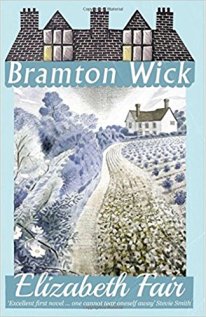
Cover for Bramton WickI so enjoyed A Winter Away that I looked for more novels by Elizabeth Fair immediately. I found that they are being reprinted in a nice edition by Furrowed Middlebrow. Bramton Wick is Fair’s first novel, set in a village in post-World War II England. It is a gentle domestic novel with a bit of an edge.

Although the novel features several eccentric denizens of the village, it centers around Laura and Gillian Cole. Mrs. Cole and her family used to be the owners of Endbury, one of the large homes in the area, until Mr. Cole died and they had to sell. Mrs. Cole, although she dislikes the current owner of Endbury, Lady Masters, has begun to notice that Lady Masters’ son Toby has a liking for Laura.

Neighbors Miss Selbourne and her friend “Tiger” Garrett raise dogs in a cheerfully disordered household. Miss Selbourne has noticed, though, that whenever there is something unpleasant to be done, Tiger gets ill.

The neighborhood isn’t short of elderly women, for the Miss Cleeves are also nearby. The Miss Cleeves are penniless and dependent upon their landlord, Miles Corton, for help. Miss Cleeve is profoundly deaf, one sister is a religious fanatic, and the other sister sprinkles her malicious gossip with untruths.

Gillian, Mrs. Cole’s other daughter who is a war widow, has decided to take under her wing the wealthy new resident of the village. Mr. Greenley is from new money. He dresses like a parody of an English country gentleman and has not been welcomed to the village. Gillian thinks he just needs a little help fitting in.

This novel is gently comic, reminding me of Angela Thirkell without quite so much sharpness and snobbery. As Laura tries to figure out what she wants from life, we are greatly entertained by the antics of her neighbors.

Related Posts

A Winter Away

Wild Strawberries

Money to Burn

Day 1155: Literary Wives! A Lady and Her Husband

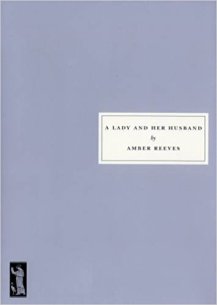
Cover for A Lady and Her HusbandToday is another review for the Literary Wives blogging club, in which we discuss the depiction of wives in fiction. If you have read the book, please participate by leaving comments on any of our blogs. Be sure to read the reviews and comments of the other wives!

Eva of Paperback Princess
Kate of Kate Rae Davis
Lynn of Smoke and Mirrors
Naomi of Consumed By Ink
TJ of My Book Strings

My Review

A few months ago for Literary Wives, we read The Awakening, one of the first feminist novels, written in 1899. A Lady and Her Husband was written 18 years later and shows great advances in feminist thought.

As I started the novel, I thought it was going to be about Rosemary Heyham, who is just about to be married, but instead it is about the awakening of her mother, Mary, a gentle, conventional soul who has been married to James for nearly 30 years. The action of the novel stems from Rosemary’s recognition that her mother is facing empty nest syndrome but also because she thinks her mother needs outside stimulation. She goes to her father with the idea that he give Mary a job.

James decides to put Mary to work looking into the welfare of his female employees, particularly the waitresses who work in his chain of tea shops. He believes he is a stellar employer and she won’t find anything to complain about, so in a way, this job is make work.

But Mary takes her job seriously. At first she finds nothing wrong, but she is shocked when she investigates the living conditions of the girls. (Of course, this dates the work, because these days the things she looks at and has control of would not be an employer’s business.) When she finally goes to James with some ideas, she is surprised to find him reacting angrily. What she asks for first are a room in each shop where the girls can eat their lunches, shoes that are more comfortable, and permission to do the washing up sitting down. What she gets are the shoes, but the girls will have to buy their own.

As Mary pursues her work, eventually asking for raises for the girls, she begins to see James in a less rosy light. It is difficult for me to guess how a contemporary audience would view their relationship, but for me, even when it is loving at the beginning, he patronizes her shamefully. All of this eventually leads to a crisis, when Mary is forced to evaluate even her own marriage.

While I wouldn’t say I loved this novel, I found it fascinating. A lot of it follows the evolution of Mary’s ideas from total acceptance of her situation in life to more of an awareness of her duty to herself and others. It also exposes James’s self-justifications. After I read Samantha Ellis’s introduction to the Persephone edition, which provides biographical information about Amber Reeves, I felt that if I ever had a hero, she would be it. As a young women, she had an affair with the much older H. G. Wells, whose ideas about free love didn’t include the woman being equally free, but she grew out of it. He never did, apparently, grow out of her, though, but kept rewriting her into novel after novel, where he depicted her changing from a vibrant, intelligent lover to a subservient wife. She never did, though.

What does this book say about wives or the experience of being a wife?

Mary has had a conventional marriage for her time. In the beginning of the novel, she sees that her role has to do with keeping house and caring for the children. She believes that only men are capable of understanding bigger issues. She loves her husband and takes care to present him with a placid home life.

However, largely because of his reaction to how she does the job he invented for her, she begins to re-evaluate her ideas about men and their relationship to women. She sees that men care more about things—their careers, their projects—more than they do about people. She begins to question her role in her marriage and in their business—in which she owns 50%—and to feel that she has a responsibility to make sure their employees aren’t treated badly.

She also begins to understand James’s self-justifications. As an example, when Mary, having seen how some of the waitresses live, points out that they are not receiving a living wage, both James and their son Trent remark that the girls just spend their money on ribbons. And she notices how James adroitly manages to blame a more serious marital problem on Mary herself.

Within the novel, Mary awakens from a woman who has been blinded by convention to a person who is more aware of the realities of life, who is able to think through her own difficulties and come to a solution.

Related Posts

The Awakening

Fidelity

Dept. of Speculation


Day 1154: Agatha: The Real Life of Agatha Christie

Cover for AgathaI occasionally read a graphic novel, but I am not at all attracted to the superhero kind. Although they generally have very polished illustrations, I don’t find them imaginative and am more attracted to unusual subjects.

Agatha is a biography in graphic novel form of Agatha Christie. It begins with her mysterious disappearance of 1926, something that has never been fully explained. (I confess, I prefer the Dr. Who explanation, in which she was off with the doctor fighting a giant alien wasp.) Then it covers the major events of her life from a girl. To add a touch of whimsy, her major detective characters appear occasionally to talk with her.

I’ve noticed that some graphic novels use the illustrations to tell parts of the story, while others depend heavily on the text. This novel is one of the latter. I would also comment that the illustrations are more workmanlike than beautiful. But they are interesting, colorful, and convey the story.

It’s difficult for me to rate a graphic novel as a book. This one, for example, makes no effort to build up to a climax as fiction would. It is more like a biography without the depth and without the effort to be accurate about details of the times. For example, when Christie is a nurse during World War I, they have her introducing herself to the patients, something that would not have been allowed.

All in all, I appreciate the subject matter, but I have been more impressed by some other graphic novels in terms of beauty of artwork and effectiveness of story line. So far, Hannah Berry is my favorite.

Related Posts

Maus I

Britten and Brülightly

RASL: The Lost Journals of Nicola Tesla

Day 1153: Bleak House

Cover for Bleak HouseBest of Five!
I just love Bleak House. I hadn’t read it for years, so I was happy to pick it up as one of the last books on my first Classics Club list. Note: with this book, I have finally posted my last review for my first Classics Club list. I will soon have my second list posted at the link above.

At first, the novel appears to follow two distinct stories, that of the orphan Esther Summerson and that of the household of Lord and Lady Dedlock, but we find that these stories are entwined. Peopling the novel are countless other unforgettable characters.

Esther has had a sad childhood, but her life begins to improve when an unknown benefactor first takes her education in hand by sending her to school and then employs her to be the companion of Ada Clare. Ada, with her cousin Richard Carstone, is another orphan, and both are parties to the famous lawsuit of Jarndyce and Jarndyce. As they are wards of the court, a distant cousin, Mr. John Jarndyce, has agreed to be their guardian.

Dickens was famous as a social activist, and one of his targets here is the Courts of Chancery, where wills are proven. Jarndyce and Jarndyce is a famous case in Chancery that has been going on for years and has driven countless possible legatees to ruin. Mr. Jarndyce refuses to deal in this case and hopes to encourage Richard and Ada to leave it alone.

Esther makes a happy home for herself and Richard, Ada, and Mr. Jarndyce at Bleak House, Mr. Jarndyce’s home. But as Richard grows older, he fails to settle to a profession and devotes more and more time to the lawsuit. He is sucked in. And that is more a shame because Ada, whom Esther calls her darling, is in love with Richard.

At the Dedlock’s, a mystery begins that eventually takes up much of the novel. Lady Dedlock is beautiful and stately but deeply bored. However, one day when the Dedlock lawyer, Mr. Tulkinghorn, comes with papers to sign, Lady Dedlock glimpses some handwriting and promptly faints. Lady Dedlock has a secret, and Mr. Tulkinghorn is determined to find it out. Mr. Tulkinghorn is inexorable.

As with any Dickens novel, Bleak House is filled with entertaining characters. There is Mrs. Jellyby, who is so taken up by a charity for Africans that her children are neglected and her house is a disaster. Her unfortunate daughter, Caddy, covered in ink when we first meet her, becomes an important secondary character. One of Mr. Jarndyce’s friends is Harold Skimpole, who professes himself a mere child in worldly ways and proceeds to leech off his friends. There are many other notable characters, but one of the most interesting is the detective, Mr. Bucket. At first he seems rather sinister, but we soon change our minds about him.

Above all, there is Dickens’ style, which carries you along with the story. He makes you laugh, he makes you cry, and as always, he shows sympathy for the unfortunate, especially for children. It is easy to see from Bleak House, which many consider his masterpiece, why he was the most popular writer of his time.

Related Posts

David Copperfield

Great Expectations

Oliver Twist

Day 1152: The Ghost of Christmas Past

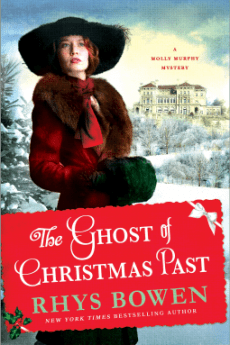
Cover for The Ghost of Christmas PastI was amused by the sprightliness and humor of Rhys Bowen’s Her Royal Spyness novel that I read recently, so I thought I’d try one of her Molly Murphy novels. I saw this one listed on Netgalley and requested it.

The Ghost of Christmas Past is the 19th Molly Murphy novel, so it’s hard to say if I’d have been more impressed with an earlier book in the series. The series has won Agatha awards, so I assume so.

Molly is an Irish immigrant who by this novel is married to Daniel, a New York City police captain. Molly is in a depression. Her husband had problems with Tammany Hall, causing him to take some work in San Francisco from a government agency in the previous book. She followed him in time for the 1906 earthquake and lost her baby. Daniel’s employment prospects are up in the air, and Molly does not want to move away from her close friends in their New York neighborhood. And Bridey, an Irish girl she took in and learned to love, is being reclaimed by her father to return to Ireland. Finally, Molly returns from taking care of her mother-in-law to find that the Christmas she expected to have with her neighbors will not be because Gus and Sid are going away to spend it with friends.

Molly and Daniel get an invitation to spend Christmas with her mother-in-law at the stately home of Cedric Von Aiken in upstate New York. There, they find a gloomy family, haunted by the disappearance of the couple’s three-year-old daughter ten years before. Molly thinks it unlikely that the little girl supposedly dressed herself, put on her coat, opened the heavy front door, and walked out by herself. But her footprints and hers alone were found in the snow going to a nearby creek.

Of course, Molly decides to try to figure out what happened. Of course, we have the dynamic of the protesting husband that has made me tired of other series featuring a crime-solving wife.

link to NetgalleyAside from there being no sign of the other series’ humor and lightness, the plot of the novel is just too unlikely and the solution has been used before. Spoiler, although I will not be specific: an unexpected arrival is oddly time to coincide with Molly’s visit to the house. But that’s not the biggest coincidence.

Finally, the novel and dialogue are fleshed out just enough to propel the plot along, and when we come to the problem of Bridey, the behavior of those involved and their remarks are comic in their obviousness. Not one of my favorite books, for sure.

Related Posts

On Her Majesty’s Frightfully Secret Service

The Strange Fate of Kitty Easton

Birds of a Feather

Day 1151: Henry VI, Part III

Cover of Henry VI Part IIIHenry VI, Part III must have been a difficult play to write, because it telescopes the major events of years into five acts. Its action is a little tiresome, as one side of the conflict is in the ascendent, then another. However, the longer speeches in this early play are beginning to show Shakespeare’s stuff. And certainly, for audiences of the day, who didn’t know their history, it was probably exciting.

The play opens where Part II left off. Henry has just been defeated by the Yorkists at the first battle of St. Albans. Shortly thereafter, he makes a deal with York that allows him to rule during his lifetime but makes York his heir. But both York and Queen Margaret soon break the vow. York is preparing to resume conflict so that he can be king when Queen Margaret attacks in an effort to protect her son’s rights.

What was most interesting to me in this play is the depiction of several of the main characters. Queen Margaret is a real viper and is reviled by several characters, even though she is just trying to protect her son. In fact, I believe it was this play in part that was responsible for her reputation in history.

Although Henry is depicted as saintly and all for peace, he is not shown as mentally incapacitated, as he was for much of his life. Warwick, despite changing sides and being ultimately on the wrong one (as far as the Tudors are concerned), is rather heroic. And Gloucester, later Richard III, is set up beautifully for the subsequent play, Richard III.

All in all, I thought that the second play moved along better. I was glad to contrast this trilogy with the other reading I have done on the Wars of the Roses.

Related Posts

Henry VI, Part I

Henry VI, Part II

Margaret of Anjou

If I Gave the Award

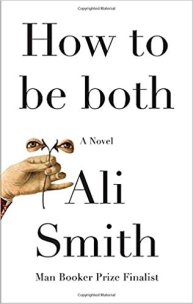
Cover for How to Be BothSince I’ve just posted my last review of books on the shortlist for the 2014 Booker Prize, it’s time for my feature, If I Gave the Award. In my opinion, many of the books on the 2014 shortlist are overrated. The winner, The Narrow Road to the Deep North by Richard Flanagan, is sidetracked by a deeply uninteresting illicit love affair, while J by Howard Jacobson is overwhelmed by its obfuscation and sly jokiness and a deeply uninteresting licit love affair. Neel Mukherjee’s The Lives of Others is more powerful than either one of those novels.

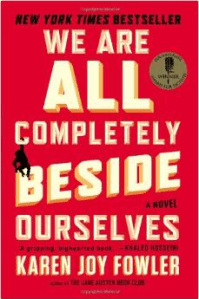
Cover for We Are Completely Beside OurselvesHowever, my preference goes to one of the other two novels. How to Be Both by Ali Smith is more inventive than the other novels in its structure and more subtle in its message. But for its ability to keep me glued to the page, I have to say that over all the others, I preferred We Are All Completely Beside Ourselves by Karen Joy Fowler.