Review 2569: #1952Club! Mrs. McGinty’s Dead

It’s time for the 1952 Club, for which participants review books written in 1952 on the same week. What would a year club set between the 1930s and the 1960s be without an Agatha Christie? So, this book became one of my choices for the 1952 Club, especially good because I hadn’t read it before.

However, first, as usual, I have a list of the books I’ve reviewed previously that were written in 1952:

And now for my review.

Hercule Poirot is retired, and the days are passing slowly. So, he is happy to look into a case for an old acquaintance, Inspector Spence. An old cleaning lady was apparently murdered for her savings by her lodger. All the evidence points that way, and the lodger was found guilty. But Inspector Spence isn’t satisfied that he did it, and there is little time to investigate before he is hung.

So, Poirot journeys to a small village—only four houses and a post office. He meets a few people and seems to be getting nowhere when a chance remark gives him an idea. Mrs. McGinty had purchased ink at the post office, which meant she intended to write a letter, and she was so unaccustomed to writing letters that she had no ink. Who was she writing to?

Going back to look through some of her things, he finds a newspaper with an article ripped out. When he finds the paper at the archive, he sees the article is a “Where are they now?” piece about females connected with four infamous crimes, with old photos from 20 years before. He reckons that Mrs. McGinty, in her work as a cleaner, saw one of those photos at the home of a regular client. Someone in the village has a relationship with one of those women, but what kind of relationship? The field broadens as he considers. Is it the woman herself? A relative or spouse? With the range in age of the original females, the woman could now be anywhere from her 30s to her 50s.

And that was the problem. There are too many people in this book, many of them suspects, and Christie didn’t do her usual job of making them instantly specific. I couldn’t keep track of them by their names. The only distinctive villager at first is Maureen Summerhayes, Poirot’s incompetent hostess, who can’t cook and is completely disorganized, but I soon thought of her as Maureen, so that by the time there was a reference to Mr. Summerhayes, I had forgotten he was Maureen’s husband.

Fairly early on, Poirot meets his old friend the author, Ariadne Oliver. She is staying with the playwright Robin Upward while they try to adapt one of her books for the theater. Mrs. Upward is another of Mrs. McGinty’s clients, and thus a suspect.

I never thought of the murderer as a suspect, but I also felt I wasn’t given much of a reason to. I just didn’t think this was one of Christie’s best.

I was also struck by how little any of Mrs. McGinty’s clients cared that she was dead. There’s some real classism going on here (including the idea that she had to buy ink because she never wrote any letters; even if it happened to be true; anyone might have to buy ink).

Related Posts

The Mirror Crack’d from Side to Side

Sparkling Cyanide

Sad Cypress

Review 2568: The Quiet American

I long ago saw the movie version of The Quiet American starring Michael Caine and Brendan Frasier, but I couldn’t remember the details. I need to read more Greene, so when this book filled a hole in my A Century of Books project, I found a copy.

The narrator, Thomas Fowler, is an aging British reporter in Saigon, a cynical, world-weary man. The time setting is the early 1950s, when it was the French fighting the Communists in Vietnam. Fowler has lived a long time in Vietnam and has a young mistress named Phuong whom he cares for more than he admits.

At the beginning of the novel, he learns that an American, Alden Pyle, is dead. Then the story backtracks to his meeting with Pyle, a young naïve man who has just arrived in the country. Fowler catches on fairly quickly that Pyle has no real understanding of the country or its people but some half-baked ideas about Vietnam based on a book by an author who spent one week in the country. However, Pyle is not receptive to other ideas (until it’s too late).

Fowler invites Pyle to his home, where he meets Phuong. Very quickly, Pyle decides that he is in love with Phuong and tells Fowler he can make a better life for her, so he will court her but not behind Fowler’s back. He seems to have no conception that this may be painful for Fowler.

Fowler is married, so he cannot marry Phuong, but he writes a letter to his wife asking for a divorce—a request he’s fairly sure will be denied. At about the same time, he receives notice that he has been promoted and should return to London, but all he wants is to stay in Saigon with Phuong. He writes asking to stay.

He knows, though, that Phuong, although she cares for him, is probably ultimately going to be practical and take the young man who can marry her—egged on by her older sister, who has always thought Phuong could do better.

With this situation between them, Fowler begins hearing rumors about Pyle’s activities in Vietnam.

There are some suspenseful passages in this story, but what Greene does even better is get into the motivations of his characters. Of course, all the Americans in the novel are clueless oafs (except Pyle, who is clueless but not an oaf), and the women are disregarded. Phuong’s sister has more of a personality than Phuong does, and in one passage, Greene has Fowler basically say to Pyle that Phuong doesn’t think. (All she does in her own time is dance, visit her sister, and read movie magazines.)

If you can get past these caveats, this is a really good, suspenseful and psychological novel. None of the characters are particularly likable, but at some points you feel a lot of sympathy for Fowler.

Related Posts

The Lotus Eaters

Lyndon Johnson and the American Dream

Perfume River

Review 2567: Mad Madge: The Extraordinary Life of Margaret Cavendish, Duchess of Newcastle

Before reading Margaret the First for Novellas in November, I had never heard of Margaret Cavendish, which is interesting because I have a master’s degree in English Literature. But that all falls into place once you read Whitaker’s epilogue to this biography.

In fact, Margaret was the first woman to publish prolifically and publicly, as opposed to having writings privately printed and distributed or, more likely at the time, including a poem or two in her husband’s writings.

Margaret Lucas, according to her own writings, was determined to be famous. Unfortunately, she was very shy. She wrote even from a girl, what she called her fancies, and commented that her mind was full of ideas.

The Lucases were a prominent Royalist family. Margaret was still fairly young when she left home to be a lady in waiting for Queen Henrietta Maria at the court of Charles I. Margaret wasn’t very good at this job, because her shyness made her seem standoffish.

The English Civil War broke out, and first the court moved to Oxford, but eventually it had to move overseas. There, Margaret met William Cavendish, fully 30 years her senior, who had valiantly fought on the Royalist side but eventually left when things seemed hopeless. At the time, he was the Marquis of Newcastle. The couple married, despite having little income, William’s estates having been taken by Parliament, and most of his money gone to the Royalist cause. However, it was in William’s house that Margaret got what she had long sought, the opportunity to meet and discuss issues with men of note and with philosophers and scientists.

Margaret began writing prolifically—plays, poems, essays on philosophy and science. Once she published, many people supposed that her works were actually written by her husband.

Eventually, she became one of the first female literary celebrities, and her name was known throughout Europe. In the epilogue, though, we learn that not too long after her death, critics began to disparage her work, and she was almost lost to history. We learn that the nickname of “Mad Madge” was bestowed on her centuries after her death (and repeated by Virginia Woolf). I looked at my own 1985 Norton Anthology of Literature by Women, and despite her prolixity, they only included one page by her and perpetuated the story of her strangeness, which apparently was based only on her original clothing, designed by herself, and her odd social behavior (not speaking much).

Although this material is undoubtedly interesting, I think that Whitaker falls over the too much/not enough detail line that I find plagues a lot of biographical writing. Whitaker falls over on the “too much” side, synopsizing every section of every work Margaret wrote, quoting every person of note who respected Margaret’s work, describing details of every house she lived in, and so on. This got a little tedious when it continued for pages, although now, having read the epilogue, I see why Whitaker felt that she needed to prove that in her lifetime, Margaret was a famous and respected figure with very early feminist leanings.

Related Posts

Margaret the First

Georgiana, Duchess of Devonshire

Queen Anne: The Politics of Passion

Review 2566: Looking for Alaska

The few John Green books I’ve read are aimed at teenagers (although some are excellent adult reading) and address, fairly subtly, an issue. For Looking for Alaska, it’s death and grief.

Sixteen-year-old Miles is miserable in his school. He has no friends, and the level of education is fairly low, so he convinces his parents to send him to a boarding school in Alabama that his father attended. He is hoping this change will initiate what he calls the Great Perhaps.

He is lucky enough to pull as his roommate a stocky kid named Chip (aka The Colonel). The Colonel is at first dubious of him until some other students overdo it with the initiation for new students. The custom is to haul Miles off in the middle of the night and drop him into the lake, but because The Colonel and his friends have lately pranked them, one of them wraps Miles up in duct tape and then they drop him in the lake. He is in danger of drowning, but he manages to float himself to shore and then get the tape off.

The Colonel is outraged by this prank because it was so dangerous. He has a running feud with the Weekday Warriors, rich kids who board there but return home every weekend to their parents’ homes in Birmingham. It was some of those kids who duct-taped Miles because of his association with The Colonel.

The Colonel nicknames Miles “Pudge” because he’s so skinny and introduces him to his friends, a Japanese boy named Takumi and a girl named Alaska. Miles is immediately smitten by Alaska, a cool girl but with an unstable temperament, usually out-going and dare-devilish but sometimes hysterically unhappy.

The group pals around, teaches Miles to smoke and drink and get into trouble, but they also take studying and grades seriously, especially The Colonel, who is on a scholarship and comes from a very poor home.

Then one of the friends dies.

For once, I thought Green got a little of this wrong. Some of the friends’ reactions didn’t read true, or maybe they did and I just don’t know teenagers. For example, throughout the novel, Miles is fascinated by the last words of famous people, so much so that he reads a lot of biographies. When the friend dies, he is upset, but he regrets he didn’t get to hear the friend’s last words. He is supposedly devastated by the death and blaming himself, so that seems like a flippant reaction, but Green mentions it twice.

Otherwise, Green does his usual masterly job of gaining your sympathy for his characters and presenting them with a difficult situation. He writes well, avoiding that stereotypical “teenage voice” that so many adult authors use; has a good sense of humor; and is good at depicting believable teenagers.

Related Posts

The Fault in Our Stars

Turtles All the Way Down

Tell the Wolves I’m Home

Review 2565: Classics Club Spin Result! Incidents in the Life of a Slave Girl

I pulled this book for the Classics Club spin, and I’m very happy to have done so. Because of the state of my reading right now, I was hoping for a short one, and this book is only 144 pages (albeit of very small type). It’s one of the few short works left on my Classics Club list.

The autobiography was written in the 1850s about events earlier than that and published in 1861. Although by then Jacobs was free, she wrote it under the pseudonym of Linda Brent, probably to protect others.

Linda had a fairly cheerful childhood, because she was owned by a kind woman who had promised to set her grandmother free. However, on the woman’s death, her slaves were seized as assets because she owed money, and Linda and her brother William ended up in the home of Dr. Flint, a relative. Linda’s grandmother was not freed and was also owed $300 by her mistress but never got it.

Jacobs recounts many instances of brutality on the part of slave owners, but her own troubles began when she reached puberty and Dr. Flint began relentlessly pressing her, trying to get her to have sex. Essentially out of desperation, she succumbed to another white man who she liked better and had two children by him. He, Mr. Sands, tried to buy her and her children several times, but Dr. Flint refused to sell them.

Eventually, Jacobs tried to escape, and the events of her escape, which took years, are the most harrowing in the book. Even after she escaped, she was in danger of being snatched back because of the Fugitive Slave Act, and Dr. Flint didn’t stop trying to find her until he died.

I thought this book was interesting, although at times it had very religious overtones, applied to events that she thought would make her look bad. But, after all, part of her purpose was to educate people against slavery, and she didn’t want her audience to turn against her. Frankly, she does little to deserve that (mostly, she feels she sinned by sleeping with Mr. Sands), but I can see why in that time she would worry about it.

For some reason, although I had sympathy for Linda’s really horrible troubles, I didn’t get as involved with this book as I might have expected. I’m not sure why.

Related Posts

The Underground Railroad

Booth

Beloved

Review 2564: Animal, Vegetable, Miracle: A Year of Food Life

I usually enjoy Barbara Kingsolver, but even in her fiction, she can get preachy, so I have avoided her nonfiction. That is, I avoided it until I saw that this book filled a hole in my A Century of Books project. (At the book’s reading, I had seven or eight to go. Now, while I’m typing up this review, I have three. By the time it appears, I hope to have finished.)

Although Kingsolver is the primary author of the book, it also contains essays or informational sidebars written by her husband, Steve L. Hope, and her oldest daughter, Camille Kingsolver. It is about food—in particular, her family’s decision to act on its principles. To do so, they move from Arizona to her husband’s farm in Southern Appalachia (somewhere in Virginia). The idea is to try to live for a year only on food they grew or raised themselves or on local food.

Kingsolver has chapters on issues, for example, an early one is on the growth cycle—which vegetables and fruits are started when and when they are ready to be picked. (I didn’t find her concept of the vegetannual helpful at all. A timeline might have worked better.) But for the most part, she tells the story of the year, the things they plant or raise and when, the people they meet, the things they learn. These chapters were mostly interesting and sometimes entertaining. I was truly wrapped up in suspense about whether the turkey eggs would hatch.

Kingsolver talks also about issues around local food, such as how much gas is used transporting food that isn’t local to supermarkets; the takeover of Federal funds for farmers by large conglomerates (your local farmer isn’t getting the money); the negative effects genetically engineered seeds have on farmers, especially for organic farms; the growing local food movement and how to support it; and so on. The sidebars were some of the same topics, though, so I sometimes felt as if I was in church—tell them, tell them again, and tell them again. (Just as my own sidebar, I remember at about age ten asking my father after church why they did that and finishing my polite question with, “Do they think we’re idiots?”) You can see I have no patience with that kind of thing.

So, that’s a criticism, but on the other hand, lots of things in the book were interesting, and the descriptions of the meals had me licking my lips, recipes included in the book.

I personally have made steps at times to eat more locally. I belonged to a CSA for years, and I’m thinking of signing up for another one. I kept a vegetable garden here until growing trees cut off my sunlight, so now I just grow tomatoes on the back deck (in the tomato wagon). I try to stop often at a local farm store. (During the summer, I stop by every week, and I have stopped buying grocery store strawberries—I just wait for the fresh ones in late spring, because once I moved to this area and ate a real one, I realized that the ones in the store were not real.) In any case, this book has made me think of all this again.

Those of you who worry about the higher cost of local food may be very interested in the chapter about the food economics for a year. It turns out that when you forgo processed foods and do most of the cooking yourself, it’s a lot less expensive for a family to eat for a year even if paying more for some local foods. Of course, they were growing most of theirs, which everyone cannot do. However, like Michael Pollan also points out, Americans spend less money on food than people in most other countries. And even in the city, it’s possible to grow some of your food.

Related Posts

The Omnivore’s Dilemma

Cod: A Biography of a Fish That Changed the World

John Saturnall’s Feast

Review 2563: One by One They Disappeared

Inspector Collier meets a wealthy American in the lobby of a hotel one evening and begins chatting with him. He is Mr. Pakenham, and he explains that he was a survivor during the war of the sinking of the Coptic. He and eight other men were afloat on a lifeboat for days, and he being ill, the others kept him alive. Ever since then, the men have met once a year to celebrate their survival, and last year, Mr. Pakenham announced that he was leaving his estate to whomever of the group survived him. This year, however, only a couple of men showed up.

In the meantime, Corinna Lacy returns from Europe where she has been working as a companion. She is not well off, but she has a few assets, so she writes her second cousin, who is also her trustee, to ask his advice about selling her property to pay for a secretarial course. She has never met Wilfred Stark, but he invites her to his place to talk about it and turns out to be a friendly, fatherly sort of person. While she is there, she meets his neighbor, Gilbert Freyne, who has a shadow on his past.

Investigating an apparent accident in which a blind man walked into an empty elevator shaft, Inspector Collier recognizes Henry Raymond, a man who was meeting Mr. Pakenham the night of the dinner as one of the prospective heirs. Inspector Collier begins looking into the other heirs. He can’t find some of them, but several of them have died recently, and one of the heirs is Gilbert Freyne, with whom Corinna is falling in love.

Yes, it’s a plot! We find out part of it as early as page 60, but the rest is not clear until the end. I had my suspicions pretty early, though, and they were right. But that didn’t make the book any less fun to read.

True to its 1929 origins, there isn’t a lot of characterization going on here, and Corinna is eventually so much the heroine in peril that she might as well be tied to a railroad track. But there is a bit more of an emphasis on character development than in most mysteries of this time, and at least it’s not a puzzle mystery. It’s more of a mystery/adventure story.

Will innocent lives by saved? Including Mr. Pakenham? Will the murderer or murderers be brought to justice? Has Corinna fallen in love with a villain or victim? And what about Mr. Pakenham’s cat?

I received this book from the publishers in exchange for a free and fair review.

Related Posts

Twice Round the Clock

Murder After Christmas

Weekend at Thrackley

Review 2562: The House of the Spirits

The House of the Spirits fills another hole in my A Century of Books project, and although I believe I’ve read at least one book by Allende, it isn’t this one.

For a long time, you don’t have any sense of when this novel is set. Even when it mentions a big war in Europe, you’re not quite sure if it’s World War I or II. (It’s I.) It took a lot of attention to establish a time setting for this expansive, wandering account that, although generally written in chronological order, sometimes skips forward and sometimes backward. I finally figured out that the novel takes place from shortly before World War I until 1973.

Although the novel contains some information about previous generations, it concentrates mostly on Clara, her children, and her granddaughter Alba. It is narrated mostly by Clara and Alba, with short passages by Esteban Trueba, Clara’s husband.

Clara lives in the house of the spirits, where she can see and hear the wandering spirits and is herself clairvoyant. When Clara is still quite young, Esteban Trueba falls in love with her older, green-haired sister Rosa, and they become engaged. But Rose dies, and Trueba goes off to reclaim the family estate, ruined by his father. There, if he wasn’t one already, he becomes a brutal man with an uncontrollable temper.

Clara grows up in her eccentric family performing experiments in the supernatural with her mother and some of her friends. When Trueba returns years later, having accomplished his goal of making his estate the most prosperous in the area, he asks if the family has any more marriageable daughters. There is Clara.

The novel follows the couple’s story and that of its descendants, their eccentricities and fates, in a wandering way. It ends shortly after Chile’s brutal military coup in 1973.

This is an eccentric, enthralling novel. Although I am not usually a fan of magical realism, in this novel it seemed almost organic. I think once you start it, you just can’t help being pulled along.

Related Posts

In the Time of the Butterflies

Great House

The Ten Thousand Things

WWW Wednesday

It’s the first Wednesday of the month, so it’s time for WWW Wednesday, an idea I borrowed from David Chazan, The Chocolate Lady, who borrowed it from someone else. For this feature, I report

  • What I am reading now
  • What I just finished reading
  • What I intend to read next

This is something you can participate in, too, if you want, by leaving comments about what you’ve been reading or plan to read.

What I am reading now

People who can remember my WWW Wednesday for last month may be amused, because what I am reading now is finally Lanark by Alastair Gray. That’s because this book was the one I was planning to be reading next that month. However, since I was dreading it for its length, a bunch of library books came in and saved me, plus I squeezed in some books for ReadingIreland25 and ReadingWales25. So now I am finally getting to it. It’s going to fill the position as second-to-last book in my A Century of Books project.

What I just finished reading

I took a break from the tomes that are the remainder of my A Century of Books project and read a very short book for my Booker Prize project. It was Treacle Walker by Alan Garner. It reads like a myth or fairy tale, and I wasn’t always sure what was going on. But it was beautifully written and interesting. And a plus at this time, it was only about 140 pages long!

What I will read next

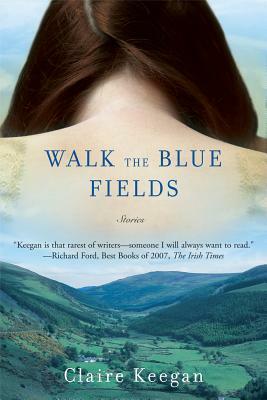
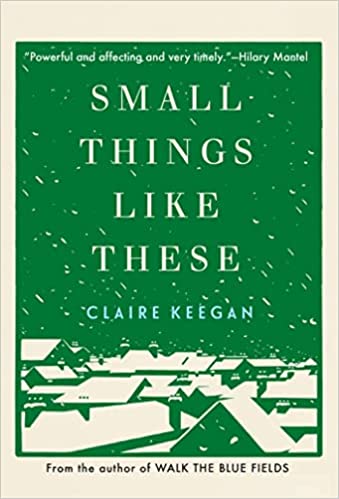
If I live through Lanark, which is almost 600 pages long, I’m planning on reading another short book that is not related to any of my projects. It’s been quite a while since I did that. The book is short stories, Walk the Blue Fields by Claire Keegan.

What about you? What are you reading now or have read recently?

Review 2561: Cultish: The Language of Fanaticism

In February, I decided to take a break from trying to finish A Century of Books and revisit my intention to read more nonfiction books that I formed during Nonfiction November. I realized I hadn’t read any nonfiction at all in 2025, so I picked Cultish, which I read about last November.

Montell is a writer and language scholar, although, taking a note from her own approach, I wonder what “language scholar” means. This book is written for the general public and takes an entertaining rather than scholarly approach.

Although I noticed at the time I was reading that I was unable to summarize the topic of any chapter (each of which is unhelpfully named with something like “Repeat after me”), Montell makes clear what she means by a cult, broadens that definition to explore whether some organizations are cults or not (hence, “cultish”), and shows how true cults use language to attract and hold followers. She starts with some of the usual suspects, moves to the death cults, and then examines the cultish qualities of marketing companies like Amway and the niche health businesses like Peleton.

This is an interesting book, but it felt a little muddled to me, probably because I didn’t feel I could single out, except by the type of business or group, the central ideas of each section of the book.

Also, I saw some evidence of sloppiness. The first was simply a syntax issue. It says on page 28, “If you subscribe to an astrology app or have ever attended a music festival, odds are that in the 1970s, you’d have brushed up against a cult.” Now, what does that mean, given that there were no astrology apps in the 1970s? or any apps for that matter. I think she meant, “If you . . . app or attended a music festival in the 1970s, odds are . . . .” To make that sentence crystal clear, you’d start the pairing with the music festival.

That’s fairly minor (except that she’s a language scholar), but she twice brings up the Branch Davidian incident and both times slightly misrepresents what happened. I lived in Texas then and remember what happened, but just in case my memories were false, I looked it up. On pages 38 and 39, she says that the FBI showed up in response to concerns expressed by families of the members. I thought, what? The FBI would never show up en masse for a reason like that, and I remembered that it was actually the ATF who came first. They came based on reports from neighbors and a gun sales business that the Branch Davidians were stockpiling weapons. Of course, everyone was shocked by the incident, especially its outcome, but it is interesting that Montell left that out, because it minimizes the role of the Branch Davidians in how the incident started. And that is also an interesting use of language.

Related Posts

The Girls

Arcadia

The Miracle on Monhegan Island