Day 1063: The 1951 Club! Hangsaman

Cover for HangsamanI picked Hangsaman to read for the 1951 Club. Unfortunately, although I have read other books published in 1951, I haven’t done so recently enough to have reviewed them on this blog.

Hangsaman is a very strange book about a young woman and her first months away at college. Although it does a masterful job of exploring her consciousness, that is unusual territory. The first scenes of the novel show her interacting with her parents while she imagines being questioned by a detective about her father’s murder.

And no wonder. Her father is an arrogant and pompous editor, who, under the guise of helping her with her writing, daily subjects her to alternating insults and compliments and tries to enlist her sympathies against her mother. Her mother also tries that, apparently with more reason.

1951 Club logoIn these circumstances, Natalie is delighted to go off to college for a fresh start. But things don’t go well there. The students are cliquish and cruel. The one girl who seems to be seeking her out as a friend turns out to be mentally unstable. And two other girls use her to torment a young university wife whose husband is having an affair with one of them.

Natalie finally makes a very strange friend, and at that point the novel goes off into murky territory, where I didn’t quite understand what was going on. When I read later that the novel was inspired by the actual disappearance of a Bennington student—the girl’s college where Jackson’s husband was employed—I understood it a little better. If you have read Shirley by Susan Scarf Merrell, it will ring some bells.
Related Posts

Let Me Tell You

Shirley

Wylding Hall

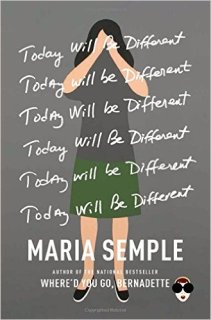
Day 1062: Today Will Be Different

Cover for Today Will Be DifferentI so much enjoyed Where’d You Go, Bernadette that I was really looking forward to Today Will Be Different. That said, this novel bears many of the same characteristics as the previous one while lacking its originality of expression.

Like Bernadette, Eleanor Flood is also a once-successful professional who is now leading a depressed life as a Seattle housewife and mother. At one time she lived in New York and was the animation director for a successful cartoon series. After the series was cancelled, she agreed to move to Seattle for ten years for her husband’s career as a hand surgeon and sports team doctor. She has been depressed because of her alienation from her sister, Ivy.

The morning of the story, she wakes up determined to do better. Soon she notices that her husband, Joe, is behaving oddly. She thinks she has a lunch appointment with an annoying friend only to realize it’s with a man she once fired from her show. And her eight-year-old son Timby is faking illness to get out of school.

When Eleanor takes Timby to Joe’s office, she finds that he has told his employees the family is on vacation. Where is Joe and what is he up to?

One of my issues with this novel is how most of Eleanor’s problems get solved in one day. Of course, this novel is meant to be light and funny, so something like that has to happen. I guess it’s more my problem with a whole genre of fiction. Still, I felt sympathy with Eleanor and liked most of the characters. I missed the zingers about Seattle from Bernadette, which I understood even though I have only been there a few times. Instead, Semple replaces this kind of thing with Eleanor blaming herself for her New York sense of superiority.

So, a middling review for this one.

Related Posts

Where’d You Go, Bernadette

To Rise Again at a Decent Hour

The Interestings

Day 1061: The Baker’s Daughter

Cover for The Baker's DaughterIn the Scottish town of Beilford, the Bullochs are worried about their granddaughter, Sue Pringle. Since her father remarried, Sue has led a tough life with her stepmother. Had she known her grandfather planned to offer her a job in his store, she would not have taken a job as cook for the Darnays to get away from home.

The first morning at work, Sue finds that Mrs. Darnay and her maid have left the house, leaving her alone with Mr. Darnay, an artist. Although for propriety’s sake she should leave him to find an older housekeeper, Sue decides to stay.

Darnay is so wrapped up in his painting that the practicalities of the situation don’t occur to him. He has previously been well paid for his paintings, but since changing his style, he is not making any money. He has a shock when he realizes he owes money in the village and hasn’t paid Sue. To make things worse, his wife has sued for divorce, naming Sue as corespondent, even though she herself created the situation that makes her husband and Sue look bad.

Sue is in love with Darnay but views him as unattainable and above her in class. Once he sends himself off in disgrace, she returns to work for her grandfather. But will she see him again?

It’s interesting to me that the class angle is still such a strong one in 1938, when this novel was written. Stevenson works around it, but this plot point seems even more important than the divorce. In any case, this is a slight but entertaining novel with likable characters.

Related Posts

Vittoria Cottage

The Lark

The Making of a Marchioness

Day 1060: Literary Wives: Z: A Novel of Zelda Fitzgerald

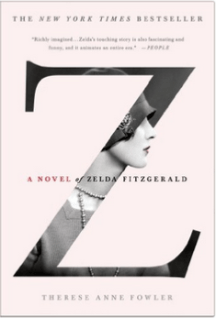
Cover for ZToday is another review for the Literary Wives blogging club, in which we discuss the depiction of wives in modern fiction. If you have read the book, please participate by leaving comments on any of our blogs. Be sure to read the reviews and comments of the other wives!

Ariel of One Little Library
Emily of The Bookshelf of Emily J.
Kate of Kate Rae Davis
Lynn of Smoke and Mirrors
Naomi of Consumed By Ink

My Review

I reviewed this novel about a year and a half ago, and I don’t want to repeat my review except as it applies to our subject. Overall, I thought that novel was interesting and painted a devastating picture of the Fitzgerald’s marriage. Here is my original review.

What does this book say about wives or about the experience of being a wife?

Although the Fitzgeralds start out with a loving relationship, their marriage goes sadly awry, mostly because of Scott Fitzgerald’s insecurities. A life full of drunken parties doesn’t help, nor does Fitzgerald’s friendship with Ernest Hemingway.

Fowler depicts Zelda as a creative woman whose work is robbed from her by her support for her husband. His “assistance” to her career of publishing several of her stories under his own name turns out to be a trap, whether planned or not. Afterwards she is unable to publish because her work is perceived to resemble Scott’s too much. When she finally writes a novel, he takes it over in the editing stage and butchers it.

Ernest Hemingway dislikes Zelda and feeds on Fitzgerald’s insecurities to destroy their marriage. Although Fitzgerald was an established author and Hemingway a newcomer when they met, Fitzgerald seems unsure about his own abilities. He starts out by taking Hemingway under his wing, but Hemingway pays him back by telling him that Zelda is ruining his life. At first, Scott dismisses such ideas, but after a while, he begins to believe them.

Being Scott Fitzgerald’s wife starts out fun but turns into a horrible life for Zelda. She struggles to express her own creativity. Aside from undercutting her career opportunities as a writer, when she is offered a lead role in a ballet, he threatens to take her daughter away from her. He returns her support by being a drunk, an unfaithful one, and by trying to control her. She finally ends up in a mental institution when she actually has nothing wrong with her mind.

Moral of the story: don’t marry insecure authors.

Related Posts

Z: A Novel of Zelda Fitzgerald

Mrs. Hemingway

Under the Wide and Starry Sky

Day 1059: In the Name of the Family

Cover for In the Name of the FamilyJust a short note about my Walter Scott Prize project. The committee has announced its short list for 2017, and I have updated my page accordingly, along with the links to Helen’s reviews at She Reads Novels. (I have read one of them but haven’t yet posted my review.) Do check it out if you are interested in historical fiction. So far, I have found most of the books on the short list to be excellent reading.

* * *

In the Name of the Family is the follow-up to Sarah Dunant’s Blood & Beauty, about the Borgia family. It picks up in 1502, with Lucrezia’s marriage to Alfonso d’Este, the son of the Duke of Urbino. This marriage is political. Her beloved second husband was murdered by her brother Cesare, because an alliance with his family was no longer expedient.

Like the previous novel, In the Name of the Family is mainly concerned with Lucrezia and Cesare. This novel also brings in Niccolò Machiavelli as a secondary character in his role as envoy from Florence. This role for Machiavelli is familiar to me from Michael Ennis’s The Malice of Fortune, although that novel was a mystery. Machiavelli was famously inspired to write The Prince by his fascination with Cesare Borgia.

One of Dunant’s aims in writing these novels was to redeem the characters of the Borgias, particularly Lucrezia. Of course, the Borgia men were ruthless and greedy, but it seems that all the other powerful families in Italy at the time were the same. Lucrezia apparently was an intelligent and charming young woman who won over most of the people she met, even the hostile court of Urbino.

Cesare begins as a brilliant strategist but begins to deteriorate mentally from syphilis.

link to NetgalleyI gave high marks to Blood & Beauty, but In the Name of the Family seemed to drag a little for me. I am not sure why. It could be because I read it in ebook form, and I have a much more difficult time concentrating on electronic books. However, that has not stopped me enjoying other novels in ebook form. Certainly, Lucrezia’s part of the story was not as important, and that was what I was most interested in. Also, I’m not sure how effective it was to occasionally introduce Machiavelli’s viewpoint.

Related Posts

Blood & Beauty

Sacred Hearts

The Malice of Fortune

Day 1058: The Second Life of Nick Mason

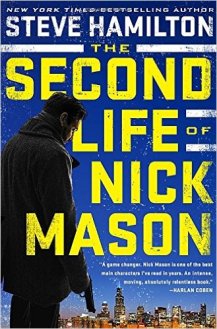
Cover for The Second Life of Nick MasonI’ve read and enjoyed several of Steve Hamilton’s Alex McKnight detective series, so I thought I’d give his new series a try. A big part of the appeal for me of the Alex McKnight books is their setting in the Upper Peninsula of Michigan, whereas Nick Mason is set in Chicago. Another big difference, though, is that Nick Mason is a criminal.

Nick has been released from a 20-year sentence in prison after making a deal with Cole, a lifer who still controls much of Chicago’s underworld. Nick gets a fancy place to live, a car, and a job on paper, and all he has to do is whatever he is told.

Nick’s main reason for wanting out is Arianna, his nine-year-old daughter, but his ex-wife doesn’t want him to see her.

Slowly, Nick finds out that Cole wants him for very dirty jobs. He also finds out that he and his friends were set up and betrayed by the guy who talked them into doing the job that Nick has been serving time for.

This novel is a straight action thriller, but unlike, for example, the Jack Reacher series, Nick’s morals are not so clear-cut. Even though Hamilton has Mason going after drug dealers and dirty cops, I don’t think I can overlook this characteristic of the series. Although Hamilton somehow manages to make Mason a sympathetic character, I’ll take Alex McKnight any day.

Related Posts

61 Hours

Without Fail

Vulture Peak

Day 1057: Conspirata

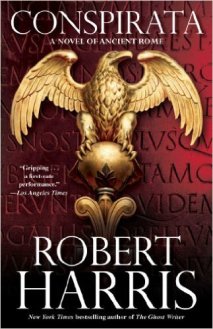
Cover for ConspirataConspirata is the second of Robert Harris’s Cicero novels, published originally as Lustrum, and is on my list of books for the Walter Scott prize. This series has been unexpectedly compelling for me. I had previously read Colleen McCullough’s series about Julius Caesar, and this series is such a contrast to it.

The novel begins at the start of Cicero’s four-year term as consul and ends shortly after it. During this time, Cicero is continually at odds with his enemies, who wish to dismantle the Republic. The most powerful of these enemies are the billionaire Crassus and Julius Caesar.

Although the intrigues in this novel are all political, that doesn’t make them any less thrilling. Harris depicts some of the most important figures in Roman history as men almost deranged by a need for power. We have strong sympathy for Cicero as he navigates the difficulties of Roman political life, forced into unpleasant choices but always trying to work for the good of Rome. This is a great series.

Related Posts

Imperium

An Officer and a Spy

Master & God

Day 1056: The Owl Killers

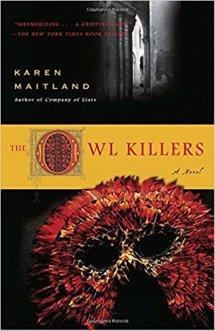
Cover for The Owl KillersIn the 1321 village of Ulewic, England, a group of women have settled into a beguinage, a community of women who are committed to a life of celibacy and service but not one sanctified by the church. Some of them are from Belgium, and they are led by Servant Martha.

The village is experiencing dark days and some of the villagers are returning to a pre-Christian cult called the Owl Killers. When the beguinage takes in a leper and then the daughter of a lord, who has been raped, the villagers and the Owl Killers begin to turn against them.

Although this novel is atmospherically dark and seems well researched, I had a hard time sticking with it. This problem may have more to do with the fact that we were moving cross-country while I was reading it than with the book itself. But I frankly found few of the characters sympathetic. The village priest is so terrified that the truth of his affair with a man will come out that he is led into dastardly acts. Servant Martha seems completely blind to what is going on with some of the members of the beguinage. Beatrice is jealous and bitter. Osmana is sympathetic but one-dimensional.

I may try another Maitland novel at a better time. The novel blends a bit of the supernatural with a fairly straight historical narrative, which combination is interesting.

Related Posts

The Daylight Gate

Harvest

The Chalice