This week’s Best Book is A Man Could Stand Up by Ford Madox Ford. Also highly recommended is Valiant Ambition by Nathaniel Philbrick!
Day 940: Passages in the Life of Mrs. Margaret Maitland, of Sunnyside
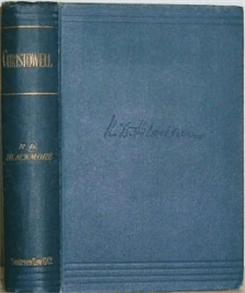
I have mentioned before that Margaret Oliphant was one of the most popular novelists of her time, but only a few of her novels are easily available except in print by demand. So, her complete works was one of the collections I selected from Delphi Classics in e-book form.
I decided to read the works in order of their appearance in the collection, and this novel is the first, published in 1849. Like the others I have read, it is a domestic novel, about events in the lives of ordinary people. It has a few light overtones of a more sensational genre, however.
Margaret Maitland is a spinster when she takes on the charge of raising a young orphan, Grace Maitland. Since her mother’s death, Grace has been in charge of an aunt, but Margaret’s friend thinks she will do better with Margaret, and Grace’s aunt has no objection. So, Margaret takes young Grace and frankly loves her at first sight. Grace lives happily at Mistress Maitland’s home of Sunnyside and spends a lot of her time with Margaret’s niece Mary and nephew Claud. Margaret’s brother Claud is a minister, and Margaret and her family are strict Scottish Presbyterians.
When Grace is a young woman, though, her aunt, Mrs. Lennox, demands that she return to live with her in Edinburgh. Grace does not have fond memories of Mrs. Lennox and does not want to go, but Margaret urges her toward obedience and hopes that things will be better for her than Grace expects. There have been rumors that Grace is an heiress, but no one at Sunnyside has put much store in them.
For some time, all we hear from Grace are her letters. Her family keeps her isolated from other people, never letting her attend events but telling others she is an invalid. When Claud, who is at school in Edinburgh, calls on her, he is first told she is not at home and later treated shamefully.
There is other drama closer to home, because Margaret’s niece Mary is being courted by Allan Elphinstone, young Lilliesleaf. His mother is looking higher for him than Mary, though, and encourages him to associate with the nearby gentry, where he gets into bad company. Mary won’t have him, therefore, and Margaret can only agree, for a similar situation in her youth brought her to her solitary state. Margaret thinks Allan can improve, though, and he sets out to try to do so. A subtitle on some editions of “Lilliesleaf” leads me to suppose that the plot about Mary and Allan was supposed to be the main story, but I was more interested in Grace’s predicament.
This is an enjoyable novel with likable characters, even though some of its attitudes seem very dated. One difficulty I had with it, though, is that it is written in Scots dialect. The narration by Mistress Maitland isn’t difficult to understand, but some of the country folk use expressions with which I am unfamiliar, so I think I missed most of the humor of the novel. In addition, this e-book was almost certainly machine read from an old manuscript and there are many mistakes, especially in words where old-style typography had ligatures, or connected letters. The combination of the dialect, which had words I didn’t understand, with the many typos made the text difficult. If you want to read this, you might try finding an old used book instead of an e-book or print on demand edition (which I assume would have the same problems).
Related Posts
Day 939: A Man Could Stand Up
Best Book of the Week!
At the beginning and end of A Man Could Stand Up, the third book of Ford Madox Ford’s Parade’s End, it is Armistice Day. In between, the book returns in time several months to the front.
Valentine Wannop is at her job as a schoolmistress in a London school when classes are dismissed because of the Armistice. But in the midst of all the confusion, Valentine receives a spiteful phone call from Lady MacMaster about Christopher Tietjens. Since Lady MacMaster has been spilling her poisonous lies to the headmistress, Valentine finds herself having to make plain to her what she barely understands herself.
Months earlier, Tietjens has been ordered to take second in command of a unit at the front. He was in a much safer position in charge of moving men, but General Campion has, as usual, miscontrued the events in the second book between Tietjens and his faithless wife and has transferred Tietjens to a position of more danger. Unfortunately, his commanding officer has been drinking too much, and Tietjens has to remove him from duty. The novel depicts the events of a chaotic night during a bombardment.
This novel has been considered one of the best books about World War I. Certainly I have enjoyed every minute reading about the principled Tietjens, whose every action has been misinterpreted, and his so far unfulfilled affair with Valentine Wannop.
Related Posts
Day 938: What Alice Forgot
Alice Love wakes up from an accident thinking she is 29, pregnant with her first child, and madly in love with her husband Nick. But she is actually 39, the mother of three children, and separated from Nick. It takes her a while to understand she is ten years older, much thinner, and quite a bit harder and more driven than she remembers.
Alice escapes from the hospital by simply lying to the doctors. But somehow, she must piece together her life from the allusions of other people and her own feelings of occasional discomfort. How can she get along with her three unknown children? What happened between her and Nick? Why are she and her sister Elizabeth on the outs? And who the heck is Gina?
I thoroughly enjoyed this novel, mostly because of its characterizations. Alice in her 29-year-old reincarnation is guileless and likable, and Nick in her memories is also endearing. Alice’s children seem like real kids, adorable one minute and infuriating the next.
I didn’t like as much the sections written by Elizabeth to her therapist or by Frannie to her long-dead fiancé, but their stories add more depth to the novel. Since the focus was so much on Alice, there probably wasn’t another way to fit that information in.
All in all, this is another highly enjoyable novel from Moriarty. Toward the end, I was afraid she was going to take an easy path, but she did not.
Related Posts
Day 937: Suite Française
I tried to read Suite Française when it first came out in the early 2000’s, but I was completely turned off by its characters, whom I found petty and vicious. But that’s exactly the point, I find, picking up the book again because of a book club. Although a well-known writer who had lived in France for half her life, Némirovsky was denied French citizenship presumably because she was Jewish. She was inspired to write the novel because of the behavior she witnessed during the evacuation of Paris in World War II. She never finished this ambitious novel because she was deported to Auschwitz in 1942 by the French government and died there a month later.
Suite Française consists of the first two parts of what was to be a five-part novel. “Storm in June” follows various Parisians as they evacuate Paris with the rumor of the German advance. They have left it very late, but even so, Mrs. Péricard delays, waiting for her linen to be returned from the launderer. Later, she scours a small village trying to find sweets to refill her supply that she has passed out to starving fellow evacuees, but when she learns that everyone is out of everything, she snatches back some of her treats to save them for her family. Even later, in a rush to catch a train to safety, she actually forgets her ailing father-in-law, who dies alone in a hospice.
Charles Langelet abandons Paris in his car filled with his collection of porcelain. When he runs out of gas, he persuades a young couple that they can rest and he will watch their car, which he steals.
Gabriel Corte is a famous writer who evacuates with his mistress, Florence. Throughout the chaos, he behaves with extreme selfishness and expects special treatment.
The only sympathetic characters are the Michauds, who work in a bank. They have been instructed by their boss, Corbin, to meet him with their things in front of the bank, where employees who are needed in Tours can share rides. He himself has promised a ride to the Michauds, but when they get to his car, his mistress is there with her dog, even though he has already told her he can’t take her. After an argument, the Michauds are abandoned, with no recourse except to walk to Tours. All the while, they are worried about their son Jean-Marie, a soldier at the front. When they are forced to return to Paris because the road to Tours is closed, Corbin fires them.
The spiteful, satiric tone of “Storm in June” subsides a bit for “Dolce.” This volume examines the fate of two families in the village and countryside nearby where many of the evacuees ended up stranded before they returned to Paris. It is now months later.
One family is the Sabaries, the country folk who tended Jean-Marie when he was wounded. Although their foster daughter Madeleine fell in love with Jean-Marie, she has married the son of the family, Benoît, and has had a baby. A young German officer has been billeted on the family and pays attention to her. Although she is afraid of the German, Benoît is jealous.
In the village, Lucile Angellier is shut up in the dark house with her mother-in-law, who dislikes her. (The Angelliers briefly took in the Péricard family during the evacuation.) Lucile was pushed into her marriage by her father and found out soon afterwards that her husband has a mistress. In her loneliness, she becomes attracted to the German lieutenant billeted in their house.
My strongest reaction was to the first book, which I found a bit shocking. Despite a review comment on the back of the book about its “indictment of French manners and morals,” I wasn’t sure if the social commentary was meant to be more general or specifically against the French. According to Némirovsky’s own notes, it was against the French.
As to the second book, it seemed as if it was intended to build toward ramifications later in the novel, which, of course, was never finished.
Related Posts
Day 936: Valiant Ambition: George Washington, Benedict Arnold, and the Fate of the American Revolution
Although he has written on other subjects, Nathaniel Philbrick has made a specialty of writing about events and industries that affected New England, including the Revolutionary War. His latest book concentrates on the forces and personality flaws that resulted in Benedict Arnold’s betrayal of his country.
I haven’t read much about Benedict Arnold, only one novel, Rabble in Arms by Kenneth Roberts. That novel painted him in surprisingly sympathetic colors, blaming his treachery largely on the rapacious demands for money of his wife Peggy. Philbrick’s view is more nuanced.
Certainly, at the beginning of the war you can sympathize with Washington and with Arnold. For his part, Washington was hamstrung by the ineffectiveness and bickering of the Continental Congress. He had very little power over such decisions as which of his officers would receive promotion, which lead to the initial difficulties with Arnold.
A key to the British strategy of cutting off New England from the rest of the country was the chain of lakes leading down from Canada to the Hudson. So, Fort Ticonderoga was an important target. Benedict Arnold and a rag-tag collection of boats prevented the British from approaching the fort in the fall of 1776, before the lakes could freeze up to keep the British out.
As the hero of this engagement and the senior Brigadier General in the Continental Army, Arnold expected a promotion. But the Congress devised an idiotic scheme that awarded the promotions not on merit but according to what state the person was from. Since Connecticut already had two Major Generals, Congress awarded the promotions to other Brigadier Generals who were junior to Arnold, some of whom were only mediocre in ability. Washington protested this decision, to no avail. Even after he got his promotion, Arnold was forced to defer to these men who were promoted before him.
It was this kind of bickering about states’ rights and even local rights versus the rights of a national government that hampered the Congress. In addition, there were plenty of people out for what they could get. I was shocked to read that while no one was interested in supporting the Continental Army, to the point where they were starving and dressed in rags, the rest of the country was doing very well financially. Arnold joined into this self-enrichment when he was made military governor of Philadelphia after it was captured back from the British. He was actively engaged in all kinds of corruption.
Philbrick’s book is really interesting and sometimes quite exciting as it revisits key scenes from the war and leads up to Arnold’s big betrayal. His conclusions about the results of the betrayal are startling.
Related Posts
Best Book of the Week!
This week’s Best Book is One Fine Day by Molly Panter-Downes!
Day 935: Acté
Acté was Alexandre Dumas’ first novel and a partial inspiration for Henryk Sienkiewicz’s Quo Vadis. As with most of Dumas’ work, it is based on actual historical characters. That being said, my research tells me that it is unlikely that Acté was a Christian convert.
This novel begins in Corinth in the year 57 A.D. Corinth is preparing to hold a competition of wrestling, chariot racing, and singing. Acté, a beautiful Greek girl, is on shore when a bireme arrives containing one of the competitors. Acté falls in love with this man, Lucius, at first sight, and he appears to fall in love with her.
Lucius wins all three competitions but in a manner that seems to fill the audience with dread. He also behaves in an oddly commanding way. To the reader, things don’t look good for Acté, but she heedlessly runs off with Lucius, leaving her home and father behind.
It is not until their arrival in Naples that Acté learns with horror her lover’s true identity. He is the Emperor Nero. Acté is further horrified at the behavior of his court, especially the dissoluteness shown during feasts.
Nero’s formidable mother, Agrippina, actually approves of Acté and hopes that by her innocence, she will discourage Nero from his excesses. But in shock one night at the behavior during a feast, Acté runs to Agrippina for shelter. Unfortunately, that is the same night that Nero has decided to have his mother murdered by sinking her ship with her on it. Agrippina and Acté are almost drowned, but they get away, and Acté is rescued on the shore by the Apostle Paul. Agrippina, although briefly rescued by Acté, ends up dying.
There are lots of descriptions of races and fights and battles in this novel, but its focus is on the fall of Nero and the role Acté played. Acté herself is just a cardboard figure prone to fainting, which is interesting since she is strong enough to swim to shore from the middle of the Bay of Naples, supporting Agrippina, and is described in terms of an athlete and Diana the huntress.
In addition, the many pages wherein St. Paul describes his conversion and in doing so recounts most of the life of Christ, are deadly dull and unnecessary. If his words are meant as the inspiration to convert Acté, I believe they would be more likely to put her to sleep.
All in all, this novel is interesting as the start of Dumas’ career but is not in itself the most compelling of historical novels. It is based on the most damaging of the accounts of the life of Nero, who has been rehabilitated to some extent in more recent scholarship.
Note that the cover at the top is for a French-language version. The only English-language version I could find had just a black cover. My own version is a Kindle collection of complete Dumas works, published by Delphi Classics, shown just above.
Related Posts
Day 934: One Fine Day
Best Book of the Week!
It is shortly after World War II, and Laura Marshall and her family are trying to return to normal life during the privations of post-war England. With only one part-time housekeeper, Laura is struggling with unaccustomed chores. The house and garden are beginning to look shabby, which bothers Laura’s husband Stephan, who struggles with the lawn every weekend.
The family is also having to accustom itself to living together again. Through the war, Laura and her daughter Victoria shared the house in a relaxed way of life with various female friends and children. Stephan is inclined to be more fastidious, while Laura is dreamy and untidy.
This novel takes place over the course of a fine summer’s day as Laura does her chores and thinks about a way of life that is disappearing. It is beautifully written, with evocative descriptions of nature. Barrow Down, which looms over the landscape, is an important feature of this novel.
This is a lovely short novel.
Related Posts
Day 933: The Night Stages
While reading The Night Stages, I kept wondering when, if ever, the stories of the characters would link up. The answer is, one character’s story does not, except metaphorically. Still, I thought the novel was at times poetic, and engrossing and affecting enough to recommend it.
It is post-World War II, and Tam is fleeing her married lover. Upset by a confrontation she had with him, she drove from her cottage in Kerry to Shannon Airport and took a flight to Gander in Newfoundland. There, she has been stranded by fog for several days. While she waits in the lounge, she examines a cryptic mural, Flight and Its Allegories by Kenneth Lochhead. Tam’s relationship with Niall has been poisoned, not by his thoughts of his wife Susan but by his memories of his lost brother Kieran.
Kieran as a boy suffers from rages that overpower him. When he was young, his mother and her chemist, both addicted to pain killers, committed suicide. His father finds it impossible to handle Kieran, who hears his mother’s voice inside the house, but Kieran likes the housekeeper, Gerry-Annie. When Gerry-Annie announces she is taking Kieran home with her to live, no one objects.
Kieran develops a deep love of the Kerry countryside and travels all over it on his bicycle. While Niall is studying in college to be a meteorologist like his father, Kieran is an unskilled laborer who loves the stories and songs of the country people. Then Kieran falls in love with Susan, Niall’s fiancée. The story climaxes around the Rás, a bicycle race through the Irish countryside.
Making the novel seem more diffuse is the introduction of Kenneth Lochhead as a character. We see how episodes from his life have inspired characters in his mural. But the description of the mural is a difficult thing to grasp just through text, and the small pictures that come up in Googling it convey very little, although I would love to see it sometime. It seems to me as though the emphasis on the mural and this character take away some of the power of the novel.
Flight is a recurring theme of the novel. Tam used to be a pilot during World War II, flying planes from one location in the U.K. to another. She is on a flight from her earthbound life in Ireland, and of course Kieran has flown Ireland. Then there are the descriptions of biking down the steep mountains and through the valleys of Kerry.
Although I think the novel would have been more cohesive without Kenneth, and in retrospect, Tam’s past as a flyer seems irrelevant (although making me wonder why the person she was before would put up with the situation with Niall), I was deeply involved in the story of Kieran, Susan, and Niall. I think this is an ambitious novel that doesn’t quite accomplish its goals but is beautiful and definitely worth reading.
Related Posts