The Best Book for this period is A Pale View of the Hills by Kazuo Ishiguro!
Review 2660: Little Boy Lost
When World War II broke out in France, Hilary Wainwright left his pregnant wife Lisa in Paris to rejoin his regiment, thinking that the British would be fighting in France. He only saw his son, John, once, shortly after he was born. Later, he heard that Lisa, who was working with the resistance, was dead. He had no idea what happened to the baby, but he once received a visit from Pierre Verdier, the fiancé of Lisa’s best friend, Jeanne. He reported that Lisa had given the baby to Jeanne shortly before she was arrested, but that now Jeanne was dead, and he did not know what happened to the baby.
The war is over, and Pierre returns. He tells Hilary he wants to look for John for him. Hilary is now ambivalent about finding his son. When Lisa was killed, he envisioned getting comfort from raising his son, but it has been five years. Now he’s more worried about how to tell whether any boy they find is really his.
Pierre eventually traces a boy who might be John to a Catholic orphanage in Northern France. Hilary goes to Paris to meet the people Pierre traced. He has always loved France, but post-war, the country is in dire straits. Hilary travels to the northern town to try to determine whether the boy, called Jean, is his.
Frankly, I disliked Hilary pretty much all the way through this novel. The Afterword says that it takes Hilary until the last few pages to know his own mind, but in fact, he uses every excuse to try to disassociate himself from responsibility. When he thinks he would be betraying Lisa if he accidentally took home the wrong boy, for example, it seems clear from what is said about her that she would have taken Jean as soon as she saw his plight.
Small spoiler—when it seemed Hilary was going to use his lust for an obvious slut to break his promises, I was really disgusted.
That being said, I still enjoyed reading this novel, which is touching and insightful into human weakness. It also provides a post-war view of France that is bleak and that I hadn’t read of before.
Related Posts
Review 2659: Study for Obedience
The unnamed narrator moves to another country, one she describes as a northern country of her family’s ancestors, to live with and be housekeeper to her recently divorced brother. She has been raised, she says, to curb her natural inclinations and be obedient. Certainly, her relationship with her brother looks more and more disturbing as the book progresses. For example, a point that comes out early on, she bathes and dresses her brother, who is not an invalid. Later, we learn that he insists she watch TV with both the sound and the subtitles off.
But how trustworthy a narrator is she? Her whole existence seems colored by a twisted view of life. For example, early on, she says that when she quit her job, her coworkers were so pleased to get rid of her that they gave her a big party. Well, isn’t that a tradition for a long-serving employee?
Her attitude is entirely negative—taking everything on herself. Despite being fluent in several languages, she is unable to learn the language of her new home. Almost immediately after her arrival, her brother departs for an unexplained reason, so she finds herself cut off, unable to make herself understood, with only a three-legged dog for company. She begins to sense that she’s being blamed for a series of agricultural disasters, as if she’s a witch. Since her Jewish ancestors were forced to leave this area during the war, she reads a lot into this.
Actually, she reads a lot into everything, tortuously examining every glance, every event. The book doesn’t really have a plot; it’s more about her exhaustive examinations of everything. If it hadn’t been so short, I would have quit reading it, because as another StoryGraph reader said, I felt like I was being psychologically tortured.
There is a turn to the book, but it just becomes more perverse. I read it for my Booker Project.
Related Posts
WWW Wednesday!
It’s the first Wednesday of the month, so it’s time for WWW Wednesday, an idea I borrowed from David Chazan, The Chocolate Lady, who borrowed it from someone else. For this feature, I report
- What I am reading now
- What I just finished reading
- What I intend to read next
This is something you can participate in, too, if you want, by leaving comments about what you’ve been reading or plan to read.
What I am reading now
I am reading The Deepening Stream by Dorothy Canfield Fisher, which I’ve had sitting on my nightstand for a few weeks but was avoiding during Nonfiction November and Novellas in November because it is 600+ pages long. However, it is perfect for Doorstoppers in December, so I signed it up for that. I originally chose it because it’s on my Classics Club list, so reading it serves two purposes. So far, the novel may be autobiographical, and it is covering the main character’s childhood. It was published in 1930.
What I just finished reading
I just finished a really entertaining early mystery, Enter Sir John, by two authors I have never heard of, Clemence Dane and Helen Simpson. Well, actually, I think I have heard of Clemence Dane, but not in terms of mystery novels. It turns out both were successful writers, Dane mostly as a screenwriter and Simpson as a novelist. This mystery is from 1928.
What I will probably read next
The next book in my stack is Wild Dark Shore by Charlotte McConaghy, which has shown up here and there a lot this year. I have forgotten what it’s about since I ordered it, but that just makes it more fun to dig in!
What about you? What are you reading?
Review 2658: Rum Affair
The famous coloratura opera singer Tina Rossi has made a rendezvous with her lover, Kenneth Holmes, at the flat of one of his friends. When she arrives, though, Kenneth is not there, but a body is in the wardrobe. She has just discovered it when Johnson Johnson, the famous portrait painter, arrives with two policemen, saying there’d been a complaint. Reader of this series know that Johnson is a lot more than an artist. (Although I guess they don’t know at this point.)
Tina puts them off, but after they go outside, a man with a gold tooth bursts out of the wardrobe. Tina screams, but they miss him and he escapes.
Tina is now afraid for Kenneth, but acknowledging the affair could destroy her career. She decides to go to the island of Rum, where his laboratory is located. But she must do it without anyone suspecting, especially her agent, Michael Twiss, who has been trying to keep them apart. Later, she hears that Kenneth is suspected in the explosion aboard a nuclear submarine that was developed under his management. That makes her more eager to get to Rum.
Luckily, Johnson offers to paint her portrait if she will join him for a yacht race in Western Scotland that ends near Rum. Shortly after they leave, it becomes clear that someone is trying to kill Tina.
Dunnett’s Dolly series (Dolly is the name of the yacht) poses as mysteries but the books are really adventure novels with espionage at their core. They are fast moving with entertaining dialogue. All of them are narrated by a different woman, vividly drawn. The 60s yachting life seems to be pretty wild. These books make entertaining reads, even though it is generally impossible to guess what’s going on.
These books have not been republished in order, and I have not been reading them in order. This one, original name Dolly and the Singing Bird, was actually the first one in the series.
Related Posts
Review 2657: Literary Wives! The Soul of Kindness
Today is another review for the Literary Wives blogging club, in which we discuss the depiction of wives in fiction. If you have read the book, please participate by leaving comments on any of our blogs.
Be sure to read the reviews and comments of the other wives!
- Becky of Aidanvale
- Kate of booksaremyfavoriteandbest
- Naomi of Consumed By Ink
- Rebecca of Bookish Beck
My Review
Although this novel has a main character, Flora, it is more of a community novel, about a group of people whose lives are affected by Flora. I was going to say by her actions, but Flora doesn’t really act.
Flora’s best friend Meg has never approved of how much Flora’s mother, Mrs. Secetan, cossets her, but in school Meg picks up the cossetting herself. Flora is a beautiful young woman, getting married to Richard in the first chapter, and people tend to worship her and try to protect her. Her influence is well-intentioned, but she doesn’t seem to understand that what she believes is good for other people may not be.
There’s her father-in-law, Percy, for one. He is a widower who drinks a bit too much and whom Mrs. Secetan thinks is uncouth. He has been happy with his mistress Ba for years, living apart, having his days to himself and his nights with Ba. And Ba, who owns a dress shop, likes the independence this gives her. But Flora thinks they will be happier married.
And Kit, Meg’s younger brother, adores Flora. She encourages him in his career as an actor even though he can’t act and is a financial burden on Meg.
And Meg loves her friend Patrick, whom everyone but Flora realizes is gay. Even when Richard tells her that, she can’t believe it and persists in wondering why they don’t get married.
If you ask Richard, he’s happily married, although he works a lot. Yet he occasionally seeks out the company of a neighbor, Elinor Pringle, whose playwright/activist husband leaves her alone almost all the time, even when he is home. Their friendship is entirely innocent, but when Flora learns about it, she can’t grasp that.
In fact, Flora, meaning well, is often cruel because she utterly fails to see anything from anyone else’s point of view. And only Kit’s friend Liz sees her for what she is. Everyone else thinks she’s wonderful.
I feel that Taylor is very observant of people’s foibles. As a realist writer, she doesn’t really deal in unmixed joy. She has a fine eye for complex personalities, though.
What does this book say about wives or about the experience of being a wife?
There are three marriages on view here—Richard and Flora’s, Percy and Ba’s, and the Pringles’, although we don’t get much perspective on the feminine half of the marriages except Elinor’s. From the beginning I didn’t forecast success for Flora’s marriage because she wasn’t paying attention during the groom’s speech and seemed more concerned about her doves. But it seems to be surprisingly successful. Yet, Richard is clearly getting something out of his friendship with Elinor that he doesn’t get from Flora. He is innocent of any intent to deceive, but Flora is beginning to doubt him by the end of the book, and I foresee trouble from that.
Percy was happier with Ba as his mistress, because he had time for himself. And perhaps Ba, although we don’t see much from her point of view, was happier, too.
In the introduction to my edition, Philip Henshir states that Taylor felt it was better to be lonely than bored. Certainly, there are some lonely people in this book. Elinor Pringle is one of them. Between his activist meetings and his time spent writing bad plays, her husband Geoffrey leaves her almost entirely alone. She has little to do, so she is both lonely and bored. In this marrriage, we see only her dissatisfaction.
As for Flora, she seems perfectly happy as wife, mother, and interferer in other people’s business until her interference nearly causes a tragedy and she gets a letter from Liz. And then, at least to her, her husband seems to be meeting another woman.
Related Posts
Review 2656: The Edinburgh Murders
I still prefer McPherson’s stand-alone thrillers to any of her mystery series, but Helen Crowther is starting to grow on me. This is the second book in the series.
Helen is an almoner serving the poorest neighborhoods in Edinburgh post-World War II. Her title has just been changed to welfare officer, but her job is a lot more hands on than we would expect. So, she is bathing a woman at the public baths when two things happen—first, she spots her father in a booth but it is not the family’s usual night. Then, in the next booth an attendant finds a man who has been boiled to death. Helen, trying to help, notices that although his clothes are those of an abattoir worker, his hands are not those of a working man, and someone has removed his signet ring.
No one comes to identify the body, but Helen thinks her father knows something about it.
Helen’s personal life is complicated. In the first book, she was newly married and wondering why her marriage was not consummated. (Spoiler for the first book.) She has discovered her husband Sandy is in love with a man, Gavin. Now she lives alone in an upstairs apartment with Sandy and Gavin below. Things are going to get more complicated, because Helen is attracted to Billy, a technician in the morgue. Her friend Caroline wants to visit the morgue, so they arrive there to find out that another corpse has arrived, this one forced to eat himself to death and dressed like a tanner with a signet ring missing.
Helen agrees to go ice skating with Billy, Caroline, and Billy’s coworker Tom, and another body is found frozen under the ice. Then there is a fourth.
Helen and Billy begin investigating the murders, which are being blamed on an escapee from a mental hospital. But they don’t think he did it.
In the meantime, Helen and Caroline are arranging a Halloween party for the local kids at an Adventist church. It turns out spookier than they planned.
I like the flavor of Edinburgh in these mysteries, although like her Dandy Gilver series, they are super complicated, without much of a hint about the perpetrators until the end.
Related Posts
Review 2655: #NovNov25! A Pale View of the Hills
A Pale View of the Hills, Kazuo Ishiguro’s first novel, is restrained and delicate and at first seems relatively straightforward. But towards the end, ambiguity sets in, forcing the reader to think back through the events of the novel. I read it for Novellas in November.
Etsuko is a Japanese woman, a widow living in England whose eldest daughter, Keiko, has recently committed suicide. Her younger daughter, Niki, is visiting from London, and a child they see on a walk together reminds Etsuko of her life in Nagasaki just after World War II. Particularly, she is reminded of her friendship with a woman named Sachiko.
Nagasaki is recovering from the bombing. Etsuko is married to Jiro only a short time, and she is pregnant. The other women in her apartment building talk about Sachiko and say she is unfriendly. She lives with her daughter Mariko in the only house left in the area, a rundown cottage.
Etsuko meets Sachiko when she expresses worry about Sachiko’s young daughter, who seems to be left alone quite often. Sachiko talks as if her daughter is the most important thing in her life, but she doesn’t worry when she is out late, and Mariko is a very strange girl. Also, we eventually learn that Sachiko has an American lover, Frank, who keeps promising to take them to America but then abandons them and drinks up all their savings.
For her part, Etsuko behaves like a dutiful housewife and entertains Jiro’s visiting father, whom she likes very much. But in the present time we understand that she left Jiro to move to England with Niki’s father.
The plot of the novel centers on Sachiko’s choice—whether to return to live with her rich uncle and cousin, who welcome her, to live the life of a traditional widow, or to go off with Frank. The girl Mariko detests Frank, by the way, and she is also concerned about the fate of some kittens.
There is a moment late in the book that made me doubt that I fully understood what was going on, and this ambiguity is not resolved. As a narrator, Etsuko is not altogether reliable, but whether this moment is a slip of self-identification or of something more sinister, readers have to decide for themselves. Certainly, by then the story has taken on a darker tinge.
Some readers may not care for this ambiguity and others, I understand, have come up with some far-fetched theories, but along with its elegiac pure prose, it is this moment that turns the novel into one you will remember and think about.
Related Posts
Wrap-Up for My James Tait Black Project
Announcement of a Review-Along!
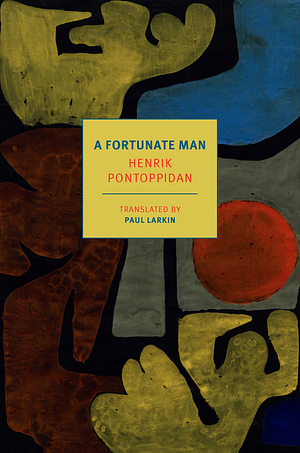
Before I plunge into my topic, FictionFan and I are announcing a Review-Along of the works of Henrik Pontoppidan, the Danish Nobel Prize for Literature winner (1917). We both chose his most famous book to read, A Fortunate Man (also known as Lucky Per), but readers are welcome to choose any of his works that are available. We’re aiming for March, as A Fortunate Man is a real doorstopper! See the details at FictionFan’s announcement post here!
James Tait Black Fiction Prize Wrap-Up
A few years ago, I decided to add the James Tait Black Fiction Prize to my shortlist projects. However, after a while I felt like I was reading too much British fiction as opposed to American or fiction from other countries, since all my prize projects were Brit-based and I also read a lot of reprinted British fiction. So, I dropped the James Tait in 2023 and added the Pulitzer Prize for Fiction. For the James Tait, I started my list back a few years, at 2010.
When I was just trying to wrap up this project by finishing the few books I had left to read, some fellow bloggers asked me if I would provide a wrap-up post for my reading. So, here it is, for the shortlisted books from 2010-2023, I know I’m finishing a few years later, but many of the books for this project were never available from my library, so I waited to see if they would become available and at the end, had to buy them. That hasn’t been a problem with my Booker or Pulitzer projects, although it has sometimes affected my Walter Scott Fiction Prize project.
The Data
Thanks to a request by FictionFan, I am providing data about my project. I am not a data person, so bear with me.
I began this project October 6, 2017, and decided to wrap it up in 2023. I finished reading on October 4, 2025, but it’s taken me this long to schedule the final two reviews. I posted my last review last Thursday, November 20, 2025.
Number of books read for project: 57
Ratings in The StoryGraph
Keep in mind that until 2025, I stored this data in Goodreads, which does not allow fractional ratings. There were only two books in the list that had fractional ratings, so I rounded them down. I am not really happy with 1-5 ratings, because to me, a 3.25 rating (a little bit better than 3, which is my meh rating), for example, is a lot different than a 3.75 rating (almost a 4).
Yes, I made some charts! It’s been a long time since I used Excel, so pardon me for any awkwardness. As you can see below, most of the books were rated either 3 (green) or 4 (blue).
Author Information
Number of female authors: 34; Number of male authors: 22
Note that one author made the shortlist twice.
I made a chart for author nationality. This chart is off by one because Sarah Hall is listed twice in my data, and I couldn’t figure out how to exclude one of her from this chart. So, there is one extra count for “English.” I used nationality as listed in Wikipedia, which for some authors listed two. Where are the Canadian authors, guys?
Settings
This answer was difficult, because some settings were unspecified while other books were set in several places, and one was just “Europe.” The chart I generated was unpleasing, so here is the data entered by hand for number of books in a setting:
U. S.: 17
England: 13
Ireland: 2
Scotland: 2
Multiple countries: 9
Unspecified: 5
Only one novel is set in each of the following countries: Kosovo, Bulgaria, Italy, Spain, Nigeria, Russia, Japan, Uganda, and Vietnam.
Genres
This section is problematic, I know, but I decided to add it at the last moment. The problem is that genres are so fluidly described these days that I could have a different list for each book! I tried for broader categories and used a search when I needed to, but sometimes I got as definitive a genre as “novel.” I also realize that short fiction could also fit into one or more of these genres, but I didn’t go there. I didn’t want to deal with specifying more than one genre per book. So, I did my best. Here is the genre breakdown I came up with. I was surprised by how many of the novels were historical, although I know it has recently become a very popular genre.
How Much I Liked Them
I wasn’t sure how to organize this section, so I decided to break it up into categories by how much I enjoyed the book. So, with no more adieu . . . These books are ordered by year of the prize, with the earliest first. For the most part, you will see that the category I put a book in has no relationship to whether it won that year or not. Winners are marked in red.
Books I Loved
- Wolf Hall by Hillary Mantel (2010)
- The Thousand Autumns of Jacob de Zoet by David Mitchell (2011)
- The Invisible Bridge by Julie Orringer (2011)
- All the Birds, Singing by Evie Wyld (2014)
Books I Highly Recommend
- The Children’s Book by A. S. Byatt (2010)
- Solace by Belinda McKeon (2012)
- Snowdrops by A. D. Miller (2012)
- The Panopticon by Jenni Fagan (2013)
- Benediction by Kent Haruf (2014)
- Dear Thief by Samantha Harvey (2015)
- Fourth of July Creek by Smith Henderson (2015)
- The Wolf Border by Sarah Hall (2016)
- The First Bad Man by Miranda July (2016)
- The Lesser Bohemians by Eimer McBride (2017)
- American War by Omar El Akkad (2018)
- White Tears by Hari Kunzru (2018)
- Demon Copperhead by Barbara Kingsolver (2023)
Books I Moderately Recommend
- The Selected Works of T. S. Spivett by Reif Larsen (2010)
- There But for the by Ali Smith (2012)
- The Big Music by Kirsty Gun (2013)
- The Deadman’s Pedal by Alan Warner (2013)
- Harvest by Jim Crace (2014)
- In the Light of What We Know by Zai Haider Rahman (2015)
- We Are Not Ourselves by Matthew Thomas (2015)
- A Country Road, A Tree by Jo Baker (2017)
- Attrib. and Other Stories by Eley Williams (2018)
- Heads of the Colored People by Nafissa Thompson-Spires (2019)
- Sight by Jessie Greengrass (2019)
- Ducks, Newburyport by Lucy Ellman (2020)
- Sudden Traveler by Sarah Hall (2020)
- Travelers by Helon Habila (2020)
- Girl by Edna O’Brien (2020)
- Alligator & Other Stories by Dimi Alzayat (2021)
- A Children’s Bible by Lydia Millet (2021)
- LOTE by Shola von Reinholdt (2021)
- Memorial by Bryan Washington (2022)
- Bitter Orange Tree by Jokha Alharthi (2023)
So-So or Even Meh or Some Good Stuff
- Strangers by Anita Brookner (2010)
- Nocturnes by Kazuo Ishiguro (2010)
- The Lotus Eaters by Tatjana Soli (2011)
- Leaving the Atocha Station by Ben Lerner (2013)
- The Flame Throwers by Rachel Kushner (2014)
- You Don’t Have to Live Like This by Benjamin Markovits (2016)
- Beatlebone by Kevin Barry (2016)
- What Belongs to You by Garth Greenwell (2017)
- First Love by Gwendolyn Riley (2018)
- The First Woman by Jennifer Nunsubuga Makumbi (2021)
- English Magic by Uschi Gatward (2022)
- Libertie by Kaitlin Greenidge (2022)
- A Shock by Keith Ridgway (2022)
- Bolla by Pajtim Statovci (2023)
- After Saphho by Shelby Wynn Schwartz (2023)
Books I Actively Disliked or That Annoyed Me
- La Rochelle by Michael Nath (2011)
- You & Me by Padgett Powell (2012)
- The Sport of Kings by C. E. Morgan (2017)
- Murmur by Will Eaves (2019)
- Crudo by Olivia Laing (2019)
Best and Worst
The best book choice is tough, but I pick Wolf Hall by Hilary Mantel. It captured me every second and was minutely researched.
The worst book choice is easy, the only one I didn’t finish, You & Me by Padgett Powell. Who needs to rewrite Waiting for Godot anyway? And so unfunny.
Review 2654: #NovNov25! Why Did I Ever
Technically, Why Did I Ever is a little longer than the page limit for Novellas in November at 210. But I found it in a list of recommended contemporary novellas and read it for this event.
Part of me doesn’t want to present a cogent plot synopsis for this book, because it isn’t presented cogently. Instead, the novella is written in fairly unconnected snippets, some of them titled but in a way that seems to have nothing to do with the snippets.
So, maybe not a synopsis, but here are some of the things that are going on. Melanie Money (we don’t learn either name for quite some time) hates her job as a Hollywood script doctor. She lives somewhere in the Deep South but occasionally flies to California for bizarre meetings about an inane script.
She has two grown children. Mev, her daughter, is methadone-dependent and has trouble keeping a job. Paulie, her son, is in New York under protective custody before testifying against a man who held him prisoner and viciously abused him.
In her home in a small Southern town, she has two very odd friends—the Deaf Lady, an old lady who is not deaf, and Hollis, a driving instructor who seems to spend most of his time in Money’s house.
Money has a boyfriend in New Orleans named Dix who calls a lot but from whom for a while she is keeping her address secret. She doesn’t regard him as very smart, but he seems to care for her.
Aside from the states of her various relationships, in which every character seems to respond to what is said with a non sequitur, the ongoing plot is about the state of the script and whether Melanie will be fired and about Paulie’s situation.
Melanie herself obsessively covers everything in her house (literally everything, even her books) with a coat of paint or alphabetizes everything, seems to drive aimlessly around the South, and worries about her missing cat and her kids.
It’s a very disjointed account, but it’s quite funny at times, especially about the movie industry.