Review 2552: Malice

I have only read a few Japanese mysteries, and those, written in the 1990s, were more focused on the puzzle than motive and psychology. A couple featured eccentric buildings that no rational person would design, explicitly there to make the puzzle harder.

Malice, although written around the same time, 1996, is much more concerned with personality and motivation. It is also unusual because the murderer is arrested on about page 80.

Osamu Nonaguchi, a children’s book author, goes to visit his friend, Kunihiko Hidaka, a best-selling writer, shortly before Hidaka leaves the country to live in Vancouver, British Columbia. Later that day, Nonaguchi returns to the house when invited, only to find it shut up and the lights out. He is alarmed and calls Hidaka’s wife, Rei, who has moved to a hotel while Hidaka finishes some pages for his editor. When Rei arrives, they find Hidaka dead, possibly from hitting his head in a fall. But Hidaka, it turns out, was murdered.

When Nonaguchi is interviewed, he can only offer the information that Hidaka had an altercation with a neighbor about a cat, and that when Rei let the cat out of the house, the neighbor was talking to Masaya Fujio, who was suing Hidaka over one of his books.

Nonaguchi has known Hidaka since middle school. By coincidence, the detective, Kyiochiro Kaga, also knew Nonaguchi in school.

Although Kaga quickly identifies the killer, he is concerned with motive. Even though the killer eventually offers up a motive, Kaga is not satisfied.

This novel is written entirely in statements and interviews. Although Wilkie Collins used this method effectively many years before in The Moonstone, it makes this novel inert. Also, a problem I found in other Japanese mysteries, when the solution is finally revealed, Kaga goes over every little detail to explain it, sometimes more than once. I felt the novel was a good 50+ pages too long, and it dragged at times.

Although I liked this novel’s approach better than that of the other Japanese mysteries I’ve read, it didn’t have any action and moved too slowly.

Related Posts

The Decagon House Murders

Murder in the Crooked House

Number9Dream

Review 2551: #ReadingIrelandMonth25! A Girl Is a Half-Formed Thing

I was going to review this book in February, but then I decided to hold it a few weeks so it could be part of #ReadingIrelandMonth25 hosted by 746 Books. This may be my only contribution, because I’m busy finishing my A Century of Books project. And now for my review.

When he was two, the unnamed narrator’s brother had brain cancer. To her mother’s mind, her praying rather than the surgery saved him, and she became extremely religious. Her father left, saying he couldn’t take it. So, she, the younger child, her brother, and her mother grew up in a sort of microcosm.

When she isn’t praying, their mother is full of anger, which is expressed at them, particularly at her. Their classmates think they are weird—he because he is slow and has a scar across his head, she because she scorns them and is intelligent. She doesn’t care, but he wants to fit in.

Then at 13, she begins a sexual relationship with an older relative that forms her later relationships with men around violence and mistreatment.

This book isn’t for everyone. For one thing, it is written in an experimental, half-incoherent style. It takes a while to get used to it. However, it is bold and bleak and ultimately it made me cry, which to me means it’s very good. It’s ground-breaking.

It contains scenes of verbal and physical abuse, sexual violence, and rape. Also, suicide and death. So be warned.

Related Posts

The Lesser Bohemians

Milkman

The Virgin Suicides

WWW Wednesday!

It’s the first Wednesday of the month, so it’s time for WWW Wednesday, an idea I borrowed from David Chazan, The Chocolate Lady, who borrowed it from someone else. For this feature, I report

  • What I am reading now
  • What I just finished reading
  • What I intend to read next

This is something you can participate in, too, if you want, by leaving comments about what you’ve been reading or plan to read.

What am I reading now?

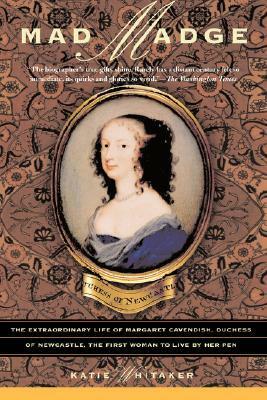
During Novellas in November last year, I read a novella about an interesting woman, Margaret Cavendish, Duchess of Newcastle, the first woman to publish more than one work. She was prolific, but she got the label of Mad Madge. We can assume that some men were jealous. Anyway, this is a biography of her, Mad Madge by Katie Whitaker, one of the source materials for the novella, I think. Not only will it work toward a larger number of books to report for Nonfiction November and fill a hole in my A Century of Books project, but I wanted to read it anyway. I am just getting started on it.

What did I just finish reading?

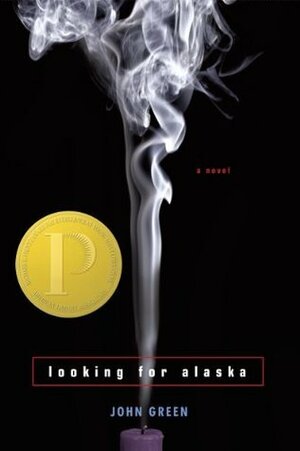
I don’t often read YA books, and I confess to being perplexed as to why so many adults read lots of them, but John Green is usually a reliable author and has even managed to tear me up at times. So, when I saw that Looking for Alaska filled a hole in my A Century of Books project, I got it from the library. Green, so far in my experience, usually writes about some major issue, and in this case, it is death and grief.

What will I read next?

As of this writing, that’s a good question. The next book I have on my pile for A Century of Books is Lanark by Alasdair Gray. I am sort of dreading it, though, both because of its length and what the cover forebodes. (I’ve seen that exact same devilish character on the cover of another book from that era, and I remember disliking the book intensely, although I can’t remember what it was. I also find no succor in the image of the naked woman or in the blurb that says it’s “probably the greatest book of the century.”) I’m writing this a few days ahead, being very sure that I won’t finish Mad Madge by Wednesday since I am a slow nonfiction reader, so what I read really depends on whether some of my other A Century of Books selections arrive from the library before I finish it.

The books I’m waiting for are, in order of how long I’ve had them on hold:

  • Girl Interrupted by Susanna Keysen (which I’ve been waiting for since December, so I suspect it’s stolen; however, one time that I had a book on hold for several months, they apparently bought another copy, because the one I finally received looked unread)
  • A Short History of Nearly Everything by Bill Bryson (which is probably going to end up being another big honker)
  • Sarah’s Key by Tatiana Rosnay (I think I read another book by her and didn’t like it, but this one was very popular—we’ll see.)
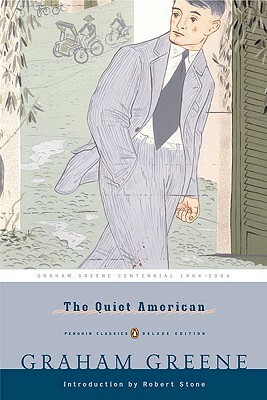
  • The Quiet American by Graham Green (The movie was good.)
  • Moo by Jane Smiley (I have an uneven relationship with Jane Smiley. Sometimes I think her books are so-so and other times they’ve been great. We’ll see.)

Update! Not only did some of my library books arrive yesterday, but almost all of them did! The only one that didn’t arrive was A Short History of Nearly Everything. (We should have a copy in the house, because I gave one to Wayne for a present years ago, but of course, since it’s his, he can’t find it.) So, the next book I read will probably be The Quiet American. Girl, Interrupted is shorter, but I just read a nonfiction book, so I don’t want to push it. I know it’s silly to read shorter books first, but I just read several big honkers in a row!

What about you? What are you reading, or what have you finished reading?

Review 2550: Literary Wives! Lessons in Chemistry

Today is another review for the Literary Wives blogging club, in which we discuss the depiction of wives in fiction. If you have read the book, please participate by leaving comments on any of our blogs.

Be sure to read the reviews and comments of the other wives!

My Review

I finally got to read Lessons in Chemistry. It’s been sitting in my pile for more than a year waiting its turn for the club.

Elizabeth Zott is a chemist in the 1950s, when any career for a woman besides secretary, teacher, or nurse is unusual. She was accepted as a Ph.D. candidate at her university when her advisor sexually assaulted her, so she stabbed him with a pencil. Although he had a reputation, she was accused of cheating and expelled. So, she has no doctorate.

She gets a job at Hastings Laboratories in a town in California, but she is treated like a secretary. However, she meets Calvin Evans, a scientific genius with no social skills, and after a misunderstanding, she interests him in the work she is doing on abiogenesis. Soon, they fall in love. The people at their workplace interpret their synergy to Zott’s ambition to succeed. The couple acquires a dog, which they name Six Thirty (a great, if slightly unlikely, character). Zott is determined not to be married because she knows any breakthroughs she makes will be attributed to Calvin, but Calvin determines to ask her to marry him. We never find out how this will work out, because he is killed in a freak accident.

I may seem to be giving a lot away, but there’s a lot more to this story. For one thing, Garmus has created a unique character in Elizabeth Zott. She is straightforward, forthright, and determined to be treated equally with men. She doesn’t understand the meaning of compromise or of hidden messages.

I know I’m not conveying what this book is like, though. Despite the many obstacles and injustices that Elizabeth encounters, the tone of this novel is light and often funny, as Elizabeth misunderstands the other characters, and they misunderstand her. Yet, the novel has a strong message of feminism, and if younger readers think the misogyny in it is exaggerated, I can tell you it isn’t. (I remember talking to my father, who was a vice president of a large corporation, about a job interview at his company—for which, by the way, he gave me no assistance because he thought it would be unethical. I complained that the first thing they wanted to do was give me a typing test. He told me that was how to get started. I asked him if he had to pass a typing test when he first went to work. He didn’t understand my point.)

As someone who wanted to be a boy when I was a child, because boys got to do things, I really related to Elizabeth Zott. She’s a great character, and I loved this book.

What does this book say about wives or about the experience of being a wife?

Literary Wives logo

The marriage examined in this book is more of an implied one about everyone else, since Elizabeth and Calvin aren’t married. The problems that Elizabeth has are rooted in the attitudes about marriage at the time, the clichés that Elizabeth doesn’t want to have anything to do with—that the wife is the homemaker and mother, and the husband earns the bread, that women don’t have careers, that the women who work are basically there to be sex toys for their bosses, that women are subservient to their husbands and probably not even intelligent, that in terms of science, findings would be attributed to the husband.

Elizabeth and Calvin, the main relationship in the book, are not married, and they have an intellectual synergy that is above these notions. But the implications of the notions have all their coworkers buzzing that Elizabeth is sleeping her way to the top, rather than that she is contributing to the work intellectually.

The point of the novel is to break all these stereotypes and show what Elizabeth is able to do despite all the setbacks. And have fun reading about it.

Related Posts

Euphoria

Recipe for a Perfect Wife

The Time of Women

Review 2549: A Bend in the River

Salim is a young man of Indian descent who was born and raised on the east coast of Africa, at that time a cosmopolitan and wealthy area. Feeling the need for a life change, he buys a store in an unnamed Central African country (probably Congo) based on the stories his friend has told about the town. He makes the difficult journey there. It is the mid-20th century when African countries were throwing off their colonial rulers. He arrives to find the rebellion has destroyed the town.

Salim makes a life there, following a second rebellion, a boom and rebuilding, the reappearance of Europeans, and so on. However, he struggles with a sense of inertia and lack of identity.

This novel has been criticized for leaning toward colonialism. I’m not sure it does, but certainly it spends a lot of time looking at the characteristics of what Salim might call “bush Africans.” The new leader of the country is such a man, and at first, he seems to be a symbol of hope and prosperity, but eventually things change.

I was enthralled by the beginning of the book but not as interested as political issues emerged. There is a long section about an area called The Domain, sort of like the unoccupied cities the Russians and Chinese have built, that bored me. Also, there is a shocking scene when Salim attacks his lover.

Related Posts

Afterlives

The Promise

Things Fall Apart

Review 2548: The Shape of Water

No, this is not a movie review. Andrea Camilleri is a Sicilian writer of the Inspector Montalbano series. The Shape of Water is the first in the series.

The body of a prominent politician with an impeccable reputation is found by two city street cleaners in his car in an area of town known for sex and drugs. (In Sicily, at least in the 90s, they had people who walk around and pick up trash? If only they would do that here.) Although it appears he died from natural causes, Inspector Montalbano thinks something is off. Lupanello died with his pants around his ankles. It is his wife who notices later that his underpants are on backwards. (This is the only thing that seemed unlikely to me—that the coroner wouldn’t notice that.)

Lupanello’s second almost immediately takes his position. Everyone wants Montalbano to close the case, but he asks for two more days.

Other complications turn up. One of the street cleaners finds an expensive necklace near the site. Also, the car apparently got to the site using an almost impossible route.

Montalbano is an honest cop, but he is cynically aware of the levels of corruption in city government. He has some slyly funny thoughts.

I wouldn’t say this novel is telegraphic in style, but portions of it are told only with telephone calls, and we don’t often learn what Montalbano is thinking. Also, Camilleri holds back some of the detective’s findings to the end. Cheating a little, but this series is very popular in Europe and so far seems promising. I like Montalbano, who has his own ideas about justice.

Related Posts

Siracusa

In the Wolf’s Mouth

The Jewels of Paradise

A Century of Books: How Am I Doing? February Report

In January 2024, I foolishly decided to join Simon Thomas’s Century of Book Challenge, even though I knew that reading 100 books, one for each year in a century, from 1925-2024, would be tough because last year I only read 169. So, how am I doing? I was trying to finish by the end of December, but I clearly didn’t make it.

Here are the holes in my project with the books listed for this month below. If you want to see the details, see my Century of Books page.

  • 1925-1934: complete!
  • 1935-1944: complete!
  • 1945-1954: entry needed for 1948
  • 1955-1964: entries needed for 1955
  • 1965-1974: complete!
  • 1975-1984: entry needed for 1981
  • 1985-1994: entry needed for 1993
  • 1995–2004: entries needed for 1995, 2002, and 2003
  • 2005-2014: entries needed for 2005, 2006, and 2007
  • 2015-2024: complete!

Since January 29, I read the following books. The ones for this project are listed in bold. As you can see, I concentrated this month on books for this project:

  • Pride and Prejudice by Jane Austen for 1813
  • One by One They Disappeared by Moray Dalton for 1929
  • The Country Girls by Edna O’Brien for 1960
  • Angle of Repose by Wallace Stegner for 1971
  • September by Rosamunde Pilcher for 1990
  • American Psycho by Brett Easton Ellis for 1991
  • The Magician’s Assistant by Ann Patchett for 1997
  • Erasure by Percival Everett for 2001
  • Cultish: The Language of Fanaticism for 2021
  • Lessons in Chemistry by Bonnie Garmus for 2022
  • What Sheep Do in Iceland When Nobody’s Around by Brian Pilkington for 2023

Review 2547: Howl’s Moving Castle

I noticed that this book filled a hole in my A Century of Books project. I found the images from the movie fascinating when it came out years ago. So, although I don’t often read children’s books, I got a copy from the library.

Sophie lives in a sort of fairytale world of wizards and spells and witches. Because she is familiar with fairy tales, she knows that as the eldest sister, she would fail at any attempts to find her fortune. It’s always the youngest who is successful. So, when the family fortunes falter, she agrees with her stepmother’s plan to apprentice in her hat shop, while one of her sisters is apprenticed to a baker and the other to an herbalist.

Sophie has a talent for trimming hats, but she is still finding life a bit dull until she has an encounter with the Witch of the Waste about one of her hats. The witch puts a spell on her and turns her into an old lady.

All the girls in the country are afraid of Wizard Howl, who lives in a moving castle. He is reputed to kidnap girls and steal their souls. But Sophie thinks the only way to throw off the curse is to get help from Howl. The castle is in the area, so she bangs on the door until Howl’s apprentice Michael opens it, and then she makes herself at home as a housekeeper.

Howl has imprisoned a demon in his fireplace to move the castle, so she makes a deal with the demon. If she can break his contract, he’ll break her spell.

Otherwise, things in the castle seem quite different than she expected.

I think some of the ideas in this novel are imaginative, but otherwise, it seemed as if everyone was running around aimlessly most of the time. There is a contract to be broken, for example, but Sophie and Michael only make one attempt to break it, and the rest just seems to happen. I’m sure children would find the novel fascinating, but to me it seemed too loosely plotted and could have been about half as long.

Related Posts

The Golden Compass

A Stranger Came Ashore

Victorian Fairy Tales

Review 2546: The Temptations of Big Bear

I can’t remember whether I found this book when looking for more about native peoples or for filling holes for my A Century of Books project. In any case, it does both.

Readers from the U. S. may not be familiar with the name “Big Bear,” but I’m betting Canadian readers are. He seems to have been their equivalent of Sitting Bull.

In The Temptations of Big Bear, Wiebe tells Big Bear’s story beginning in 1876, when the Cree, of whom Big Bear was a chief, along with other groups of native peoples and the Métis, meet to discuss a treaty with British officials. The treaty calls for the people to “sell” several hundred thousand acres to the government in exchange for small reservations and regular payments as well as assistance when they are hungry. Big Bear does not sign the treaty. He wants to wait to see what happens.

Within a few years, it becomes apparent that the buffalo, upon which the Cree depend, are dying out, so Big Bear signs the treaty. However, he does not select a reservation for his people. Instead, they continue to move among their usual environs.

This novel leads up to events at Frog Lake in 1888, where some of the Cree warriors attack the settlers, kill some, and take others prisoner. These attacks follow years of broken promises and starvation. Although Big Bear tries to stop them, he is disregarded. Of course, he is held responsible by the authorities and tried, despite all the white witnesses but one having testified for him.

This is an eloquently written novel. It is insightful and interesting, and Big Bear’s last speech at his trial made me cry.

Wiebe doesn’t cite sources, and it’s hard to tell whether some of the speeches and writings are verbatim from records or not.

Related Posts

One Thousand White Women

Mayflower: A Story of Courage, Community, and War

The Sentence