In which I take a break from my usual reviews and do a little musing.
This week I read Noel Streatfeild’s classic book Ballet Shoes for the first time, and that made me think about something I have often wondered. Why do the children in classic children’s books seldom have parents? Or if they have parents, why aren’t they there?
In Ballet Shoes, three little girls, Pauline, Petrova, and Posy, are adopted by Great Uncle Matthew. Then he goes off on a trip and doesn’t come back for a long time, leaving them with his great niece Sylvia, only sixteen, and the servants. To support themselves, the girls turn to dance and theatre.
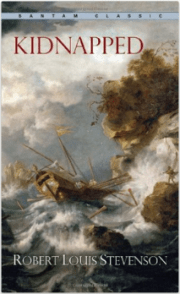
 But the Fossil girls aren’t the only orphans in children’s classics. Anne Shirley is an orphan, although admittedly Marilla and Matthew are a lot more present than many parents in children’s books. The parents of Mary Lennox of The Secret Garden and Rose of Eight Cousins die, and they go to live in the house of uncles they’ve never met. Mary’s uncle is a recluse and Rose’s uncle is away at sea. Hugo Cabret is left with his uncle, too, but his uncle disappears, and he lives alone in a clock tower. Pippi Longstocking’s father is lost at sea. David Copperfield is a posthumous child whose mother dies, leaving him to the mercies of a despotic stepfather. Poor little Oliver Twist never knew either of his parents. Pollyanna goes to live with her aunt, and Heidi with her grandfather. David Balfour is not only an orphan, but his kidnapping is arranged by his own uncle! Karana’s father is killed and then she misses the boat to wait for her brother. No one ever tells us what happened to Dorothy’s parents. She lives with her aunt and uncle but flies off from them in a tornado. And there’s the most famous orphan of all, Harry Potter, who at first lives in a cubbyhole under the stairs at his uncle’s house and later discards his relatives altogether. Somehow, none of these guardians seem to be as present as actual parents would be, we assume.
 Then we have children who may as well be orphans. Wendy, John, and Michael Darling literally fly out the window with a sprite, so eager are they for adventure. Huckleberry Finn is a boy who would just as soon leave his father behind, and does. Although Marmee is home part of the time, she has to go off and nurse Mr. March for a good portion of the book, leaving Meg, Jo, Beth, and Amy home alone. The boy in The Reluctant Dragon has a mother who wants him to come home, but he spends all his time hanging out with saints and dragons. Sara Crewe’s father leaves her at school and then disappears. Jim Hawkins runs off to sea to find treasure, leaving his mother behind to watch the tavern. Max from Where the Wild Things Are sails away to an island full of monsters. Cedric Errol’s mother gives her up to his grandfather so that he can have a better life. Meg Murray and her brother Charles Wallace travel off into time, although admittedly they are trying to rescue their father.
 Of course, you’re probably thinking about other books where parents are present, the Little House books, for example. But think how many of your favorite books were about children who are alone or being taken care of by other relatives, strangers, or no one at all. Why is that?
One obvious thought is you can’t go fighting pirates when you’re being reminded to brush your teeth and put on your pajamas. As a budding author of 12, I was fully aware of how parents would stifle my creativity. My girlfriend and I spent each day writing under the tree in her back yard. After thinking about the problem for about five minutes, I ruthlessly killed off my main character’s parents.
 But maybe there is something to consider about the types of books we love as children. Maybe the books we love best are the ones where children learn to develop and take care of themselves. And of course, all good children’s books must have pathos. A lonely child appeals to our sympathies, even if she is a brat at first, like Mary Lennox. Danger is heightened without the protection of a parent, as we find with Jim on the Hispaniola or Oliver Twist in the clutches of Bill Sykes or Harry in the clutches of, well, everything. The children must find ways to survive using their wits.
Maybe it’s not so much that as children we don’t want parents in our books, but that those books are the ones we find more memorable. We can imagine how we would feel if our parents were gone and we had to go live with a scary uncle or a grumpy grandfather or Marilla Cuthbert, who seems very intimidating to a child. We can admire how resourceful the characters become when they have to fend for themselves. How great it is that Mary learns how to garden, make friends, and help heal her cousin Colin. How resourceful Huck is in protecting Jim. How cheerful Sara is even when she’s banished to the attic of her school and treated as a housemaid. How cleverly the boy helps work out the problems between St. George and the lazy, poetic dragon. How ingenious Hugo is at finding ways to support himself. How Pippi can do anything she wants, at any time!
And, of course, loneliness is a huge theme in most of these books (maybe Pippi excepted), and all children know what it is to feel lonely.
Related Posts
The Secret Garden
Anne of Green Gables
The Invention of Hugo Cabret

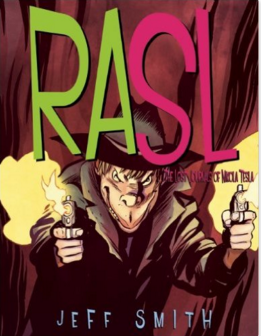 Every once in a while, I dabble in graphic novels, without really knowing much about them. I’m not at all interested in the violent or superhero ones that seem to dominate the genre but in the more unusual ones. This volume of RASL pulled me in with its reference to Nikola Tesla. Tesla is one of my husband’s interests, so I picked it up at the library to read together.