Day 683: By a Woman’s Hand: Illustrators of the Golden Age

Cover for By a Woman's HandBy a Woman’s Hand is essentially a picture book for adults. It does not have much in the way of written content, but it has many lovely illustrations.

A short preface tells about the prevalence of woman illustrators toward the end of the 19th century and the beginning of the 20th. Then the book provides a very brief, one paragraph or so, biography of about 20 illustrators, surrounded by several pages of their work.

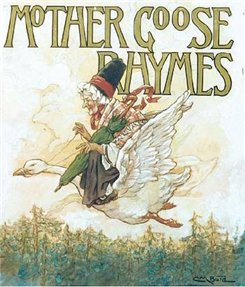
Mother Goose by Clara Burd

Although there are lots of chubby children, the illustrations show influences from several different art movements—Art Nouveau, the Pre-Raphaelites, for example. Some of the illustrations are complex and others look almost like paintings. Clara Burd also trained at the Tiffany Studios and designed stained glass windows.

I have been interested in illustrations for children’s books for a long time, although I have not made a study of it. This book is a nice little addition to my collection of children’s books with nice illustrations.

Related Posts

Clara and Mr. Tiffany

The Last Pre-Raphaelite

Studio St.-Ex

Day 682: The Sea House

Cover for The Sea HouseAn atmospheric novel set on the Scottish isle of Harris, The Sea House offers a fascinating story split between two times, the 1990’s and the early 19th century.

In 1992, Ruth and Michael have purchased a ramshackle Georgian house on the island, intending to fix it up and open a bed and breakfast. The house used to be the manse long before a new modern house was built. In tearing up the floorboards in the study, Michael finds the small corpse of a baby, although its legs are unfinished, looking more like a fish tail.

The body is at least 100 years old and its death is found to be of natural causes, but Ruth becomes interested in finding out more about the long-ago occupants of the house, hoping to identify the baby. She begins looking into the house’s history.

Ruth also knows very little about her own history. When she was 10, her mother’s death by drowning was found to be suicide, and she grew up in a series of foster homes. She knows nothing about her father, and all her mother told her was that they came from the islands and were descended from selkies. Her last name was Macleod, which she finds is a very common name there, but when she consults a genealogist, the woman can find no trace of a woman of her mother’s name and age born on the islands, leading them to guess that she was using a false name.

In 1860, Alexander Ferguson is the new curate at the manse. He is serious and eager to serve god and his parishioners. He is also interested in the new discoveries about evolution and studies fossils looking for new species. His family legend also holds that he is descended from selkies, and he is fascinated when he hears that a mermaid was discovered on the beach after a storm. He would like to examine her, but she has already been buried and the authorities won’t dig her up. He becomes interested in the idea that selkies might actually exist and could be a cross-species between man and fish.

Alexander has also taken in a new maid, a girl found running wild. Moira’s family was moved off their island along with all the other families so that Lord Marston could put sheep on it. The families were allocated the worst piece of land and all of them except Moira got sick and died. Moira was away from the house when Lord Marston’s men came and burned it down, and she was living wild until the reverend took her in. She loves the reverend but has vowed to kill Lord Marston.

This novel is well written and interesting. I was engrossed in both the modern and historical stories. The novel is particularly interesting for those who like Celtic legends and folk tales.

Related Posts

Galore

Remarkable Creatures

The Forgotten Garden

Day 681: Literary Wives! The Bishop’s Wife

Cover for The Bishop's Wife

Today is another Literary Wives discussion about the book The Bishop’s Wife by Mette Ivie Harrison.

Be sure to read the reviews and comments of the other wives!

***

Linda Wallheim is the wife of a Mormon bishop. She has no official role in his duties but he occasionally asks her to help him by talking to someone he thinks is troubled. The couple’s lives are busy with many church functions and many visitors for the bishop. But it is one woman who doesn’t come who is soon to cause an uproar.

Jared Helm comes over very early one morning with his five-year-old daughter Kelly to report his wife Carrie missing. He claims she got up in the middle of the night and left. Linda is angered by his crude and sexist remarks about his wife and begins to wonder about his story. She is even more concerned when the Westons, Carrie’s parents, tell Linda and her husband Kurt that Carrie would never have left without Kelly.

Soon, there’s a full-blown police investigation into Carrie’s whereabouts. Although Jared’s father Alex is even less likable and more misogynistic than Jared, Linda tries to stay on pleasant terms with them to look after Kelly.

In the meantime another neighbor finds out suddenly that he is dying. Kurt has noticed that Anna Torstenson has a problem, and Kurt and Linda soon find out that her husband Tobias is dying. Anna loves Tobias, but she is his second wife and he has refused to be sealed in the temple with her, meaning they will not live out eternity together. He has instead often talked about his first wife. As he gets very ill, he wants to visit his first wife’s grave, but neither Anna nor either of Tobias’ grown sons know where she is buried. Upon examination, different people realize they’ve been told different things about the cause of her death.

This novel is fascinating, as much of interest because of the details of life in a modern Mormon ward as for the mystery. Linda is a complex character, always ready to help but sometimes struggling with her role in her husband’s work. The novel is apparently based upon a true case.

What does this book say about wives or the experience of being a wife?

I think that The Bishop’s Wife is the most complex of the books I have read for this club in its examination of “wifehood.” As in the other books, there are several marriages depicted, some of them quite off-kilter. Linda’s and Kurt’s is very much a partnership. Although her primary role is as a wife and mother, he engages her in his work when he can, even though people’s confidences remain confidential. When he thinks a troubled person might be more likely to confide in his wife, he asks her to visit them. Although they have several disagreements about her involvement in the Helm case, he agrees that she must do as she thinks best.

Anna finds, I think, that she has subsumed some of her own personality to please her husband. It takes her awhile, but she learns to look forward to a new start to her own life after his death.

Some of the other marriages depicted are shaded by childhood trauma or by completely dysfunctional relationships. Linda is sensitive to any hints of sexism, but there appears to be plenty in the community. One of the things I found a little shocking was the speed with which one widower decides to remarry and the acceptance that decision apparently has in the community. And there is another marriage that is entirely shocking.

Literary Wives logoIn what way does this woman define “wife”—or in what way is she defined by “wife”?

The old-fashioned phrase “help meet” seems to describe Linda’s role as wife. She is concerned about the hours Kurt puts into his work without being jealous of the time taken away from her. She and Kurt have a warm give and take of views, and she has a close relationship with her sons. Her biggest regret is the death of her stillborn daughter.

Day 680: As Chimney Sweepers Come to Dust

Cover for As Chimney SweepersAfter 12-year-old Flavia de Luce’s last adventures, she starts out this most recent novel in the series on her way to Toronto. She has been sent away to school, to Miss Bodycote’s Female Academy. Lest you worry that this will turn the series into a nonmagical version of Harry Potter, never fear.

Flavia has arrived by boat in the company of Dr. and Mrs. Rainsmith, an unlikable couple who are associated with the school. They drop her there late at night, and true to form, Flavia has discovered a corpse by morning.

Or rather, another of the boarding students by the name of Collingwood has. In an attempt to hide from the headmistress when she is out of her room at night, Collingwood crawls up the chimney in Flavia’s room, only to fall down again along with a desiccated body wrapped in a Union Jack.

Of course, Flavia is soon on the job, trying to identify the body. Several girls are rumored to have disappeared from the school. And then there is the mysterious death of Dr. Rainsmith’s first wife, even though she went overboard during a cruise, which makes the death a little harder to fit.

Although the series has taken a somewhat fantastical turn, with Flavia seemingly being groomed to be some sort of spy, she continues her inimitable self, naive enough to draw some pretty ridiculous conclusions from her evidence but smart enough to find the facts, and entirely neglectful of the school rules. I have to admit, though, that I miss Flavia’s village and the eccentric members of her family.

I’m sure I am not the only one to enjoy Flavia, an expert in chemistry who thrills over an electron microscope but still believes in Santa Claus, as we discovered a few volumes ago.

Related Posts

The Sweetness at the Bottom of the Pie

The Dead in Their Vaulted Arches

Speaking from Among the Bones


Classics Spin #9!

Cover for The MoonstoneI always enjoy the Classics Club spin, where the club invites members to post a list of 20 book from their Classics Club lists, draws a number, and then you promise to read the book corresponding to that number by the deadline. Unfortunately, the date for posting that list always seems to fall on the same day as Literary Wives club, so I’m posting it a little early. Here is my list, and I will read the book chosen by May 15.

  1. The Vicar of Wakefield by Oliver Goldsmith
  2. Henry VI Pt I by William Shakespeare (chosen by the spin)
  3. The Idiot by Fyodor Dostoevsky
  4. The Call of the Wild by Jack London
  5. Night by Elie Wiesel
  6. The Moonstone by Wilkie Collins
  7. Vanity Fair by William Makepeace Thackeray
  8. Troy Chimneys by Margaret Kennedy
  9. Far from the Madding Crowd by Thomas Hardy
  10. Rebecca by Daphne du Maurier
  11. The Remains of the Day by Kazuo Ishiguro
  12. The Beggar Maid by Alice Munro
  13. Ada by Vladimir Nabokov
  14. Red Pottage by Mary Cholmondeley
  15. A Wreath of Roses by Elizabeth Taylor
  16. Bleak House by Charles Dickens
  17. Middlemarch by George Eliot
  18. O Pioneers! by Willa Cather
  19. The True Heart by Sylvia Townsend Warner
  20. Beloved by Toni Morrison

Day 679: The Bees

Cover for The BeesThe Bees is a collection of more serious poems than those included in The World’s Wife, also by British poet laureate Carol Ann Duffy. This collection is more diverse in subject matter and quite varied in form, containing sonnets, haiku, free verse, and even drinking songs. And many of the poems are about bees.

In “Bees,” Duffy even presents her poems as bees: “brazen, blurs on paper,/besotted; buzzwords, dancing/their flawless, airy maps.” In this poem she finishes with “and know of us;/how your scent pervades/my shadowed, busy heart,/and honey is art.” My niece, a beekeeper, would especially appreciate that.

I understand that after Duffy’s mother died, she did not write for some time. Especially touching are some of the poems about her mother. In one, she gives her dying mother a last drink of water and remembers the times her mother brought her water when she was a child. In another, a remembered kiss from her mother after she was out in the cold as a child makes her think of kissing her dead mother’s lips.

Some of the mythological figures visited so vividly and amusingly in The World’s Wife, Sisyphus and Achilles among them, are revisited more seriously here.

The poetry is lyrical. It is sometimes harder to understand than the works in The World’s Wife, but it always sings.

Related Posts

The World’s Wife

The Greek Myths

The Selected Poetry of Edna St. Vincent Millay


Day 678: Castle Dor

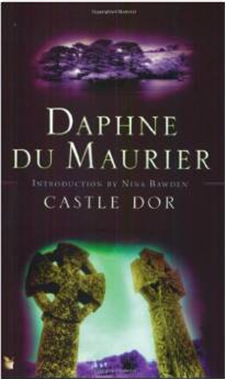
Cover for Castle DorIt is clear from the number of books Daphne du Maurier set in Cornwall that she found the region inspiring. In the case of Castle Dor, a book I had not heard of until recently, she actually finished a book begun by Sir Arthur Quiller-Couch, which is a retelling of the ancient Cornish legend of Tristan and Iseult. The novel also features another interest of du Maurier’s, the unexplained.

Dr. Carfax is the observer of this story set in the early 1800’s. He has a theory that he shares with a French visitor, elderly Monsieur Ledru, that the events of the old legend took place in the area of Cornwall where he lives. Monsieur Ledru has in fact traveled there to investigate just that subject. Ledru has also taken an interest in a young French onion-seller named Amyot Tristane and helps him free himself from his abusive ship’s master and get a job on the Bosanko’s farm.

It is the doctor who begins to feel an eerie familiarity in the behavior of Amyot once he unfortunately encounters Linnet Lewarne. Linnet is the most beautiful woman in the region, and she has at 18 married a much older man, the innkeeper Mark Lewarne. After Amyot meets Linnet, he seems to be aware of the history of the area in a way that is unlikely for the unsophisticated foreigner that he is. As Dr. Carfax views certain events and sees in them the similarities to the legend, he begins to fear the same fatal result for Amyot.

Linnet, although she is also presumably taken over by the strong forces of the past, is depicted unsympathetically, as ambitious and remorseless. As in the legend, there is a potion, but instead of being a love potion, it is poisonous.

The characters in this novel are rather one-sided, but it is the atmosphere and the legend that are important in the novel, set in the vicinity of the legendary Castle Dor. However, this is not one of du Maurier’s best, and for a retelling of the legend, I prefer Dorothy Robert’s The Enchanted Cup.

Related Posts

Daphne Du Maurier: The Secret Life of the Renowned Storyteller

Neverland: J. M. Barrie, the du Mauriers, and the Secret Life of Peter Pan

Bellman & Black

Day 677: The History of Love

Cover of The History of LoveBest Book of the Week!
At times I wasn’t sure that I would be able to figure out what was going on in The History of Love. This feeling may not be unfamiliar to readers of Nicole Krauss. My book club was so frustrated by Great House a few years back that I had to draw a diagram to help figure out the series of owners of a desk. However, The History of Love eventually becomes clear, with an eminently satisfying ending.

For most of the novel, we follow two main characters. Leo Gursky is an old Jewish immigrant in New York, a survivor of the holocaust from Poland. Years ago he fell in love with Alma Mereminski but was separated from her just before World War II when she went to America. When he tracked her down after the war, she had married. Her oldest son, though, was 6.

Leo has led a lonely life, during which he yearned for Alma and for his unacknowledged son, Isaac Moritz, who became a famous writer. As an old man, he spends part of each day trying to draw attention to himself in some small way, so that if he dies that day, someone will have seen and remembered him.

Alma Singer is a lonely 14-year-old. Years ago her father died, and her mother has ever since lived a life of quasi-mourning, seldom coming out of her room and only doing some occasional translation work. Alma’s brother Bird is a strange boy who believes he is blessed by god. He is preparing an ark for the coming flood.

Alma has been trying to find a boyfriend for her mother so she won’t be sad. One project that interests her mother is a request to translate a book called The History of Love by Zvi Litvinoff that had a small publication run in Chile. This book was very important to Alma’s parents, and Alma was named after a character in the book. Alma thinks she perhaps can strike up a relationship between her mother and the man who requested the translation. But then she notices that the only character in the book who doesn’t have a Spanish name is Alma Mereminski. Reasoning that it may be a real person’s name, she decides to find Alma.

It is Leo who actually wrote The History of Love, we understand, inspired by his love for Alma. But then what happened?

This novel is intricate and vividly imagined. Ultimately, it is emotionally involving. I did not really enjoy the excerpts from the novel within the novel, which seem to be trying too hard to be profound, but those make up only a very small part of the book.

Related Posts

Great House

Beautiful Ruins

Tomorrow There Will Be Apricots


Day 676: The She-Wolf

Cover for The She-WolfThe fifth novel in Maurice Druon’s wonderful Accursed Kings series begins where the first one did, with the problems of Isabella of France, unhappy queen of England and sister to Charles IV of France. While Charles IV’s administration is being ably handled by his uncle Charles of Valois, the same cannot be said for that of Isabella’s husband, Edward II. He is completely under the sway of Hugh Despenser the Younger, his rapacious lover. At the beginning of the novel, Despenser has taken everything from Isabella’s dowry for himself and forces her to give him the valuable book she is reading.

Roger Mortimer is the only person to have ever escaped from the Tower of London, and he soon arrives in France. He too has been a victim of the greedy Despensers. He has a fateful meeting with Isabella when she arrives to broker a treaty. Soon their actions will cause the overthrow of a king.

The powerful Countess Mahaut of Artois still remembers Isabella’s testimony, which condemned her daughter and cousin to prison in the first book. She will make it her business to cause trouble for Isabella. And we know what trouble can mean, for in The Poisoned Crown, Mahaut had Charles’ oldest brother murdered so that her daughter could be queen of France.

Druon’s knowledge of medieval history, customs, and architecture is especially noticeable in this book, with its extensive historical notes. This fantastic series continues, with Druon specializing in snark.

The sixth book in this series will soon be available in paperback while the last is soon to be published in hardcover. Years ago, I read all but the last book, which I was unable to find, so I am looking forward to finally being able to read the entire series.

Related Posts

The Iron King

The Strangled Queen

The Poisoned Crown

The Royal Succession