Day 651: Literary Wives! The Last Wife of Henry VIII

Cover for The Last Wife of Henry VIIIAgain, we have a group book review with Literary Wives, where a group of bloggers get together and review the same book about wives on the same day. If you have read this month’s book and would like to participate, leave comments on any of our blogs. Be sure to read the reviews and comments of the other wives!

***

In considering The Last Wife of Henry VIII, I come smack up against the issue I’ve mentioned in the reviews of several historical novels based on the lives of actual people. That is, how an author can make the subject interesting while staying faithful to the events of the person’s life and to the person’s character.

In this novel, Erickson has a fairly clean slate to work with, because Catherine Parr’s life has not been covered as exhaustively as that of other Tudors. Yet it is one thing in historical fiction to invent the details of ordinary life and another to present readers with questionable events. The most obvious of these is to have Parr’s love affair with Thomas Seymour begin while she was still married to John Neville, when to all indications it began after Neville’s death, when she was left a relatively wealthy widow. And, might I add, the unlikelihood that they continued their physical relationship (if they had one) while she was married to Henry VIII. Not in that court and atmosphere, with that history, I’m guessing.

But this is aside from the point that with all this inventing, Erickson still fails to make Catherine Parr an interesting character or her story compelling—despite the fact that it probably was compelling. The actual Catherine was much more capable and influential than Erickson’s character, in fact.

Literary Wives logoWhat does this book say about wives or the experience of being a wife?
First, for the Tudors wives were bargaining chips. The novel depicts Catherine as taking control of her own fate in some of her marriages, but only within limits. That is, in both instances if she hadn’t had another suitor, she would have had to marry the person chosen for her. Within the marriages, the limits to her spheres of action are chosen by her husband unless, as in her marriage to Seymour, she has her own money, which gives her leverage. In three of her marriages, her husband’s activities or relations with her husband’s relatives make her position insecure, so much so in her first marriage that she is left a poor and unprotected widow, at least according to Erickson. I would submit that in actuality, what left her insecure after the death of Henry VIII was more likely her marriage to Thomas Seymour than anything else.

In what way does this woman define “wife”—or in what way is she defined by wife?

Catherine usually tries to do her duty by her husband, whether she loves him or not. The exception is her affair with Thomas Seymour while she was married to John Neville (which I don’t believe actually happened). In the terms of the novel, this is probably supposed to make it more romantic (it doesn’t), but it makes her character less consistent. I would say that for Parr, a wife is dutiful, affectionate, and tries to do the right thing. Her marriage to Henry VIII also shows her as compassionate, capable, and politically astute. Her marriage to Thomas Seymour, on the other hand, shows her as fatuous and besotted, unfortunately the reputation that has survived her. If I can sneak in a comment about stepmothers here, I believe her actual relationship with Henry’s children was much warmer than depicted in the novel.
Related Posts

The Tudor Secret

Bring Up the Bodies

The Marriage Game

Day 650: Nora Webster

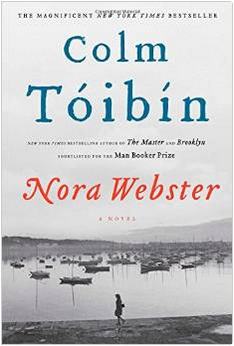
Cover for Nora WebsterIt took me awhile to place Nora Webster in time. Irish readers may be quicker to identify its setting from some events, but I am not familiar enough with recent Irish history. Finally, I identified the novel as set in the late 60’s and early 70’s. It wasn’t long after gaining that knowledge that I began to wonder how autobiographical the novel is. Since then, I have read that it is indeed autobiographical, as details about Nora’s husband match those of Toíbín’s father.

Nora Webster is in her 40’s a recent widow. She is finding it difficult. Not only does she miss her husband Maurice, but she finds the attention paid to her as a widow painful. She feels comfortable only with a few people, those who stayed with her and Maurice during his painful death.

Making things more difficult is the fact that she is left with little money. One of the first things she is forced to do is sell the holiday cottage where the family stayed every summer. She finds it hard to return there, especially under those circumstances.

She also has her children to worry about, particularly her two young sons. Donal has begun stammering since his father’s death, and when her Aunt Josie comes to call, it is immediately clear to Nora that all did not go well when the boys stayed with Josie while their father was dying.

Soon Nora is forced to return to her old job at Gibney’s, where she has not worked since she married 20 years before. She must report to Mrs. Kavanaugh, a woman she disliked when they were girls at work there together and who bullies the office staff.

There are no big events in this novel, which is more of a character study. It is about grief and the act of making a new life after a major event.

Nora is an interesting character. She doesn’t say much of what she thinks, so is sometimes misunderstood. She does not listen to other people’s opinions of who she should like or what she should do. She is intensely private and does not discuss things with her family, even things that she should perhaps discuss. She is also fiercely protective of her family.

This is a quiet, contemplative book and is not for those who read only for plot.

Related Posts

The Master

The Year of Magical Thinking

The Gathering

Day 649: The Death of Bees

Cover for The Death of BeesBest Book of the Week!
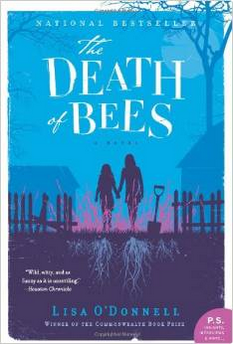
It may take some fortitude for readers to get past the foul language and bad behavior at the beginning of this novel. But I think most readers will feel it is worth it to have read this dark, funny, and ultimately touching little modern gothic novel.

Marnie and her younger sister Nelly find themselves with a problem. Their parents are dead, and they have already once experienced the joys of the foster care system. So, the two girls bury their mother Izzy in the back garden and hide their father Gene in the shed.

Izzy hung herself, but it is not altogether clear for quite some time what happened to Gene. The couple were terrible parents in any case, Izzy a self-obsessed, neglectful addict and Gene also an addict and molester of his own daughters. The two girls will do their best to take care of themselves until 15-year-old Marnie can do it legally.

Lennie, the old man next door, is a social outcast. After the death of his long-time partner, the lonely Lennie was once tempted by a male prostitute, only to be arrested and charged because the prostitute was a minor. Lennie doesn’t see that well anymore, so although he knew the man was young, he didn’t know how young and feels thoroughly ashamed. Despite his poor eyesight, Lennie is the only person who notices that the two girls are on their own. Soon, he is inviting them over and feeding them, happy to have someone to cook for.

The meat of the novel is the characters of these three. Marnie is brash, foul-mouthed, and smart. She is determined to protect her unworldly sister. But she is more vulnerable than she seems.

Nelly speaks like someone out of a Jane Austen novel and seems strangely clueless for a girl growing up in a tough Glaswegian neighborhood. She has a tendency to see only what she wants to.

Lennie misses his partner. He is meticulous but still ready to open his house to the two teenage girls.

Marnie’s world is populated with drug dealers, butch girlfriends and unreliable boyfriends, a best friend who was ready to run off with her father, and other difficult personalities. As Lennie’s dog Bobbie insists on digging up the bones in the garden and the girls evade questions about their parents, they both learn who they can love and depend upon.

Related Posts

NW

All the Birds, Singing

Mercy Snow

Day 648: The Snow Queen

Cover for The Snow QueenAlthough The Snow Queen is marketed as Michael Cunningham’s reworking of the classic fairy tale, the novel actually alludes to it more than rewrites it. Tyler Meek gets an ice crystal in his eye as does the main character of the fairy tale, so we know he will not be able to see clearly. The Snow Queen herself is the drugs Tyler takes.

The novel begins with Tyler’s younger brother Barrett walking home through a snowstorm. He has just been dumped by his lover by means of an abrupt text and is wondering what he did wrong. In his mid-40’s, Barrett, although a Yale graduate who had a seemingly bright future before him, has been unable to settle to any one thing. He has lost his apartment and now lives with Tyler and his girlfriend Beth and works as a clerk in a store.

Barrett notices an odd light above him in the sky and feels that it is looking back at him. This experience seems so extraordinary to him that he half fears he imagined it and doesn’t at first tell anyone about it.

At home, Tyler awakes to find the room full of snow because he and Beth left the window open. Tyler, Beth, and Barrett live in an ugly apartment in a shabby neighborhood in New York City. Tyler’s dreams of being a musician have ended with him working as a bartender and being allowed to play a couple of nights a week.

Tyler is trying to write a song for Beth for their wedding. Beth has liver cancer, and she presently is getting no better or worse. Tyler obsesses with the song and with the impending 2004 re-election of George Bush rather than trying to get himself off drugs, as he promised Beth. Now, he has begun lying about the drugs.

For a few months, Beth gets better. Barrett attributes her recovery in some part to his exchange with the light and begins attending church. Tyler, who has been good at taking care of Beth, feels a bit like he has lost his purpose.

Cunningham has written an intimate portrait of the two brothers in his masterly style. He forces us to examine our notions about success and failure and insightfully depicts Tyler’s growing dependence on the drugs. However, the story about the brothers and their friends isn’t really compelling, and the female characters are deficient. Beth is a palely drawn angel, and the only other important female character, Liz, looks too much like her opposite. Other characters seem to be there just to populate the novel. After the stunning The Hours, I found The Snow Queen disappointing.

Related Posts

The Hours

The Goldfinch

Boy, Snow, Bird

Day 647: Spider Woman’s Daughter

Cover for Spider Woman's DaughterIn summary, ho hum. I think I’ve read all of Tony Hillerman’s Joe Leaphorn and Jim Chee mysteries. I especially like Jim Chee, because he follows the Navajo Way, and I find the information about these customs and beliefs fascinating. I am not so fond, though, of writers picking up other writers’ series after their deaths. However, in the interests of being fair, I decided to try Spider Woman’s Daughter, a Leaphorn and Chee novel by Anne Hillerman, Tony’s daughter.

This novel is written from the point of view of Bernie Manuelito, now Jim Chee’s wife and a Navajo Nation police officer. She is attending a breakfast with retired Lieutenant Leaphorn and some other police officers when she witnesses Leaphorn being shot. In the parking lot of the restaurant in broad daylight, a short hooded figure emerges from the car next to his and shoots him.

Bernie does what she can to help him but feels as if she could have done more if she moved faster. Leaphorn is shot in the head and is moved from Albuquerque to Santa Fe to get care. Bernie is only allowed to follow through to contact relatives and then is off the case because she is a witness. The police are also having trouble finding Louisa, Leaphorn’s partner.

Because of Bernie’s thorough description of the getaway car, the police are able to identify it quickly. But it turns out that many people could have been driving it, as the owner’s son regularly loans it out.

Jim and Bernie become convinced that the attack relates to an old case, but a report is missing for a new case Leaphorn is on, evaluating the documents for a collection of native American artifacts that is being donated to a research facility in Santa Fe.

I was disappointed in this novel. First, except for Bernie, it does almost nothing to develop its characters. Frankly, Jim Chee did not seem like Jim, and Leaphorn was unconscious almost the whole time. The minor characters have little personality.

More importantly, by two thirds of the way through, I knew who the murderer was and why, while it took being abducted for either Chee or Bernie to figure it out. This is too early in the book to be thinking the detectives are idiots. With the old series, I seldom knew the murderer before Hillerman wanted me to, and if I did, I was interested enough in the plot or other details to want to continue.

Related Posts

The Cold Dish

The Wives of Los Alamos

Folk Tales of the Native American

Third Anniversary: 10 Best Books of the Year!

Cover for The LuminariesThis weekend is the third anniversary of this blog. As I have done the first two years, I have put together a list of what I consider the ten best books I reviewed this year. To get the list down to ten books, I had to make some tough decisions. For example, if I picked more than one book by the same author as a Best Book during the year, I will only put one of them on the list, and which one I pick may be fairly arbitrary. They are not listed in the order of preference but in the order I reviewed them. This year’s list is unusual for me, because it contains one book of poetry (The World’s Wife) and one nonfiction book (Giving Up the Ghost).

Day 646: The Marriage Game

Cover for The Marriage GameAlthough I have read several of Alison Weir’s meticulously researched histories and historical biographies, I feel her gifts are more for nonfiction than fiction. In her novel The Marriage Game, she concentrates on the struggles and power plays around the issue of Queen Elizabeth I’s marriage during the first years of her reign. Unfortunately, Weir focuses on this subject so much to the exclusion of others that you would think it was the only item of concern in the realm. For example, Elizabeth sends Cecil away to broker a peace with Scotland, which is almost the only mention of a war.

The novel begins right after Elizabeth hears of her sister’s death and takes the throne. Her advisor William Cecil almost immediately raises the issue of her marriage. Elizabeth, determined not to lose her hard-won power to a husband, finds her repeated statements that she will not marry either not believed or met with the opinion that her remaining unmarried would not be good for the kingdom. Elizabeth takes a flirtatious stance, refusing to be pinned down to a decision but forever pretending she’s considering a suitor.

Confusing the issue is Lord Robert Dudley, for whom she has a decided preference. But he is already married. Still, she heeds no one’s warnings about her reputation. She keeps him with her even when his wife is dying, and at least in this novel, their physical relationship includes everything except actual penetration. Just whether the Virgin Queen was a virgin is a subject of debate, and this seems to be Weir’s (perhaps unlikely) compromise. The mystery of what happened to Dudley’s wife seems much less important than it actually was at the time.

http://www.netgalley.comWeir has not chosen to make this story romantic or even depict the two main characters sympathetically. Neither is fully formed, but both are selfish, ambitious, demanding, and conniving. Although the novel is well written and should be interesting, it eventually devolves into repetitious arguments, with Dudley’s ambitions thwarted and Elizabeth incensed because he has overstepped his bounds. If there is an arc to the plot, I couldn’t discern it. I couldn’t help thinking that a novel about Elizabeth that was a little broader in scope would be more interesting. After reading most of the novel, I finally decided I was finding it tedious and quit reading it. Very disappointing, especially considering Weir’s excellent biography of Mary Boleyn.

Related Posts

Mary Boleyn

The Wars of the Roses

Wolf Hall


Day 645: The Secret Rooms

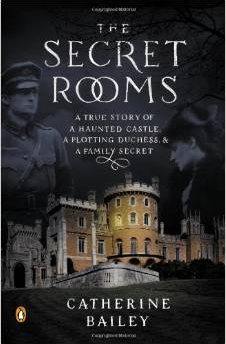
Cover for The Secret RoomsWhen British documentary producer Catherine Bailey began looking through family archives at Belvoir Castle, she was searching for information about the men from the area who served in World War I, including the 9th Duke of Rutland. What she didn’t find surprised her. Not only did she find few letters from the war, surprising for a family who wrote each other and others often, but the letters were missing from two other periods—when John Manners, later the 9th Duke, was nine years old and in 1909, when he was serving the ambassador in Rome.

Soon, Bailey learned that Manners spent the last days of his life, when he was dying of pneumonia, working among the archives in the room, that he died there, and that the rooms had been locked up ever since he died. It became clear that he was destroying correspondence and other papers. Further, she learned that the rooms had been broken into shortly after his death, the thief being identified later as John’s mistress, Hilda Lezard.

Bailey realized that without the letters for World War I, she could not complete her original project. However, she then decided to try to find out what happened during those three periods of the Duke’s life that he wanted hidden.

The result is a story as fascinating as any mystery novel. Although the entire truth of these periods will never be known—in particular, exactly what happened to the Duke’s brother Haddon when they were boys—the search is  as interesting as any modern crime story. The truth involves cruelty, duplicity, and a completely unscrupulous parent.

The Secret Rooms is an entertaining and interesting book. I highly recommend it.

Related Posts

The Forgotten Garden

Goodbye to All That

The House of Walworth