Day 604: The Oxford Book of Victorian Ghost Stories

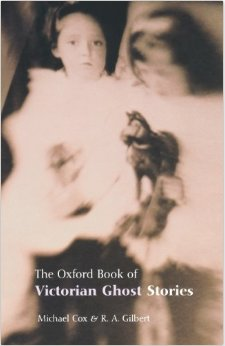
Cover for The Oxford Book of Victorian Ghost StoriesIn honor of Halloween, I decided to read this collection of 35 ghost stories from Victorian times, when they were very popular. This collection contains stories by well-known writers of the time, such as Charles Dickens, Mary Elizabeth Braddon, Wilkie Collins, and Rudyard Kipling, as well as those by other less-known writers.

First, I’ll comment that modern audiences probably won’t find them very scary. But I’m not so sure this has anything to do with the period or the ability of the writers. I think it’s very difficult to handle genre fiction successfully in a short story. Short stories seem to me to be more suited for literary fiction somehow. A few years ago, for example, I read a collection of mystery short stories but felt that the form didn’t allow much space to really develop an interesting atmosphere or characters. It merely allowed the author to pose a puzzle and a solution.

The Victorian ghost stories seem to observe a few conventions. Unlike the gothic stories from the preceding years, Victorian ghost stories are more homey and less likely to include oddities, fantastic events, or exotic settings. Many of them are presented as a person telling a story to one or more other people, often as an evening entertainment before the fire. Almost all of them involve haunted houses, which often seem to be leased to unwary renters at a suspiciously low price. (But I shouldn’t mock. I actually have a friend who found himself in precisely this situation.) Another common theme is a haunted object. In most of the stories, the worst thing that happens is that someone sees a ghost, although there are a couple that are a little more gruesome.

I found the story-telling approach a little tiresome after awhile and was refreshed by the ebulliant characters writing the letters in the epistolary story “The Truth, the Whole Truth, and Nothing but the Truth,” by Rhoda Broughton. “The Romance of Old Clothes” by Henry James and a few others also stood out. The collection even includes one vampire tale.

If you are looking for some chilling reading, you’re not really going to find it here. (Although I’ll suggest that any of these stories may be more successful if read out loud, preferably on a dark and stormy Halloween night.) However, if you are interested in the genre or the time period, you’ll probably find the collection worth dipping into.


Day 603: Stone Mattress

Cover for Stone MattressMargaret Atwood describes Stone Mattress as a collection of tales, and several of them are characteristic of wonder tales or amazing tales of decades ago. In the title story, for example, a woman meets a man on a cruise to the Antarctic who years ago ruined her life. When he does not recognize her much older self, she begins plotting his murder.

All of the stories are about characters in their older years. The first three are linked. In “Alphinland,” Constance, the author of a popular fantasy series, copes with the aftermath of an ice storm and listens to advice from her dead husband as she considers her earlier life, particularly Gavin, an old lover who was cruel to her. In “Revenant,” Gavin’s wife Reynolds tries to cope with her difficult poet husband. She has a bit of revenge by setting him up with an interview with a graduate student who only wants to know about his relationship with Constance. In “Dark Lady,” Jorrie, the woman who long ago was the cause of Constance and Gavin’s break-up, asks her twin brother to go along with her to Gavin’s funeral.

http://www.netgalley.comSome of the stories are more fantastic, such as “Lusus Naturae,” about a woman whose family has hidden her away for years because of her appearance and a thirst for blood. Many of them reflect a concern for the environment and a dark sense of humor. All are well written. This collection is a perfect one for people who want to experience a light and entertaining dose of Atwood.

Day 602: The Memory Keeper’s Daughter

Cover for The Memory Keeper's DaughterI understand that Kim Edwards got the idea for The Memory Keeper’s Daughter from a true story told to her by her pastor. I can see why a novelist might think the story makes good fodder for a novel. I was not so sure how I would feel about reading it, though.

The blurb makes very clear what the novel is about. On a snowy Kentucky night in 1964, Dr. David Henry must deliver his children when the doctor he engaged is unable to reach the clinic. His wife has twins. The first born is a boy, and he is perfect. His twin is a girl, and the doctor and his nurse, Caroline Gill, immediately recognize the signs of Down’s syndrome. At that point, Henry makes a fateful decision. He asks his nurse to deliver his daughter to a home for the mentally deficient. When his wife awakens, he tells her the girl died.

Henry explains his actions to himself as an attempt to protect his family. He too had a Down’s syndrome sister, and he remembers the pain her early death caused him and his mother. But these memories are muddied by the feelings of resentment he had as a boy for the amount of attention that went to his sister.

Caroline Gill is shocked to the core by Dr. Henry’s decision, even though she is in love with him. She does what she is told until she gets a look at the facility. Then she turns around and takes the baby home. She waits for Henry to do the right thing, but when she sees a memorial notice for the little girl in the paper, she takes the baby and leaves town.

This lie that David Henry told continues to haunt his marriage, for it puts a barrier between himself and his wife and child. He comes to feel he made a bitter mistake, but cannot find a way to correct it. He puts his energies into his work and his hobby of photography instead of his family.

This novel reminded me of the attempts of some of the modernists to show ordinary people with all their flaws. Even Caroline, the most blameless of all the characters involved in the original act, leaves town after Henry asks her to do nothing without telling him first. Later, when he has an opportunity to meet his daughter, Caroline panics and leaves.

Norah Henry, who knows nothing of the original act, still handles her marriage poorly. I don’t think I’m being too judgmental when I say that everything is not all David Henry’s fault.

I feel that the novel becomes too diffuse somehow. I don’t require novels to wrap everything neatly up—often they’re more interesting if they do not and I give this book credit for not trying to—but I found the ending especially frustrating. I also did not see much point in bringing in the character of Rosemary. She is simply a convenience to cause a break.

All in all, I felt my initial hesitations about this book were justified. Despite the idea being based on a true story, the novel begins in 1964, not 1934, and Henry is a doctor, not the impoverished farmer his father was. So, there is no other way I can view his behavior except as unconscionable. I did not read this novel at the same time as My Father’s Eyes, which is in some ways a nonfiction counterpart to this book, but the similarities and differences are interesting to consider.

Day 601: The Talented Miss Highsmith

Cover for The Talented Miss HighsmithI became interested in reading this biography after hearing about interviews with Schenkar, who called Patricia Highsmith a sociopath. Patricia Highsmith is, of course, the author of many mid-20th century thrillers, the most famous being Strangers on a Train and The Talented Mr. Ripley. After reading the biography, I don’t really think Highsmith was a sociopath. I think she was fascinated with certain dark themes, but she strikes me as more of a social inept, perhaps partially on the autistic spectrum.

Highsmith was certainly a complex person of many contradictions. She was a lesbian misogynist, as contradictory as that sounds, who was a great womanizer in her younger years and was seldom faithful to any of her lovers. She was an outspoken anti-Semite who had Jewish lovers and a lot of Jewish friends. Known in later years as a recluse, she visited her neighbors every evening and corresponded with many people, as well as making an appearance whenever invited.

She certainly was a damaged person. She had a love-hate relationship with her mother for her entire life, blaming her for abandoning her briefly when she was young and for not divorcing her stepfather. She was a woman who always thought she should actually have been a man. A heavy drinker and smoker, she barely ate any food for years and was probably anorexic.

Her life was an interesting one. She did not seem to be a likable person and frequently behaved very badly. Yet, she had many sincerely devoted friends.

I was interested in this book but had some issues with its structure. Schenkar explains at the beginning that a chronological approach wouldn’t do Highsmith justice, so she approaches Highsmith’s life sort of organically. The problem I found with this approach was that after awhile I could not figure out what organizing principle is holding some of the chapters together. Sometimes they just seem to follow a stream of consciousness approach. It makes the information conveyed very repetitive and chronologically impossible to follow. Schenkar helpfully provides a chronology at the back of the book, along with about 100 pages of supplementary material, but by then I was exhausted and had no interest in exploring any of it.

Finally—this is a small quibble—I got irritated by Schenkar’s chapter naming. The table of contents shows only nine chapters in this very long book, but there are really forty-nine. That is because she actually names them Les Girls Part 1, Les Girls Part 2, and so on. Perhaps I’m being unfair, but I could just imagine Schenkar’s editor telling her she couldn’t have a 150-page chapter, which is the length of Les Girls, Parts 1–14. Such an approach does not strike me as being very imaginative.

Day 600: My Father’s Eyes

Cover for My Father's EyesWhen she was in high school, author Sheila Allee discovered that her father had a brother she didn’t know existed. Melrose Allee, nicknamed Pie, was born with profound intellectual disabilities. Once Allee’s father “Dub,” who had taken much of the burden for Melrose’s care, left home in 1937, his parents placed Melrose in Austin State School. Even though her father was angry with his parents and swore to get his brother out, he never did, and Melrose eventually became an unmentioned subject.

Sheila could not understand how her family could have institutionalized her uncle in the first place and even worse, how they could have left him for years, unvisited. When she moved to Austin as an adult, she set about finding Melrose, eventually locating him in Travis State School in 1991.

This short book is the touching story of Allee’s own self-discovery through the agency of her impaired uncle. It is also the story of her discovery of the profoundly disturbing beliefs and practices surrounding the mentally handicapped that were practiced in this country in the first half of the 20th century.

In the interests of full disclosure, I know Ms. Allee, and I received a copy of her book in return for an honest review.

Day 599: Kind of Cruel

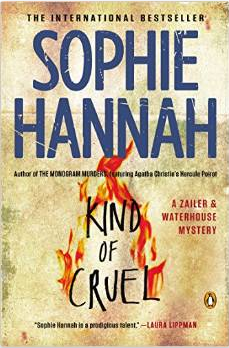
Cover for Kind of CruelWhen Amber Hewerdine decides to consult a hypnotherapist for her insomnia, something unexpected happens. She blurts out a phrase that is puzzling her because she has seen it somewhere and doesn’t know what it means, “Kind, Cruel, Kind of Cruel.” Then she realizes she saw it written on a pad that one of the other clients was writing on in her car before her session.

She knows she has seen it before that. When she asks the woman if she can see it, the other woman denies having it on her pad. So, after the woman goes in to consult with the therapist, Amber gets into her car to look at the pad.

What Amber doesn’t realize is that the phrase is a clue in a murder. Detective Constable Charlie Zailer is the other client, and even though she is not on the case, she has been mulling over the phrase. But it was impossible for Amber to have seen the entire phrase on Charlie’s pad, because she had only written “Kind, Cruel” before Amber interrupted her.

The case where the phrase was discovered was the bludgeoning death of Katherine Allen in her own home, now being investigated by Charlie’s husband Simon Waterhouse. Amber didn’t know Katherine. She believes the phrase is somehow linked to a Christmas event several years before, when her sister-in-law Jo and her family disappeared for two days after inviting the entire extended family to stay at a house they had leased. Amber thinks maybe she saw the phrase in a locked room in that house. No one ever spoke about why part of the family disappeared, and Amber has always been curious.

Amber’s insomnia started after her best friend was killed in a fire. After the fire, Amber and her husband Luke took in her friend’s two daughters. Amber loves the girls but hasn’t slept much since the fire.

Sophie Hannah writes compelling psychological thrillers. Amber’s narrative is interrupted by that of Waterhouse, the detective whom Amber agrees to speak to, as well as that of Ginny Saxon, the therapist. Hannah’s plots are complicated and always interesting to unravel.

Day 598: Mrs. Palfrey at the Claremont

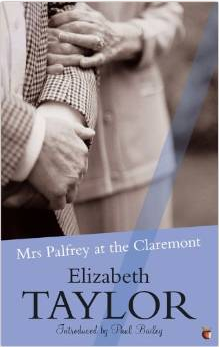
Cover for Mrs. PalfreyI’ve read two books by Elizabeth Taylor, who is beginning to be appreciated as a novelist years after she authored the books. Both the novels are melancholy, about sad people in realistic situations.

Mrs. Palfrey is an old lady who takes a permanent room at the Claremont, a hotel that has seen better days. Staying at the Claremont are several other older people who are all living on limited means.

One reason Mrs. Palfrey chose the Claremont instead of a seaside resort her daughter recommended is because her grandson Desmond lives in London and works at the British Museum. Mrs. Palfrey regrets having mentioned him to the other guests, though, as day after day passes and no one comes to visit.

The life of all the permanent residents of the Claremont is similar to hers, as they sit waiting for something to happen. Mrs. Post knits while Mr. Osborne writes letters to various newspapers hoping to see them in print. Any incident, no matter how trivial, constitutes a break in the monotony.

One day while out walking, Mrs. Palfrey falls. A young man runs out from a nearby building and helps her. He is Ludo Myers, an impoverished would-be novelist. After this encounter, the two become friends of a sort. Mrs. Palfrey doesn’t know that Ludo has decided to write about old people and is using her as a model. Still, they both behave kindly to one another, he even pretending to be her grandson so she can save some face with the other hotel residents.

Underlying the lives of all the old people are sadness and boredom, but Ludo also feels lonely. His mother goes from one affair to another and doesn’t seem to care if he comes to visit. He eventually takes up with Rosie, a young woman who also doesn’t care for him much.

This novel is observant enough of people’s behavior that it is sometimes funny, but mostly it sensitively explores the solitude that is in all of us. I saw the movie a few weeks after I read the book and was interested, but not surprised, to see how the movie was just enough more heartfelt and touching to make it avoid the central message and atmosphere of the book. I liked the movie, but it missed the point.

Day 597: Neverhome

Cover for NeverhomeBest Book of the Week!
After some personal tragedies, Ash Thompson leaves the farm in Indiana to join the Union army and fight in the Civil War. Although the truth about Ash is not immediately apparent, I feel little hesitation in revealing that Ash is a woman, because the publicity for this novel makes that clear. Why she has chosen to leave her husband Bartholomew and go off to war is another matter.

Ash, who is tall and strong, shows herself to be a brave and obedient soldier, resourceful and a good shot. No one knows her for what she really is except a few women she sees in passing and her colonel.

This story is told by Ash herself in a very understated way. In fact, it is the voice of this novel, so distinctive, that makes it stand out. It is not until the end of the novel that we learn that Ash is not always a reliable narrator.

http://www.netgalley.comThis novel is beautifully spare and compelling, a wonderful portrait of a person who is more disturbed by violence and her personal tragedies than she appears to be.

Day 596: Aurorarama

Cover for AuroraramaThe city of New Venice floats on the ice in the Arctic Circle in this steampunkish work of fantasy fiction. The city is a supposed near-utopia, not a utopia because it is ruled by the corrupt Council of Seven and their sinister police force, the Gentlemen of the Night. The residents of the city dress in Victorian clothing and go on about their business, which is most often the pursuit of pleasure (and their idea of pleasure, basically sex and drugs, also doesn’t fit into my idea of a utopia). A black airship hangs over the city, but no one seems concerned about it.

The novel has two main characters, friends. Brentford Orsini is an aristocrat, an administrator of the city gardens, and a friend to the frightening Scavengers. He is concerned about the behavior of the Council of Seven, particularly in its mistreatment of the Inuit, and has anonymously published a subversive pamphlet called “A Blast on a Barren Land.” Gabriel d’Allier is more of a bohemian, concerned with his own pleasure. He is a reluctant professor at the city college who is being pushed out by the machinations of a colleague and his accusations of impropriety with students. He also soon finds himself receiving the unwelcome attentions of the Gentlemen of the Night, who think he knows who wrote the pamphlet.

Brentford receives a visit from a ghost in his dreams, Helen, a former lover, who tells him to make a trip to the North Pole. He heads out the morning after his disappointing wedding. Gabriel, who has ruined Brentford’s wedding and is in despair about his own love affair, sets out on his own intending to freeze to death outside the city’s controlled Air Architecture.

At this point, the novel, which is imaginative and well written in a style that is faintly Victorian (and has, as you can see, a beautiful cover—yes, I got it for its cover), becomes one of the silliest books I have ever read. It is almost hallucinogenic at times, like a combination of watching a side show and taking too many drugs. I can imagine it developing some kind of cult following, but I found it exceedingly ridiculous.

At one point when the book describes Snowdrift and Reliance, a book being read by one of the characters, I felt the description could have been self-referential, just substituting Victorian for Elizabethan:

Part melodrama, part Elizabethan tragedy, Snowdrift and Reliance has little to recommend it to the reader’s benevolence, the bewildering intricacies of its plot being further shrouded by unfathomable esoteric symbolism, not to mention an amphigoric style whose only coherent trait is its consistent lack of taste.