
 This week’s Best Book is Jack Maggs by Peter Carey!
Day 570: Murder in Pigalle
 Paris during the sticky summer of 1998 is in chaos because of the impending World Cup. Private detective Aimée Leduc is in her office worrying about paying her taxes when her 13-year-old neighbor Zazie comes to see her. Zazie explains that some girls her age, including her friend Melanie, were raped, and that she has a lead on the rapist.
Aimée promises to meet with Zazie about it later that day, all the while planning to warn Zazie’s mother Virginie about her daughter’s sleuthing activities. But Aimée doesn’t make it to Virginie’s until that evening, and by then Zazie is already an hour late coming home. A visit to the friend Zazie said she was seeing turns up another crime scene—Zazie’s friend Sylvaine has just been raped. All of these girls were home alone.
Aimée is convinced that Zazie somehow found the rapist and he took her. But the police think Zazie is a teenage runaway.
In what at first appears to be a side plot, a parolee named Zacharíe is being forced to commit a crime. His client has kidnapped Zacharie’s daughter Mary Jo to keep him from abandoning the job. With Mary Jo was a little friend, Zazie.
Aimée doggedly pursues her investigation despite her condition—she is six months pregnant. Helping her are her partner René and their cyber expert Saj.
I had heard good things about this series but wasn’t really impressed. Although Black may have developed the main characters in earlier books, she certainly doesn’t do much with them here. The book races from action to action, leaving a lot of loose ends untied or ignored. Right from the beginning, Aimée has some photos Zazie tells her were taken using her friend’s telephoto lens. Yet no one follows up by trying to figure out who the friend is. When they eventually find out it is Mary Jo, Aimée spends no effort on finding the girl, just making a few feeble efforts to contact her parents.
Another example—later in the novel, Aimée kills a man in self-defense, then she and another person flee the scene. Yet we never hear about the dead man again.
These omissions all go to my feeling that Aimée’s world is not fully realized. Paris is not much of a presence in the novel, even though Black mentions various locations. We hear, for example, about the dangers of Pigalle, but we don’t really learn what it is like. We don’t really get a flavor of Aimée’s world.
Day 569: The Castle of Wolfenbach
 The Castle of Wolfenbach is one of several “horrid” novels referred to in Jane Austen’s Northanger Abbey. All of these novels, as I reported awhile back, are packaged together in a book for Kindle, so I thought I’d try them out.
This novel begins in the wilds of Switzerland on a stormy night when a mysterious young lady asks for shelter for herself and her servant at a small cottage. The inhabitants of the cottage take the fugitives to the nearby Castle of Wolfenbach for more comfortable accommodations. This castle is not being occupied by its owner but is maintained by two servants, and the castle’s upper floors are reputed to be haunted.
The young lady, Matilda Weimar, is not afraid of ghosts, however. She sleeps upstairs, and although she hears noises and sees lights across from her bedroom window, she goes the next day to explore that part of the castle. There she finds in residence an older lady and her female servant. The castle servant Joseph knows they are there, but his talkative wife does not.
Matilda explains why she is a fugitive. She has never known her parents, but was raised by her uncle. Lately, her uncle has begun showing her attentions that make her uncomfortable. What made her flee was that she overheard the housekeeper advising him to sneak into Matilda’s bedroom at night and claim her for his own.
The older lady, the Countess of Wolfenbach, offers to tell part of her story to Matilda, but Matilda asks her to wait until the next day. However, that night there is a disturbance, and Matilda visits the “haunted” area of the castle the next day to find the countess’s attendant murdered and the countess gone. When Matilda was leaving the countess the day before, however, the countess offered to send a letter to her sister in Paris asking for refuge for Matilda. Soon Matilda is on her way to the Marchioness of Melfort in Paris.
Matilda and her friends have many more adventures, in which Matilda unfailingly demonstrates her purity and honor. The evil Herr Weimar chases after her and tries to remove her from her friends, telling her that he is not actually her uncle but found her by the roadside. A young count falls in love with her, but her scruples about her unknown lineage do not permit her to accept his proposal of marriage. Temporarily, she retires to a convent.
The plot of the novel is quite convoluted and involves several kidnappings, pirates, murders, deathbed confessions, scandalous rumors, defamation of character, and other food for melodrama. Characters are mostly either good or evil, although all the evil people repent. Dialogue is elaborate and ceremonial.
This novel is not terribly scary to modern sensibilities, nor does Parsons do a very good job of creating suspense. But The Castle of Wolfenbach, which was written in 1793, is an early effort in what is essentially a genre of potboilers. Although Matilda is so good and does a lot of fainting, she at least shows some occasional evidence of spunk. Even as scary as its contemporary audiences found it, there is little doubt of a happy ending.
 I was disappointed not to find a spooky cover available for this novel, although the one for the collection I am reading isn’t bad, so I attach a picture of this scary castle. It came up on a search for the cover, but I actually have no idea at all where it came from.
Day 568: Bridget Jones Mad About the Boy
 At first, the breezy, dippy tone of Bridget Jones Mad About the Boy is a little disconcerting. Bridget sounds just like her dingy 30-year-old self, but she is now 51. Eventually, though, I was happy to renew my acquaintance with her.
Bridget is struggling to raise two small children on her own, Mark Darcy having died five years before. She also is lonely and misses Mark. Her friends decide it is time she starts dating again. Her technological and dating misadventures are complicated by her bumbling attempts to cope with school functions, for which she is always late, her efforts to write a screenplay, and her encounters with Mr. Wallaker, the teacher who Bridget believes disapproves of her.
The bulk of the novel, though, concerns Bridget’s relationship with Roxster, her 29-year-old boyfriend. This coupling provides food for flashes of insecurity and lots of cougar (and fart) jokes.
We get to spend time with many old friends of Bridget, including Daniel, Bridget’s old love interest, who has turned out almost predictably, still chasing women but now also babysitting (ineptly). This is fluff, but fun fluff, and I think it is a little better than the second Bridget Jones book. It is amusing to revisit Bridget’s world, and we occasionally have a tear in our eyes.
Day 567: Jack Maggs
Best Book of the Week!
Jack Maggs belongs in a growing genre of fiction that reinterprets a classic novel. In this case, the novel works in two ways: as another look at Great Expectations from the point of view of a different character and as a loose work of metafiction.
Jack Maggs is a convict illegally returned from Australia when he arrives at the door of a gentleman named Henry Phipps, only to find no one at home. The maid from a neighboring house, Mercy Larkin, thinks he has come to the wrong house as an applicant for a footman position in her own. Maggs decides to take the position so that he can watch the neighboring house for Phipps’ return.
Maggs’ employer is Percy Buckle, once a grocer, who inherited some money and fancies himself a patron of the arts. That night Buckle entertains at dinner a famous author, Tobias Oates, who dabbles in mesmerism. During dinner, Maggs is attacked by a horrible pain in his face, which makes him collapse. Oates hypnotizes him in an attempt to cure him but also gets him to tell some of his secrets.
Soon the two are locked in a struggle. Oates has mentioned knowing of a thief-taker, whom Maggs wants to employ to find Phipps. Oates only agrees to give him the name in exchange for two weeks of allowing him to mesmerize Maggs. Oates, who has realized quickly that Maggs is a fugitive, wants to learn about the criminal mind for an upcoming book. But Maggs becomes dangerous when he learns Oates has found out his secrets.
This tale is really gripping and ultimately suspenseful. It is also very Dickensian in nature—in its storytelling, its empathy for the poor, its dark London atmosphere, its character names, and its rather convoluted but satisfying plot. Our sympathy is all for Maggs, who has built up in his mind a fantasy about Phipps, whom he educated and made a gentleman, and who he does not realize is hiding from him in dread.
Oates is meant to be Dickens himself, and he is depicted less sympathetically. He misuses Maggs in service of his writing, but he is not much more responsible toward members of his own family.
Although Carey won a Booker prize for Oscar and Lucinda, I think Jack Maggs is much more powerful.
Day 566: Savage Beauty: The Life of Edna St. Vincent Millay
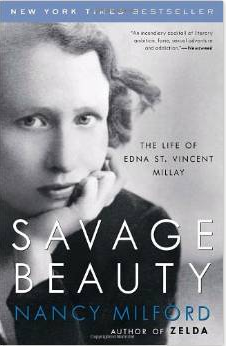 Nancy Milford, author of an acclaimed biography of Zelda Fitzgerald, was able to gain unlooked-for access to Edna St. Vincent Millay’s papers to write this compelling biography. She explains in the prologue that she stopped by the house of Millay’s sister Norma in 1972, hoping to talk her into working with her on a biography. Norma, who had all along refused access to her sister’s legacy, decided it was time.
The result is a riveting biography, full of excerpts of letters—some never sent—poetry and scraps of poetry, and notes. It is unflinching in looking at Millay’s lifestyle and addictions.
Millay, of course, is famous as the voice of a newly liberated youth, particularly of women, in the Jazz Age. She began publishing her poetry at a young age and became famous after her first book, when she was in her early twenties. For a long time, she was wildly popular—movie star popular—which is interesting in a nation that generally doesn’t love poetry. And, like many a modern idol, she had a lot of attention paid to her appearance, which was small, with fiery red hair, and sprite-like.
That is about all I knew about her—that and a bit of her verse. Her childhood was hard. Her mother left her father when Edna and her sisters were young and was away much of the time trying to make a living for them as a nurse, while the girls fended for themselves. Still, she brought the girls up with a love of music and poetry. Millay published a few poems in a children’s poetry magazine and won all their awards, but her big break came when she attracted the attention of a wealthy patroness, who arranged for her to attend Vassar.
I am not going to relate Millay’s life story in this review—you can read the book for that—but instead ruminate on some ideas this book made me consider. One is the strange relationship Millay had with her mother Cora and her sisters Norma and Katherine. For Cora, her letters always expressed much affection, often resorting to baby talk. Yet increasingly, Millay kept her mother at arm’s length, sending money instead of visiting her.
With Norma, too, the messages were affectionate, but the visits were few. In her case, there seems to be fair enough evidence that Edna’s husband Eugen Boissevain acted as a barrier between Millay and some people, including her family. As time progressed, for example, almost all of Norma and Katherine’s letters to Edna were answered by Eugen.
Katherine’s case was different, a life that seemed to be an attempt to compete with Edna in her own backyard, and failed. Edna’s patroness also saw Katherine into Vassar, from which she failed to graduate. She published a couple of prose books and some poetry, but her work was deemed too similar to her sister’s to succeed. This evaluation must have been disheartening, but in later years she claimed that Edna stole her ideas, an allegation that was patently absurd, especially as they had barely been in touch for years. Katherine’s relationship with Edna toward the end consisted solely of letters that were a combination of vituperation and demands for money. Like Edna, Katherine was an alcoholic, although not apparently a high-functioning one.
Edna’s relationship with her husband was unusual, too. After a gay and determinedly single life including many affairs with both men and women, Millay married not long after the failure of an affair with another man. Eugen is frequently described as a man who did everything for Edna, including absenting himself so that she could have an affair with a much younger man. Her family and some of her friends seemed to blame him for keeping her apart from them, but I can’t help feeling that most of that was at her desire, since she seemed to see who she wanted to see.
All of this makes me wonder how far a creative person can go in selfishness—how acceptable that is in the service of art. Millay was certainly one of those extremely charismatic people who attracted others like moths. How often such people are completely self-absorbed, even if they are not geniuses. If a person’s genius is fueled by intense emotion, is it okay to fire that emotion at the expense of others? To blow hot and cold on people’s passions until they are madly in love and then discard them? I don’t really know. Many of Millay’s lovers remained her lifelong friends after the affair was over, but it seems that charismatic people are more often forgiven their actions than others. I haven’t come to any conclusions on this. These ideas are just some the biography made me consider.
I read this book in tandem with The Selected Poetry of Edna St. Vincent Millay. Review to come.
Classics Spin #7!
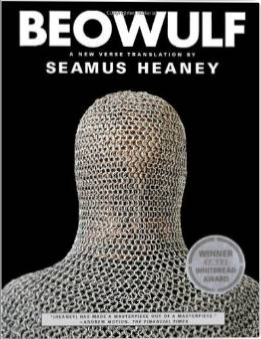 I have enjoyed the Classics Club spins so much that I’ve decided to participate again in Classics Spin #7! In these spins, members of the Classics Club post a selection of 20 books from their Classics Club List, then the Classics Club picks a number on the slated day, and you read that book within the next couple of months. Unfortunately, this time, the Classics Club post will be battling with my next post for Literary Wives, both due October 6. I will post my Literary Wives review on the 6th and post my review for whatever the spin book is on the 7th. I usually don’t do what the spin advises and post my books by category of how much I look forward to them, but this time, what the heck. The spin number is announced next Monday.
Books I’m Dreading
1. The Vicar of Wakefiel
2. Giants in the Earth
3. Beowulf
4. Henry VI Pt. I
5. Don Quixote
Books I’m Looking Forward To
6. Mrs. Marjoribanks
7. Sisters by a River
8. The Age of Innocence (an old favorite)
9. The Remains of the Day
10. Vanity Fair (another old favorite)
Books I Am Neutral About
11. Night
12. Ada
13. Beloved
14. That Lady
15. The Call of the Wild
Other Choices
16. Red Pottage
17. Goodbye to All That
18. Brave New World
19. Greenbanks
20. The Beggar Maid
Best Book of the Week!
 This week’s Best Book is a tie between The World’s Wife by Carol Ann Duffy and We Are All Completely Beside Ourselves by Karen Joy Fowler!
Day 565: Olive Kitteridge
 This collection of linked short stories lucidly illuminates the contradictions that make up the human condition. The link that binds the stories together is Olive Kitteridge, a retired schoolteacher in small-town Maine.
Olive is plain-spoken and gruff. Some people are afraid of her, but she can show sudden compassion and insight.
In “The Pharmacy,” Olive’s gentle husband Henry falls in love with his young pharmacy assistant without ever making his feelings known. In “A Little Burst,” Olive steals some of her daughter-in-law’s clothes during the wedding at the house the Kitteridges built for their son. She has overheard Suzanne saying nasty things about her. In “Tulips,” after Henry has a heart attack, Olive reflects upon their pain that their son Christopher moved away to California with his wife, and even after divorcing did not return or invite them to visit.
In other stories, Olive is less important or simply a presence. A timely conversation with her seems to keep a young man named Kevin from attempting suicide in “Incoming Tide.” In another story, the Kitteridges stroll to the restaurant through the bar where Angie plays the piano every night and thinks about the man she loved.
With neighbors and strangers, Olive says exactly the right thing in a difficult moment, and with her loved ones exactly the wrong thing. Many of the stories are sad but ultimately touching. Strout uses an unusual structure to create the sense of a lovely and affecting novel.
Day 564: Literary Wives: The World’s Wife
Today is another posting for Literary Wives, where a group of bloggers get together to discuss the same book about wives and invite others to join in the conversation. Please take a look at the reviews of the other members, listed below.
 My Review
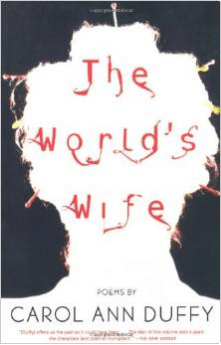
My relationship with poetry is not so comfortable that I expect to burst out laughing when reading it. But that’s exactly what I did several times when reading The World’s Wife.
This book contains a clever, brilliant collection of poems united by a single conceit. Duffy looks at legendary figures, that is, some figures of myth and fairy tale and a few from real life, from the points of view of their wives. Occasionally, male figures become females. In any case, the result is to turn the myth, be it legendary or real, on its head.
The first time I laughed out loud was when reading the Poem “from Mrs. Tiresius.” Regrettably, I did not know who Tiresius was, so I looked him up. It turns out he was a blind prophet who managed to offend Hera, so she turned him into a woman. In the poem, when Tiresius comes back as a woman, his wife at first tries to help him, takes him shopping, teaches him to blow-dry his hair.
Then he started his period.
One week in bed.
Two doctors in.
Three painkillers four times a day.
That’s when Mrs. Tiresius loses patience, and I laughed.
These poems are cheeky, earthy, inventive, and sometimes extremely powerful. Although many of the wives view their men’s activities with cynicism, the poems are not always so, as in the beautiful sonnet called “Anne Hathaway,” in which Hathaway fondly remembers the activities that took place in the second best bed. I love this book.
What does this book say about wives or the experience of being a wife? In what way does this woman define “wife”—or in what way is she defined by “wife”?
 There are 30 poems in this collection, each of them from the point of view of a different woman. The most common viewpoint is a certain cynicism about the wives’ husbands or their activities, but that is by no means true of every poem. In many, though, the man or the love of man is a source of pain.
At first, Penelope looks for her husband and waits for him to come home. Then she gets involved in her embroidery and meets his return with a certain dismay. Mrs. Sisyphus laments that ever since he started pushing that stone up the hill, he’s been ignoring her for his work. Mrs. Midas cannot believe the greed and stupidity that made her husband wish for something that keeps him from eating or touching her ever again. Mrs. Aesop is bored stiff by her husband’s constant platitudes. Naive Little Red Cap let the wolf seduce her with poetry, but ten years later she sees he is a dog with no new tricks.
Some of the poetry can be somewhat misandrist, and most of it ends in some sort of triumph for the woman, occasionally one that is gruesome.
The Wives
Be sure to read the reviews and comments of the other wives!
- Ariel of One Little Library
- Carolyn of Rosemary and Reading Glasses
- Cecilia of Only You
- Emily of The Bookshelf of Emily J.
- Lynn of Smoke and Mirrors
 What? Me Read?