Day 533: The Descendants

Cover for The DescendantsIf you have seen the movie The Descendants, the book will not provide you with very many surprises. But that is looking at things the wrong way around. Perhaps the novel provides a stronger sense of betrayal and even more sympathy with the characters.

He may live in balmy Hawaii, but Matt King is struggling. His wife Joanie is in a coma after a boat-racing accident. He has been the type of father who is always working; now he is becoming conscious of his deficiencies as a parent. He finds his ten-year-old daughter Scottie harming herself. Then he learns that the reason his wife sent his teenage daughter Alex away to boarding school was because she discovered drugs in her room.

Added to all this turmoil is a decision he must soon make about his family’s property. A trust is being wound up and prime real estate could be sold. Some cousins want the most money while others favor a local developer. With the majority vote, Matt has the power to decide what the family will do with the land.

After Matt picks up Alex from boarding school, she explains a big blowup she had with her mother over Christmas. Alex had discovered Joanie was having an affair.

Joanie’s doctors decide that she is brain dead, so Matt begins gathering her friends and family to say goodbye. Learning from friends that Joanie had planned to leave him for her lover, Matt decides he should notify him too.

It is in trying to identify and contact this man that Matt discovers Joanie’s affair was a much bigger betrayal than he thought. He is also brought to consider what he owes to his Hawaiian ancestors, from whom his family inherited their property.

Although narrated in a light style that is sometimes funny, The Descendants deals with such issues as grief, anger, death, and infidelity. It is surprisingly affecting, and you feel you know and like Matt, his daughters, and their friend Sid. Most of the characters are well-meaning people who are trying to do the right thing. I enjoyed this novel.

Day 532: The Daylight Gate

Cover for The Daylight GatePurely by accident, I recently read two books based on historical fact that feature witches. In Corrag, women are falsely accused of witchcraft, and the only thing even approaching the paranormal is a woman with second sight. The Daylight Gate is about the Lancashire witch trials. It supposes that witchcraft exists and that some of the women were witches.

As in Corrag, some of the characters are based on actual people. The novel hinges on the inexplicable condemnation of one woman, Alice Nutter, who was a completely different type of person from the other accused. She is the novel’s principal character. While the Device family and the others are poor, degraded beings who practice witchcraft as well as incest and other abominations, Alice Nutter is a wealthy and apparently blameless older woman who lets them stay in a tower in the wilds of her property.

We soon find that most of the authorities’ attention toward Alice is politically motivated. Alice is known to be linked to Christopher Southworth, a Catholic priest who is implicated in the Gunpowder Plot and has fled to France. In the mind of King James, the Catholic mass and the Black Mass are indistinguishable. So too believes the repellent Thomas Potts, a lawyer who is driving the attempt to build a case against Alice. He is also writing a book about witchcraft in Lancashire. It behooves him, then, to find some actual witches.

Potts has Southworth’s sister Jane, a completely innocent Protestant, arrested with the Devices and their cohorts in an attempt to lure her brother back to England. It works, and Alice is at least guilty of harboring Southworth. As Alice skates closer and closer to danger, we learn that she will not turn back because of love, for two very different people.

This is an interesting novel rather than an affecting one. I sympathized with Alice, and even with the magistrate, Roger Nowell, who does not believe in witchcraft. Other characters, though, are despicable and some events distasteful. Details of the Devices’ lives are picaresque. Not all of the novel was to my taste.

Day 531: Midnight in Europe

Cover for Midnight in EuropeChristián Ferrar is a lawyer and Spanish émigré who lives in Paris during the time of the Spanish Civil War. He wants to do what he can for the Spanish Republic against the fascists. The Republican government contacts him to help with the occasional arms deal. Getting arms is difficult, because the fascist governments of Europe are on the other side. Besides, the US and other countries have banned sales of weapons to the Republic because of atrocities committed by the communists.

Working with Ferrar on these dangerous transactions is a Swiss citizen named Max de Lyon who used to be an arms dealer. The two of them get into some sticky situations during missions to Poland and Odessa.

For someone doing secret work, Ferrar is oddly unsuspicious of a Spanish marquesa who comes to his office to consult him and seems open to his advances. It was so obvious to me that she was a spy that I’m giving away a plot point.

I occasionally enjoy a good spy thriller and had heard good things about Furst, but I did not find Midnight in Europe involving. None of the characters have much depth, and Furst doesn’t successfully build any tension. I remember enjoying an earlier book of Furst’s years ago, so perhaps my problem is that I have lately been reading the master, John Le Carré.

http://www.netgalley.comThis period is a fascinating one, and I would have hoped Furst would do more with it. For one thing, he explains very little about the war, seeming to assume that everyone will automatically know the Republic is the good guys. Perhaps he thought that explanations would slow down the action, but the action never really gets going. Interestingly, he only mentions atrocities committed by the side we’re supposed to favor, although there were plenty on the other side. He does a better job evoking the growing threat from Nazi Germany.

Day 530: Literary Wives! The Crane Wife

Cover for The Crane WifeToday is another Literary Wives review, where the wives explore the depiction of wives in contemporary fiction. Please be sure to check out the reviews of all the Literary Wives.

Also, you can join in by adding comments on any of our pages or on our Facebook page!

***

George is awakened in the middle of the night by a strange cry. When he looks out the window, he is astonished to see a wounded crane in his garden. He removes an arrow from the crane’s wing, and the crane flies away.

The next day he is doodling at work when he gets the urge to cut up an old book. He makes a paper crane. When a woman named Kumiko arrives at the shop, she takes away his crane and unites it with a tile of feathers she has made, creating a wonderful sculpture.

Women have always left George, deeming him to be too nice. Kumiko, though, quickly becomes his lover and promises to be his wife.

George’s daughter Amanda is feeling lonely. Because of her anger and acerbic wit, she has never kept her friends. It is beginning to look like her friendship with coworkers Rachel and Mei is going south. She loves her ex-husband Henri, but her anger drove him away. Only her four-year-old son JP and her father seem to stay.

The stories of these characters are periodically interrupted by a fable about the love/hate relationship between a goddess and a volcano. Eventually, these two threads intersect, overlaying the everyday story with mythic and magical overtones.

I was much more interested in the everyday story of George, Amanda, and Kumiko than I was in the mythic elements, which at times seemed to be trying too hard to be profound. The everyday story was touching and sometimes funny, the character Mehmet being particularly amusing.

What does this book say about wives or the experience of being a wife? In what way does this woman define “wife”—or in what way is she defined by “wife”?

There are two wives in the story. One is Amanda, who loves Henri. But her self-hatred is so strong that she feels something must be wrong with Henri for him to love her back. So, she fights with him until he leaves her. Eventually, she has to settle for being his friend.

Although she and George never actually marry, the other wife is Kumiko, the crane wife. She is a self-sacrificing figure. To stay with George and make their works of art, she tears the feathers from her own body. In her mythic self, though, she offers forgiveness at a terrible price, by ripping out a person’s heart and blinding him, then turning him to stone.

Is Ness saying that we’re only forgiven if we are blind, heartless, and turned to stone? Or are we only free of pain in that condition? Ness’ vision of love, that it is greedy, angry, or self-sacrificing, is a strange one. The goddess’s love is harrowing while Kumiko’s makes her give up everything. All of these ideas seem at once confused and simplistic. Literary Wives logo

I think Ness is saying more about love than about being a wife—that true love is more self-denying than greedy. George becomes obsessed with learning everything he can about Kumiko instead of accepting what she can give—and that leads to unhappiness.

But my question is, is either view of love a true one? Is it healthy or even right to be so self-denying that you literally mutilate yourself for love?

Day 529: The Interestings

Cover for The InterestingsIt took me awhile to get interested in The Interestings. (I just had to say that.) Reading it was ultimately worth it, but I found the novel difficult to get into, beginning as it does with a situation and characters to which I do not relate.

Jules Jacobson is an awkward teenager when she arrives at a summer camp for the arts during the mid-1970’s. The campers are mostly rich New Yorkers. She is not rich, but received a scholarship for the camp after her father’s death. Jules feels inferior to these kids, but she is unexpectedly adopted by a small group who call themselves the Interestings.

Ethan Figman is an unattractive but kind boy. He spends most of his time at the camp learning animation and drawing. Jonah Bay is the beautiful but elusive son of a famous folk singer. Cathy Kiplinger is a talented dancer. Ash and Goodman Wolf are a wealthy, attractive sister and brother. It is not clear what Goodman does at camp besides flirt with girls, but Ash is studying drama.

Jules is entranced by her friendship with these people, so much so that her relationship with them becomes a preoccupation of her life. She is particularly attracted to the Wolf family, and Ash becomes her best friend. Ethan early on makes overtures to her of a different nature, but she is not attracted to him.

The novel follows Jules’ relationship with her friends over a period of forty years. It particularly focuses on Ash and Ethan, who marry and become extremely successful.

For Jules, the Interestings glow with a special aura long after most of them have not lived up to their promise. Wolitzer’s intent is to examine issues such as how much value to place on a constant striving for success and its link with the need to feel special. She also examines the life of art—how far do you go for art before giving up? After having little success, Jules abandons her own desire to be a comic actor. She also goes through a long period of envy for Ash and Ethan while she and her “ordinary” husband Dennis struggle financially.

My problem with this novel is that I don’t understand the attraction the group, and particularly the Wolfs, have for Jules. In truth, she seems dazzled by the wealth and privilege of this family, even if she doesn’t realize it. Ash is a nice enough person, although somewhat vaguely depicted. But somehow these fascinating Wolfs manage to raise a self-absorbed, uncaring son and a daughter who is too eager to please her family. Early on, Goodman is accused of a serious crime. The way his family handles this problem is very telling, as is the fact that they never seem to consider he might be guilty.

Wolitzer sometimes tells us other things I personally feel the novel does not demonstrate, for example, how witty Jules is. I saw very little evidence of wit in the dialogue, and when I did, it usually came from Ethan. Maybe the novel would have been more compelling if we could feel the attraction of the Interestings ourselves or hear the sparkling wit. Or has Wolitzer planned for us to remain detached, to see through everyone from the first?

This novel provides many ideas to ponder. After I stuck with it, I got interested in what happened to the characters, but I didn’t  love it.


Day 528: A Tale of Two Cities

Cover for A Tale of Two CitiesIt has been a long time since I read A Tale of Two Cities, and I did not remember anything except its broadest outlines. The novel is unusual for Dickens in two respects. It is his only historical novel, and it is probably the grimmest. Although he handles some weighty subjects in other novels—the poor laws, the civil justice system, mistreatment of children, abusive schools—this novel about the French revolution shows little of his celebrated sense of humor.

The novel centers around a much smaller cast of characters than usual for Dickens. It begins with Dr. Alexandre Manette, long a resident in a French prison for reasons we do not learn until the end of the novel. When the book begins, he is free but severely disturbed from trauma. His daughter Lucie travels with his banker Jarvis Lorry from England to bring him back to London.

Five years later, he is living contentedly with his daughter in England. Their friend French émigré Charles Darnay is tried for treason on bogus charges, but he is released when his defense proves that the principal witness cannot tell him apart from Sidney Carton, a barrister. These characters will soon become well acquainted.

When the novel returns to France, it shows us the extreme poverty of the poor as well as grim depictions of their mistreatment by aristocrats. Darnay returns to France to meet his uncle, the Marquis St. Evrémonde, and renounce his inheritance. St. Evrémonde’s careless slaughter of a young child when he runs over him in his carriage and his disdainful treatment of his nephew are all we see of him before his murder.

Secretly, a revolutionary society is growing and taking note of atrocities such as those committed by Evrémonde. Wine shop owners Monsieur and Madame Defarge are involved, and at first we have sympathy with their cause.

Charles Darnay marries Lucie Manette in London, but Sidney Carton has fallen in love with her as well. Although he considers himself unworthy of her, he pledges to do anything he can for her or for anyone she loves.

Meanwhile, France falls into revolution and brutal chaos. It becomes a place where revenge is more important than justice.

The fates of the main characters reach a climax when Charles returns to Paris to help an old retainer and is denounced by the revolution. Although he has committed no crime, his relationship to St. Evrémonde puts him in peril. Dr. Manette’s sanity is also threatened when he, Lucie, and Jarvis Lorry travel to Paris to try to help Charles.

The novel is a little more melodramatic than I prefer, unleavened as it is by Dickens’ usual antics. Only a couple of major characters provide momentary relief, and Madame Defarge is like a heavy dark cloud hovering over everything. The novel is also a bit disjointed through moving back and forth between the two cities. Still, Dickens always manages to bring tears to my eyes.

Day 527: The Possibilities

Cover for The PossibilitiesAfter her son Cully’s death in an avalanche near their home in Breckenridge, Colorado, Sarah St. John is having difficulties. She has returned to work as a host of a local TV show but finds it hard to raise the enthusiasm needed. She is angry at the loss of her son, who had only just graduated from college, and is upset with herself for nagging him about his recent aimlessness. She is suffering from grief and a loss of identity.

Then she begins discovering facts about Cully that she didn’t know. She finds paraphernalia for selling pot in his room, which jolts her. A young woman named Kit comes to see her, pretending to want a snow-shoveling job, but she is really Cully’s girlfriend. Sarah had never even heard of her before.

Sarah’s family and friends are planning to attend a second memorial for Cully in Colorado Springs given by his friend Morgan. Sarah is dreading it, as she does not know how to deal with the sympathy or attention. Feeling the need to discuss the drug discovery, she asks Cully’s father Billy, whom she never married, to come see her the day before the memorial.

This novel is a wise and heart-warming, sometimes humorous examination of grief and of life’s surprises. As in The Descendants, a disjointed and somewhat alienated family becomes closer and gathers new members after experiencing grief and making hard decisions.

http://www.netgalley.comI found myself liking all the characters. Sarah is handling her feelings poorly but is sympathetically human. Her father Lyle is a retired public relations executive for one of the resorts. He is not doing retirement very well, giving his ex-coworkers unsolicited advice and buying too many gadgets on QVC. He moved in temporarily with Sarah and Cully and somehow never left, but Sarah likes him being there. Billy is calm and supportive, quietly dealing with his own grief. Sarah’s friend Suzanne, in the midst of a divorce, is at once annoying, interfering, and caring.

I will soon be reviewing The Descendants, but in The Possibilities I find another satisfying and touching novel by Hemmings.

Day 526: King Hereafter

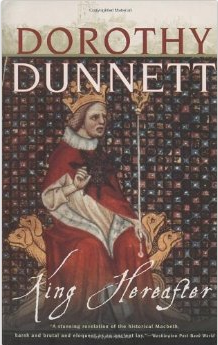
Cover for King HereafterBest Book of the Week!
What most of us know of Macbeth, King of Scots, is taken from Shakespeare, from a play he wrote in honor of King James I of England. It is perhaps no coincidence that James I was a descendant of one of Macbeth’s enemies. King Hereafter presents an interpretation of Macbeth’s life from the master of historical fiction, Dorothy Dunnett, herself a Scot. You may well imagine that the Scots have a different version of the story than did the English and Shakespeare.

For some way into this novel, you may wonder when Macbeth will even appear, for it begins in Norway with a Viking and his foster son. Thorkel Admundason has left his foster son Thorfinn in Moray with his stepfather Findlaech for a few months while Thorkel attends the Norwegian court. Thorfinn is one of what had been three earls of Orkney—Thorkel recently killed one of them and is at court to learn his punishment. But Thorkel soon hears that Brusi, the other earl, has arrived to complain to the throne that Thorfinn has demanded half of the islands from him.

Thorkel is angry at the behavior of his 13-year-old foster son, who may have gained what he wanted if it was approached another way. In the end, not only does Thorfinn not receive more of Orkney, but he is forced to pledge himself as King Olaf’s vassal.

Thorkel has almost broken with Thorfinn entirely when he learns why Thorfinn fled to Norway. While Thorfinn was in Moray with his stepfather, Findlaech was burned to death in his hall by his two nephews. Thorfinn ends their conflict by begging Thorkel to teach him to think like a man.

Of course, Thorfinn is the young Macbeth, or rather Macbeth is the Christian name he takes later. In Thorfinn’s time of the 11th century, Christianity was not widespread in northern Scotland.

Thorfinn straddles cultures and religions. He is mostly of Celtic descent and was raised partly in his Celtic stepfather’s house, but as an Orkney man he is a Viking. He eventually comes to rule an area incorporating Scots, Norse, Irish, and Saxon subjects. He must speak Gaelic, Norse, and Saxon to rule them.

By the time his grandfather Malcolm, King of Alba, dies, Thorfinn is ruler of part of Orkney and of Moray. He has avenged his stepfather’s death by burning his enemies and has consolidated Moray by marrying Groa, the wife of one of his victims.

However, only when his cousin Duncan, by that time King of Alba, attacks Moray in an attempt to take it from Thorfinn does Thorfinn fight and kill him. With Alba part of Thorfinn’s dominion, he realizes he must learn to rule differently, to try to make of the entire territory of Scotia something resembling a nation instead of a collection of settlements with no towns or roads.

Fans of Dorothy Dunnett’s other novels will not be surprised at the meticulous research that went into this novel. Nor will they be surprised to find that Thorfinn is immensely capable and intelligent but frequently misjudged. This novel is wide ranging in scope, as Thorfinn masters the politics of Europe and struggles with the various intrigues between the Irish and Latin churches. For he must decide which religion will unify his people and serve them best.

Since Dunnett is a master of characterization as well as historical detail, the novel is full of vibrant characters. Thorfinn at first merits the respect and eventually the love of his followers. He has a handful of friends who are important characters. Although they misunderstand each other at first, he eventually enters into a deep love and partnership with his wife Groa.

No witches are part of this novel, but there is Luloecen, his stepson with second sight. He tells Thorfinn his fate very soon upon meeting him.

Yes, the woods of Dunsinane play a pivotal part in the plot. If you enjoy historical novels that are rich in detail and steeped in their time period, you will like this book. Like all of Dunnett’s novels, it is complex, yet full of excitement and adventure. King Hereafter is a clever, romantic, and intricately plotted novel.