Best Book of the Week!
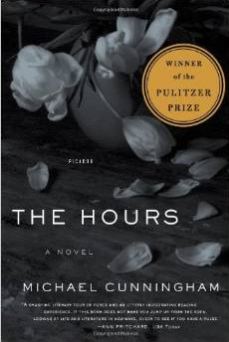
One of our Pandora channels repeatedly plays Philip Glass’s music from the movie soundtrack of The Hours. So, as soon as I began reading it, the intricate notes of the score became a mental accompaniment to the novel. That is, I got an ear worm.
I came to the novel with the slight disadvantage of being unfamiliar with Mrs. Dalloway, having been traumatized by To the Lighthouse in a college English class. But you don’t have to be familiar with it to appreciate this lovely, cleverly constructed novel, an homage to Woolf’s own.
The novel begins with Virginia Woolf’s suicide. But later it returns to 20 years before, when she is writing Mrs. Dalloway.
First, though, we meet a middle-aged woman, Clarissa Vaughn, whose best friend calls her Mrs. Dalloway. Like her namesake, Clarissa is eagerly going out into a crisp, clear morning to buy flowers for her party. This is New York, though, in the late 1990’s, and Clarissa’s party is for her dearest friend Richard, a poet who is dying of AIDS. He has recently been chosen to receive a prestigious prize for poetry, and the ceremony is that night.
Back in 1920’s Richmond, England, Virginia Woolf is trying to decide the plot of Mrs. Dalloway. Someone will die, she thinks, but will it be Mrs. Dalloway herself? Woolf also copes with her own fears about her mental state, her yearning to return to living in London, and a visit from her sister Vanessa Bell.
In 1950’s Los Angeles, Laura Brown struggles with being a suburban housewife and mother. Although she loves her husband and small son, she feels unsuited to this life.
Cunningham presents us with three stories, and a theme of threes recurs. Woolf has bouts of mental illness, Richard suffers from dementia caused by his illness, and Laura is struggling with depression. The jellyfish shapes and voices of Woolf’s migraine visions appear in Richard’s episodes of dementia. And Laura briefly sees a grayish jellyfish cloud floating over her son’s head. A forbidden kiss and the color mustard feature in more than one story. And other links that I will not name are more intrinsic to the plot. The three stories are so cleverly interwoven, we’re not sure if the events of one cause the events of the other.
This is a novel of astonishing beauty, cleverly constructed and entertaining. I’m going to find a copy of Mrs. Dalloway.
If I had to guess which of Robert Louis Stevenson’s books is the most popular, I’d pick Treasure Island. My own favorite is Kidnapped, though, and I probably wouldn’t have reread Treasure Island except that it came free with a reading app for my iPad. Still, it’s a pretty good adventure story.
The plot is familiar to everyone. Jim Hawkins and his parents run the Admiral Benbow Inn in an isolated location near the English seashore. A shifty old sailor comes to stay. He seems to be on the watch for someone, and asks Jim to alert him to strangers. Soon more shifty sailors arrive looking for him. The Hawkins’ guest is drinking himself to death, though, and he dies soon after Jim’s father does. In his sea chest is a treasure map.
Jim has gone for help to the Squire Trelawny and Dr. Livesey. Soon they prepare a ship to go collect the treasure, taking Jim with them. A crucial misstep occurs when the Squire hires the crew without waiting for the captain (something that seemed not only improper but stupid to me). He hires as the cook a one-legged man named Long John Silver. Silver and a good part of the crew turn out to be pirates who know about the map and want the treasure.
I was struck by a few cases when the protagonists behave nonsensically, the biggest being abandoning the ship when they find out a mutiny is afoot. Almost all the sailors are ashore at that point. It seemed like they should just sail away to another part of the island.
Still, the novel is written really well, and Stevenson is good at building suspense. I’m sure that successive generations of young people are thrilled to discover this adventure story.
I am sometimes rather contrary about bestsellers. I assume that I’m not going to like them and avoid reading them. This attitude isn’t entirely irrational as I am familiar with the writing of many consistently bestselling authors that I do not like at all. The idea behind The Jane Austen Book Club also seemed like something I wouldn’t enjoy, as I am a little tired of all the Jane Austen spin-offs and other hoopla (although never tired of Austen herself). So, it wasn’t until I picked up the book at a used book sale that I decided to try it.
I found the novel extremely light reading but enjoyable and sometimes witty. Of course, it is about a book club of Austen lovers who get together to read all of Austen. Only one member is male, and Grigg is also the only one who has never read Austen.
The novel does not have much of a plot. There are some romances and a banquet. That’s about it. As in Austen novels, it is more about the characters and their relationships.
Jocelyn, the founder of the club, is a dog breeder in her 50’s who likes to arrange things and make matches. Sylvia is her best friend from high school whose husband Daniel recently left her for a younger woman. Allegra is a strong, adventurous lesbian. She isn’t so much an Austen fan but is in the club because she’s Sylvia’s daughter. Bernadette, a kind older woman with a colorful past, talks a lot and repeats herself. Prudie, the married French teacher, annoys everyone by speaking French during the club meetings. Grigg is a little more of an enigma, a science fiction reader in his 40’s who just moved to town.
Each section of the novel focuses on a book club meeting and tells us more about the character who hosts the meeting. Throughout the novel, quotes from Austen and other sources appear appropriately, or maybe with an angle we need to figure out. Strikingly, the novel is narrated in the second person plural, apparently by the entire book club, and in omniscient viewpoint.
I found myself liking the characters and drawn into their dramas. Early on, we feel Grigg is interested in one of the women, but I don’t think we’re supposed to guess which one. I thought it was obvious.
If you are looking for some light, amusing reading with just a hint of romance, you may enjoy this novel. I did.
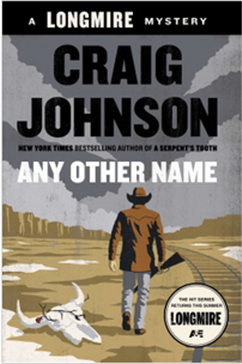
Sheriff Walt Longmire is supposed to be on his way to Philadelphia for the birth of his first grandchild, but he’s been sidetracked. Old Lucian, the former sheriff, has asked his help for a friend. The two travel to a neighboring county to call on Phyllis Holman, whose husband Gerald has been deemed a suicide. Phyllis does not believe he committed suicide and thinks the local police are covering something up. Connie Holman, the couple’s daughter, wants Walt to drop the investigation.
It seems from the investigation photos that Holman must have shot himself. But Walt would like to find out why, and why he shot himself twice. Holman was on the Cold Case squad investigating the disappearance of an exotic dancer named Jone Urrecha. But Walt learns there have been three disappearances of local women within the last three months.
Despite his daughter Cady’s repeated summonses, Walt finds himself caught up in the case. Soon he’s involved in several shoot-outs, a close encounter with a herd of buffalo in a snowstorm, a chase through an abandoned lodge, a short visit with his dead friend Virgil White Buffalo, a bar fight, and the pursuit of a coal train. He also finds out someone has hired a hit man to kill him.
Assisted by his best friend Henry Standing Bear and his deputy and lover Vic Moretti, Walt tries to wrap up the complicated case and make his plane flight. As usual with Johnson’s mysteries, the characters are interesting, the writing is excellent and the dialogue witty, and there is plenty of action.
Best Book of the Week!
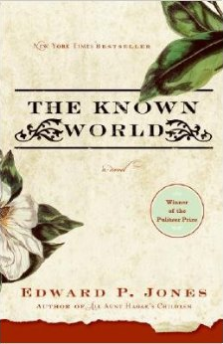
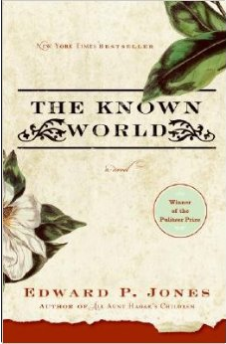
I found The Known World disorienting for some time. I think this was because the standard blurb describes it as being about Henry Townsend, an African-American owner of slaves who is mentored by his white owner. The novel starts with Henry Townsend’s death, and I kept waiting for it to circle back around and cover his history. But it’s not so much about him as about the world around him. Once I settled in to the world Jones creates, I began to appreciate the novel.
Henry Townsend’s act of becoming a slave owner is so shocking to his parents that they refuse to stay in the house he built with his slave, Moses. His parents, Augustus and Mildred Townsend, worked hard to buy themselves and their son free. Augustus at one point muses that he may have made a mistake in buying Mildred first, leaving Henry too long under the influence of William Robbins, his white master and the richest man in the county. We actually don’t see much mentoring going on between Robbins and Henry, except when Robbins chides Henry for rough-housing with his new slave Moses.
Jones’ focus is on a larger story than that of one man. His story is about the life on Henry Townsend’s plantation and in the county and how it is affected by slavery—particularly by the decision of African-Americans to own slaves.
At first, I found it difficult to keep all the characters straight—or even the timeframe—for Jones has a habit of fixing on a character for a brief moment and telling about that character’s entire life. He also interjects facts and census details about Manchester County. These details are so convincing that he had me believing it was a real place. It is not.
This nonlinear narrative means we don’t fully know any one character. Henry himself is one of the biggest enigmas, and we see more of his slave Moses than we do of Henry himself. Certainly, a handful of characters are more important than others, but that handful keeps changing. Still, some threads of the people’s stories are captivating, and even surprising. Does Augustus, kidnapped by unscrupulous slave dealers when he is returning from a job, ever see his home again? Did Moses actually murder his wife Priscilla in hopes of marrying Henry’s widow?
If I had to state briefly the theme of this unusual novel, I would say that slavery corrupts. Characters who start out with good intentions do despicable things because they have absolute power over other people. When we see the effect of the “institution” of slavery on people, especially upon Henry’s blameless parents, it is sometimes shocking.
There are true villains in this novel but no heroes. Some of the characters are doing the best they can; others are not.
Years ago, I was living in a house with a bunch of other students. It was then that I read Helter Skelter, the book by Vincent Bugliosi about the Manson murders. Bugliosi was, of course, the prosecutor on that famous case.
I am the type of person who is much more scared by books and movies about things that could or did happen than things that could not. I watched countless horror movies (the classics of the 40’s and 50’s) as a kid without being scared (Saturday night with my older brother, all lights off for the Christopher Coffin show), but I was terrified at the same age by The Three Faces of Eve. After I read Helter Skelter, I realized for the first time that because my bedroom was the former living room of the old farmhouse and right next to the door, it would be the first stop for anyone who broke in during the night. I was creeped out!
Christopher Coffin in his coffin
This newer Bugliosi book is about a crime that occurred in the 1970’s but was not tried until the 1990’s. It involves two couples who arrived coincidentally at what was supposed to be a deserted island far south of Hawaii, Palmyra.
One couple, the Grahams, was wealthy, with a beautiful boat, fully stocked. Their plan was to stay on the island a year, although Muff Graham was there only because Mac wanted to be. Buck Walker was a fugitive from a drug-selling charge. He and his girlfriend Jennifer Jenkins arrived on a leaky, battered old boat with few stores, planning to stay there indefinitely.
In late August of 1974, after staying on the island a couple of months, Buck and Jennifer were preparing their boat for a tough sail to Fanning Island to buy more supplies. They were tired of living mostly on fish and coconuts. A couple months later, the couple sailed into Ala Wai harbor in Hawaii in a beautiful boat, clearly the one that belonged to the Grahams.
Although Walker and Jenkins were prosecuted for the theft of the boat, visits to Palmyra turned up no evidence of what happened to the Grahams. Jenkins’ story was that they found the Grahams’ overturned Zodiac on the beach after Mac and Muff told Buck they were going fishing. Walker and Jenkins claimed to have searched for the couple, but said they could find no sign of them and thought they drowned or were killed by sharks. Nevertheless, they had not reported the incident to the authorities because they had stolen the Grahams’ boat.
Seven years later, a visitor to Palmyra discovered a human skull, a wrist watch, and other bones on the beach. They appeared to have fallen out of a metal box that had been fastened shut with wires and had drifted ashore. The skull was identified as that of Muff Graham.
Buck Walker was convicted of the murder. Bugliosi’s book is about Jennifer’s trial.
First, I was surprised to find Bugliosi had changed from prosecution and defended Jenkins. He makes a major point that he only defends people he thinks are innocent of the crime they’re charged with. I was not as sure as he was about Jennifer.
This book is well written and for the most part moves along nicely. It has a few flaws, though.
For one thing, it is extremely long at more than 700 pages. In my opinion, it does not need to be that lengthy. The crime itself occupies less than 200 pages. The rest is about the investigation and the trial. Although most of the material is interesting, at times it seems as though Bugliosi is confusing his role of storyteller with that of a litigation instructor. He spends a lot of time explaining legal procedure and concepts, some of which are very basic. For example, within the same 20 or so pages, he spends four pages explaining the difference between the verdict of not guilty and actual innocence and another four pages on the importance of the summation. He also constantly gives his opinion of the job the prosecution was doing. I sensed a lot of ego here.
Approaching the end of the book, I was astonished to find nearly 100 pages devoted to Bugliosi’s summation, which is quoted almost verbatim. Although he makes some important points not raised elsewhere, he covers a lot of ground already discussed during the trial. He could have hit the highlights.
A lot of dialogue is quoted throughout the book. Although this technique makes the book move along, it seems impossible to me that so much conversation could be accurately recounted almost 20 years (by the time of the trial) after some of the events. This approach to nonfiction makes me uncomfortable.
If you like true crime, you’ll probably find this book interesting enough to stick with it. Like me, you may find yourself skipping over pages of material. While I was reading, I often imagined Henderson, Bugliosi’s ghostwriter, arguing with him that some things should be left out.
If you have seen the movie The Descendants, the book will not provide you with very many surprises. But that is looking at things the wrong way around. Perhaps the novel provides a stronger sense of betrayal and even more sympathy with the characters.
He may live in balmy Hawaii, but Matt King is struggling. His wife Joanie is in a coma after a boat-racing accident. He has been the type of father who is always working; now he is becoming conscious of his deficiencies as a parent. He finds his ten-year-old daughter Scottie harming herself. Then he learns that the reason his wife sent his teenage daughter Alex away to boarding school was because she discovered drugs in her room.
Added to all this turmoil is a decision he must soon make about his family’s property. A trust is being wound up and prime real estate could be sold. Some cousins want the most money while others favor a local developer. With the majority vote, Matt has the power to decide what the family will do with the land.
After Matt picks up Alex from boarding school, she explains a big blowup she had with her mother over Christmas. Alex had discovered Joanie was having an affair.
Joanie’s doctors decide that she is brain dead, so Matt begins gathering her friends and family to say goodbye. Learning from friends that Joanie had planned to leave him for her lover, Matt decides he should notify him too.
It is in trying to identify and contact this man that Matt discovers Joanie’s affair was a much bigger betrayal than he thought. He is also brought to consider what he owes to his Hawaiian ancestors, from whom his family inherited their property.
Although narrated in a light style that is sometimes funny, The Descendants deals with such issues as grief, anger, death, and infidelity. It is surprisingly affecting, and you feel you know and like Matt, his daughters, and their friend Sid. Most of the characters are well-meaning people who are trying to do the right thing. I enjoyed this novel.
Purely by accident, I recently read two books based on historical fact that feature witches. In Corrag, women are falsely accused of witchcraft, and the only thing even approaching the paranormal is a woman with second sight. The Daylight Gate is about the Lancashire witch trials. It supposes that witchcraft exists and that some of the women were witches.
As in Corrag, some of the characters are based on actual people. The novel hinges on the inexplicable condemnation of one woman, Alice Nutter, who was a completely different type of person from the other accused. She is the novel’s principal character. While the Device family and the others are poor, degraded beings who practice witchcraft as well as incest and other abominations, Alice Nutter is a wealthy and apparently blameless older woman who lets them stay in a tower in the wilds of her property.
We soon find that most of the authorities’ attention toward Alice is politically motivated. Alice is known to be linked to Christopher Southworth, a Catholic priest who is implicated in the Gunpowder Plot and has fled to France. In the mind of King James, the Catholic mass and the Black Mass are indistinguishable. So too believes the repellent Thomas Potts, a lawyer who is driving the attempt to build a case against Alice. He is also writing a book about witchcraft in Lancashire. It behooves him, then, to find some actual witches.
Potts has Southworth’s sister Jane, a completely innocent Protestant, arrested with the Devices and their cohorts in an attempt to lure her brother back to England. It works, and Alice is at least guilty of harboring Southworth. As Alice skates closer and closer to danger, we learn that she will not turn back because of love, for two very different people.
This is an interesting novel rather than an affecting one. I sympathized with Alice, and even with the magistrate, Roger Nowell, who does not believe in witchcraft. Other characters, though, are despicable and some events distasteful. Details of the Devices’ lives are picaresque. Not all of the novel was to my taste.
Christián Ferrar is a lawyer and Spanish émigré who lives in Paris during the time of the Spanish Civil War. He wants to do what he can for the Spanish Republic against the fascists. The Republican government contacts him to help with the occasional arms deal. Getting arms is difficult, because the fascist governments of Europe are on the other side. Besides, the US and other countries have banned sales of weapons to the Republic because of atrocities committed by the communists.
Working with Ferrar on these dangerous transactions is a Swiss citizen named Max de Lyon who used to be an arms dealer. The two of them get into some sticky situations during missions to Poland and Odessa.
For someone doing secret work, Ferrar is oddly unsuspicious of a Spanish marquesa who comes to his office to consult him and seems open to his advances. It was so obvious to me that she was a spy that I’m giving away a plot point.
I occasionally enjoy a good spy thriller and had heard good things about Furst, but I did not find Midnight in Europe involving. None of the characters have much depth, and Furst doesn’t successfully build any tension. I remember enjoying an earlier book of Furst’s years ago, so perhaps my problem is that I have lately been reading the master, John Le Carré.
This period is a fascinating one, and I would have hoped Furst would do more with it. For one thing, he explains very little about the war, seeming to assume that everyone will automatically know the Republic is the good guys. Perhaps he thought that explanations would slow down the action, but the action never really gets going. Interestingly, he only mentions atrocities committed by the side we’re supposed to favor, although there were plenty on the other side. He does a better job evoking the growing threat from Nazi Germany.

 Best Book of the Week!