Day 429: The Dark Rose

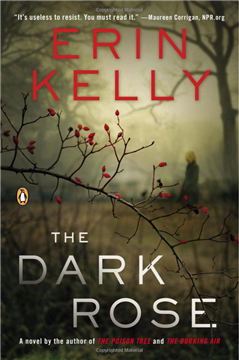
Cover for The Dark RoseThe Dark Rose is the story of how the lives of two troubled people intersect, with unfortunate results.

Louisa has had a secret for 20 years that changed her life. In flashbacks to 1989, she meets Adam, a singer and bassist in a local rock band, and falls immediately in love. For the first time, she is not the one in charge of her own love life, and he is in turn attentive and evasive, loving and impatient. Louisa is eaten up by jealousy, especially when his band mates make jokes about his relationships with other women. No good comes of this situation.

In the present time, 19-year-old Paul has been forced to testify against his friend Daniel. They have a long-standing friendship that Paul has been wanting to escape. As boys Daniel protected Paul from bullies while Paul kept others from finding out that Daniel was illiterate. But Daniel’s father is a criminal, and Daniel has begun involving Paul in illegal activities just as Paul is trying to begin a new life at university.

While he awaits Daniel’s trial, Paul is sent out of the area for his own protection to help with a project restoring a Tudor garden to its former glory. On site he meets Louisa, the head gardener, who is struck by Paul’s resemblance to her long lost love.

Kelly does a good job of keeping up the suspense, telling the interleaved stories of the young Louisa from 20 years before and of Paul’s more recent history. Although you become aware that each story involves some horrendous event, she spins out her tale so that events are revealed toward the end of the novel. Still, all is not over.

I found The Dark Rose less satisfying than The Poison Tree, Kelly’s debut. Paul and Louisa are definitely more flawed and less likable than the previous book’s heroine. Still, we want to find out what happens to them.

Erin Kelly has been likened to Gillian Flynn or Tana French. I am always skeptical of such comparisons (“If you like so-and-so, you’ll love . . .”), and I prefer the work of Flynn and French. However, Kelly does have a comparable dark sensibility. I just think Flynn and French are better at getting you to sympathize with their main characters, even though they are invariably flawed (except for Gone Girl, that is, where no characters are sympathetic).

A warning about this book if you shop in used book stores. I bought it a second time by accident because the British edition is under a different title, The Sick Rose.

Day 428: Annals of the Former World: Assembling California

Cover for Annals of the Former WorldAssembling California is the fourth volume of McPhee’s massive book about the geologic structure of the country. It dwells mostly on how the ideas of plate tectonics by themselves do not explain the geology of California.

As explained in my reviews of the previous volumes, McPhee spent years traveling along I-80 in the company of different geologists with the aim of describing the geologic formation of the country. In this volume, McPhee continues his travels along I-80, this time with geologist Eldridge Moores. They begin a series of journeys at the eastern border of California near Donner Pass, crossing to the Oakland/San Francisco area.

McPhee introduces the concept of the ophiolitic sequence, a sequence of rock strata that has been found to originate from ocean floor crusts. These crusts were ripped from the floor and mashed upward when an island arc, like that of Japan, collided with the western coast of the continent. Thus the ophiolites, which are the oldest rock, end up on top of mountains. The theory is that three such island arcs joined with the continent over the ages to form California.

McPhee also travels with Moores to Cyprus and Macedonia, two areas with similar rock. He introduces some other structures that are not completely explained by plate tectonics, such as the whole of Southeast Asia, which appears to be a part of the continent that was pushed sideways by the impact of India smashing into Asia and creating the Himalayas.

McPhee finishes this book with a dissection of the 1989 earthquake in San Francisco-Oakland (which occurred after his initial visits). He returns to examine the damage and explain how the shockwave spread and why some areas were more damaged than others.

As in the other volumes, McPhee imparts a great many concepts and theories in clear and interesting prose. This series of books (or the larger volume) makes for reading that can be a little difficult to grasp, as plates and continents seem to whirl and gyrate all over the earth (only, of course, very slowly), but it is nonetheless fascinating.

Day 427: The Leaf Men

Cover for The Leaf MenEven when I was a small child, I looked for beautiful pictures in children’s books (or bunnies–bunnies were good, especially fluffy ones). I had some books that had belonged to my mother, and I used to spend hours looking at Arthur Rackham’s illustrations of fairies and twisted trees full of goblins. As a young adult, I collected children’s books that combined good stories with illustrations by artists such as Rackham, Kay Nielsen, or Mercer Mayer.

A few weeks ago I saw a feature on William Joyce and decided to buy some of his books for my young nieces and nephews. The first one that arrived was The Leaf Men, which I had to order used in hardcover, as it is older. It is written for a young child and is a simple story about the brave bugs who climb to the top of a tree to summon the leaf men in an attempt to save a dying garden and an old woman. (I have seen some editions of this book called just The Leaf Men but the one I purchased was called The Leaf Men and the Brave Good Bugs.)

The pictures are beautifully retro, with a 30’s or 40’s appearance. One of the things that attracted me to the book was the huge man in the moon on the cover, which was one of my favorite childhood images.

Good Bugs
The Brave Good Bugs

This is a lovely book. I think it is readily available new in paperback, but it is easy to find good used copies of the hardcover edition online. (I always think paperbacks are going to be totally destroyed, so I prefer to buy hardcover children’s books.)

People who have older kids are probably familiar with Joyce’s work, perhaps through the Guardians of Childhood series (several of which I have also bought for my older nephew). An animated movie called Rise of the Guardians was made from this series in 2012.

Day 426: A Fatal Likeness

Cover for A Fatal LikenessIn A Fatal Likeness, Lynn Shepherd has created her own gothic horror around the mysteries in the real lives of two fans of the gothic, the poet Percy Bysshe Shelley and his wife, the writer Mary Shelley. It is not only a dark story, but some of it is relatively plausible, given the research Shepherd has done into their lives. Ever since I read Shepherd’s astounding reworking of Bleak House, The Solitary House, I have been a fan of her narrative skills, her writing skills, and her imagination.

Shepherd’s detective, Charles Maddox, is summoned to the home of Percy Shelley, the son of the deceased poet. Shelley and his wife have established a shrine to the poet’s memory and say they are worried about some papers someone is offering to sell them. Mrs. Shelley in particular has been responsible for destroying any papers that would tarnish Shelley’s legacy. They hire Charles to find out what is contained in these papers.

Charles has his own reasons for taking the job, for his beloved great-uncle, also Charles Maddox, the master detective who trained him and is his only family, suffered a stroke upon receiving a calling card bearing the name of his client. Charles learns from his assistant Abel that his great-uncle was employed on a case years before for William Godwin, the brilliant philosopher and Mary Shelley’s father. When the file on this case is located, though, some of the pages have been torn out.

Charles takes a room in the home of the person purveying the papers, whom Charles has been told is an Italian man, and it is not long before he realizes his landlady is Clair Clairmont. Clair, the step-sister of Mary Shelley, infamously ran off with Shelley and Mary when both the girls were only sixteen and Shelley was still married to his first wife, Harriet.

Charles is soon to realize that everyone involved in this case has ulterior motives, those of the Shelleys to find out whether a record of the earlier case still exists, as it certainly contains damaging information. With his great-uncle only slowly recovering, it is up to Charles to discover what mysteries lurk in the Shelleys’ past. As he investigates the earlier case, he finds records of an even earlier encounter with his great-uncle.

The Shelleys’ past is a rat’s nest, with two young suicided women, Shelley’s first wife and Mary’s other step-sister, with several dead infants, with Shelley’s own history of delusions, hallucinations, fits, and obsessions. Each person’s story of the fraught years of the Shelleys’ relationship is different, and it is difficult to know what or whom to believe. It is not long before Charles is to think Percy Shelley was something of a monster.

Doubles are a theme throughout the novel. Shelley is always involved with two women at once, two young women commit suicide, Shelley is obsessed with the idea of a doppelganger and thinks he has encountered a monster with his own face. Charles’ great-uncle was partially deceived long ago by the likeness he perceived between the young Mary Godwin and a lost love.

Shepherd’s writing style is distinctive. She writes in limited third person but overlays this voice occasionally with observations from a more knowing narrator of a later time, perhaps the present. The effect is slightly facetious and ironic in tone.

Her research into this time period and into the lives of the Shelleys is clearly extensive. She impressed me with The Solitary House and here she continues to do so with a fascinating, disturbing tale about some turbulent personalities.

Best Book of the Week!

Cover for The Gods of GothamThis week’s Best Book is The Gods of Gotham by Lyndsay Faye!

Please note another new feature, added today. If you look under the List of Books menu at the top of my page, you can see a new option, Best Books and ContendersSome weeks it is difficult to pick a best book because there is more than one that is very good. Other weeks, the best book is weaker than one that was not chosen on another week. So, this list contains all the books I thought were very good.

Day 425: The Gods of Gotham

Cover for The Gods of GothamBest Book of the Week!

New York in 1845 is a turbulent city. The political campaign between the Democrats and the Whigs is crooked and violent, and the recent influx of Irish poor is causing some Protestant leaders to preach against Papists. The recent establishment of a police force has been fought against by those claiming it impinges on their civil liberties.

Timothy Wilde is a bartender who has managed to save up $500 and intends to ask the woman he loves, Mercy Underhill, for her hand. A huge fire that ranges more than twenty blocks changes his plans, for his home is burned down with all his money in it and so is his place of work. His face is badly scarred as well, so Timothy believes his future is ruined.

His older brother Valentine, with whom he has a rocky relationship, has plans for him. Val has just been made a captain in the new police force and believes the copper stars–for that is what they are soon called because of their badges–is the place for his brother. Timothy is distrustful of Val’s intentions. His brother is a popular and charismatic leader of the firemen and the Democratic party, but Timothy also knows him as an opium addict and a wild man who hangs out with thugs. Timothy soon finds that the job suits him, however.

He is not long on the job before a child runs into him late one night, hysterical and covered with blood, saying “He’s going to tear him to pieces.” Wilde sees that she is a kinchin mab, or a child prostitute. He brings her home to the Dutch widow who is his new landlady instead of taking her in for questioning. When the girl recovers herself, she identifies herself as Bird and tells him a pack of lies. He soon finds out what she was talking about, however, when the body of a young male child prostitute is found in a trash receptacle.

Timothy’s investigation results in the discovery of a field full of bodies on the edge of the city–a total of 19 dead children with a cross carved into their torsos. Although the authorities try to keep this a secret, the word soon gets out. Then someone begins writing letters blaming the deaths on the Irish. Soon the city is a powder keg.

This novel is even better than Faye’s acclaimed first, Dust and Shadow. It depicts New York in all its grit and dissension and feels historically grounded. It introduces an honest, kind, and clever hero whom I hope we’ll see more of. The plot is full of twists, and although I managed to spot a perpetrator well in advance, the story was much more tangled than I expected. I thoroughly enjoyed this novel.

Day 424: Mutiny on the Bounty

Cover for Mutiny on the BountyMutiny on the Bounty did not seem like the type of book I would normally pick to read, but when my friend Karen learned I had never read it, she sent me a copy. Now that I have read it, I’m glad she did, for it is a true adventure story, extremely interesting and well written.

The story of the famous mutiny is told by Roger Byam, the only fictional character on the ship. At the beginning of the novel Lieutenant Bligh (not, apparently, a captain at the time) meets the young man socially and invites him along on the journey because of Roger’s facility with languages. One of Bligh’s directives for the voyage besides its mission to collect breadfruit trees is to draft a dictionary of the Tahitian language, a task for which Bligh does not feel competent.

Once aboard, Byam soon learns how ill-fitted Bligh is to command men. Byam commends him as an excellent navigator, but Bligh has no control over his temper and abuses all his men verbally, no matter their station. He is prone to order the most vicious punishments for slight or even imagined offenses. As time goes on, the men also come to believe that Bligh is cheating them out of their due rations with the connivance of Mr. Samuel, his clerk. Bligh even accuses his officers of the theft of cheeses that he himself had delivered to his own house before departure.

Bligh’s clash with Fletcher Christian is perhaps inevitable. Christian is one whom Bligh first views as a friend and promotes to second-in-command over the head of the ship’s master. However, Christian is an upright man whose attempts to soften Bligh’s behavior and whose rebukes in the name of fairness are not well received. And Christian is victim to his own passions. Nordhoff and Hall build slowly to the famous mutiny, which takes place shortly after the ship has departed Tahiti for home.

Although Christian is depicted more positively than Bligh, his fault lies in taking actions that affect the lives of the men who are innocent of the mutiny. Fully half the novel deals with the aftermath of the mutiny, culminating in the trial of eight men, three of whom are innocent.

The novel is carefully researched and the tale told is enthralling, from the details about shipboard life in the 18th century to the customs and culture of Tahiti. Even though the first chapter makes you aware of Byam’s fate, as he is tried for mutiny although entirely innocent, the suspense at the end of the novel still holds you to the page.

I was surprised to learn that this novel is the first of a trilogy. Men Against the Sea, which I had not heard of, tells the story of Bligh and the other men set adrift in a small boat, and Pitcairn’s Island, which I had heard of, relates what happened to the men who left with Fletcher Christian on the Bounty after they departed Tahiti for the second time. I will certainly read these other two novels.

Day 423: Accidents Happen

Cover for Accidents HappenKate Parker has lived the last five years in fear, not of something specific but of harm to herself or her son Jack. She believes she is cursed. First, her parents were killed in a freak accident on the night of her wedding, and then a few years later her beloved husband Hugo was viciously murdered by a gang of men who were trying to steal his car.

Since then, Kate has been obsessed with numbers, the odds of this or that happening that could hurt her or her son. She has gotten so fearful that her in-laws are threatening to sue for custody of her son, claiming she is harming his mental well-being.

Kate is not just being paranoid, though. Fairly early on, we learn that someone is regularly breaking into her house from the student rooming house that shares a wall.

Kate meets Jago Martin, a professor at Edinburg University who is visiting at Oxford. He has written a book that fascinates her on the statistics of events. Once he finds out her problem, he begins a series of unorthodox experiments with her to try to draw her out of her fears. Soon, she seems to be improving, and she is becoming attracted to Jago.

This novel does a fairly good job of building suspense. However, I feel the whole “treatment” idea to be unlikely, first that Kate would agree to do some of the experiments–actually any of them given how she was behaving before–and second that they would help her improve so quickly. There are other plot points I find unlikely, but I can’t discuss them without giving too much away. Let me just say that although the motivation for some actions may not be completely absurd, the chosen target makes no sense at all. Finally, after a villain comes into the open, given the time and effort expended on the tortuous plot, the manner of resolution seems too easy. With these mysterious comments, I will leave you to decide for yourself whether to read the book!

Day 422: Studio Saint-Ex

Cover for Studio Saint-ExAnia Szado has written an interesting historical novel based on the writing of Antoine de Saint-Exupéry’s classic The Little Prince. The novel centers around a relationship between the famous aviator and author and a young French-American woman, Mignonne Lachapelle. This relationship is fictional, although Saint-Exupéry, or Saint-Ex, as he is called in this novel, was known to have such connections.

Mignonne is a recent graduate of design school who is struggling to start a career in fashion design during the early days of the American involvement in World War II. Although with Paris out of the picture things are looking up for American design, no one is ready to hire a rank beginner for a design position. So, Mignonne is forced to turn to Madame Véra Fiche, her instructor from design school who stole Mignonne’s ideas for a dress collection to open her own atelier. Fiche takes her on under a vague promise of partnership.

Mignonne has just returned from Montreal, where she has been staying with her mother, but she is already under the spell of the middle-aged Saint-Exupéry, whom she tutored in English the year before. They have carried on a sort of dalliance. On the scene, however, comes Saint-Ex’s tempestuous wife, Consuelo, whom he continually tries to dodge. He claims he cannot get any peace while she is around and cannot work, yet their relationship is more complex than that.

Saint-Ex himself worked to get America involved in the war in an effort to save his beloved France. Lately, he has been lobbying to join the services, but he is considered too old and too frail to fly, having crash-landed his airplanes many times in the course of his adventures. To calm his frustration and anxiety, he begins writing The Little Prince and seeks refuge from Consuelo in the Atelier Fiche studio to work and see Mignonne. Soon Mignonne is caught up in a tangled relationship with Saint-Ex and Consuelo.

This novel is well written and evokes its time successfully. I don’t think I was taken with its characters so much, though. I had some sympathy for Mignonne, but in her own way she is almost as difficult as Consuelo. Consuelo herself seems almost uniformly manipulative and conniving, and it is difficult to comprehend why Saint-Exupéry stays loyal to her, albeit in his own way. I frankly find Saint-Exupéry himself to be not so much a spellbinder as a high-strung and excitable man encouraging the attentions of a beautiful young woman without really paying much heed to her. I don’t find him romantic so much as also manipulative.

Nevertheless, I was engrossed in the story and found the details of Mignonne’s work and her sensual descriptions of the fabric fascinating even though I don’t pay attention to fashion. The story of the launching of The Little Prince around a fashion show and play was interesting, too.

I won this book in a giveaway from Unabridged Chick blogspot.

Day 421: The Ghost of the Mary Celeste

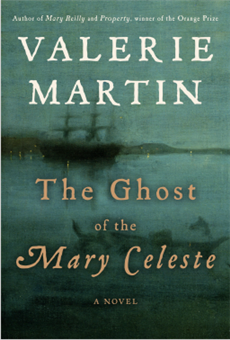
Cover for The Ghost of the Mary CelesteI haven’t read anything by Valerie Martin since her creepy Mary Reilly, which of course was a reworking of Dr. Jekyll and Mr. Hyde. I understand her novel Property won the Orange Prize, however, and The Ghost of the Mary Celeste was certainly worth reading, so I will look for some of her others.

This novel is based on the mysterious history of the Mary Celeste, a merchant ship that is famous for having been discovered in 1872 completely abandoned in the Atlantic Ocean. The captain, Benjamin Briggs, had his wife Sarah and two-year-old daughter Sophie aboard the ship, which had no other passengers, just the crew. No explanation has ever been found for the disappearance of everyone on board.

Martin’s book doesn’t so much attempt to offer us an explanation as add to the mystery surrounding this event.

The novel begins, though, with an earlier maritime tragedy. Captain Joseph Gibbs and his wife Maria go overboard in 1859 during a fearsome storm while she is trying to board a lifeboat.

Back at home after their deaths, Sallie Cobb is concerned about her younger sister Hannah, who claims their cousin Maria wants to take away her son Nathan, the little boy Hannah has been caring for since his parents were lost at sea. Maria’s family, the Gibbs, have been very unlucky at sea. Many of them having died there, including, of course, Maria. Sallie is worried about Hannah’s well-being, as she also claims that their mother, who died when Hannah was young, has been coming to talk to her.

Nathan only lives another few months, and Sallie is concerned about Hannah’s sorrow and her insistence that she has talked to both Maria and their mother. Sallie thinks that Hannah, who has always been fanciful, may be deranged from grief. Sallie is self-absorbed, however, for she is being courted by her childhood friend and cousin, Benjamin Briggs, Maria’s brother and also a sea captain, with whom she is in love.

The next section of the book leaps ahead in time to 1881 to follow Arthur Conan Doyle on a trip to Africa, where he is working as a ship’s doctor. It is during this trip that he decides to write a story about the Mary Celeste. Unfortunately, the story, which proposes a lurid explanation for the mystery, is understood by many to be true, even though he didn’t bother to research it and has almost all the facts wrong. Although he is taken aback by the response, especially of the victim’s families (whom he never considered), this story begins his writing career. Later he meets a spiritualist who has a connection with the Mary Celeste.

http://www.netgalley.comThrough such meanderings, including documents, newspaper clippings, journals, a journalist’s memoir, and visits with spiritualists, we eventually find ourselves back on the Mary Celeste by means of Sallie’s journal. This journal has found its way into the hands of Conan Doyle.

This story is haunting and melancholy, and Martin is not so much interested in what exactly happened aboard the Mary Celeste as in the event’s repercussions. Evocatively written, this novel will carry you along with it.