Day 380: Lady Gregory’s Toothbrush

Cover for Lady Gregory's ToothbrushLady Gregory’s Toothbrush is more of a biographical essay than an extensive biography of Lady Gregory, one of the founders with William Butler Yeats of the famous Abbey Theatre in Dublin and a huge figure in the Irish cultural revival of the 1890’s and early 1900’s. The title of the book is based on a comment she made that reflected her own inconsistencies, that is, her firm roots in the Protestant aristocracy against her support for the culture of rural, Catholic Ireland. When Playboy of the Western World was being produced by the Abbey, there was a huge uproar by Catholic nationalists. Lady Gregory remarked that the dispute was between “those who use a toothbrush and those who don’t.”

Tóibín’s sketch effectively shows the contradictions in Gregory’s character. It would be easy to dismiss her as an elitist snob, but Tóibín makes very clear her contributions to Irish theatre and folk lore. She was one of the first people traveling to rural Ireland to collect Irish folk tales before they were forgotten. As well as writing her own plays as part of the movement to encourage and advance Irish culture, she collaborated with Yeats on his without credit, and some of her contemporaries believed she wrote the bulk of one or two.

An interesting detail from Lady Gregory’s life is how this redoubtable woman cossetted and gave in to Yeats. Tóibín recounts her son Robert’s indignation, for example, when he found that his mother had served Yeats “bottle by bottle” the entirety of his prized Tokay handed down to him by his father.

Copper Beech in Coole Park
The copper beech at Coole Park

Tóibín makes very clear the love she had for her husband’s estate, Coole, which she carefully preserved for her son while he was in his minority. There she entertained many of the great talents of Ireland, including Yeats, his brother Jack, J. M. Synge, George Bernard Shaw, and Sean O’Casey. The home no longer stands, Tóibín says it has been covered in concrete, but I myself have seen the great copper beech bearing their initials.

If I have any complaint of this short book, it is at my own ignorance (even though I have done some reading), for my lack of knowledge of the events of this time and particularly of the plays discussed makes it difficult to understand some of Tóibín’s remarks, particularly the furor around some of the plays. Having never read or seen Playboy of the Western World, for example, I don’t understand what was so upsetting (and indeed he implies that a modern audience may not).

Tóibín effectively and elegantly draws a brief but balanced portrait of this complex woman, showing us both her accomplishments and faults. Although I have read some of Yeats’ poems and some of Shaw’s plays, this short work makes me want to do more exploring around these figures in the Irish cultural nationalism movement and their works.

Day 379: A Delicate Truth

Cover for A Delicate TruthBest Book of the Week!

A mid-level diplomat called Paul is sent on a mission to Gibralter with an army detachment and some mercenaries to capture a terrorist about to do an arms deal. Paul’s role is to act as the “red telephone,” keeping the minister in charge, Quinn, appraised. The agreement is that no action will be taken on British soil without British approval.

A person is spotted in the houses that the teams are monitoring, and there is an argument about whether to go ahead. The British, lead by a Welshman named Jeb and backed by Paul, argue that there is not enough evidence to proceed, but the mercenaries start to move anyway, and Quinn then gives permission to go. During the actual mission, though, all the monitors in the command center where Paul is waiting go dead, and Paul has to take the word of Elliott, the head mercenary, that everything went as planned.

Returning to a few days before the mission, Tony Bell, Quinn’s private secretary, is looking for help. For months, Quinn has been going AWOL, leaving him out of meetings, and keeping documents from him.

Toby has unofficially been informed that Quinn was censured a few years ago for a mission that went wrong involving a mercenary company lead by Jay Crispin. Quinn was forgiven but told not to consort with Crispin. Now Toby finds that Quinn has been meeting with Crispin and even sneaking him into the Foreign Office on the weekend. However, Toby is not supposed to know about the prior incident, so he has nowhere to turn. Taking a drastic decision, he secretly tapes a meeting about the mission to Gibralter. But his mentor, who originally was the one to break confidentiality, fails him, and soon he is sent to another posting.

A few years later, Kit Probyn, lately known as Paul, has retired to his wife’s property in Cornwall when he runs into Jeb, no longer a soldier but a leather worker who makes the rounds of fairs. Jeb tells him that the Gibralter mission, which Kit thought was a success, actually went horribly wrong and that Jeb himself was used as the fall guy. When Kit decides to collect evidence and blow the whistle, he turns to Toby with what he has learned. Although Toby is more aware of the dangers of their task than Kit is, neither has any idea of what they are getting into.

This novel is another of Le Carré’s taut and cynical thrillers, now moving from espionage to the theme of mixing private enterprise with politics and the fight against terrorism. Although not quite up there with The Constant Gardener, which I think is one of the best and most touching of Le Carré’s post-Cold War thrillers, it is deeply involving and tense. With Le Carré, you are never sure of whether good or evil will win, which makes his novels that much more exciting. He is really the master of this genre.

Day 378: Cascade

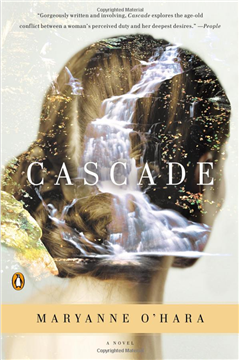
Cover for CascadeIt would be nice to know how much O’Hara expects us to like Desdemona Hart Spaulding, the heroine of Cascade. Unfortunately, I think we may be thrust too abruptly into Dez’s troubles to get to like her.

A promising artist who has studied in Boston and Paris, Dez has already been forced to leave that life when we meet her. The Great Depression cost her father his fortune, and he had to close down the famous theater he founded in the resort town of Cascade and sell his treasured First Folio of Shakespeare. Dez was forced to withdraw from art school and hastily married her childhood friend Asa Spaulding so that she and her father would have somewhere to live. Her father dies soon after, and she is taken aback to find he has left the theater to Asa.

Still, considering she married a man with little interest in or understanding of her drive to create art, Asa has set aside a bright room in their house for her studio, and she paints for several hours on most days. Asa wants a child, though, and Dez fears that her precious painting time would be taken up with child rearing. She is secretly doing what she can to prevent conception.

Two things soon make her dissatisfied with her life. Her art school friend Abby stops by on her way to a new life in New York, and suddenly everything in the depressed town looks shabby, even the beloved playhouse. Dez has also formed a friendship with a Jewish man named Jacob Solomon, who has taken over his father’s peddlar’s route. Jacob, though, is a gifted artist who plans to sell his father’s inventory and move to New York, hoping for a job with the Works Progress Administration. He meets Dez once a week to discuss art, but after a dispute, Asa asks her to stop meeting Jacob.

Asa is concerned because the town is under threat. Cascade is one of two possible towns that may be flooded to create a reservoir that will supply water to Boston. Asa wants to mobilize an effort to save Cascade, and Dez has the idea to paint a series of postcards showing Cascade in the past and present in an attempt to garner public support for the town. She is able to sell this idea to a prominent national magazine. All the while, however, she is secretly hoping the town will lose and she will have an excuse to move to a large city. The agreement she makes with the magazine and other disastrous decisions cause her to betray her husband, her town, and finally even Jacob.

I think O’Hara wants us to sympathize with Dez in her growing ambition to go to New York and take up a career in art. But some of her actions don’t just show poor judgment; they are despicable. As the plot advances, I feel less and less sympathy for her.

A review from the Boston Globe calls Dez complex and says she doesn’t always make the right choices. I think it’s worse than that; the trouble is really with where she places her priorities. The town is in danger of dying, in the horrible economy many people’s welfares are at risk, but Dez puts her future as an artist first and barely gives the other townspeople a thought, in fact, seems to feel superior to them. She supposedly yearns to reopen her father’s playhouse but doesn’t seem to give it much attention when it is threatened, although she eventually makes a deal that saves it. She has married for selfish reasons and is all too ready to give up on her marriage.

Of course, the principal theme of the novel is how much to give up for art, but in this case, it is not Dez who does the sacrificing. I wish I had liked this novel better. I think that if we’d had a longer time with Dez in her art student life and gotten to know her before she began a series of lies, deceptions, and betrayals, I could have felt more sympathy with her struggle.

Day 377: Gods and Beasts

Cover for Gods and BeastsMartin Pavel is standing behind an old man and a child in the post office waiting to mail Christmas packages when a gunman comes in. The old man pushes the little boy toward Martin and behaves as if he knows the gunman. The gunman forces the old man to assist him in the robbery and then shoots him.

Things are going better for DS Alex Morrow than they have in awhile. She finally admitted her relationship with her criminal half-brother Danny Boyle to her supervisors and has been investigated and cleared of any suspicion of wrong-doing. She also gave birth to twins four months ago and is happy in her marriage. Her habitual anger has stopped simmering below the surface.

Morrow’s team is surprised to find no ties to crime on the part of the victim, Brendan Lyon, a former union organizer. The tattooed Pavel turns out to be a wealthy do-gooder. The police are having a hard time figuring out how Lyon could have known the gunman.

In a parallel story that seems unrelated until the very end of the novel, labor leader Kenny Gallagher, a rock star in politics, can feel the support of his constituency ebbing. His leadership is being challenged, he is being accused of improprieties with a young party member, and his wife wants a divorce.

Alex soon finds that two officers on her team were lured into taking a bribe, and then a third has a sack of cash thrown into his car. As she investigates these incidents, she begins to uncover a web of corruption.

On the home front, she is tentatively exploring normal family relations with Danny. He says he’s retiring from crime, but is he?

I discovered Denise Mina’s gritty crime novels shortly after the publication of her first book. They are unfailingly excellent, with gripping plots, complex characters, and complicated moral dilemmas. Mina’s writing is spare and elegant. You can’t go wrong with her if you have a taste for dark, dramatic crime novels.

Day 376: Where’d You Go, Bernadette

whered-you-go-bernadetteDespite the cover, Where’d You Go, Bernadette is not chick lit; however, it is a great beach read, and summer is almost over (except if you live in Texas, like I do)! This novel is quite a romp. It has a zany, ridiculous plot and is full of little jibes at such things as suburban mothers who are overly involved in their children’s schools, Microsoft, and Seattle.

Bee loves her mother, who is creative and funny, but Bernadette has managed to alienate the other mothers at Bee’s school. She is slightly agoraphobic, so she stays home most of the time and does not volunteer at school, and she has hired a virtual personal assistant to help her run errands, even though Bee’s father doesn’t approve. Bee’s father Elgie is a computer genius who is practically worshipped at Microsoft and is seldom at home.

Bee’s parents have promised her that if she gets perfect grades, she can have any gift she wants. She picks a trip for the entire family to Antarctica over Christmas. To Bernadette, the idea of such a trip is intimidating, but she thinks Bee deserves it, so she begins ordering supplies online and getting Manjula, her online personal assistant, to take care of travel arrangements.

However, Bernadette’s dispute with a neighbor (and school mom enemy) about blackberry brambles creates complications that are both appalling and hilarious. When Elgie gets drawn in, he misunderstands what is going on because of his ignorance of home events. Crisis ensues, and Bernadette disappears on the eve of the trip.

Elgie is convinced that Bernadette had a breakdown, but Bee refuses to give up on her mother. She decides to try to figure out what happened the last few weeks before her mother disappeared.

My description does nothing to convey how cheeky, inventive, and funny this novel is. It is told in an epistolary style through emails from Bernadette to Manjula, emails between plotting mothers who hate Bernadette, emails between Elgie and his administrative assistant, and Bee’s record of her search for her mother. Bee and Bernadette are appealing, even while Bernadette is going a little crazy. If I have one little quibble, it’s that I don’t believe the personality change that one character undergoes. Still, if you want something light and lots of fun, this is the book for you. I have to thank my friend Gunjan for this recommendation.

Day 375: King Lear

Cover for King LearKing Lear is about fathers and their children–in particular, how two fathers misjudge their children, mistaking flattery and trickery for love, and push away those who sincerely love them. It is also about the responsibilities of power.

We all know the plot. King Lear has three daughters, Regan, Goneril, and Cordelia. As he is an old man, Lear wants to rid himself of the cares of governing while keeping the title and prerogatives of his office. So, he proposes to divide his property among his daughters but first sets them a silly test of telling him how much they love him to determine the sizes of their gifts. Regan and Goneril reply fulsomely, but Cordelia, who is not comfortable with expressing feelings, replies with restraint. Lear, who had planned to give her the biggest piece as she is his favorite, banishes her and splits his kingdom between the two other sisters.

In a parallel story, the Duke of Gloucester has two sons. His eldest, Edgar, is legitimate, while Edmund is not. Edmund, who is a lot like Iago but with more cause, decides to take all that Edgar has, so he forges a letter that makes it seem as though Edgar is trying to tempt Edmund into murdering their father. He also keeps Edgar away from Gloucester by making him think that he, Edmund, is on Edgar’s side and telling him that Gloucester is angry.

In both cases the fathers, without considering their own experiences of their children’s qualities, throw away the loving child and favor the conniving children.

One metaphor throughout the play is that of sight. Neither father can see what is plainly before him. Gloucester actually loses his sight during the course of the play, and Lear goes mad before he can see clearly.

Madness also factors heavily in the play. Lear is driven mad with grief when he sees his older daughters for what they are, while Edgar pretends to be a madman to hide from his brother and father. Of course, madness is exciting in the theatre because a mad character is allowed to say anything, but Lear’s lines seem very obscure to me, unlike Hamlet’s when he was pretending to be mad.

This play seems to me to be rather disorganized. A lot of time is spent wandering around on the moors, with different characters running into other characters. I confess to finding that part tedious. Cordelia, who in one way is so important to the play, spends most of it offstage, while the fool, who is a dominant character at the beginning of the play, is ruthlessly killed in the middle of it. I am not sure of the point of the scene where Edgar makes his father think he has committed suicide by leaping off a cliff. All in all, this play seems rather messy to me.

Day 374: A Plague of Lies

Cover for A Plague of LiesA Plague of Lies is the third in the mystery series set in 17th century France and featuring Charles du Luc, a master of rhetoric at the Louis le Grand school in Paris.

Charles is dismayed when he is summoned to escort Père Jouvancy to the court at Versailles to present Madame de Maintenon with the gift of a holy relic. Madame is angry with the Jesuits because the King’s confessor, Père la Chaise, convinced the King not to give her the title of Queen, so the gift is an attempt to regain favor. Although Charles disapproves of what he sees as the Sun King’s constant self-glorification, he must escort Père Jouvancy, an old man who is just recovering from an illness that is raging through Paris.

On their way to Versailles, Charles and Jouvancy encounter Lieutenant-Général de la Reynie, head of the Paris police, whom Charles has assisted on occasion. La Reynie asks Charles to keep an eye on the Prince of Conti while he is there and to listen to what is said about him.

Once at court, though, Père Jouvancy has a relapse, and Charles comes close to witnessing the death of a much-disliked man, the Comte de Fleury. Apparently, he too was ill and running for the latrine when he slipped on the wet floor and fell down the stairs. The rumor is that he was writing a scandalous memoir, and poison is immediately mentioned. When the other members of Charles’ party fall ill, there are more rumors of poison, but all the men seem to just have food poisoning.

De Fleury does appear to have been poisoned, however, and Charles observes several people going in and out of his room, including the Duc du Maine, son of the King. Charles finds himself getting embroiled in the problems of the Duc’s sister, Mademoiselle de Rouen, who is soon to be engaged to the son of the King of Poland and is not happy about it. Charles also observes Conti behaving suspiciously. Next, a gardener is found drowned.

The novel presents us with a convoluted plot but also with a fascinating portrait of the court at Versailles. Rock’s knowledge of the period, even of how the places she describes would have appeared at that time, seems convincingly complete. Her novels are always absorbing.

Day 373: Tell the Wolves I’m Home

Cover for Tell the Wolves I'm HomeBest Book of the Week!

Although I think Tell the Wolves I’m Home is classified as a young adult novel, it has much to offer adults, too, in reading pleasure. Carol Rifka Brunt gives us a novel in which the voice of the narrator is so strong and the sense of her personality so developed that it is really outstanding.

Fourteen-year-old June Elbus is an unusual girl–a loner who likes to go to the woods and pretend she is living in the middle ages. She loves her Uncle Finn more than anyone and believes he is the only person in the world who understands her. She used to be close to her older sister Greta, but for some reason Greta has started treating her badly. So, when Finn dies of AIDS, June feels as if she has no one. The situation is made worse because it is the 1980’s, and no one understands the virus.

Something strange happens at Finn’s funeral. A man June has never seen before appears and tries to get her attention, but her sister hustles her away. Days later her uncle’s favorite teapot arrives for her with a note in it. The writer explains that he is a friend of Finn’s and asks to meet her. But Greta has told her that this friend, Toby, killed Finn.

A problem is posed by the portrait Finn spent the last months of his life painting. It is one of June and Greta, although Greta acted as if she didn’t want to sit for it. The Elbuses have the portrait in their living room until an article appears about lost works of art, including a picture of the portrait and reporting that its title is “Tell the Wolves I’m Home.” Until then, June didn’t even know her uncle was a famous artist. And who could have photographed the portrait and sent the article to the magazine?

June agrees to meet Toby but becomes jealous of him when she realizes how close he was to Finn. She is shocked to find they were partners for nine years, and she never knew he existed. June is torn because of her ambivalent feelings about Toby and the fact that they are keeping their acquaintance a secret from her parents, until she finds a note to her from Finn in a book, asking her to take care of Toby because he has no one.

Infused throughout with the voice of its teenage narrator, a girl like so many others struggling with feelings of self-doubt, trying to figure out what is right, this novel is beautiful and moving without being in the least sappy. It is really a wonderful book.

Day 372: A Trick of the Light

Cover for A Trick of the LightThe morning after the village of Three Pines throws a big party to celebrate Clara Morrow’s show at the prestigious Musée d’Art Contemporain in Montreal, the body of a murdered woman is found in Clara’s garden. The body turns out to be that of Clara’s childhood friend Lillian Dyson, whom she has not seen in more than 20 years.

Clara’s friendship with Dyson was broken because Dyson cruelly betrayed her in art school. This puts Clara on the list of suspects. However, as Inspector Gamache’s team investigates Dyson, they find that she has a reputation for doing harm to others by trying to ruin their careers in art, providing a broad field of suspects, especially after a party celebrating an art debut.

On the other hand, Dyson is viewed completely differently by her new circle of acquaintances, which leads Inspector Gamache to wonder if people can really change their natures. Eventually, the police realize that Dyson was on a 12-step program and that she was probably intending to ask forgiveness of one of the people at the party.

On another front, Clara seems to be headed toward trouble in her marriage. Although her husband Peter has been happy with his own moderately successful career in the art field, now that Clara may be proving to be more talented than he is, he is becoming jealous and insecure.

Although this mystery has Penny’s usual hallmarks of beautiful description and insight into people’s characters, I do not like where the plot involving Jean Guy Beauvoir is going. Also, I thought it took the police an awfully long time to figure out about the 12-step program.