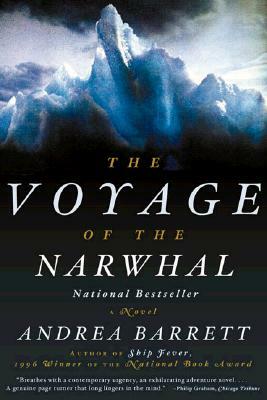
The Best Book for this period is The Voyage of the Narwhal by Andrea Barrett!
Reviews, reviews, and more reviews

The Best Book for this period is The Voyage of the Narwhal by Andrea Barrett!

Detective Vera Stanhope’s team is still grieving after the death in the last book of (reverse spoiler) Holly. Now they have a new member, brash Rosie Bell from Newcastle.
They also have a new case. A worker in a children’s home, Josh Woodburn, was killed in a vacant lot just outside the home. Round about the same time, 14-year-old Chloe Spence, a resident of the home, goes missing. Is she the murderer? A witness? Is her disappearance a coincidence? All they know is that they must find her and soon.
Joshua’s parents appear unaware that he was working at the home. He’s a student, and he’s supposed to be working on his art and film project. Apparently, he told his ex-girlfriend Stella that he was working on an important project.
At Chloe’s school, the staff seem to be more worried about Chloe’s grades and behavior than that her mother has been put into mental care and she herself is in a group home and missing. To Vera, the home looks like it doesn’t have a penny spent on it, and it is understaffed.
In their search for Chloe, the team finds that she liked going to a village in the hills where her grandfather once owned some land and they used to do rough camping. When the team goes to the small camping hut on the property, they find someone—not Chloe but Brad, another resident of the home, dead from an apparent overdose.
The solution to this mystery isn’t really possible to figure out, because vital information is withheld from the reader. Early on, I guessed what Josh’s project might be, sort of, but I couldn’t see how it would lead to murder. Then I more or less forgot about it. Still, Cleeves really rivets you to the page. You have to keep reading.
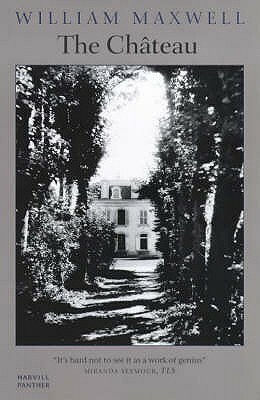
I found The Château when I was looking for a book to fill the 1961 hole in my Century of Books project. Although the blurb calls Maxwell “one of our greatest practitioners of the art of fiction,” I hadn’t heard of him before.
Harold and Barbara Rhodes, a young American couple, have taken one of the first opportunities of Europe reopening for tourists after World War II to visit France in 1948. Although they have some other adventures first, the bulk of the novel concerns the two weeks they have booked at a château, where they will be having meals with and visiting with the family. They made this decision to try to improve their French.
Although they meet mostly with kindness, they find post-war France difficult to travel in. The destinations they have in mind take several trains and sometimes other modes of transportation to get to, and they have brought too much luggage. Sometimes they are recommended not to go to a destination they planned. They end up going to the château early.
At first, nothing seems to be going well. No one meets them at the station, and although their room, when they finally see it, looks nice, it is cold and the fireplace is blocked. They were promised a bathroom and they get one but with only cold water from the sink and none at all from the tub, and the toilet is on another floor. The bicycles they were promised don’t appear. Moreover, their host, Mme. Viénot, seems cold and distant and their French isn’t up to the conversation. It is clear that the family is of the upper echelons of society, but now they are broke.
The Rhodes take a break of three days in Paris, and after that, they find things improving. They meet guests and younger family members whom they like very much, their French has improved, and Mme. Viénot seems happy to see them.
This novel takes a gentle, sometimes amusing look at the differences between the French characters and the Americans—Harold especially beaming good will but sometimes putting his foot in it—basically culture clash and a clash of social classes. It also describes the post-war conditions in France. I enjoyed reading the novel very much. Its descriptions of landscapes are lovely. It is both appreciative and ironic.
The first Wednesday of the month, I try to have WWW Wednesday, for which I talk about
I stole this idea from Davida, The Chocolate Lady, and I’ve found it to be a nice break. You can participate by commenting on your recent reading below. Please do!

In among all the reading for Novellas in November, Nonfiction November, A Century of Books, Literary Wives, and Dean Street December, I managed to stuff a couple of books for my other projects. The last one was The New Life by Tom Crewe for my Walter Scott Prize for Historical Fiction project. It is set in late 19th century London and is based loosely on the true story of two men who wrote a controversial book about homosexuality.

I thought I had read one Cadfael book years ago, and I did not really enjoy the TV series. However, when I saw that the first book in the series filled one of the holes in my A Century of Books project, I decided to read it. So far, it is pretty good! It’s A Morbid Taste for Bones by Ellis Peters.

Of course, what I’m reading next often changes, but my plans are to fill another hole in my A Century of Books project by reading Cousin Rosamund by Rebecca West. It is the third in her Aubrey family trilogy, which I have been reading lately. (I believe I am reviewing the first one, The Fountain Overflows, on Christmas Eve.) I understand that trilogy was unfinished, which means this book is unfinished, but it has been compelling reading so far.
What about you? What have been been reading or plan to read next?
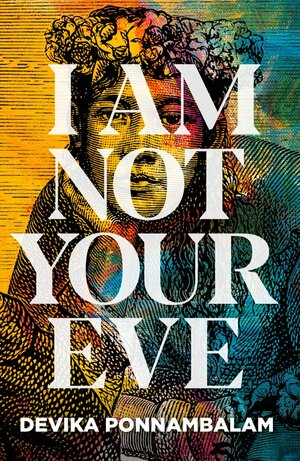
This is an interesting yet difficult novel about one of Gauguin’s Polynesian “wives,” whom the blurb calls his muse. Although much of it is about her, Teha’amana, a very young girl, it is told with several voices—those of Gauguin’s daughter, his European wife (briefly), Teha’amana’s Foster Mother (called only that in the book), and very occasionally Gauguin himself.
The broad story is of Gauguin arranging a “marriage” on Tahiti with a very young girl. Their relationship is one-sided. She basically does what he tells her to do while he continues to talk about her as if she were free. Their relationship starts with rape and mostly consists of sex and posing for his paintings. She dislikes the food he eats. When she returns home after eight days to her mother as custom dictates, she tries to stay there.
From Denmark, Gauguin’s daughter writes about him in her diary. She seems to be the only family member who misses him. When his painting of Teha’amana arrives, her mother shoves it into the attic instead of taking it to Paris to sell, and she goes up to commune with it.
Interleaved with these stories are Polynesian creation tales and other myths.
This novel is poetically written, but it was sometimes difficult to know which narrator was speaking. There were a few times, for example, when I thought I was reading a myth but it was actually part of Teha’amana’s story. Also, I was occasionally startled by Gauguin’s point of view of Teha’amana’s behavior that seemed radically different from how she was feeling. Teha’amana’s expression of her point of view is very different from a Western way of telling things, so I didn’t always feel I understood what was going on.
The book only briefly mentions other girls, but apparently Gauguin had three very young Polynesian “wives,” hopefully one after another rather than at once. I couldn’t tell. Much of the content within the mythology sections and in Teha’amana’s story are very sexual in nature, although not graphic.
I read this book for my Walter Scott project.
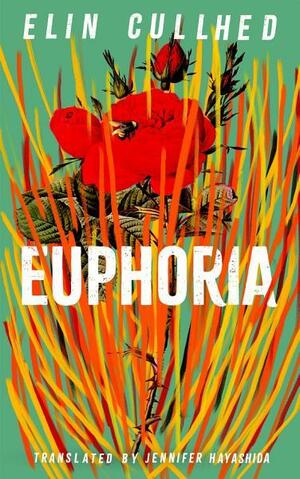
Today is another review for the Literary Wives blogging club, in which we discuss the depiction of wives in fiction. If you have read the book, please participate by leaving comments on any of our blogs.
Be sure to read the reviews and comments of the other wives!
Oh, dear, Elin Cullhed and editors, morels come out in the spring. By October, it’s unlikely that any could be found, worm-eaten or not. Chanterelles are what you pick in the fall, among others.
Euphoria is about Sylvia Plath, set in the last year or so of her life. It begins when her daughter is one year old and she is pregnant with her son. It ends a few months before her death.
Before I get into my review, I want to comment on something. When I began reading this novel, I knew very little about Plath except she was a poet, she was married to Ted Hughes, and she committed suicide. Very recently, I read her novel, The Bell Jar, just by coincidence because it filled a hole in my Century of Books project. While I was reading Euphoria, I got the sense that there was a big controversy when Plath died. Some blamed her death on Hughes, who left her a few months before for another women. Certainly, there was a lot of anger against him for burning her diaries. Perhaps I’m seeing some reflection of the opposite side, but I ran across a post by All That’s Interesting, a blog produced by material collected from other sources, that states that Plath was at the nadir of her career when she died. Actually, her novel was recently published (one month before), she had been on BBC reading her poetry, and had recently finished her most famous poem, “Daddy.” So, where did this “nadir” idea come from? Maybe from Ted Hughes’s supporters?
That novel starts with the couple having moved to Devon at Hughes’s insistence. Plath liked living in London and feels lonely in the country, pregnant and left alone with her one-year-old Frieda while Ted goes up to London. Frieda wants attention all the time, and Sylvia has difficulty finding time to work or get anything done. Her marriage already seems rocky to me, alternating sometimes vicious verbal battles with voracious sex. Sylvia admits to liking being mistreated and having a fascination with death. She is extremely needy and jealous. He is always walking away.
The novel is written from Sylvia’s point of view. She is almost always either ecstatic or depressed. With her, as depicted by Cullhead, it is I, I, I. There isn’t so much a plot here as a detailed examination of her feelings as her children grow and her marriage breaks down. Jealous or not, she immediately recognizes that Aissa Wevill is after Ted.
This novel is sometimes difficult to read. Sylvia’s shifts in mood or reactions are sometimes hard to understand, and occasionally her thought processes were hard for me to follow.
Well. Certainly Sylvia would be a difficult woman to be married to. First, she’s possibly bipolar, unsure of herself, and obsessed with Ted. But Ted, I think, is not exactly a model husband, even for his time. He helps out sometimes (which is actually unusual for his time) but he withdraws a lot because he has to write. Sylvia has to ask for time to write even though it is her fellowship that is supporting them at the beginning of the book. There are a few signs that he may be threatened by her as a writer, although other times he celebrates with her.
I know this is a time when men generally weren’t involved much with family life and childcare—and sometimes he cooks, does dishes, or takes care of the kids—but I was shocked when he left Sylvia, sick with puerperal fever but with an infant and toddler to care for, to go fishing, in winter no less.
I don’t think this book says anything about marriage in general, just something about this particular, very volatile marriage. It seems like the volatility that made it exciting at first was what did it in finally.
As so often happens when one person in a couple is attracted to someone else and wants to leave, that person begins finding fault with the person he wants to leave in order to make himself feel better about this betrayal. Often, the very things that attracted him in the first place are the things that irritate him later. You may find fault with my pronouns, but it is often these pronouns that this applies to.

Here we are at the last week of Nonfiction November. The prompt for this week is
Week 5 (11/25-11/29) New To My TBR: It’s been a month full of amazing nonfiction books! Which ones have made it onto your TBR? Be sure to link back to the original blogger who posted about that book! (Deb)
I have added a bunch of books to my TBR this week! Some of them were ones that I intended to put on it but forgot until reminded by a thoughtful blogger! Others are brand new to me. So, let’s go! I thought I’d divide these into books I already knew about and books I learned about this week.
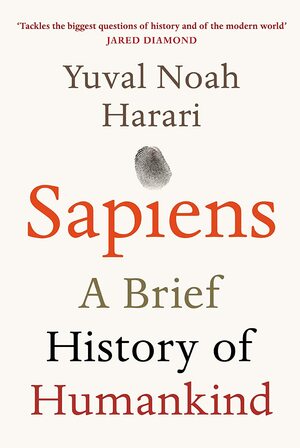
Actually, a friend of mine recommended this book to me quite some time ago, and I forgot about it. So, when I saw it on Readerbuzz this month, I immediately put it on my list. Thanks Deb! It’s Sapiens: A Brief History of Humankind by Yuval Noah Harari.
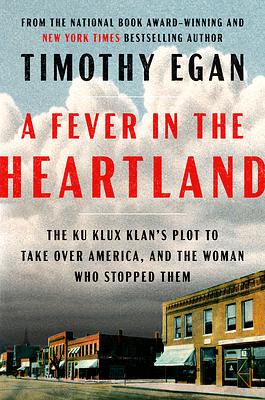
I’ve had my eye on A Fever in the Heartland by Timothy Egan since it came out. Okay, I am interested in the history of fringe organizations. I’ll never forget reading Under the Banner of Heaven by Jon Krakauer. Also, I found Egan’s book about the dust bowl to be interesting. Notice how I made no attempt to use this book’s really long and bulky subtitle. C’mon you guys! Some subtitle on a nonfiction book is expected, but you don’t have to tell everything on the cover! The blog that reminded me of this book was Joy’s Book Blog.
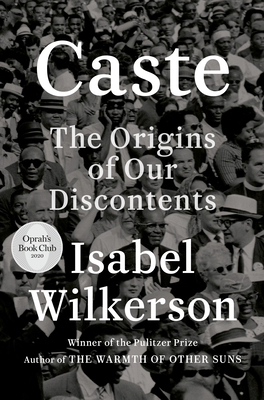
I didn’t write down which blog reminded me of Caste: The Origins of our Discontent, because it was mentioned on several. I have been meaning to read this book, especially because I thought Wilkerson’s book about the Great Migration was excellent.
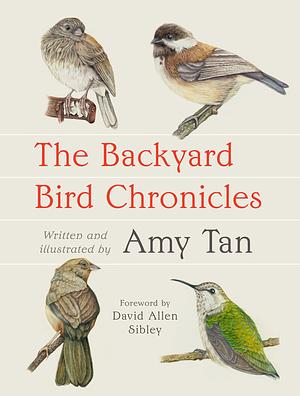
One morning as I was driving to my art class, I heard an interview with Amy Tan. I didn’t know that she had been more or less restricted to her house because of a condition that causes her to faint with no warning. She told how she got interested in looking at the birds in her backyard and how she eventually trained some of them to eat from her hand. The book is also illustrated by herself! I made a resolution to get that book right away, but I forgot all about it until Shoe’s Seeds and Stories wrote about it this week.
Those are the books I knew about before, but look what I picked up this week!
These books appear in the order that I wrote them down.
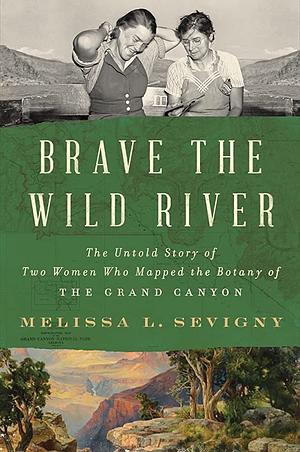
What could be more exciting than the story of women in 1938 tackling the Colorado River to see what botanical specimens they can collect? They were expected to die! I found out about Brave the Wild River by Melissa L. Sevigny on The Book Stop blog! Another unnecessarily long subtitle, guys.
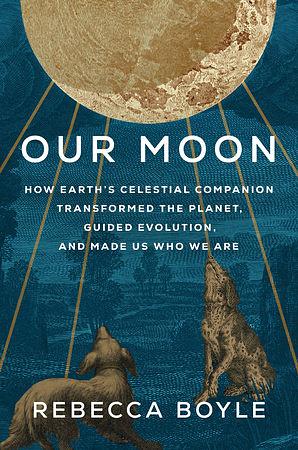
I can thank Unsolicited Feedback for listing two books that I put on my TBR this year. One of them is Our Moon (long subtitle) by Rebecca Boyle. I’ve always liked the moon, and Boyle hooks it into effects on our intellectual development, science, and other topics.
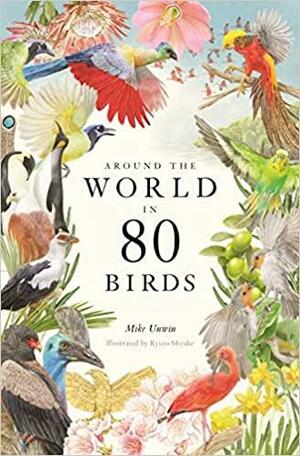
The other book is Around the World in 80 Birds by Mike Unwin, illustrated by Ryuto Miyake. OK, I like birds. In this beautiful book, Unwin picks 80 birds from around the world and tells us all about them.
Thanks so much, Unsolicited Feedback!
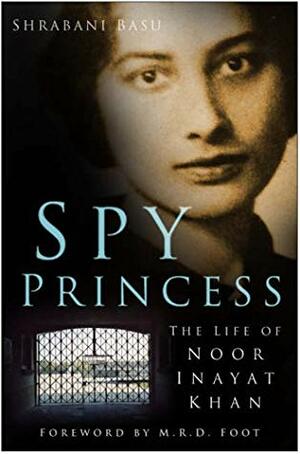
This one looks like a page-turner, Spy Princess: The Life of Noor Inayat Khan by Shrabani Basu. It’s about the first woman wireless transmitter in occupied France during World War II. She assumed a dangerous resistance post, was betrayed, and ended up dying in Dachau. I put it on my TBR thanks to Literary Potpourri!
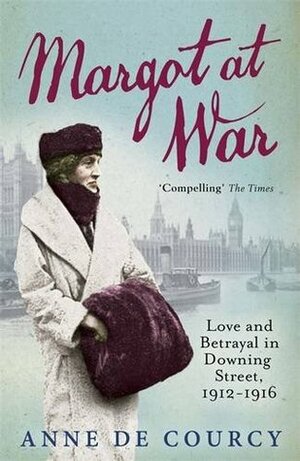
And stepping back to World War I, Margot at War by Anne de Courcy is a biography of Margot Asquith, the wife of Britain’s Prime Minister during World War I and how she affected the office. This is a staid description, but this book with its examinations of the couple’s private lives sounds quite juicy! Thanks to Hopewell’s Library of Life for this suggestion!
Finally, thanks to Helen of She Reads Novels for just yesterday reviewing another true crime novel by Kate Summerscale, The Peepshow: The Murders at 10 Rillington Place. I have found Summerscale to be reliably good and interesting but didn’t know she had another book out. I like me a good true crime.
Last year, I listed six or seven nonfiction books in my TBR, but only managed to read three of them (along with nine others). This year, I’ll try to make a point of doing better.
In 1855, Erasmus Wells has spent years working with the items in his father’s collection of specimens, ever since he himself returned from an ill-fated exploration in the South Pacific. The members of the expedition were mocked, but the worst thing was the acclaim given to the leader after he released his book—cut and pasted from the journals and records he confiscated at the end of the trip—including Erasmus’s—but giving them no credit.
But Erasmus almost unwillingly finds himself departing on a voyage to the Arctic, to be lead by his sister Lavinia’s young fiancé, Zeke Vorhees. Zeke was raised like a younger brother to Erasmus and his brothers. He is handsome and charismatic, but may not make good leadership material. However, Erasmus has promised Lavinia he will take care of Zeke.
And Zeke proves divisive as a leader almost from the beginning, determined to do what he wants even if it unnecessarily risks the lives of his men. He almost immediately gets on bad terms with Mr. Tyler, the sailing master, even though he should be relying on Tyler’s experience. Although the purpose of the voyage is to find out more about the Franklin expedition, Erasmus becomes worried that Zeke has other intentions.
Periodically, the novel looks back at the people left behind, particularly Alexandra, who has been hired to keep Lavinia company. She is also hired by Erasmus’s brothers to color illustrations for a book of exploration, and later begins to engrave, but she yearns to travel herself.
Barrett builds suspense as the novel moves from Erasmus’s loneliness and sense of isolation to his fears about the results of Zeke’s leadership to a sense of true peril. This is a truly fascinating novel that builds on the records of actual voyages of exploration during this period. Although Erasmus has his flaws, he is a sympathetic main character. I’ve read several really good historical novels this year, and this is one of them.
In January, I foolishly decided to join Simon Thomas’s Century of Book Challenge, even though I knew that reading 100 books, one for each year in a century, from 1925-2024, would be tough because last year I only read 169. So, how am I doing?
Here are the holes in my project with the books listed for this month below. If you want to see the details, see my Century of Books page.
Since October 30,, I read the following books. As we’re closing in on the end of the year, I decided to mark the ones that fill one of my holes in bold from now on. I didn’t do well on this project this month because of the several other projects I was reading for in November.
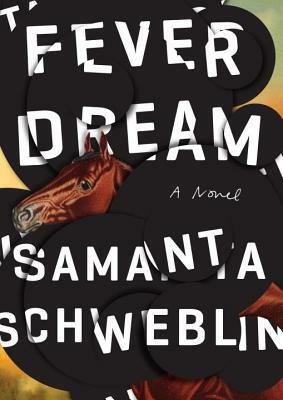
Fever Dream was another book I found on Literary Hub’s 50 Best Contemporary Novels under 200 Pages list. It is mysterious and unsettling and qualifies for Novellas in November.
Amanda, a young woman, is in bed talking to a boy named David. Together, they are trying to reconstruct the story of what happened to Amanda. Amanda is telling David the story, prodded by his questions, but it is clear that David remembers more than Amanda does. The story starts out with David’s mother, Carla. It soon becomes clear that Amanda is dying.
I don’t want to tell much about this story because almost anything I say would interfere with the plot unfolding itself. Let me just say that the story is eerie and a ghost story, in its own way. And to watch out where you pick to go on vacation.

The novella is sparingly written, so sparingly that the lines were given extra space just to make it to 185 pages. It’s quite a creepy little book, combining superstition and ghosts with an unstated environmentalism.
Book reviews of mainly modern & contemporary fiction
Writer and Historian
There is nothing more satisfying than reading a book while sipping a hot cup of tea.
A historical fiction book blog
Emerging as an artist
Liz Dexter muses on freelancing, reading, and running ...
For mostly adult, literary, fiction; focusing on historical, contemporary, biographical, and women.
"Well, there’s so much to read, and I’m so far behind." Wallace Stegner
Read to live and live to read
A bookish blog (mostly) about women writers of the nineteenth and twentieth centuries
A Celebration of Russian Literature
Reading: it's personal
Based in Romania, reading all over the world. Mostly fiction, some memoires and a little bit of poetry.
Adam Burgess
"Vivre le livre!"
"History is a vast early warning system." Norman Cousins
Scottish Book Blogger
"She had read novels while other people perused the Sunday papers" - Mary Elizabeth Braddon
A word after a word after a word is power. --Margaret Atwood
Books • Opera • Art • History
FOR DISCERNING READERS
Your online source for Jane Austen and her legacy
A Community of Classics Lovers
A blog about Irish books, writers, writing and everything in between.
 What? Me Read?