Day 117: Tinker Tailor Soldier Spy

After seeing the exciting movie this winter, I decided to read the novel Tinker Tailor Soldier Spy by John le Carré. George Smiley has been drummed out of the service and the entire leadership of “The Circus” (slang for Britain’s intelligence organization) replaced after the death of Control, their former leader.

But the ministry calls him in to listen to the tale of Ricky Tarr, a low-level operative from Penang, who has been missing for months. Tarr’s story includes information from the wife of a Soviet operative and an allegation that The Circus has a mole at the highest level, moreover, that the mole has been sending the Russians information for some time. The ministry wants Smiley to investigate. It is soon clear that the mole is one of only a few of Smiley’s colleagues, whom he has known and worked with for years.

The novel is breathtakingly suspenseful even though, having seen the movie, I knew the ending. Smiley puts the pieces together by going over records of significant events and interviewing several agents who were replaced because of suspicions they raised or events they witnessed.

This may not sound exciting in this day of explosions and car chases, but le Carré is a master at building up the intrigue and suspense. You will not want to put this book down. I recommend the movie as well, featuring a host of excellent British actors.

Day 116: 22 Britannia Road

Cover for 22 Britannia RoadAlthough the subject matter of 22 Britannia Road should have been interesting, a major flaw of this novel by Amanda Hodgkinson is that I always feel removed from the actions and characters. This feeling of distance may be because we, the readers, are immediately thrust into their woes without first getting a chance to know them.

One minute they meet, the next minute they have a baby, the next he is off to war. The two main characters, Janusz and Sylvana, are natives of Poland before the invasion of the Nazis, but aside from knowing that, you wouldn’t believe that anything unusual is going on. Later, they are in Poland, fleeing, with the Nazis invading, but except for a few events, you wouldn’t know there was a war. It’s as though the author is unable to imagine what it might be like first to live in Poland when the war is building and worse to be there once the Nazis arrive.

The novel actually begins after the war, with Janusz waiting in England, where he has spent most of the war, for the arrival of Sylvana and their son Aurek from Poland. Later it tells the story of their meeting, courtship, marriage, and war through unconvincing flashbacks.

It also tells the story of their floundering marriage, which happens because they tell each other nothing. This post-war story is a little more realized than the story of their past.

I have some sympathy for Janusz at the beginning of the novel, when he is waiting for his family to arrive. He has obviously meticulously prepared for them and is hoping to give them a good life. But I think Sylvana is a stupid woman, who is cloyingly overprotective of Aurek. She is harboring a big secret, but I guessed it almost from the beginning.

Although I was mildly interested in the story of the novel, I felt it could have been done much better.

Day 115: Dark Places

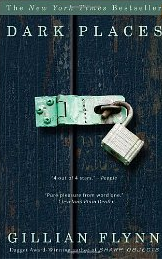
Cover for Dark PlacesHappy Independence Day!

I just got a notice from Amazon that the latest Gillian Flynn book is finally shipping, so in celebration, I thought I’d post a review of a previous Flynn book. Gillian Flynn writes great, dark mysteries about women who have been severely damaged.

In Dark Places, Libby Day is the only surviving victim of a famous crime. When she was seven years old, her entire family was murdered, supposedly by her 15-year-old brother Ben. She survived by climbing out the bedroom window and hiding in the snow.

As an adult, she has been subsisting on the fringes of society, supported by donations made after the crime, sales of family memorabilia, and money from a book deal. But now she is almost completely broke and embittered, with no friends and her only relative serving a life sentence in prison. Although she is an unlikable character, a liar and manipulator, you somehow end up completely identifying with her.

The bizarre Kill Club contacts her. They are a group of amateur true crime buffs, and they want to hire her to investigate the murders. Most of them believe that the seven-year-old Libby lied in her testimony years ago and that Ben was wrongly convicted.

The true story of the murder is told partially in flashbacks, from the points of view of Libby’s mother and her brother Ben. As usual with Flynn, I found this book to be dark, enthralling, and perceptive.

Day 114: A Walk in the Woods

Cover for A Walk in the WoodsIn A Walk in the Woods: Rediscovering America on the Appalachian Trail, Bill Bryson recounts his attempts to walk the Appalachian Trail. After living in England for years, Bryson has moved back to the States, and he decides to reacquaint himself with America and try to get into better shape by walking the trail. To his surprise, an old friend named Katz, a reformed drug user, decides to come along.

Bryson is an amusing writer. He mixes interesting facts about the trail and information about the environment with stories about who he and Katz meet and what happens to them. I was particularly struck by how two such mismatched companions not only did not kill each other but actually treated each other considerately.

The two out-of-shape and inexperienced hikers start out with far too much equipment and then as they continue, Katz begins throwing things out, including the food. It seems they make just about every mistake a couple of neophyte campers can make, except being eaten by bears.

They run out of time after walking a few hundred miles of the trail in the south, and Bryson’s attempts to finish the trail devolve to what he can accomplish by driving to different portions of it and hiking on long weekends. But the longer hike that the two of them take is the meat of the book.

A few people have criticized the book because Bryson didn’t actually manage to hike the entire length of the trail. I think they are missing the point of the book, which is about friendship, about the interesting things that happen on the trail, and the history of the trail itself. In fact, few people do manage to complete the entire length of the trail, from Maine all the way to Georgia.

Day 113: Extremely Loud and Incredibly Close

Cover for Extremely Loud and Incredibly CloseI’m probably the last person to read Jonathan Safran Foer’s Extremely Loud and Incredibly Close, which was enormously popular six years ago. I suspect I avoided it for awhile because of the subject matter, which is, of course, 9/11.

Oskar Schell is an extremely precocious nine-year-old boy who is grieving for his father, a casualty at the World Trade Center on 9/11.

Hidden away in a vase in his father’s closet, Oskar discovers a key with a label that says “Black.” Since his father was always leaving him puzzles, he believes that if he can find the person named Black who has the lock that goes with the key, he will get a message from his father. He especially needs this message because that day, his father called repeatedly from the World Trade Center but Oskar could not make himself pick up the phone. In search of this message, Oskar begins visiting everyone in New York whose last name is Black.

The story of his grandparents’ past is told in parallel in a series of notes and letters. His grandparents both lost their families in the bombing of Dresden (perhaps too neat a parallel). Later, they met in New York, but his grandfather, severely traumatized and unable to speak, deserted his grandmother when she became pregnant.

Although it has been criticized for triteness, I found Extremely Loud and Incredibly Close a touching and funny novel about loss and about the relationship between fathers and sons (but also implicitly about mothers and sons). It is told in the nontraditional narrative style that is becoming almost traditional–in first-person narration by Oskar, in letters and pictures, and even in pages of illegible typing.

Oskar is a frighteningly intelligent, creative, unusual, and quirky child, and the depiction of his character is my major criticism. To me, he seemed very similiar in tone and style, and in repetitions and oddness, to the autistic older boy in The Curious Incident of the Dog in the Night-Time by Mark Haddon. Other reviewers have mentioned Holden Caulfield. In fact, although you will like Oskar, you will also find him annoying at times and, I feel, unbelievably precocious for his age. He does not make a believable nine-year-old, no matter how intelligent.

Day 112: Fever of the Bone

Cover for Fever of the BloodVal McDermid is the author of an excellent series featuring Tony Hill, a troubled profiler. In Fever of the Bone, someone is luring teenagers over the Internet and murdering them.

Tony’s friend and colleague Inspector Carol Jordan’s new boss won’t allow her to employ Tony, so he goes off to Manchester to consult on a case. Later, two boys disappear in Bradfield. Neither Carol nor Tony know it, but they are both working on cases with the same killer.

Tony has also inherited some property from his father, whom he never met. He just wants to ignore the situation, but Carol thinks it’s important that he try to find out about his father.

As usual with a McDermid novel, the book introduces interesting characters and has an involving plot.

Day 111: The Black Tulip

Cover for The Black TulipThe Black Tulip does not feature the swashbuckling we have come to expect from the historical novels of Alexandre Dumas. Even though it begins with two innocent men being torn limb from limb by a mob, it is actually a romantic comedy about the mania for tulips in the 17th Century.

The two men are the uncles of an obsessed tulip grower, Cornelius van Baerle. Just before their deaths, they send him a message telling him to destroy some papers they’ve left with him, but he is too occupied with cultivating his black tulip bulbs to read it.

These bulbs are worth a lot of money, as the Horticultural Society is offering a huge prize for a black tulip. Cornelius himself is not interested in the money as much as the achievement of growing the tulip. However, a neighbor who covets the prize, Isaac Boxtel, betrays him to the authorities hoping to get a chance to steal his tulip when he is arrested.

Cornelius bequeathes his tulip to Rosa, the jailer’s daughter, when he thinks he will be executed. Although completely innocent of treason, he is sentenced to life in prison. The story continues with the attempts of Boxtel to steal his tulip, which Cornelius and Rosa are trying to grow in jail so that it can be delivered to the Horticultural Society. At the same time it is about the love that grows between Cornelius and Rosa.

The novel is funny, romantic, and well written. Although some historians currently believe that reports of tulip mania are exaggerated, this novel seems to accurately reflect what was earlier reported of this odd period of history. If you are interested in another look, try reading Deborah Moggach’s historical novel Tulip Fever or the Wikipedia entry on “tulip mania.” For a nonfiction account reflecting current ideas, try Anne Goldgar’s Tulipmania: Money, Knowledge, and Honor in the Dutch Golden Age, which I have not read, but is cited in the Wikipedia article.

Day 110: Maus I

Cover for MausMaus I is a graphic novel that is both about Art Spiegelman’s relationship with his father, Vladek, and about Vladek’s survival of the Holocaust. The characters are depicted as different types of animals–Jews are mice, Poles are pigs, Germans are cats, Americans are dogs, and Swedes are reindeer. Spiegelman explained in The Comics Journal (according to a reader review on Amazon.com) that his idea for using these animals is not entirely original but is extrapolated and expanded from the names the Germans called Poles and Jews.

In the novel, as Vladek tells Art the story of his experience during World War II, they also argue. The story is compelling, although the relationship between the two is less so. Vladek is difficult and eccentric, but Art seems childish and spoiled, with no patience or understanding for his father. However, the novel makes the point that he, too, was scarred by his father’s experiences.

I am not by any means an expert on graphic novels, having only read one other, which was the beautifully illustrated Britten and Brülightly. However, the art in Maus I is so primitive that I could not tell any of the characters of a single species apart except for their clothes. I suppose, though, that that in itself is a statement. Still, the art shows a strength of line and a simplicity that make it interesting.

Maus I is apparently intended for young adults, and as such, is probably a powerful educational piece. I think it is less successful for adults.