Day 27: Major Pettigrew’s Last Stand

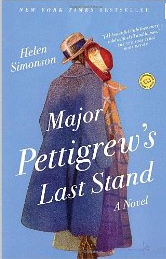
Cover for Major Pettigrew's Last StandBest Book of Week 6!

A touching love story, Major Pettigrew’s Last Stand is also a wry and witty jibe at small village life in England. Major Pettigrew is a proper widower who leads a life of quiet and habit, comfortable in his village and local golf club. Still suffering from the loss of his wife, he has just learned about his brother’s death and he is so shaken by this that he has a dizzy spell. Mrs. Ali, the widow of a Pakistani grocery store owner, has come to his house collecting for charity and helps him recover. The two begin a friendship based around discussions of books.

Besides missing his brother and wife, Major Pettigrew has other worries. He is concerned about his son, who seems only interested in money and prestige, and at times lacks gentility and honor, for which Major Pettigrew cares deeply. He is also concerned about his brother’s greedy wife and daughter, who do not seem likely to honor his father’s request that two valuable heirloom shotguns given to each of the sons be reunited when one of them dies.

Mrs. Ali is having her own battle with relatives. Her husband’s family wants her to give over her store to her religious fundamentalist nephew while she takes her expected widow’s place as a family servant.

Major Pettigrew must navigate the murky waters of village and family disapproval of his relationship because of racism and class snobbery and decide how much he wants to keep his quiet life. Mrs. Ali must in turn decide how much duty she owes to her family.

This novel is charming and delightful, one of my favorite books of 2011. Major Pettigrew’s dry and clever comments amused me throughout. The novel is beautifully written. I have been eagerly waiting to see what Ms. Simonson does next.

Day 26: Love, Poverty, and War

Cover for Love, Poverty, and WarEssays are not really my genre since I was terrorized by Ralph Waldo Emerson and Henry David Thoreau in my teens, but I’ll give this a try.

Love, Poverty, and War is a collection of articles written by Christopher Hitchens between 1998 and 2005. It is a mixed bag containing book reviews, biographical opinion pieces, travelogues, and political polemics. I have read that he has said or written something to irritate everyone. I found him scarily intelligent and well-informed, although he has also been accused of picking his facts and disregarding those that don’t agree with his beliefs. He has a strong opinion about everything, it seems.

Hitchens’s book reviews are difficult for me to assess because I had not read a single one of the books (although I had read the authors) except Brave New World, which I read about 1970. I thought it was curious that most of the literature he reviews was written before the 1960s. Those reviews are included in the section called “Love,” so I suppose they are some of his favorite classic authors, but his selections made me wonder how he picked the essays to include in this book (if he did). I loved his review of a book by some academic that compared Bob Dylan’s songs to religious poetry by counting how many words the pieces had in common. His comments on this methodology are hilarious.

His portrait of Churchill was startling and shocking to me, as it was almost entirely negative. But then I started wondering about why it is included in the section called “Love” along with essays about Kipling, Kingsley Amis, and Orwell. I decided that he is fascinated by people of contradictions, although certainly he does not appreciate hypocrites.

I regret to say that I am not familiar enough with the details of events he discusses under “War.” For example, he repeatedly brings up the U.S. bombing of a Sudanese chemical plant, which I don’t recollect at all. He has been criticized for a shift from leftist to rightist politics because of his opinions about the U.S. handling (or lack thereof) of Salman Rushdie’s situation when he was under fatwa and then his reaction to 9/11 and the attacks following. I noticed that between essays he certainly shifted his position on the Sudanese bombing, maintaining at first that the factory produced aspirin and later that there were strong indications that it was used to produce WMD.

I didn’t see this as a political shift as much as the result of his knowledge of the situations in Iraq and Afghanistan and an honest abhorrence of some of the left-wing apologists after 9/11. Unfortunately, it seems that some of his optimism about the interventions in Iraq and Afghanistan was a bit premature.

Hitchens is sharp and witty. I laughed out loud frequently even if I didn’t agree with him. However, if you are not very familiar with the events he discusses, he is sometimes hard to follow. And since these are essays, he does not cite his sources. Sometimes he states things as facts that make me wonder where he got his information.

Day 25: Shiloh

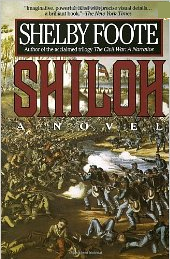
Cover to ShilohIn Shiloh, the historian and novelist Shelby Foote has written an interesting fictional account that describes the battle from the points of view of several different narrators, some on the Union side and some on the Confederate. Each narrator has his own chapter. In these brief narratives you get a sense of the character while being able to trace the larger movements of the battle.

Foote manages to work into the narratives the major events, such as the death of General Johnston; the surviving Confederate leadership’s failure to follow Forrest’s recommendation of attacking again at night, which probably would have ended in victory for the Confederates; the 10,000 Union “shirkers” who hid along the riverbank after they became dispirited from having to pull back time after time; and the river crossing by Buell’s troops, which turned the tables in the Union’s favor.

Lieutenant Palmer Metcalfe is marching with the Confederate army under Johnston as it prepares for a surprise attack on the Union troops. He thinks back with satisfaction to the complicated plan he helped draft, as he is a staff officer under Johnson. The noisy troops may have lost the element of surprise, but Johnston insists upon attacking.

Captain Walter Fountain is a Union soldier writing a letter to his wife Martha during a Tennessee evening when the Confederate troops burst out of the woods and charge the Union army.

Private Luther Dade is wounded in battle and is sent to a triage area to wait for a doctor. After hours pass and no doctor shows up, Dade begins to show signs of infection. He stumbles around across a large swathe of the battle area and finds himself witnessing the death of the Confederate commander Johnston.

So the novel proceeds in short chapters that culminate with a return to Lieutenant Metcalfe as he reviews the results of the battle. The characters are briefly drawn but have distinct personalities. Through following the peregrinations of the various characters and with the assistance of the maps in the book, you can get a good understanding of the complex battle and why the initially successful attack ultimately failed.

Day 24: Great House

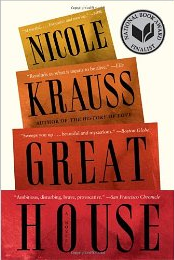
The tale this collection tells is so complex that my book club members asked me to send them an email explaining the sequence of events, once I had figured it out. Great House by Nicole Krauss is written as a series of interleaved stories without regard to sequence, almost as if she wrote the stories in order as a novel and then cut it up into pieces and rearranged it. The effect is interesting, but it is difficult for readers to understand where they are in time as they go from one story to another.

A labyrinthine tangle of people’s stories is written around the migration of a desk from one person to another. Nadia, a writer, tells the story of how she accepted the loan of furniture from Daniel, a Chilean poet, who was soon after murdered by Pinochet’s regime. Years later, a woman comes to her claiming to be Daniel’s daughter and asking for the desk, so Nadia gives it to her.

Arthur, the husband of Lotte, the writer who gave Daniel the desk, finds a secret while he is going through his dying wife’s things. This secret may be the clue to where Lotte got the desk.

Nadia goes looking for the desk to ask for it back because she finds she cannot write without it. She eventually finds herself in Israel. Other characters encounter the desk, are affected by the search, or meet Nadia or each other. We find out that the woman who claimed the desk was not the daughter of Daniel after all, but the daughter of someone who has an even better claim to it, as his family lost it in the holocaust.

Most of the members of my book club were perplexed, and many of them did not like any of the characters. I had a more neutral reaction. The desk eventually comes to represent all of the things that were lost in the holocaust. The stories as a whole are demanding and interesting, and Krauss purposefully leaves you with unanswered questions.

Day 23: The Dead Lie Down

Cover for The Dead Lie DownBest Book of Week 5!

Sophie Hannah is another writer of dark mysteries who I discovered during the past year. The Dead Lie Down was the first of her books that I read, not the first in the series. Be careful if you buy her books as some of them have two titles, depending upon whether you buy the British or the American version. I have bought two copies of the same book by mistake.

Ruth did something bad in the past but was punished far out of proportion to her crime. She is still trying to recover some confidence and self-esteem when she meets Aidan, a picture framer. The night they get engaged, they make a pact to tell each other everything and forgive each other their secrets, with no questions asked. But Ruth is shocked when Aidan confesses he strangled a woman named Mary Trelease years ago. She is even more confused when she realizes that she has met Mary Trelease and she is alive.

Ruth takes her case to Sergeant Charlie Zailer, a recently disgraced police officer, who dismisses it. At the same time, Aidan confesses to Charlie’s fiancé, DC Simon Waterhouse. After further consideration, both of them decide to investigate further, because they feel a sense of dread.

The Dead Lie Down is a compelling novel with a tangled plot. Sophie Hannah follows a convention in her novels of alternating the narrative between a usually victimized character (in this case Ruth) and the police officers. She indicates this alternation by changing the form of the dates that head each chapter. This confused me at first because for every other chapter she was using the European form of putting the day before the month, and I thought the chapters that took place in early March were actually flashbacks to January and February. Just something to keep in mind when you are reading Hannah.

I have found that Hannah’s novels are deliciously dark and always difficult to figure out, even though by now I know the pattern that someone is being deeply deceived. The trick is to figure out who and how. Her police officers are seriously flawed and have a difficult relationship. A bit of narrative that I have had difficulty following is the story of their romance, which is, however, just incidental to the novels. In other respects the books are stand-alone and do not have to be read in order.

Sophie Hannah is another find for those who like edgy, complex mysteries with a touch of the gothic thriller.

Day 22: Cleopatra: A Life

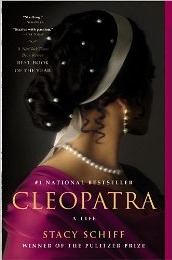
Cover for Cleopatra: A LifeWhen my grandmother traveled to Egypt in the 1960s, she wanted to buy a bust of Cleopatra. She was surprised to find out that the Egyptians consider Cleopatra a traitor. No images of her were available, so Granny Billie came back with a bust of Nefertiti instead.

When you think about Cleopatra, maybe you imagine the beautiful seductress played by Elizabeth Taylor in the movie. Maybe you think about the scheming whore in Antony and Cleopatra. Maybe you even think Cleopatra was Egyptian. (The Ptolemys were Greek.) Stacy Schiff, whose book Cleopatra: A Life was selected by the New York Times for its best books of 2011 list, would point out to you that Cleopatra’s history was written by the victors, her defeaters.

Schiff tells us the engrossing story of what is known of Cleopatra’s true life. Certainly she married her brother. So too did most of the Ptolemaic rulers marry their own siblings. Certainly her brother was executed when he revolted against her. The Ptolemys were noted for lopping off the extra branches of the family tree.

What you may not know is probably more to the point. Schiff shows us a picture of Egypt, the wealthiest country in the ancient world when Cleopatra gained the throne, but already on the wane. And there is its powerful ruler, Cleopatra, not beautiful but cultured and intelligent, reportedly fascinating in conversation, educated. Not the type of woman the patriarchal Romans are used to dealing with.

A clever strategist and negotiator and witness to Rome’s attempt to gobble up the known world, Cleopatra early realized that she needed to carefully pick her allies in Rome’s continuous battles for control of the empire. First she picked Pompey over Julius Caesar—not ultimately the wisest decision, but her family had ties to him, and her brother’s betrayal of him was one of the horror stories of the age. Then she negotiated a partnership with Julius Caesar, but unfortunately he was soon assassinated. Her next choice was not as percipient, but Marc Antony seemed to be the greatest soldier of his time.

There are few unbiased records of Cleopatra’s life, and none that are biased for her, but Schiff does an excellent job of examining the various allegations made in the existing records and judging their likelihood. Rather than the ruthless vixen reviled through the ages, Schiff depicts Cleopatra as a strong woman who was doing her best for her country.

Although some have criticized the book as heavy going (one actually commented that it “lacked dialogue”—I don’t know what source that person thought the dialogue would come from), I didn’t find it so. It was written for the general public but reflects serious scholarship, and Schiff has found an elegant balance between that and entertainment.

Day 21: The Sweetness at the Bottom of the Pie

Cover for The Sweetness at the Bottom of the PieI don’t know that anyone has invented a more delightful heroine than Flavia de Luce, the eleven-year-old sleuth in Alan Bradley’s funny, charming series. I haven’t read The Sweetness at the Bottom of the Pie in a few years, but for series books I am trying to start with the first one, so I’ll do the best I can.

It is 1950’s Britain, and Flavia is an eccentric in a family full of eccentrics. She spends her time cooking up dangerous chemicals in the laboratory she inherited from a great uncle or riding around on her bicycle, Gladys, looking for trouble. Her father is a reclusive widower who stays locked up in the library with his stamp collection and worries about how to support their ramshackle estate. She engages in all-out warfare with her two older sisters, which includes putting poison ivy extract in Ophelia’s lipstick. Her only ally is the Dogger the gardener, her father’s batman from WW II who suffers from post-traumatic stress disorder.

First, Mrs. Mullet the housekeeper finds a dead bird on the porch with a valuable stamp in its beak. Then a mysterious stranger calls upon her father, and they have an argument. Later Flavia finds the stranger dying in the cucumber patch. When her father is arrested for murder, Flavia decides to investigate. She finds out her father may have been involved in the suicide of a former schoolmaster and the theft of a valuable stamp. As Flavia cycles around the village of Bishop’s Lacey looking for clues and interviewing suspects, she may be putting herself in danger.

If you’re looking for a light mystery with plenty of twists and turns that will make you laugh out loud, look no further than any book featuring Flavia de Luce.

Day Twenty: Game of Thrones

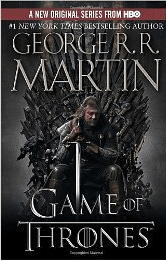
Cover for Game of ThronesBest Book of Week 4!

Game of Thrones is the first book in the Song of Ice and Fire series by George R. R. Martin and also the name of a successful TV series based upon the books. I did not at first think this series would appeal to me, because I have not read much in the fantasy genre since my 20’s. However, I have to say that this has been one of the most exciting series of books I have ever read.

I have known a couple of people to turn up their noses when I told them it was a fantasy series, but really, the first few books only fit loosely into this genre. Except for a few scenes, Game of Thrones stays firmly in the historical novel category–except that the world is fictional. OK, the dead are coming back to life, and there used to be dragons. Minor details. Like Gavriel Kay, Martin seems to be using the genre to tell the story of events in an actual medieval country, in this case possibly England or Scotland–I have read reviews that suggested he was telling the story of the Wars of the Roses. In the succeeding books, we slide slowly into the fantasy genre.

The series is set in a world where winters and summers can last decades. It has been summer for a long time, but the Starks of Winterfell know that winter is coming. In fact, that is their family motto, and when they say it, you know they are talking about more than snow. Eddard Stark is summoned to court by his friend Robert Baratheon, the King of the Seven Kingdoms. Eddard helped Robert overthrow the previous king, “Mad King” Aerys Targaryen, years ago to give the kingdom to Robert’s older brother. But Robert’s brother died in the revolt.

Robert wants Eddard to take the position of The Hand, the king’s enforcer, after the death of the previous Hand, Eddard’s brother-in-law Lord Jon Arryn. A hard but honest man, Eddard does not seek or want the honor, but he feels it is his duty to accept. He goes to court, taking along his young daughters, eleven-year-old Sansa and eight-year-old Arya (my personal favorite character). He leaves his wife Catelyn and oldest son Rob to take care of the estate. His bastard son Jon Snow decides to become a protector of The Wall, a huge structure of ice in the north that protects the Seven Kingdoms, but from something more dangerous than Picts. This commitment is for a lifetime, and Eddard is reluctant to have him take it but Jon sees no future for himself in Winterfell. Shortly after Eddard leaves, one of his younger sons, Bran, sees something he shouldn’t have and is thrown off a tower as a result, to awaken paralyzed from the waist down.

Robert has affianced his oldest son Prince Joffrey to Eddard’s daughter Sansa. Back in court, it becomes clear almost immediately to Eddard that Queen Cersei Lannister is running the kingdom while Robert plays and that both Joffrey and his mother Cersei are cruel and vicious. Cersei is also conniving, and Joffrey would be if he wasn’t so stupid. The court is full of secrets and spies, and people are out for what they can get. In the midst of finding all kinds of skullduggery, Eddard discovers a secret about Cersei, much to his peril and that of his family.

In the meantime, Viserys Targaryen, the only remaining heir of the mad king, is across the sea, prepared to sell his little sister Daenerys to the Dothraki war lord Khal Drogo in return for an army and an attempt to restore the Targaryen throne.

And up in the north, bad things seem to be happening beyond The Wall.

These are only a few of the many characters in the first volume, and as the series continues, more are introduced. Martin provides an appendix for you to keep track of them. Even the minor characters seem like real people. You will have your favorites, and you will never know what is going to happen to them next. The complex world—buildings, costumes, scenery—Martin envisages is vividly described, so you can picture exactly what he has imagined.

If this all sounds intimidating, I suggest you get a copy of the book and give it a try. If you’re like me, you’ll be grabbing the next one off the shelf as soon as you finish. Eventually, you will realize the series isn’t finished and you will have to wait for the final book to come out. At least, the sixth book is supposed to be the last one. I have read five, and I can’t imagine how Martin is going to wrap everything up in one book. With any luck, he’ll have to write another one!

Day Nineteen: Cutting For Stone

Cover for Cutting for StoneCutting For Stone by Abraham Verghese is one of those books that you read more slowly as you approach the end, because you don’t want it to stop. My first impression of it was not positive, because I found the prologue pretentious, but as soon as I started reading the story, I was hooked. Don’t be put off by my description of the unusual plot.

Marion Stone is an identical twin. He and his brother Shiva are the sons of a nun from Kerala, India–Sister Mary Joseph Praise, who dies giving birth in the hospital in Addis Ababa where she works. Dr. Thomas Stone, their father, is so distraught by her death that he runs off, never to return.

Marion and Shiva are so close that they call themselves ShivaMarion. The boys are raised by Hema and Ghosh, two married Indian doctors at the hospital. Hema and Ghosh are delightful characters, and the story of their romance is charming.

The children are raised at the mission that runs the hospital during Emperor Haile Selaisse’s reign. The novel is about their upbringing in this colorful, tempestuous setting. The story of Marion’s life, his relationship with his brother, his love for a rebellious woman, and his search for his father is beautifully told. The novel is sweeping, in both time and place, beginning in India, moving to Ethiopia, and finishing in an inner-city hospital in New York City over a series of decades.

A doctor and author of some nonfiction books, Verghese has been criticized for the amount of medical detail in this book, but I found that fascinating as well. The characters are lifelike and interesting, the scope of the novel impressive, and the story drives you along.

Day Eighteen: Jar City

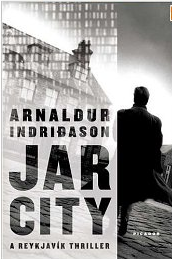
Cover for Jar CityJar City is a police procedural from the Icelandic writer Arnaldur Indriðason, who has received several awards for his books. Although I found the plot interesting, I have several criticisms of this novel.

Within a few pages, I noticed a choppy, sometimes clumsy writing style. I saw some evidence of a poor translation, but it wasn’t clear whether this was because the translator’s English wasn’t good enough or he was translating too literally. Some idioms seemed dated, and although the translation was British, I think I read enough modern British novels to know which idioms are currently in use. For one of the many examples of what appears to be a simply bad translation, take this perhaps not literal quote (I’m writing it from memory) “the photographer must have had to bend his knees until he was very short.” In English we have a word for that. It’s called “crouching.” But there is also evidence that the writing just isn’t very good, the most noticable being a dream sequence that is one quite dreadful, long sentence.

I was unable to guess whether the poor writing was the fault of the translator or the writer. My guess is it was a combination of both.

Other problems emerge. Although Inspector Erlendur was developed as a character, all the other characters were pretty flat. I got no sense at all of the personalities of his fellow investigators, for example. What is more of a shame, I also got no sense of Iceland as a country or the Icelandic as a people (or even any individual Icelanders), which is one reason I like to read books from other countries.

What fills out the detective himself is some background about his family, his divorce, his struggles with his addicted daughter, his messiness, his sleeplessness or tendency to sleep in his clothes, and his worry about a pain in his chest. These details all seem very familiar to me, but I’m not sure whether Detective Erlendur or Kurt Wallender came first or whether either of the writers knew the other’s work, so I will say no more.

Arnaldur also plays the Christy-an trick of keeping some of the evidence to his detective for awhile. For example, the killer leaves a note on the body of the victim, but we’re not told what it says for some time. If the author was holding out for a dramatic moment, I don’t believe that attempt was successful.

My final criticism is of the detective, who seems notably stupid at times. Making the detective too busy to take care of something on time or just plain dense is a common tactic of some writers, who use it to drive up the suspense, but it just makes me angry. I want my detectives to be smarter than I am. An old woman saw the killer in her yard. When she calls the detective back, does it occur to him that she might have seen him there again? No, he is too busy interrogating someone else to take a second to call her back. In doing so, we would have missed the final scene. I’m sorry, but surely Indriðason could have handled that less clumsily.

All that being said, the plot and mystery were interesting enough to get me to finish the book, although I’m not as sure if I would pick up another one. An old man is found dead in his apartment, his head smashed in by a heavy ashtray and a note on his chest that says (we eventually learn) “I am HIM.” The only other clue is an old photograph found in the back of his desk of the grave of a child.

In investigating the victim’s past, Erlendur finds that he was accused of rape in the 60s but the case was mishandled and the woman did not get justice. The photograph, it turns out, is of the grave of the daughter of the rape victim.

As Erlendur investigates further, he realizes that the victim was a truly repellant creature. He also finds another mystery–one of the victim’s friends disappeared 25 years ago. Erlendur eventually figures it out, and in doing so encounters some interesting twists.