WWW Wednesday!

I meant to do WWW Wednesday last week, but I was traveling and sick, not a good combination. So, here goes today. What is WWW Wednesday (not my original idea)? It is simply a post about what I just read, what I’m reading now, and what I think I’ll be reading next. If you would like to join in, leave a comment about your recent reading experience.

What Am I Reading Now?

I am reading The House of Doors by Tan Twan Eng and finding it very interesting. It’s so far about a visit that Somerset Maugham made to Penang in the 1920s, but I think it’s going to change soon to be about Sun Yat Sen. I am reading it for my Walter Scott Prize project, but I so much enjoyed The Garden of Evening Mists that I probably would read it anyway.

What Did I Just Finish Reading?

I just finished rereading Their Eyes Were Watching God for my Literary Wives club. I found that I felt pretty much the same about it as I did last time, but I found that reading almost the whole book in dialect was really tiring. Maybe that’s because I haven’t totally recovered yet, but it’s true that dialect is hard on the reader.

What Will I Read Next?

If it arrives before I start another book, I will read The Gambler by Fyodor Dostoevsky for the 2024 Dostoevsky Read-a-Thon hosted by Russophile Reads. I thought I had a copy, but I seem to have almost all Dostoevsky except that. Then I thought the public library would have it, but no, although in general it is a much better library than the one in Austin was while we lived there. (They finally have a new one after talking about it forever.) If it doesn’t arrive before I finish The House of Doors, then I will probably give myself a break from literary books and read Broken by Karin Slaughter, the next in her Will Trent detective series.

What about you? What are you reading?

Review 2468: The New Magdalen

In The New Magdalen, Wilkie Collins has written a sensation novel that is by definition quite melodramatic. The subject, as you might guess from the title, is the reformed prostitute.

That’s what Mercy Merrick is, although she first appears as a nurse on the battlefield of the French/German war. An Englishwoman, Grace Roseberry, is stranded there on the way to England to live with her father’s friend, Lady Janet Roy, after her father’s death. Unfortunately, she was robbed on the way and has only her letter of introduction.

Grace confides in Mercy and then pressures her to confide in her, but she is not at all sympathetic to Mercy’s story of being forced by starvation into prostitution. Mercy reformed after hearing a sermon by Julian Gray, but every time she took a respectable position with the full knowledge of her past by her employers, she lost it once the servants or neighbors found out.

Mercy has loaned Grace some clothing. When after an attack, Grace is pronounced dead by the French doctor, Mercy takes her clothes and letters of introduction and assumes her identity, trying to get a better future.

Several months later, Mercy (now called Grace, confusingly) is Lady Janet’s adopted daughter and is betrothed to Horace Holmcroft. However, she can’t find it within herself to set a date without telling Horace the truth.

Then Julian Gray arrives. It turns out he is Lady Janet’s nephew. He has taken an interest in the case of a woman who has been hospitalized in Germany and claims to have been on her way to live with Lady Janet. Of course, this is the real Grace.

In Mercy’s absense, Grace appears and accuses her of stealing her identity. But Lady Janet doesn’t believe her and finds her offensive. And in fact, Collins depicts her as a horrible person.

That’s the message, really—the despicable virtuous woman versus the saintly ex-prostitute—for Mercy eventually decides to make things right.

Some of the Victorian values in this one are hard to stomach, but Collins knows how to keep readers interested in his story.

Related Posts

The Dead Secret

Hide and Seek

Basil

Review 2467: The Birds of the Innocent Wood

Jane has grown up with no one to love or to love her, which has made her have difficulties relating to others even though she is lonely. Her parents died when she was very young, leaving her to an unloving aunt, who put her in convent school when she was five. When she left school, her aunt only wanted her to take care of her in her old age. But Jane meets James, a young farmer, and hopes to make her own family.

Years later, Jane has died and her twin daughters, Sarah and Catherine, each have a secret that involves the other. They live with their bereft father on the farm, Sarah doing most of the work because Catherine is ill.

This is a beautifully written novel about people’s essential loneliness and unknowability. Madden is not a revealing writer. Rather, she offers glimpses into her character’s minds. This is a novel to ponder.

Related Posts

The Wren, The Wren

Faith Fox

Sight

Review 2466: Table Two

One of the main characters of Table Two is more of an antihero. It’s Elsie Pearne, a bitter, disillusioned middle-aged woman who works for the Translation Office of the Ministry of Foreign Intelligence. She is intelligent and hard working, but she has a chip on her shoulder and a tendency to paranoia and doesn’t understand that it’s her own behavior that makes people dislike her.

She works at Table Two of the translation office with some eccentric coworkers. One blasts the room with cold air every morning while another can’t stop talking. A third takes delight in others’ misfortunes.

At the beginning of the novel, London has not had much of a problem yet with bombing, so the Ministry employees are simply bored and frustrated during the frequent occasions when they have to take shelter during the workday. But soon that changes.

Offsetting the character of Elsie is that of Anne Shepley-Rice, a young woman of the upper class who comes to work in the department. Elsie takes a fancy to her and takes her under her wing. But although Anne is grateful, she is much less invested in the friendship than Elsie is.

In the workplace, a plot centers around who is going to be appointed the Deputy Secretary of Table Two once the competent Mrs. Jury leaves for family reasons. The question is important because the Director, Miss Saltman, although a pleasant manager, is hopelessly disorganized, and Mrs. Jury does most of her work.

On the personal front, Anne feels she is hopelessly in love with Sebastian Kimble, her long-time friend and neighbor. Not only does Seb show no signs of wanting to settle down, but Anne’s family has lost its money, so she feels she is no longer a catch.

Although I’ve read quite a few novels set during World War II that are contemporary to that time, this is the first one that deals so much with the workplace. It is acerbically funny but also could be about a modern workplace, dealing with the same concerns of getting along with disparate people.

Elsie is not likable, and she creates her own problems, but I couldn’t help feeling sorry for her at times. Anne is sympathetic but a bit milk-toasty.

Related Posts

Mrs. Tim Gets a Job

The Halt During the Chase

Forest Silver

Review 2465: Ethel & Ernest

Ethel & Ernest is a completely charming graphic biography about the lives of Briggs’s parents from their meeting in 1928 until their deaths in 1971. The drawings are delightful, and the characters of the two emerge from the story.

Ethel is a lady’s maid and Ernest is a milkman when they meet. They marry two years later. The book shows their upward mobility starting with their purchase of a house that actually has a bathroom, to their astonishment, and continuing with their modifications and additions of appliances. Ernest is staunchly working class and pro-labor, while Ethel has pretentions to more, but through all, they are loving.

Through childbirth, World War II, and the Blitz, the privations of post-World War II Britain, and so on, the couple stick together and remain loving. The book has quite a bit of humor to it and is also touching. I was charmed by it.

Related Posts

Agatha: The Real Life of Agatha Christie

Ducks: Two Years in the Oil Sands

Britten and Brülightly

Review 2464: Cassandra at the Wedding

At the beginning of this novel, we meet Cassandra Edwards preparing to attend her twin sister’s wedding. Although her narrative is clever, entertaining, and disarmingly truthful, it is clear something is wrong.

Slowly we learn it is Cassandra’s intention to talk Judith out of the wedding, which she views as a horrible mistake. The Edwards have lived on their ranch as a self-contained until, intellectual, cultured, staying away from the affairs of others. When the girls began studying at Berkeley, Cassandra at any rate spent a lot of time with others, trying new things out. Despite having always tried to maintain their individuality, they finally decided, at lease according to Cassandra, that they only needed each other would move to Paris. But first, Judith decided she would try one year by herself studying music in New York. And now she has returned with a fiancé.

When Cassandra arrives at the ranch and we see the two women together, it seems clear that Cassandra is the less mature and more egotistical. She doesn’t seem to be able to see the situation from any point of view but her own. She is like a whirlwind of talk and distress, trying to push Judith toward her own goal. Cassandra does something drastic at the end of this section, but I don’t want to give it away.

In the second section, Judith narrates. We learn that although she loves Cassandra , contrary to what Cassandra believes, Judith wants to bet away from her. Judith is the calmer, more mature twin, and she finds Cassandra exciting but exhausting. I seems clear that Cassandra has attributed some of her own attitudes and ideas to both of them.

Cassandra may sound like an irritating character, but somehow she is appealing. We enjoy being with her as she navigates the rough seas of more maturity. I very much enjoyed this book, which has likable characters and looks honestly at the difficulties involved in finding an identity, especially if you’re a twin, and becoming one’s own whole person.

Related Posts

Beneath the Visiting Moon

Rhododendron Pie

Rebecca

Review 2463: The House Opposite

I didn’t like the main character of The House Opposite at first. Elizabeth is having an affair with her boss, a married man with two children, and she sees his wife and children only as people who get in the way of her happiness. She’s dating a young serviceman, Bob, simply to hide her affair. She apparently referred to the boy across the street as a “pansy” in his hearing, and the remark has made him doubt his sexuality.

Nevertheless, she’s friendly to her coworkers and as she begins to help with the war—working as a warden and helping in the hospital—she begins to grow on me. As warden, she is partnered with Owen, that same boy she insulted, and it is the developing friendship between the two that is a focus of the novel—that and her own self-evolution.

One of the interests of this novel is the detailed descriptions of what it was like to live through the Blitz in London. Although other novels recount an incident or two, most of the characters in this novel have chosen to stay in London and sustain many attacks, most of them even staying in their homes and feeling a little superior to those who seek shelter.

Although Elizabeth takes a long time to recognize that her lover is a stinker, she otherwise shows herself to be quite likable. There are a lot of themes, involving Owen growing up, Elizabeth humanizing her lover’s wife and children, Owen’s father’s involvement in the black market, and so on.

Related Posts

The Midnight News

Company in the Evening

Spam Tomorrow

Review 2462: Weyward

Bookish Beck has a meme called “book serendipity” where she finds things in common between books she’s read recently, and I have a doozy. Not to give too much away, but this is the second book I’ve read in two weeks where women decide that the only way to deal with their abusive husbands is to murder them.

This novel is set in three time frames. In 1619, Altha is being tried for witchcraft. In 2019, Kate has discovered she is pregnant, so she has decided she must leave her abusive boyfriend, Simon. She has inherited a cottage from her Aunt Violet that he doesn’t know about and she has quietly saved some money, so she goes. In 1942, Violet has grown up isolated, not even allowed to go to the village and never told anything about her mother. At 16, she is jealous of her brother Graham, who is allowed to study interesting topics while she is forced into a traditional feminine role. She wants to travel the world and study bugs, but her father has apparently already chosen a husband for her.

Back at the cottage, Kate begins looking into her family history, into the women who called themselves the Weywards and have an unusual connection to animals.

This is an interesting novel with supernatural overtones that are fairly slight. I was interested in all three stories, although I found the outcomes of Altha’s and Kate’s stories fairly easy to guess. In this novel, I wasn’t as disturbed by the husband murder as I was in the other novel, in which I thought the wife could have easily gotten away. In any case, almost all the men in this novel are rotten to the core. So yes, I liked this novel fairly well.

Related Posts

Recipe for a Perfect Wife

The Harpy

The Family Upstairs

Review 2461: Agatha Christie: An Elusive Woman

I usually take much longer to read a work of nonfiction vs. fiction—up to a week as opposed to two or three days—but such was the power and readability of historian Lucy Worsley’s prose that I was astonished to finish this book one day after I started it. Of course, many people may want to know about the days Christie was missing, and she deals with that, but there is much more.

Christie lived an interesting life, and Worsley tells us about it, from the pampered, loved child of wealthy parents, to the loss of her father and the family fortune when she was 11, the World War I nursing and dispensary work, the ill-planned marriage to Archie Christie, and so on. Worsley’s main message is that Christie understood people to hide their actual selves and she presented her own masks, as well as evolved during her life into different personas. That was why she presented as shy when she had a lot of self-confidence, why she said little about her disappearance, why she told everyone she was a housewife rather than an author, and so on.

I’m fairly sure I have already read a biography of Christie, but this one was much more interesting. It is written in a lively style but looks thoughtfully at some of the problems posed by other writer’s remarks, and is thoroughly documented.

Related Posts

Agatha: The Real Life of Agatha Christie

Jane Austen at Home

The Secret Rooms

A Century of Books: How Am I Doing? July Report

In January, I foolishly decided to join Simon Thomas’s Century of Book Challenge, even though I knew that reading 100 books, one for each year in a century, from 1925-2024, would be tough because last year I only read 169. So, how am I doing?

Here are the holes in my project with the books listed for April below. If you want to see the details, see my Century of Books page.

  • 1925-1934: entries needed for 1927-29 and 1931
  • 1935-1944: entries needed for 1939 and 1944
  • 1945-1954: entries needed for 1945, 1948, 1949, and 1950
  • 1955-1964: entries needed for all years except 1956, 1958, 1959, and 1962
  • 1965-1974: entries needed for 1967, 1969, 1971, and 1973
  • 1975-1984: entries needed for all years except 1975, 1976, and 1978
  • 1985-1994: entries needed for all years except 1987, 1992, and 1988
  • 1995–2004: entries needed for all years except 1998, 1999, and 2004
  • 2005-2014: entries needed for all years except 2009, 2010, 2012, and 2014
  • 2015-2024: complete!

Since June 26 I read the following books:

  • These Old Shades by Georgette Heyer from 1926
  • The Listening House by Mabel Seeley from 1938
  • Miss Granby’s Secret by Eleanor Farjeon from 1940
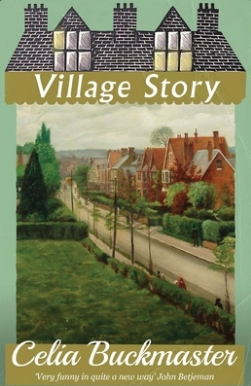
  • Village Story by Celia Buckmaster from 1951
  • The Fountain Overflows by Rebecca West from 1956
  • The Heather Blazing by Colm Toíbín from 1992
  • The Voyage of the Narwhal by Andrea Barrett from 1998
  • The Time of Women by Elena Chizhova from 2009
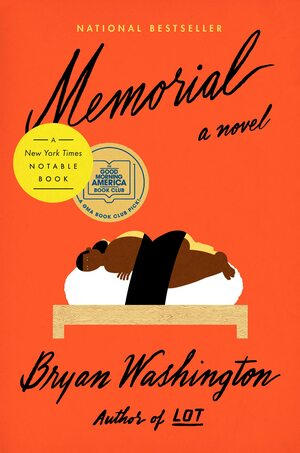
  • Memorial by Bryan Washington from 2020
  • Glory by Noviolet Bulawayo (DNF) from 2022
  • Hungry Ghosts by Kevin Jared Hosein from 2022
  • In the Upper Country by Kai Thomas from 2023

I’m on vacation this week and next, so I haven’t been making much progress lately.