Review 2449: The House Next Door

Colquitt and Walter Kennedy are dismayed when they hear that the lot next door in their wealthy Atlanta neighborhood is being built on. They have relished it as a green buffer and have been assured that no one can built on it. However, the new owners have apparently found someone who can, Kim Dougherty, a young architect. Colquitt is the first to admit that the house he builds is strikingly unusual and beautiful. In fact, she understands its beauty much better than do the owners, Pie and Buddy Harrelson. As the house goes up, Colquitt and Walter develop a friendship with Kim.

I read this novel because I heard it was a good ghost story, but it’s not a ghost story as such—rather a haunting. As the house goes up, the bodies of small animals, ripped apart, appear, including that of Pie’s puppy. Pie falls down some unprotected stairs and has a miscarriage. When Kim finishes the house and moves on to other projects, he reports being unable to work. The Kennedys think he’s just burnt out and needs a rest, but he says it’s the house, that it takes whatever you value most. Then, on the night of the Harrelsons’ house-warming party, a dreadful event occurs.

When the next family moves in. Buck and Anita Sheehan, Colquitt feels that Anita looks haunted. The neighborhood soon finds out that Anita spent time in a mental hospital after the couple’s son died in the Vietnam War. (The novel was written in the 1970s.) Soon enough, Colquitt and eventually Walter start to believe that Kim may be right about the house. The problem is what to do about it.

I am not familiar with Siddons, so I don’t know if she generally writes about the privileged. The Kennedys are not wealthy according to themselves, but they both have generous salaries and they live among the rich. There are times when the novel reflects a sort of exclusiveness and self-satisfaction that is not flagrant but is there. The Kennedys run into a class wall when they try to warn people about the house, but all this surfaces at the end in an unusual way.

The ending of this novel takes a startling turn that opens up the reader’s interpretations of the actions of the novel and makes you rethink. I think this put it higher in my regard than it would have if it had gone where I expected it to. It made me reconsider the whole story.

Related Posts

A Haunting on the Hill

This House Is Haunted

Wylding Hall

Review 2448: Ferdydurke

I thought that Ferdydurke would be something different that I could read for the 1937 Club, but I couldn’t bring myself to finish it. When I returned to it, I still couldn’t make any headway. I didn’t finish it but read about 70 pages.

The unnamed narrator is turned from a middle-aged writer into a juvenile boy by an old schoolmaster and forced to go back to school. The sense of humor is juvenile, jokey, and forced, and I didn’t think it was funny. I quit reading during the mock introduction to a story (the first of two, apparently) that Gombrowitz chose to interrupt the flow of the novel. Not that the flow was very interesting.

Gombrowitz uses a Polish word, “pupa,” which means the butt or core of the body, to signify the concept of infantilization. He uses the word so often that I never wanted to hear it again.

This novel is supposed to be a masterful satire, but I couldn’t stand it.

Related Posts

The Finkler Question

Quichotte

The Broom of the System

A Century of Books: How Am I Doing? June Report

In January, I foolishly decided to join Simon Thomas’s Century of Book Challenge, even though I knew that reading 100 books, one for each year in a century, from 1925-2024, would be tough because last year I only read 169. So, how am I doing?

Here are the holes in my project with the books listed for April below. If you want to see the details, see my Century of Books page.

  • 1925-1934: entries needed for 1926-29 and 1931
  • 1935-1944: entries needed for 1938, 1939, 1940, and 1944
  • 1945-1954: entries needed for all years except 1946, 1947, 1952, 1953, and 1954
  • 1955-1964: entries needed for all years except 1956, 1958, 1959, and 1962
  • 1965-1974: entries needed for 1967, 1969, 1971, and 1973
  • 1975-1984: entries needed for all years except 1975, 1976, and 1978
  • 1985-1994: entries needed for all years except 1987 and 1988
  • 1995–2004: entries needed for all years except 1998, 1999, and 2004
  • 2005-2014: entries needed for all years except 2009, 2010, 2012, and 2014
  • 2015-2024: complete!

This month I read the following books:

Not eligible for this project, unfortunately, because written too early:

  • The Book of Dede Korkut by Anonymous from the 12th or 13th century
  • The New Magdalen by Wilkie Collins from 1873

Eligible and read since May 29th:

  • Turn, Magic Wheel by Dawn Power from 1936
  • Table Two by Marjorie Wilenski from 1942
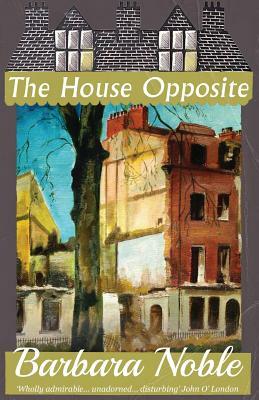
  • The House Opposite by Barbara Noble from 1943
  • The Killings at Badgers Drift by Carolyn Graham from 1987
  • The Birds of the Innocent Wood by Dierdre Madden from 1988
  • Ethel & Ernest by Raymond Briggs from 1998
  • The Topeka School by Ben Lerner from 2019
  • The Heaven and Earth Grocery Store by James McBride from 2023
  • My Father’s House by Joseph O’Connor from 2023
  • The Covenant of Water by Abraham Verghese from 2023
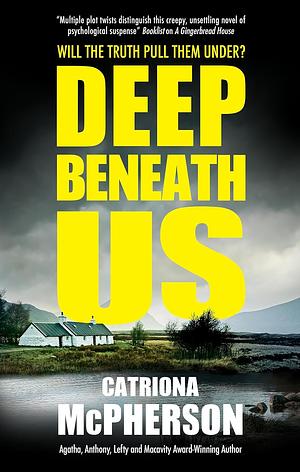
  • Deep Beneath Us by Catriona McPherson from 2024

Review 2447: Ducks: Two Years in the Oil Sands

Ducks is Kate Beaton’s graphic memoir about the two years she spent working in the oil sands of Alberta. Originally from Nova Scotia, she was unable to find work at home that would pay enough to pay off her student debts. So, like many others, she traveled to Fort McMurray to get a higher paying job.

She found herself in a hyper-masculine setting that was toxic, where she encountered routine sexual harassment and was raped twice in her first year. She does attempt to show the whole story, the loneliness of both herself and the men, the nice people she encounters, and so on.

Other themes in the book are the poisoning of the environment, the lip service to corporate safety, the harm to local people, especially the First Nations.

I thought this book was interesting. The cartoons are not beautiful, but they are good enough to tell characters apart and to recognize emotions. It certainly provided a window into another kind of life.

It struck me how often the most beautiful areas to live in are the ones where it’s most difficult to gain a living. I grew up in Michigan, which in my time was a have-not state, but not as bad as Eastern Canada, apparently.

Related Posts

The Ukrainian and Russian Notebooks

Agatha: The Real Life of Agatha Christie

The Lost Journals of Nikola Tesla

Review 2446: The Collected Regrets of Clover

Clover is a death doula who is still in mourning for her grandfather. She is a lonely person, but she avoids getting to know new people. At a death café, she meets Sebastian, who seems to want to get to know her, but she avoids him. When he finds out she is a doula, he hires her to be with his grandmother.

Her new neighbor, Sylvia, also wants to get to know her. Clover reluctantly agrees to meet for coffee.

From about page two, I realized this wasn’t the book for me. It had all the earmarks of the manipulative feel-good novels that are so popular now and I dislike. In addition, it was clunky and obvious, especially the flashbacks of her as a child with her grandfather. Brammer doesn’t write a convincing child.

I gave the novel 104 pages to see if it improved, but it didn’t.

Related Posts

A Man Called Ove

Once in a Blue Moon Lodge

The Trouble with Goats and Sheep

Review 2445: Illyrian Spring

This is a lovely book. In some ways, it compares to Elizabeth Von Armin’s The Enchanted April, but I think it is deeper and more thoughtful.

Grace Kilmichael has left her family. Although she is a famous painter, her husband Walter treats her art like a little hobby. He has always teased her about being stupid, but lately there seems to be an edge. He constantly makes admiring remarks about a female coworker and spends a lot of time with her.

Grace’s children are grown and don’t seem to need her, and she has lately had a poor relationship with her daughter Linnet, who no longer confides in her and acts impatient with her.

Accepting a contract for some drawings on her travels, she leaves without telling anyone where she’s going. She simply writes Walter a letter offering him the opportunity to leave her for Rose.

Lady Kilmichael has avoided meeting any of her friends in Europe, because she wants no one to know where she is. However, she runs into her friend Lady Roseneath in Venice. Lady Roseneath is traveling with her nephew, and when he appears, Grace realizes that she met him the day before on Torcello, where they had a conversation about architecture and he helped her correct a drawing of mathematical design that she plans to send to her archeologist son.

His name is Nicholas Humphries and he’s a little older than her sons. On an expedition the next day, he confides that he wants to be an artist but because he made the decision late and he wanted to be an architect as a child, his father is determined he will study architecture. The situation is made worse because his sister decided to be an artist before him, although she has little talent, and his father won’t stand for two artists in the family. When Grace sees his work, she realizes he needs to develop but has talent. So, eventually she agrees to help him learn.

She has told Lady Roseneath she is going to Greece because she doesn’t want her family to find her, but actually she goes to Spalato (Split) on the coast of Croatia, and the boy comes with her. Grace feels that he is giving her insights into her relationship with Linnet, and Nicholas, who was sulky when she met him, begins to be more happy.

As well as containing gorgeous descriptions of the towns and countryside of 1935 Croatia, the novel thoughtfully explores the relationship between the two protagonists. It describes Grace’s own personal growth and her insights into her relationships with her family members. It’s a lovely novel about personal development.

Related Posts

Young Anne

Three Weeks

Dangerous Ages

Review 2444: Ibiza Surprise

I know I must have read this novel back in the days when it was named Dolly and the <Whatever> Bird, Dolly being Johnson Johnson’s yacht and <whatever> being whatever they politically incorrectly called each book’s female narrator, thinking they were being hip. Anyway, I enjoyed this reread years later.

Sarah Cassels may be the daughter of Lord Forsey, but she’s been broke most of her life. She wants nice things, and the only way she can get them, she reckons, is by marrying a rich man. Although on the lookout, she is likable and doesn’t seem rapacious. In the meantime, she is working as a caterer and sharing a flat with a girlfriend.

Sarah gets word that her father has committed suicide on Ibiza. But when she receives a last letter from him, she’s not so sure it was suicide, because she doesn’t think he wrote it. She can’t imagine why anyone would murder him, though. He was just a harmless drunk who earned his way with his friends by his entertaining chatter.

Sarah meets Mr. Lloyd, the wealthy father of her school friend Janey, at her father’s funeral. That’s when he realizes she was Lord Forseys’ daughter and tells her that her father was staying with him in Ibiza when he died. Mr. Lloyd invites her to Ibiza to visit his daughter, but she only agrees if he’ll let her cook. She decides to go to Ibiza to find out why her father died.

Dunnett’s plots tend to be complicated, so it’s hard to provide any more of a synopsis. I’ll say one thing further. Sarah finds out that her brother Derek’s firm believed a piece of stolen machinery was taken by her father. Derek was in Ibiza the weekend her father died, so the family reunion is bumpy—and there’s more family than that.

She also, of course, meets Johnson Johnson, the internationally renowned portrait painter. He’s staying at the same yacht club where her father died.

These mysteries are written using a light tone with sharp dialogue and complex plots. The story involves jet setters and some wild parties, but it ends in an ancient religious ceremony. The descriptions of Ibiza are vivid and make me wish I could have visited 50 years ago.

Related Posts

The Game of Kings

King Hereafter

Station Wagon in Spain

If I Gave the Award

Having reviewed the last of the shortlisted books for the 2023 James Tait Black Award, I am ready for my regular feature, in which I decide whether the judges got it right. I have to say that in terms of my own reading enjoyment, the 2023 shortlist was a tough one.

Bolla by Pajtim Statovci, set in Kosovo before and during the Balkan War, is about a love affair between two male students, one Serbian and one Albanian. Although it was beautifully written and ultimately touching, I so disliked its main character that I had difficulty reading it.

Indifference to the main character was my problem with Bitter Orange Tree by Jokha Alharthi. In this dreamy novel, the main character, an Omani student in England, contemplates the life of the woman she considered her grandmother and finds parallels with her own. I was more interested in the historical parts of this novel than in the contemporary ones.

I found the histories of lesbian women in After Sappho by Selby Wynn Schartz to be interesting. However, there were just too many characters for me to keep track of, and the vignettes about the women were too short for me to really feel like I could differentiate the women from each other.

The winner of the award for this year was Barbara Kingsolver’s Demon Copperhead, a modern retelling of Dickens’s David Copperfield set in rural Southwestern Virginia. Although I had problems with this novel as well, it was certainly a spellbinding tale. So, this time I have to say that the judges got it right. Although they don’t seem to publicize the longlist, this selection makes me wonder what was on it.

Review 2443: After Sappho

I read After Sappho for my James Tait Black project. It is experimental, written in short vignettes that jump around in time and from person to person. It tells the stories of lesbian women, mostly literary figures, trying to make a place for themselves. It begins in the late 19th century with women fascinated by the poet Sappho. Some of them study Ancient Greek, some dress like ancient Greeks or re-enact ancient plays, some travel to Greece.

The novel is vividly written in first person plural or in third person, at times slyly ironic, sometimes engaged in word play, often invigorating and with lots of sexual metaphors. It is interesting, telling of repressive laws against women, particularly in Italy, and reporting actual aggressively misogynistic “scientific” or political statements by men. It goes on to tell of the accomplishments and tragedies and love affairs of its protagonists, largely ignoring the men in their lives. For example, from this novel, you wouldn’t know there was a Leonard Woolf, just a Vita Sackville-West.

Although I found the novel very interesting at first, there were so many characters that I couldn’t keep track of them or remember which events happened to which ones. I could only track the ones I was already familiar with. For example, the novel begins and ends with Lina Poletti, even though she disappears about halfway through, so she is obviously important to Schwartz, but by the end I couldn’t remember her. I felt like I needed a chart.

And yet, I feel that with more character definition, I might have remembered all of them, but these short vignettes that tell of an activity or something they said didn’t really provide a cohesive picture to me of what the women were like.

So, I applaud this novel’s daring devices, but they didn’t really work for me.

Related Posts

The Hours

Crudo

LOTE

Review 2442: Killing Me Softly

Although I have lost track of it, I followed Nicci French’s series featuring psychoanalyst Frieda Klein for some time. So, when I was looking through my To Read list for books published in the missing years for my A Century of Books project, I picked out Killing Me Softly, which is a stand-alone.

Alice Loudon is bored with her job, but she is happily involved in a relationship when she locks eyes with a startlingly attractive man while crossing the street. When she comes out of her workplace later, he is waiting for her, and they begin a torrid affair. His name is Adam Tallis, and he is a well-known mountaineer. He is intent and possessive, but it’s as if Alice is possessed by him. At one point, she tries to break it off, but she ends up instead breaking up with her boyfriend.

Sex is an important part of their life, and Alice finds herself agreeing to practices that are farther and farther from the norm. She drops most of her friends and can’t concentrate at work. In addition, she and Adam are receiving threatening messages.

Alice finds that Adam is the hero of an incident he has refused to talk about, in which several people died on a mountaineering trip when a storm came up. But there’s a lot Adam won’t talk about, and Alice begins to believe that he has secrets.

Nicci French is a master at building suspense, and this novel is no exception. Although Alice is not an entirely likable character—she pulls several deceptions over people to get at the truth—we can’t help but be on her side.

Related Posts

Thursday’s Children

Friday on My Mind

Dark Saturday