If I Gave the Award

Cover for The Thousand Autumns of Jacob De Zoet

I’m way behind on finishing the shortlisted books for the 2011 James Tait Black prize, but now that I have, it’s time for my feature, where I say whether the judges got it right. This year’s shortlist is unusual, because it contains three historical novels out of the four. It’s also going to be difficult from my perspective because I loved two of the books on the shortlist, but I haven’t read one of them since 2012.

Let’s start with my least favorite book. That one is La Rochelle by Michael Nath. This novel has a vestigial plot about a missing girlfriend and a friend’s obsession with her. But mostly it is about the main character, whom I found unpleasantly fascinated with women’s anatomy and not afraid to say so. The novel deals with nights of drinking too much with the missing women’s partner until the main character finally does something different, ending a labyrinthine scheme that I thought was silly and absolutely unnecessary.

Next is my second least favorite of the four, which was the winner for that year, The Lotus Eaters by Tatjana Soli. When I originally started to read it, I had forgotten why I was reading it and took it for a standard historical novel about a woman photographer’s affairs with a married man and then with his assistant. However, it turned out to really be about the experience of being a war correspondent during the Vietnam War and the main character’s growing love for the country. After giving it a second try, I finished it, but I still felt quite a bit of distance from the characters.

Now we get to two favorite books. The first one was the book I read long ago and for which I wrote my fifth review for this blog, The Thousand Autumns of Jacob De Zoet by David Mitchell. Although it had hints of the sci-fi time travelers that he incorporates into most of his novels, at that time I had only read one other book by him, and the focus on historical fiction was so strong that I didn’t notice them. The main character is an employee of the Dutch East Indies company in 18th century Japan. He is fascinated by the culture, even though the Dutch are restricted to one island off the coast and the Japanese are generally not allowed on the island. He falls in love with a Japanese girl who is allowed on the island as the student of a Swedish physician. When he refuses to participate in his boss’s graft, he is deserted on the island and makes his way to the main island. I found the descriptions of the customs and laws of Japan at the time really interesting, and the book becomes an adventure.

But another type of adventure is experienced by the main characters of The Invisible Bridge by Julie Orringer. This novel was based on the experiences of her grandparents during World War II. The main character, a Hungarian Jew, arrives in Paris in 1937 to study architecture, but he soon loses his scholarship because of anti-Semitism. He also meets an older woman with whom he falls in love. This novel becomes one of great breadth, covering events of World War II, the Hungarian Holocaust, life in work camps, and the siege of Budapest.

I so much enjoyed both of these last two novels that it’s hard to pick, but I choose The Invisible Bridge, simply because of its depth and breadth, and also just slightly because I have a vague recollection that The Thousand Autumns of Jacob de Zoet eventually goes to some places that were a bit unbelievable.

NYT 100 Best Books of the 21st Century: What Do I Think So Far?

Cover for Olive Kitteridge

As of this writing (on Tuesday), the New York Times has posted numbers 100-61 of their best books of the 21st century, 20 each day this week, as decided by 503 critics, writers, poets, and other book lovers. When I saw they were doing it, my first reaction was, I hope it’s a better list than the Time Magazine best books of the 20th century, which had only one book on it written by a woman, if I am recalling correctly. (I take that back. There were 20. However, the list I just looked at doesn’t seem to exactly be the one I remember, so maybe they revised it. And anyway, really, guys?) And two by Philip Roth, which, gag me with a spoon. (Bad news, because these new lists already have two by Philip Roth.) My other reaction was that 24 years into the 21st century was a bit early to be doing this.

Regardless, I thought I’d write a post about my reaction to the lists so far.

First of all, how many have I read? Not as many as I might have.

For books 100-91:

For 90-81: none

For 80-71:

For 70-61:

Obviously, I haven’t read enough of these to make any overarching comments. One thing is obvious. There are more books by women writers, 22 (if I counted them right) out of 40. So much better. And there are quite a few by minorities.

Of the ones that I read, I personally thought several were excellent but not all. In particular, I liked Bel Canto, Bring Up the Bodies, and Olive Kitteridge best. I liked how to be both, On Beauty, All Aunt Hagar’s Children, and Demon Copperhead well enough, A few others I felt indifferent to, but at least I didn’t actively dislike any of them.

But there is Philip Roth again, two of his books in the bottom 40 (admittedly, I haven’t read any of them, but I read several of his books and those were enough for me), the guy who writes the same book over and over again. There aren’t two books by any other authors listed twice in the list so far. Usually when I make my top 10 lists for the year, I have a rule that only one book per writer can be on the list. That makes for hard decisions, but I think it’s a good choice.

What about you? Take a look at the complete list at the link at top. Have you read any from the list so far? What do you think of the choices? I will be reporting back later this week once the rest of the list is published.

Review 2452: La Rochelle

Mark Chopra is a neurologist who lives alone and has apparently never had a partner. He also seems at first to have no friends except a much younger couple, Ian and Laura. The draw there is Laura, with whom he is in love. As for friends, it gradually becomes clear that he has other friends, but he disregards them.

Mark judges the stories Laura has told him and his own observations and thinks that Ian doesn’t treat Laura the way she deserves. At the pub at the start of the novel, Ian tells Mark that Laura has left him to think about their future. He doesn’t know where she is and doesn’t look for her, saying she’ll come back when she’s ready.

Mark is a highly intelligent person who tends to overthink things. He starts worrying about Laura, thinking she could have had an accident or even have been kidnapped. But he does nothing except hang out with Ian every night, getting so drunk that he can’t remember things and smells like booze at work. He ignores the warnings of coworkers (his other friends that he doesn’t seem to recognize) about his job.

Toward the end of the novel, Mark finally does something, but the trip there wasn’t pleasant for me. Mark is not a reliable narrator. He knows more than he tells until toward the end of the novel. But I also found him an unpleasant person. Despite being, he finally claims, willfully abstinent, he seems to think of women only in terms of sex. He meets a couple and immediately wonders how often they have sex. He makes constant demeaning comments about female anatomy. He expresses his gratitude toward a female friend and coworker by mentioning her bra size! Is this supposed to be a side effect of Mark’s lifestyle choice? Is it supposed to be funny? I have no idea. I found this character to be deeply unpleasant despite his desire to be a knight errant for Laura. It was no surprise at all to me to find him ultimately having no interest in what he finally gets, even though it’s what he wanted.

The plot eventually has some surprises, but after a labyrinthian scheme finally reveals itself, the whole idea just seemed stupid to me. The characters go to all kinds of trouble instead of speaking a single sentence. (I think Roger Ebert used to call that the “idiot plot,” in reference to movies.) I really wouldn’t have finished this book if it hadn’t been part of my James Tait Black project.

Related Posts

Amsterdam

The Sense of an Ending

Eileen

Review 2451: Endless Night

Mike Rogers is a wanderer who moves from job to job, never seeming to amount to much. But he has a taste for finer things. One thing he wants is to have an architect he’s met build a house at Gipsys’s Acres, but even though the property is going cheap because of the curse on it, he can’t afford it.

He goes up to look at the property one day and meets Ellie Guteman. She is a young, wealthy heiress who has slipped her leash from trustees who keep her so protected that she never has any fun. With the help of her companion, Greta, she contiues to see Mike, and they daydream about buying Gipsy’s Acres and building their dream house. Eventually, they decide to get married on the day she turns 21. (Here’s some book serendipity, a concept coined by Bookish Beck, two books within a week that have houses being built that may turn out to be haunted. The other is The House Next Door.)

All goes well until they move into Gipsy’s Acres. Ellie keeps meeting Mrs. Lee, an old gypsy woman who warns her of danger. Someone throws a stone through the window. Even though Ellie’s relatives are American, they show up for visits, and they are not very nice. And Ellie has offered Greta a place to live. Lots of people seem not to like Greta, including Mike.

The novel is narrated by Mike, who seems disarmingly straightforward. However, there is a lot going on under the surface, and Mike is an unreliable narrator.

Although I guessed what was going on fairly early, that didn’t ruin my appreciation of how Christie slowly builds suspense. Then, at the very end, the novel took a turn I didn’t expect. Note that gypsies don’t fare well in the comments of characters.

Related Posts

They Do It with Mirrors

Taken at the Flood

Murder at the Vicarage

WWW Wednesday

It’s the first Wednesday of the month, so now it’s time for my new feature, WWW Wednesday (which I stole from The Chocolate Lady). The idea is to talk about the book I’m reading now, what I just finished, and what I’ll read next. If you want to pop in and tell me about your reading, please do by adding your comments.

What Am I Reading Now?

I have to admit to not looking forward to this book for my Booker Prize project. It’s Glory by Noviolet Bulawayo. At this writing, I have just picked it up, but it is one of those allegories that uses animals as characters. My initial reaction is to think that Animal Farm was enough of that. Sigh. We’ll see how we go.

What Did I Just Finish Reading?

My last book was from Dean Street Press, the Furrowed Middlebrow line, a place I go for relaxation. It was Village Story by Celia Buckmaster. This is the second book I’ve read by Buckmaster, and they both seem to have lots of characters and less of a straightforward plot than most of the others. This one does indeed tell the story of a village through the characters of some of its principal citizens, through a few years in time. It was published in 1951, but its time setting isn’t clear.

What Will I Read Next?

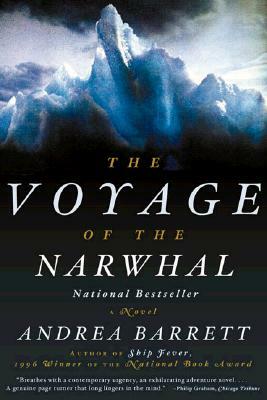
I’ve been going back and forth on this. I picked up the next book in my stack, but when I read what it was about, I put it way back on my stack. Bad timing. However, a few months into my Century of Books project, I put my TBR list in order of publication date and picked out some books for years I didn’t have an entry. The Voyage of the Narwhal by Andrea Barrett was a book that had been on my list for a long time and that filled one of those holes. For some reason I thought it was nonfiction, but it says clearly on the front cover that it is a novel, about a voyage to Greenland.

No matter what you read next, I hope you enjoy it. Let me know what you’re reading, if you don’t mind. Do any of these books sound tempting to you?

Review 2450: The Lotus Eaters

I’ve had The Lotus Eaters on my TBR list for a long time, so I finally decided to get a copy. Unfortunately, it turned out to be a DNF for me the first time. (But read on, because I eventually finished it. My review is in two parts.)

The novel begins with the fall of Saigon in 1975. War photojournalist Helen has left it late to try to get herself and her wounded husband, Linh, out of the country. Torn between trying to get photos of the fall and getting out safely, after a long, dangerous struggle to get to the American embassy, Helen gets Linh into a helicopter and then returns to the city.

The novel then moves back in time to 1965, when Linh has just been forced to rejoin the South Vietnamese army. On his first day back, he meets photographer Sam Darrow, who gets him appointed as his assistant. But on the same day, friendly fire destroys his village, including his parents and his pregnant wife. Linh deserts.

After months in Saigon, Linh gets a job with Life magazine by claiming to be Darrow’s friend. He ends up being Darrow’s assistant again. Then the focus of the novel shifts back to Helen and her arrival in Saigon as an inexperienced photographer.

First Review

I gave this novel 100 pages, but although I was interested in the setting, I just didn’t care about these characters. And although Soli does a good job of describing some things, I just wasn’t feeling the setting or getting engaged in the story. This seemed like a mediocre attempt at historical fiction. Things didn’t come to life.

I realized later that this book was part of my James Tait Black project, so I should have tried to finish it, but I didn’t.

Second Review

I gave The Lotus Eaters another try after I realized it was not only part of my James Tait Black project, but it had won the award that year. When I quit reading, it was because I assumed that the novel was mostly going to be about Helen’s romantic relationships with married photographer Sam Darrow and then with Vietnamese photographer Linh, and I wasn’t at that point that interested in them. However, it turned out to be more about Helen’s growing love for the country and whatever it is that makes people risk their lives to get photos of dangerous events.

Soli is good at evoking the landscapes and scents of Vietnam, as well as the dangers. Although I became interested enough in the story to finish it, I still felt a considerable distance from the characters. I was most interested in Linh, but we only see from his point of view briefly at the beginning and end of the novel, and after all he goes through, his most defining characteristics are loyalty and love for Helen.

So, I still only liked this novel somewhat. I couldn’t help contrasting it with the recent movie Civil War, also about photojournalists and much more gut-wrenching.

Related Posts

Lyndon Johnson and the American Dream

In the Lake of the Woods

Perfume River

Review 2449: The House Next Door

Colquitt and Walter Kennedy are dismayed when they hear that the lot next door in their wealthy Atlanta neighborhood is being built on. They have relished it as a green buffer and have been assured that no one can built on it. However, the new owners have apparently found someone who can, Kim Dougherty, a young architect. Colquitt is the first to admit that the house he builds is strikingly unusual and beautiful. In fact, she understands its beauty much better than do the owners, Pie and Buddy Harrelson. As the house goes up, Colquitt and Walter develop a friendship with Kim.

I read this novel because I heard it was a good ghost story, but it’s not a ghost story as such—rather a haunting. As the house goes up, the bodies of small animals, ripped apart, appear, including that of Pie’s puppy. Pie falls down some unprotected stairs and has a miscarriage. When Kim finishes the house and moves on to other projects, he reports being unable to work. The Kennedys think he’s just burnt out and needs a rest, but he says it’s the house, that it takes whatever you value most. Then, on the night of the Harrelsons’ house-warming party, a dreadful event occurs.

When the next family moves in. Buck and Anita Sheehan, Colquitt feels that Anita looks haunted. The neighborhood soon finds out that Anita spent time in a mental hospital after the couple’s son died in the Vietnam War. (The novel was written in the 1970s.) Soon enough, Colquitt and eventually Walter start to believe that Kim may be right about the house. The problem is what to do about it.

I am not familiar with Siddons, so I don’t know if she generally writes about the privileged. The Kennedys are not wealthy according to themselves, but they both have generous salaries and they live among the rich. There are times when the novel reflects a sort of exclusiveness and self-satisfaction that is not flagrant but is there. The Kennedys run into a class wall when they try to warn people about the house, but all this surfaces at the end in an unusual way.

The ending of this novel takes a startling turn that opens up the reader’s interpretations of the actions of the novel and makes you rethink. I think this put it higher in my regard than it would have if it had gone where I expected it to. It made me reconsider the whole story.

Related Posts

A Haunting on the Hill

This House Is Haunted

Wylding Hall

Review 2448: Ferdydurke

I thought that Ferdydurke would be something different that I could read for the 1937 Club, but I couldn’t bring myself to finish it. When I returned to it, I still couldn’t make any headway. I didn’t finish it but read about 70 pages.

The unnamed narrator is turned from a middle-aged writer into a juvenile boy by an old schoolmaster and forced to go back to school. The sense of humor is juvenile, jokey, and forced, and I didn’t think it was funny. I quit reading during the mock introduction to a story (the first of two, apparently) that Gombrowitz chose to interrupt the flow of the novel. Not that the flow was very interesting.

Gombrowitz uses a Polish word, “pupa,” which means the butt or core of the body, to signify the concept of infantilization. He uses the word so often that I never wanted to hear it again.

This novel is supposed to be a masterful satire, but I couldn’t stand it.

Related Posts

The Finkler Question

Quichotte

The Broom of the System

A Century of Books: How Am I Doing? June Report

In January, I foolishly decided to join Simon Thomas’s Century of Book Challenge, even though I knew that reading 100 books, one for each year in a century, from 1925-2024, would be tough because last year I only read 169. So, how am I doing?

Here are the holes in my project with the books listed for April below. If you want to see the details, see my Century of Books page.

  • 1925-1934: entries needed for 1926-29 and 1931
  • 1935-1944: entries needed for 1938, 1939, 1940, and 1944
  • 1945-1954: entries needed for all years except 1946, 1947, 1952, 1953, and 1954
  • 1955-1964: entries needed for all years except 1956, 1958, 1959, and 1962
  • 1965-1974: entries needed for 1967, 1969, 1971, and 1973
  • 1975-1984: entries needed for all years except 1975, 1976, and 1978
  • 1985-1994: entries needed for all years except 1987 and 1988
  • 1995–2004: entries needed for all years except 1998, 1999, and 2004
  • 2005-2014: entries needed for all years except 2009, 2010, 2012, and 2014
  • 2015-2024: complete!

This month I read the following books:

Not eligible for this project, unfortunately, because written too early:

  • The Book of Dede Korkut by Anonymous from the 12th or 13th century
  • The New Magdalen by Wilkie Collins from 1873

Eligible and read since May 29th:

  • Turn, Magic Wheel by Dawn Power from 1936
  • Table Two by Marjorie Wilenski from 1942
  • The House Opposite by Barbara Noble from 1943
  • The Killings at Badgers Drift by Carolyn Graham from 1987
  • The Birds of the Innocent Wood by Dierdre Madden from 1988
  • Ethel & Ernest by Raymond Briggs from 1998
  • The Topeka School by Ben Lerner from 2019
  • The Heaven and Earth Grocery Store by James McBride from 2023
  • My Father’s House by Joseph O’Connor from 2023
  • The Covenant of Water by Abraham Verghese from 2023
  • Deep Beneath Us by Catriona McPherson from 2024