I Insanely Decide to Join the Century of Books Challenge

Last Wednesday, Simon Thomas put up a Century of Books challenge, in which he selects 100 years and attempts to read a book published in each of those years. This time, he selected 1925-2024. I have insanely decided to join him, even though this challenge may determine 2/3 of my reading for the year.

As if I’m not doing enough challenges. We’ll see how I do! I’ll post a link under my Projects tab so you can watch my progress.

Review 2296: Lament for Julia

I tried to read Lament for Julia several times, but I just couldn’t do it. Taubes’s father was a psychoanalyst who believed writing is a disease and her husband disapproved of it for religious reasons, so it’s no wonder it’s quite bizarre.

Lament for Julia is a novella that takes up more than half of the NYRB edition. It is narrated by a disembodied spirit that seems to be part of and not part of a girl named Julia Klopps. Since Taubes believed that each person is a multiplicity of selves, I took it more as another self. Nothing much seemed to be happening in the novella except Julia growing up and the second self obsessing about her, but I didn’t really find any of it interesting. The writing is beautiful, and the second self’s obsessions are akin to those of Humbert Humbert in Lolita. But while I found that novel fascinating, I found the novella too sexualized, too perverse, too Freudian, and too interested in dreams for my taste.

I tried reading some of the short stories, but “The Patient,” about a mental patient who lacks an identity, is told by her psychotherapist that her name is Judy Kopitz, and we seemed to be in for a rehash of Lament for Julia.

The next one was “The Sharks,” about a boy who keeps dreaming he is being eaten by sharks. (Julia also dreams of being eaten.) Nope, couldn’t do it.

I received this book from the publishers in exchange for a free and fair review.

Related Posts

Dangerous Ages

Murmur

Umbrella

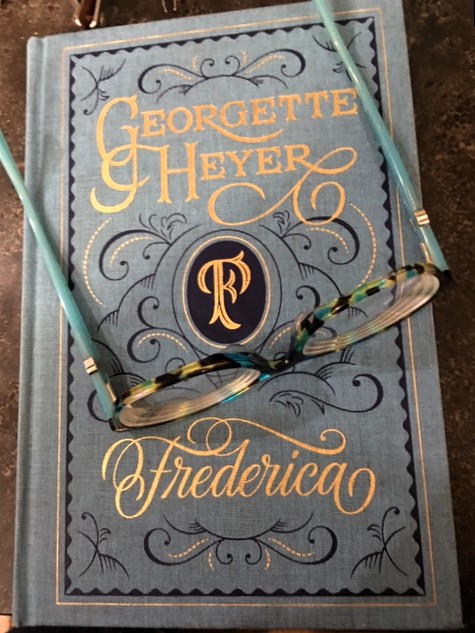
Review 2295: Frederica

I didn’t set out to reread Frederica, but the Folio Society just brought out a couple of beautiful editions of some of Heyer’s books, so I had to buy them. My original review is here, but I thought I’d talk about some things that struck me this time around.

Heyer has a great sense of humor, and I was tickled by the situation that brings about the climax of the book. Frederica has spent a good deal of ill-afforded money and enlisted Lord Alverstoke’s help with the aim of making a good match for her beautiful but dim-witted sister, Charis. Unfortunately, Charis has fallen in love with Endymion Dauntry, Alverstoke’s handsome but stupid heir. Frederica is skeptical of Charis’s affections because she has fallen in love many times before. Endymion has convinced himself that Alverstoke would prevent the match by having him sent on a mission. Not only does Alverstoke have no power to do so, but he doesn’t really care who Endymion marries. He thinks Endymion isn’t serious because he hasn’t consulted him about getting married.

The incident with the dog in the park

Endymion is friends with Harry, Charis’s and Frederica’s brother, and the two have been confiding their star-crossed misfortunes to him. Frederica makes him angry for some trivial reason, and he suddenly realizes he is Charis’s guardian. So, the three of them stage a totally unnecessary runaway marriage.

Felix and Jessamy, Frederica’s young brothers, are especially delightful characters. Heyer is an amusing writer and a master of silly situations such as the one that Charis and Endymion create for themselves.

Related Posts

The Corinthian

The Grand Sophy

Arabella

Review 2294: Hotel Silence

Jónas Ebeneser has begun to think his life has no meaning. His wife Gúdrun has divorced him, and recently she told him his daughter Gúdrun Waterlily isn’t his. Aside from getting a lily tattooed on his chest, hanging out with his neighbor, and visiting his senile mother, he hasn’t been doing much, except fixing things, which he is good at.

He decides to kill himself, but he is worried that Gúdrun Waterlily will find his body. So, he decides to travel to a dangerous foreign country, feeling sure he can find a way to die. He travels to an unnamed country where a war has just finished, taking a shirt, his tool box, and his old diaries, and checks into Hotel Silence, formerly occupied by the famous and now run down with three guests.

This quietly quirky novel is another joy from Ólafsdóttir. It’s at times serious and sad but full of hope.

Related Posts

Miss Iceland

Pastoral

This Is Your Life, Harriet Chance!

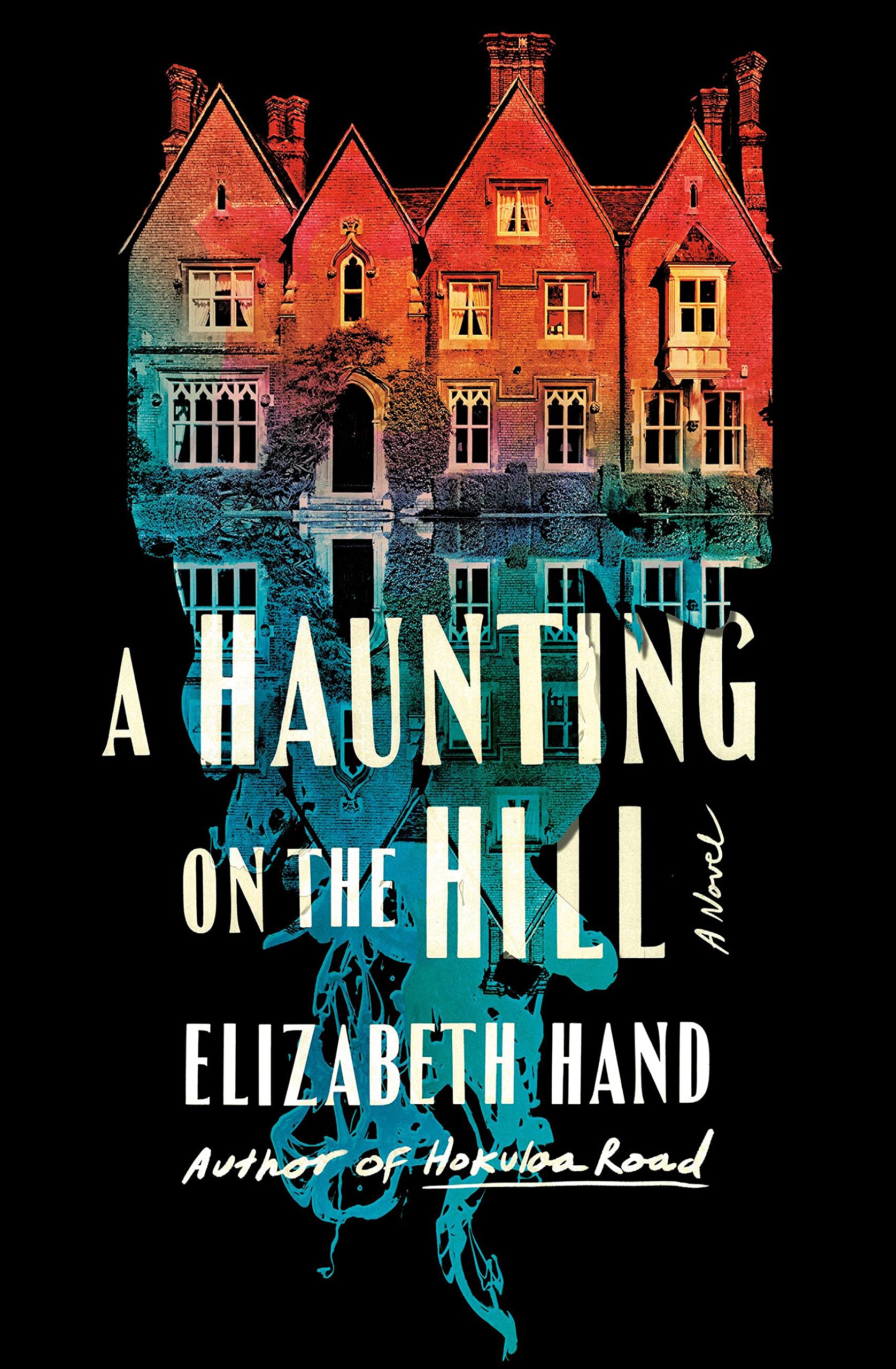
Review 2293: A Haunting on the Hill

I haven’t read a book by Elizabeth Hand in a while, but as I remember, the two I read involved the supernatural. That probably makes this homage to Shirley Jackson’s The Haunting of Hill House a natural fit for her.

Holly has recently won a grant that allows her to take leave from her school-teaching job for a semester and work on a play she’s written. She and her partner Nisa are celebrating by spending the weekend in a B & B in upstate New York when Holly goes for a drive and comes upon Hill House.

Holly decides that the mansion would make a perfect place to workshop and rehearse her play. She is barely able to afford it, and the rental agreement comes with all kinds of relinquishments of liability.

Holly assembles her small cast at the house. There is Nisa, who has written some haunting songs for the play and is going to perform them; Amanda Greer, an older actress who will play the main character, a woman who was burned as a witch in the 17th century; and Holly’s best friend Stevie, who will play a dog/Satan and do the sound. Although Amanda used to be a name, all of them have been struggling for success.

The house makes Nisa and Stevie uncomfortable, and odd things happen right away, but Holly is too obsessed with her play to pay them much heed. And she has spent too much of her money to back out.

Nisa is resentful, because Holly always talks about her play and seems to be jealous when attention is paid to the music. Also, Holly doesn’t know, but Nisa has slept with Stevie repeatedly. Amanda hasn’t worked much since her costar fell to his death from a catwalk while arguing with her. She is inclined to think the others are mocking her. Stevie is a fragile soul who struggles with drug and sex addictions.

At first there are just the huge black hares outside and sounds that might be talking. But each character experiences odd things that he or she dismisses. As the tension builds, it becomes clear that they need to leave.

This is a creepy novel, although not as creepy as the original. But it’s involving and sometimes scary.

Related Posts

Wylding Hall

Mortal Love

The Bird’s Nest

What’s Your First Book This Year?

I frankly stole this idea from Book Journey after reading about it on This Reading Life. She has folks submit photos of themselves holding the first book they’re reading for 2024. A really cute idea. I couldn’t submit my photo, because my flip-around feature on my very old phone doesn’t work anymore, but I sent her a picture of the book cover for my first book, which is Homestead by Melinda Moustakis.

I see now as I look back at Book Journey’s original post that I missed the deadline, because she asks people to submit their first books between December 17 and 31. But I’m not that good a planner, so I would have had to know about this on December 31, which was when I started this book, and I didn’t see Brona’s post until today.

So, just for fun, for all you nonplanners like me, what was your first book to read in 2024? Are you still reading it, or have you already finished?

Review 2292: Pomegranate

I have to admit that Pomegranate was a slog for me, even though I liked that central image. A review called it a fresh look at the problems faced by newly released prisoners, but that does not reflect my problem. It all seemed very predictable and trite to me.

Ranita is a Black woman who has recently been released from four years in prison on a drug charge. Although her Aunt Jessie has offered her a temporary place to stay, she faces the challenges of staying clean, getting a job, getting her own place, and regaining custody of her children. Her social worker expects her to fail, and although her therapist seems more open, she is not ready to open up. She also is having difficulty with her sexual identity, having had her first meaningful relationship in prison with a woman.

The novel flashes back to incidents in her life that explain how she ended up in jail, starting with a cold and disapproving mother.

As compelling as I feel this story could have been, it was not. I didn’t really feel pulled into it. Even the revelatory moments seemed contrived.

Related Posts

The Sentence

The Panopticon

The Mars Room

Review 2291: Stories for Winter and Nights by the Fire

Here’s an appropriate book for the first day of the new year!

Stories for Winter is British Library Women Writers’ seasonal collection of 14 stories set in winter. They are arranged chronologically (sort of), starting with a story from 1902 by Edith Wharton and ending with one by Angela Carter for which a date is not given but may have been published in 1974. Most of them deal in some way with changes to society that affect women.

In “The Reckoning” (1902) by Edith Wharton, Mrs. Clement Westall has noticed a disturbing change in her husband’s behavior. He has begun lecturing on his radical views of marriage—views the couple agreed on when they married—when before he preferred not to discuss them. The problem is that Jula no longer thinks the same way—that if one of a couple finds they no longer are happy together, they should part.

In “My Fellow Travellers” (1906) by Mary Angela Dickens, Miss Lanyon tells a girl a story about why she believes in spiritual things. This story fits right into the Christmas tradition begun by Dickens’s grandfather, Charles.

In “The Woman Who Was So Tired” (1906) by Elizabeth Banks, “the little reporter” writes an article about a poor woman supporting a large family and then becomes embarrassed when it becomes very popular. Her boss thinks she made the situation up, but that’s not exactly what’s going on.

In “A Cup of Tea” (1923) by Katherine Mansfield, Rosemary Fell thinks she’s doing a charitable act by inviting a poor woman to tea. But she soon decides she’s made a mistake, highlighting the divide between rich and poor.

In “A Motor” (1922) by Elizabeth Bibesco, Eve spots her ex-lover’s car on the street and knows he is visiting his current lover.

In “Ann Lee’s” (1926) by Elizabeth Bowen, two women visit an expensive hat store only to have a slightly disreputable man insistently interrupt their shopping.

I couldn’t really get on the same wavelength with Elizabeth in “The Snowstorm” (1935) by Violet M. McDonald. A stranger talks her into a dubious adventure even though she has only met him once and found him irritating. I couldn’t really understand what he wanted to confide in her or why he wanted to handle it the way he did or why she even agreed to go, much less what happens afterward.

“November Four/Ffair Goeaf” (1937) by Kate Roberts follows a group of Welsh workers to town for the fair, and two women also try to buy a hat, with less success than the women in “Ann Lee’s.”

“My Life with R. H. Macy” (1941) shows a different side of New York than Wharton’s story—a satiric look at Shirley Jackson’s brief employment at Macys, where the workers are so degraded that they’re known by their employee numbers rather than their names.

“The Cold” (1945) by Sylvia Townsend Warner shows how different the staff who are ill are treated from the family.

As Simon Thomas points out in the Introduction, tea is very important to the British, and it is the offer of a cup of tea that begins an acquaintance in “The Prisoner” (1947) by Elizabeth Berridge. Miss Everton offers tea to a German prisoner of war, a young man who is part of a crew digging ditches near her house.

In “The Cut Finger” (1948) by Frances Bellerby, five-year-old Julia makes an upsetting discovery when she seeks help from her mother for her cut finger.

In “The Thames Spread Out” (1959) by Elizabeth Taylor, a mistress has an adventure that leads her to reconsider her relationship with her married lover while her house is flooded by the Thames.

Frankly, I had no idea what was going on with “The Smile of Winter” (1974?) by Angela Carter except someone is depressed.

Except really for one story, I very much enjoyed this collection. I received it from the publishers in exchange for a free and fair review.

Related Posts

Stories for Christmas and the Festive Season

Good Evening, Mrs. Craven: The Wartime Stories of Mollie Panter-Downes

:Let Me Tell You

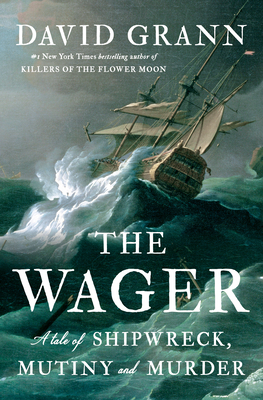
Review 2290: The Wager: A Tale of Shipwreck, Mutiny, and Murder

In 1740, a small fleet of ships set out from Portsmouth on a mission to try to capture Spanish ships laden with treasure in the Pacific Ocean. This poorly conceived and executed mission was part of the War of Jenkin’s Ear, essentially an excuse to try to gain wealth by pillaging Spanish ships.

Because of delays in refurbishing and equipping the ships, they left late. They were trying to round Cape Horn during the southern hemisphere’s summer, which they thought was the calmest time to venture through those dangerous waters. By the time they got to the Horn, the Wager, the smallest ship, had already experienced a bout of typhus and another of scurvy. The loss of officers to illness had given them a new leader, newly promoted Captain David Cheap. They made it around the Horn but lost contact with the other ships and then were shipwrecked.

Nearly a year after they were last sighted at the tip of South America, a few of the sailors made it back to England. Six months after that, a few more appeared, including Captain Cheap, accusing the first group of mutiny and other crimes. Two more appeared even later, accusing the first group of abandoning them on the coast of Patagonia.

Using the widely varying accounts in the journals and memoirs of some of the survivors, David Grann has attempted to reconstruct a fair account of what happened. One of these survivors was the sixteen-year-old midshipman, John Byron, who became the grandfather of the poet, Lord Byron. It’s a fascinating account, with some of the thrills of fictional naval adventure. Yet its all true.

Related Posts

Killers of the Flower Moon: The Osage Murders and the Birth of the FBI

The Lost City of Z

Fatal Journey: The Final Expedition of Henry Hudson