Review 2280: The Vaster Wilds

I don’t know very much about the Jamestown colony, but apparently it nearly failed because of illness and starvation. In Lauren Groff’s latest novel, a servant girl steals some supplies and flees the colony, knowing she is being pursued. She vaguely knows she can head north to French territory or south to Spanish territory without really understanding the distances involved. She heads north.

The novel follows the girl’s grueling journey through the wilderness while occasionally revisiting her past, leading up to the reason she is being pursued. This account is gripping at times as she encounters various hazards and tries to find food. Occasionally, the novel also describes her nightmares and less lucid moments.

Groff’s writing is superb, and I was right there with her until the later pages, which enter a more metaphysical realm. I don’t find that kind of thing interesting, and it occupies most of the last 20 pages.

Related Posts

Arcadia

Fates and Furies

The Lost Book of Eleanor Dare

Review 2279: The Fox in the Attic

My only other exposure to Richard Hughes was his A High Wind in Jamaica, the reading of which was certainly a different experience than that of The Fox in the Attic. Readers may find the structure of the latter unusual, but Hughes meant it to be the first part of a huge novel called The Human Predicament, for which he finished the second part but not the third.

The main character is a young man in his early 20s named Augustine. In her introduction to the NYRB edition, Hilary Mantel says that he doesn’t notice things. But it’s more than that. He has formed ideas about what things are like and seems incapable of understanding they are not as he believes.

He has inherited a remote property in Wales and has been living there recently like a hermit. When the novel opens, he is carrying the body of a little girl whom he and his hunting companion found drowned in a marsh. He brings her home instead of leaving her at the scene because the marsh is full of rats. But nasty ideas begin floating around, so he decides to go visit his sister Mary.

Mary suggests he stay with some German relatives she spent time with just before World War I. It is 1923, and Augustine firmly believes the Germans are peace-loving, cultured intellectuals, and there will never be another war. In fact, as soon as he arrives, his relative Walther begins telling him about an incident that happened after the war in which he and others were held prisoner in a hotel, and Augustine finds it so hard to believe him that he stops listening although he has seen the proof of the incident written on the wall of his hotel room in Munich. In fact, the political situation in Bavaria is completely unstable, and inflation is so bad that an educated boy is working in the hotel as a bellman because a professional salary would not pay for his pair of shoes.

The first night Augustine stays with his family, in fact, is the night of the famous Bierhall Putsch, and we see a detailed description of Adolf Hitler as a character. But Augustine has decided he is in love with Mitzi, Walther’s oldest daughter, and doesn’t pay any attention to the political discussion. Although he realizes with a shock that she is Catholic, he’s sure he can easily convince her there is no god. In fact, he doesn’t even know she’s devout.

All the while, Augustine dithers in his romance, thinking everyone is expecting him to propose when no one has noticed he’s in love and Mitzi barely knows he exists, the political situation is worsening and there is real danger from the upper floors of the house.

I liked this novel when it stuck to everyday events, even the political ones, but when it a few times broke off into philosophical asides, I couldn’t really follow it or maybe didn’t try. The political events are somewhat elliptically covered for someone like me who isn’t familiar with them, at least insomuch as some key figures are assumed to be familiar to his audience and to me some of them are not.

Related Posts

A High Wind in Jamaica

The Magician

They Were Found Wanting

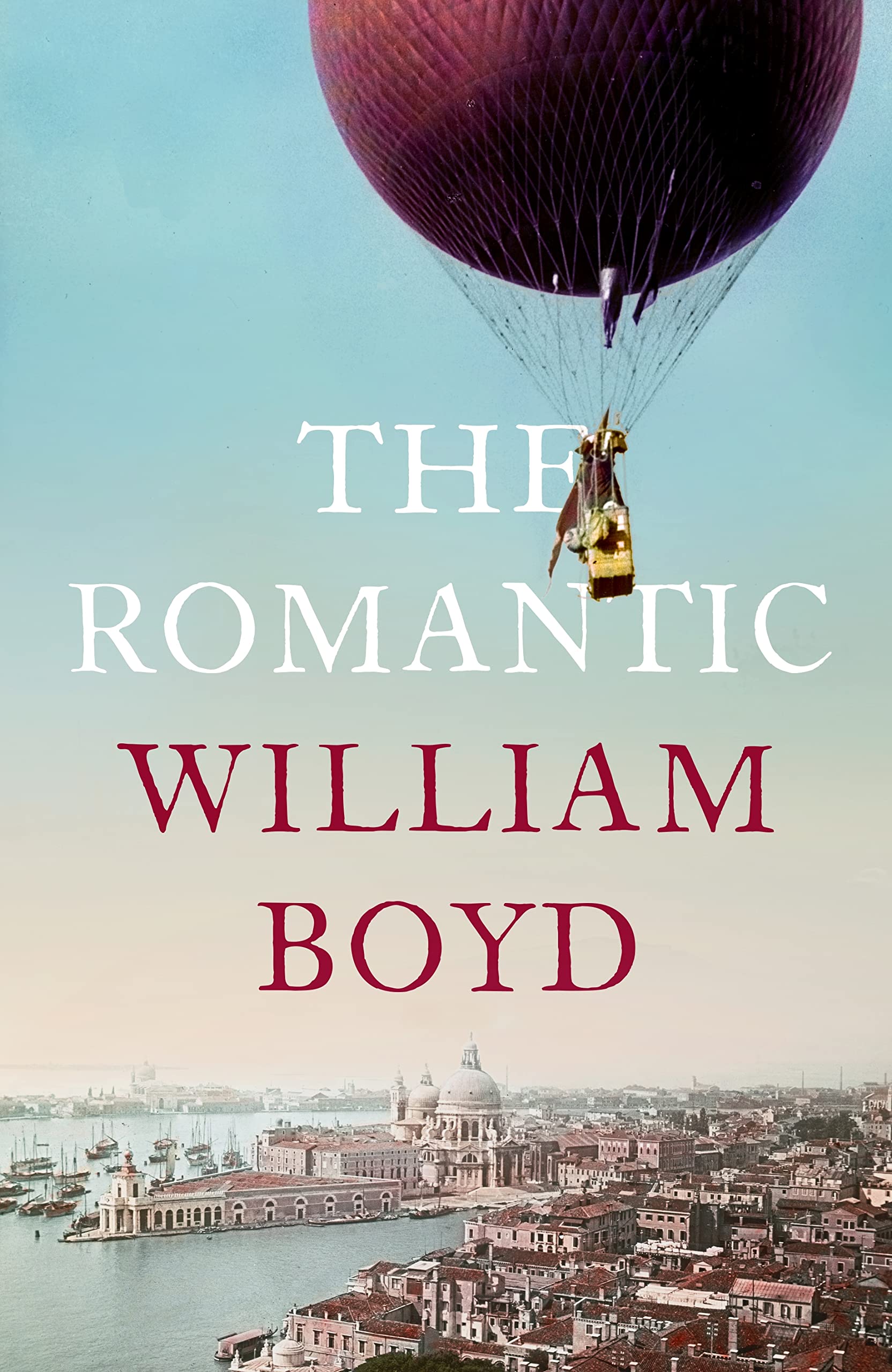
Review 2278: The Romantic

In the 19th century, Cashel Greville grows up in Ireland under the care of his aunt, who is governess to Sir Guy Stillwell’s family. But it’s clear to the reader, if not to Cashel, that all is not what it seems. Sure enough Cashel’s aunt moves them to Oxford, where they take up residence with Sir Guy under the name of Ross, and Cashel’s aunt Elspeth gives birth to twins, Hogan and Buckley. It is not until Cashel is 15 that Elspeth reveals she is his mother and Sir Guy his father.

Outraged, Cashel runs away from home and joins the army as a drummer boy. If you think I’m giving too much away, this all happens within the first 50 pages of this 450-page book, in which Cashel is on the field at Waterloo, hangs out with the Shelleys and Lord Byron, writes a best-selling novel but is cheated by his publisher and ends up in the Marshalsea, attempts to form a commune in Massachusetts, and so on. Oh yes, he also meets the love of his life in Ravenna, Italy, but she is married to a rich old man.

Cashel’s eventful and perhaps not altogether believable life (he claims to have discovered the source of the Nile before Speke and to have thwarted an antiquities smuggling scheme with the help of Sir Richard Burton) is supposedly documented by an autobiography and other papers that came into Boyd’s possession. With this claim, Boyd begins another of his “whole life” novels, maybe the most picaresque and least believable.

I usually like Boyd’s novels—in fact, some of them I have loved—but I had trouble connecting with this one. I’m not sure why, especially since it received uniformly positive reviews. It is fast moving despite its length. Maybe too fast. I didn’t feel like I got to know Cashel or really any of the characters. All of the women are ciphers, even Cashels’ great love. Boyd spends more pages on a sexual encounter with her than on Cashel’s marriage and its subsequent breakup.

Given Boyd’s plans for the adventures in this novel, maybe he needed to make it a lot longer.

Related Posts

Love Is Blind

Sweet Caress

Passion: A Novel of the Romantic Poets

Review 2277: Literary Wives! Hamnet

Today is another review for the Literary Wives blogging club, in which we discuss the depiction of wives in fiction. If you have read the book, please participate by leaving comments on any of our blogs.

Be sure to read the reviews and comments of the other wives!

My Review

Hamnet is a reread for me for Literary Wives, so if you would like to revisit my original review, including the synopsis of the plot, it’s at this link. Let me also comment that it was one of my Top Ten Books two years ago.

What does this book say about wives or about the experience of being a wife?

Literary Wives logo

There are several reasons why people assume that William Shakespeare’s marriage to Anne Hathaway (whom O’Farrell calls Agnes) was not a happy one. She was several years older than he and pregnant when they married; they lived apart most of the time; he left her his second-best bed (which is misunderstood). But Maggie O’Farrell chooses to take another point of view, that it was a love match.

The novel alternates chapters between the history of their relationship and their son Hamnet’s last days. Then it switches gears to show the aftermath of his death. By the way, Shakespeare is never mentioned by name.

In this novel, Agnes is a wise woman who knows all the healing herbs and can see into a person’s mind by grasping the muscle between their thumb and forefinger. She is thought to be strange and a witch. When she grasps Will’s hand for the first time, she sees vastness.

But Will has a hostile relationshp with his father and dreams of other things than being a glover. When he becomes depressed because he has no work, Agnes puts her head together with her brother Bartholomew, who suggests he be sent to London to sell gloves for his father. Will soon finds his element in London and plans to move the family there when he can afford it. But because of Judith’s poor health, the family can’t follow him there.

But the novel sticks at home, where he visits when he can, sometimes as long as a month—until Hamnet dies.

The novel depicts an Agnes otherworldly but confident in her relationship with Will until Hamlet’s death creates a break. Her grief is so excessive and he can’t bear to be reminded of his son, while she wants only to remember him.

This novel paints a moving depiction of grief and of how Shakespeare’s play eventually creates a mutual understanding. It’s a powerful novel, and there is probably a lot more to say about it, but I find myself unable to convey much more.

Related Posts

The Marriage Portrait

The Secret Life of William Shakespeare

The Marriage Game

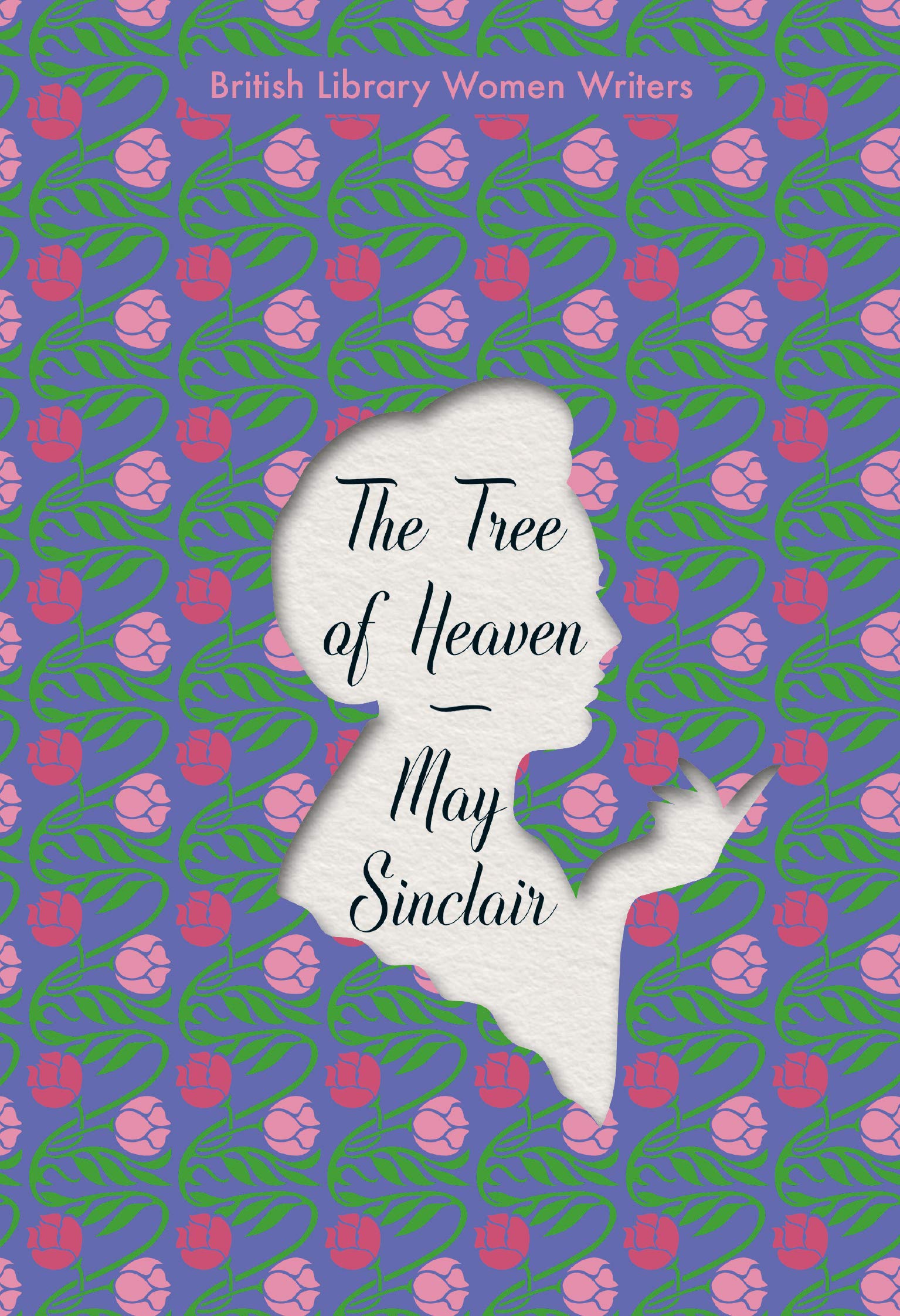
Review 2276: Classics Club Spin! The Tree of Heaven

Although the Preface states that the tree of heaven in this novel is stripped of its false identity in the end and shows itself as merely an ash—to symbolize the stripping away of Victorian sentimentality to realism—I have to say that depicting men’s deaths in World War I as glorious isn’t a bit realistic. But never mind. The book was written in 1917, so it pretty much had to.

The novel begins in the late 19th century when Anthony and Frances Harrison are young parents and have recently bought their house. One of the things Frances loves about it is the tree of heaven, which Anthony, a timber importer, states is nothing but an ash tree. The couple have four children, Dorothy, Michael, Nicky, and John. Frances is obsessed with her children, really the boys, to the point where Anthony feels left out.

This novel is about daily life in pre-war England through the microcosm of one family. Early on, as early as the first day depicted in the novel, when Michael refuses to go to a children’s birthday party, he demonstrates a fear of what he later calls the Vortex, which seems to be giving up his individuality because of the pressure of others’ excitements. As they grow, the children encounter situations which show and determine their personalities. The family takes in Veronica, the daughter of Anthony’s brother Barty and Frances’s best friend, Vera. Although Barty is family, he has become unbearable, and Vera leaves him for her long-time friend Ferdie Cameron. But Barty refuses to give her a divorce. Nicky, by then a schoolboy, becomes close to the lonely little Veronica, and it is thinking of her situation as a young man that makes him decide to marry a woman who is pregnant by another man, not for the woman but for the sake of the child.

As a young woman, Dorothy becomes involved in the suffrage movement, but doesn’t approve of some of their tactics. She too eventually backs off from the movement because of fear of the Vortex, while Michael joins a group of avant garde poets who renounce all previous poetry.

All of this leads up to World War I and the effect it has on the family and its friends. It is an interesting and well-written novel that provides a look at an ordinary (although well-off) family in the first couple of decades of the 20th century.

Related Posts

Family Roundabout

Some Do Not

They Were Counted

Review 2275: The Books of Jacob

The Swedish Academy that awarded Olga Tokarczuk the Nobel Prize for Literature called The Books of Jacob her magnum opus. It is certainly a stupendous novel at almost 1000 pages, carefully researched, minute in detail, taking on such subjects as the nature of religion, forgiveness, the interconnectedness of things. It is a dense historical novel about a real figure in history, Jacob Frank, the head of an odd religion, a Jewish heresy.

Frank emerges from another Jewish heresy, a group called the Shabbatians, who believe the Messiah has already come and therefore according to teachings, the Mosaic law is broken. The new law, according to Frank, is whatever he says to do. This story is told from multiple perspectives, notably that of Nahman, one of his earlier followers, who attempts to document his life and beliefs.

The movement, which begins in the mid-18th century, is formed mostly of Shabbatians, some of whom are merchants but others of whom are very poor. Frank’s teachings seem to consist mostly of story telling, but as with other cult leaders, one big feature is the sexual exploitation of women, first by all of them sucking a woman’s breast and later by Jacob assigning men partners even from the unmarried girls. You can guess that Frank is charismatic.

This fantastic story follows this group of people, which gets larger and larger, first from southeastern Poland down to Turkey, where Jacob briefly converts to Islam, then back to Lwow in Poland. There, they are attacked by the Talmudic Jews until from revenge they tell the authorities that it’s true that Jews use Christian blood in their rites, a lie that ends in the execution of 14 Jews, including rabbis.

After fleeing Poland again, Jacob decides that their route lies with conversion to Christianity, an act that he can justify with teachings but that also has the end goal of the members being allowed to own land and gain other honors denied them as Jews. Although the path is not always smooth and a lot more traveling ensues, the upward mobility of the group after that decision is phenomenal. Ultimately, Jacob becomes an intimate of the King of the Habsburg Empire.

The research that this novel reflects is phenomenal. As a reader, I was often enthralled but reluctantly had to put up with some deep philosophical discussions, including deeply confusing ones about numbers, since some of the members are kabbalists. The most difficult part of it, though, was the sheer number of characters, especially Frank’s followers. I was keeping up okay until they converted and all changed their names. Then I was usually lost.

I wouldn’t recommend this book as the first you read by Tokarczuk, and it’s certainly not an easy read, but it’s a fascinating story.

Related Posts

Drive Your Plow over the Bones of the Dead

Flights

Zealot: The Life and Times of Jesus of Nazareth

Nonfiction November: Week Five

This week’s host is Hopewell’s Public Library of Life, and the theme is New to my TBR:

It’s been a month full of amazing nonfiction books! Which ones have made it onto your TBR? Be sure to link back to the original blogger who posted about that book!

I haven’t participated in this event before, and I am not a big nonfiction reader, but I got a lot of ideas during the month for further nonfiction reading. Here are the nonfiction books mentioned this month that piqued my interest. I’m just dividing these up by weeks to give me a little space between cover images.

Books from Week Two

The theme for Week Two was what attracts you to a book, so a lot of people were just showing interesting covers. But even though I don’t think I use covers to attract me to nonfiction books generally, these made me look at a few books more carefully.

I saw A Place for Everything: The Curious History of Alphabetical Order by Judith Flanders posted on She Seek’s Nonfiction‘s page during week two. It sounds right up my alley, and it has a beautiful cover. I hadn’t heard of it before.

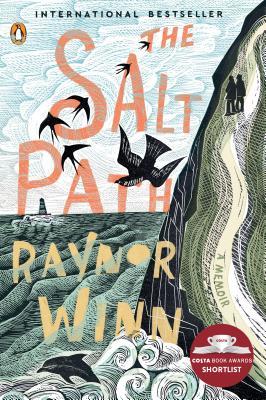
Entering the Enchanted Castle had the cover of The Salt Path by Raynor Winn on the post for Week Two. That reminded me that one of my best friends told me about the book, so I put it on my TBR. And again, what a great cover!

I’m sure I’m not the only one to notice what’s going on in our political arena, so when Silver Button Books put the cover of Cultish by Amanda Montell up in Week Two, I immediately added it to my TBR.

Books from Week Three

The theme for Week Three was pairing a nonfiction and fiction book. I admit that in a few cases, the fiction book looked more interesting to me than the nonfiction. However, here were four nonfiction books that struck my interest.

The cover of Shy Love Smiles and Acid Drops that Whispering Gums listed for Week Three as well as its subject matter made me put it right on my TBR. OK, this time I admit picking a nonfiction book for its cover.

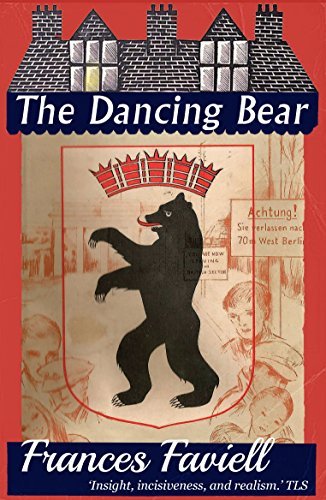
Books Please featured a memoir called The Dancing Bear by Frances Faviell for Week Three, and as I love the Furrowed Middlebrow imprint and have read some fiction by Faviell, I’m definitely putting this one on my TBR.

I love Amitav Ghosh, and I was unaware of the nonfiction book he’d written, The Nutmeg’s Curse: Parables for a Planet in Crisis until I saw it on Unsolicited Feedbacks post.

Entering the Enchanted Castle listed The Wild Silence, also by Raynor Winn, and I have to read it because of the cover and because it’s about Iceland.

Books from Week Four

For some reason many of the participants’ choices for Week Four weren’t grabbing me. The theme was Worldview Shapers, and maybe it was because some of participants didn’t really explain much about their choices but just posted their covers. Many of the participants posted several books on one subject, so I felt a little overwhelmed to pick one of them, even if I was interested in it, as I was by the holocaust books and the ones on the aboriginal experience, for example. In any case, Shoe’s Seeds and Stories selected the graphic nonfiction book Ducks by Kate Beaton, which I was already planning to read and in fact have in my pile right now.

Review 2274: The Misses Mallett

When I read that five years before she wrote this book, E. H. Young ran off with a married man, I had to wonder how much of it was autobiographical. Not that that’s exactly what happens in The Misses Mallett, but you’ll understand why I say this if you read it.

As a young woman, Rose Mallett rejects the proposal of Francis Sales. He is handsome, but she thinks he is sulky and boyish. And he is. Rose lives with her much older half sisters, whom she remembers thinking as a girl were like princesses. Now perhaps they are a little comic, but Rose doesn’t see them that way. Both are meticulously dressed in a style of twenty years before. Caroline, who likes to present a roguish effect but knows nothing about what she suggests, can be magnificent, while Sophia still looks girlish. Rose herself is beautiful in a cool, collected way, and dresses with a stylish severity.

Francis Sales goes away to Canada to learn farming and in a few years comes home with a wife, Christabel. Although Christabel says she wants to be friends, it’s clear she has some idea of Rose that is mistaken. Soon Christabel, in trying to prove her gameness at horse riding when she is actually afraid of horses, is badly injured so that she is a permanent invalid. For this incident she believes Rose had a part she did not play. Still, Rose begins a relationship with Francis that is not an affair but is more than a friendship.

When Rose is about thirty, the sisters’ niece Henrietta comes to live with them. Although the sisters never saw their brother Reginald unless he needed money, they still loved him. He has died, followed shortly by his widow, who rejected their money even though she and Henrietta were living in poverty, Henrietta having kept their lodgings by taking up the cooking for the whole house. When her mother dies, the sisters send for her.

Unfortunately, one of the first people Henrietta sees when she arrives is Francis Sales, who presents a romantic exterior riding his horse. She soon divines that Rose has a relationship with him even though they have lately broken up, and decides she will have him herself. As can be predicted, he’s not hard to get.

Because Henrietta sees Rose as a rival, she doesn’t understand the things Rose does for her. Rose has her flaws, but she isn’t the woman Christabel or Henrietta think she is. It is this misunderstanding that powers the plot of the novel.

I find Young fascinating. Her novels are not at all what I expect for her time, so early in the 20th century (this one is from 1922). Her heroines are complex and interesting. I have no idea what either of the heroines in this book see in Francis Sales, though.

Related Posts

Miss Mole

Chatterton Square

Jenny Wren

Review 2273: The Man in the High Castle

I wanted to read The Man in the High Castle for the 1962 Club, but it didn’t arrive from the library in time. Although speculative fiction is generally not my genre, this book is so well known that I was curious about it.

The novel postulates that the Axis powers won World War II. As a result, the United States was divided between Germany and Japan except for the Rocky Mountain states, which were deemed unimportant. Germany has the Eastern states and Europe and Japan has the Pacific states and Asia.

The action of most of the novel takes place in San Francisco, where a lot is going on. Frank Frink has quit his job at the factory and been convinced by his coworker to make jewelry, which his coworker is trying to sell. Mr. Cheldan, an antique dealer who specializes in pre-war American goods, very popular with Japanese businessmen, who are the only people with any money, finds out that some of his goods are counterfeit. A mysterious Swede named Mr. Beyner is coming to visit Mr. Tagomi at the Japanese Trade Mission. In the Rocky Mountain states, Julia Frink, Frank’s ex-wife, has met a young man. All of these characters incessantly consult the I Ching.

The fortunes of all these characters are going to be affected by the death of the head of Germany and the resulting factional struggle for power. A shocking book is circulating that posits that the Allies won the war. It’s banned in German areas, but in San Francisco everyone is reading it.

Almost 100 pages into this novel, I was profoundly uninterested in what was going on with all these characters. I only continued with the book because it began to be obvious who the person referred to by the title was, and I was mildly interested in that.

One of my problems with the book was the writing style, which is often very telegraphic, especially when reporting characters’ thoughts, leaving out parts of speech and using a lot of sentence fragments. I’m not familiar with Dick’s writing style, but at first I thought this was a device to show a sort of stereotyped Japanese influence, but then he used the same style for the thoughts of characters from the German-controlled areas.

I won’t tell what it is, but this is a novel with a twist. For me, novels with twists generally make everything fall into place, just a new place. However, in this case I felt the twist made the whole rest of the novel meaningless.

Related Posts

Aurorarama

To Paradise

Oryx and Crake

Review 2272: The Other Day

The Other Day is Dorothy Whipple’s charming memoir of her childhood in Blackburn, starting when she was very young until she was about 12. She clearly has a vivid memory of such things as her inability to understand when someone was teasing her, the ways she misunderstood things, and her great ideas based on childish misconceptions.

Her experiences of school were especially unfortunate. She was hopeless at mathematics, and her math teacher at her first school ridiculed her mercilessly until she “cheated” by claiming to get two answers right on a quiz. Later, she was entered into a convent school and became confused about what she was told about religion.

Most of her stories, whether happy or not, reflect a happy childhood, especially when the family later takes a cottage. Her memories reflect a lot of humor even though she seems to have been a serious child.

Related Posts

Someone at a Distance

Young Anne

Greenbanks