Review 2227: The Silver Swan

In this second Quirke novel set in 1950s Dublin, Quirke doesn’t do that much investigating, the results of the last case having been hushed up. However, his poking around does stir things up.

Quirke, a pathologist, is contacted by a distraught Billy Hunt, a man he can barely remember from school days. The body of Billy’s wife Deirdre has been discovered naked in the water, assumed drowned. Billy begs Quirke not to perform an autopsy, because he can’t bear the idea of it. Quirke says he’ll do what he can, but he does do an autopsy and finds an injection site in her neck. However, he hides this information, and the coroner brings in a verdict of suicide. Quirke has assumed she took an accidental overdose, but he would like to know more about her, so he lets Detective Inspector Hackett in on enough to know everything is not straightforward.

The novel returns a bit in time to tell the story of Deirdre Hunt, who has been calling herself Laura Swan since she opened a beauty salon called The Silver Swan. Alternately, it follows several characters in the novel’s current time. One of the first things Quirke discovers is that Deirdre was having an affair with her partner, Leslie White, a silver-haired, languid man who affects a style that emphasizes his hair color and paleness. Quirke thinks he is dangerous and is disturbed to find that his daughter, Phoebe, knows him through her slight acquaintance with Deirdre. In fact, she is also drawn to him (although he seems singularly repulsive).

Deirdre has met White through her acquaintance with the mysterious Hakeem Kreutz, who offers “spiritual healing” to women clients and has been instructing Deirdre in Sufism. But she is just visiting him because she’s attracted to the exotic, as she is with White. The connection between the two men is much more complicated.

This novel is dark, with a slow-growing suspense as it reveals more information. It is not really a traditional mystery, but it makes compulsive reading.

Related Posts

Christine Falls

The Secret Guests

The Good Turn

Review 2226: Dust Tracks on a Road

Dust Tracks on a Road is Zora Neale Hurston’s lively memoir, which I read for my Classics Club list.

Hurston was raised in what was essentially in the wilderness at the time in Eatonville, Florida, the first town in the country, she alleges, founded and run by Black people. She was an energetic and imaginative child, and though her family was poor, she seemed to have an idyllic childhood (if you don’t count being whipped, and she didn’t) until her mother died when she was nine. (Other accounts say four, but she says nine.) Not long thereafter, her father remarried and her stepmother soon ran her and her older brother out of the house. (If, when I read Their Eyes Were Watching God, I had realized she was writing about the founding of Eatonville, I think I would have paid more attention to the information about the town.)

I found it interesting that Hurston had a series of visions as a child and that all of them came true. The first was her mother’s death, the second years of wandering from home to home. Having to go to work at an early age cut into her schooling, but such was her determination to get it that after trying to earn enough at various jobs, she finally just returned to high school, ending up with degrees in anthropology and ethnography from Howard and Barnard Universities.

Hurston relates her life in a lively way with lots of anecdotes, folk stories, and even songs and poetry. Although many of the recollections of her earlier life are very particular, the closer the memoir gets to when she was writing it, the more general it becomes, so we don’t find out much after her first ethnographic studies and novels are completed. Instead, Hurston finishes with a series of discursions on her opinions, which I found less interesting than the story of her childhood and young adulthood.

Related Posts

I Know Why the Caged Bird Sings

Kill ‘Em and Leave: Searching for James Brown and the American Soul

The Yellow House

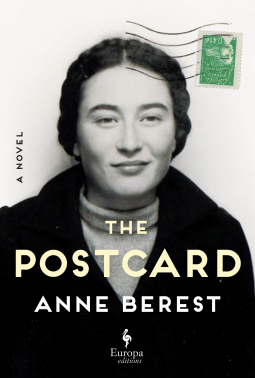
Review 2225: The Postcard

Although sold as fiction, I believe that The Postcard is very much autobiographical and historical, the story of the fates of Berest’s relatives and her own search for an identity.

The search begins with a postcard, one that arrived years before but that Anne’s mother Lélia shows her much later. It is an old postcard containing only the names of Anne’s grandmother’s parents, sister, and brother. All of them died in Auschwitz. The postcard is addressed by another hand to Lélia’s mother Myriam, but at Lélia’s address, where Myriam did not live. It is a mystery. Is it a threat? A reminder?

Myriam has never spoken about their family’s past and now she is dead, so both Lélia and Anne have grown up knowing very little about their family, Ephraïm and Emma Rabinovitch and their children, Noémie and Jacques. Since receiving the postcard, though, Lélia has built up an archive of documents about the history of the family up to when they were deported by the French government. The first part of the novel covers this history.

The further sections of the novel are about Anne’s attempts to discover who sent the postcard and what happened to Myriam. Why was she the only one missed, and what did she do during the war? And finally, how has her family’s experience affected Anne’s own life?

This is a deeply engaging story and an important one, I think. Although the Holocaust is long past, its effects are still reverberating.

Related Posts

Night

The Invisible Bridge

The Zone of Interest

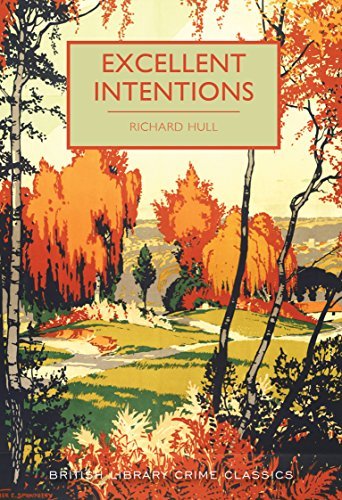
Review 2224: Excellent Intentions

Of the Golden Age mysteries I’ve been reading lately, Richardl Hull’s The Murder of My Aunt was one of my favorites. So, I looked for another by him and found Excellent Intentions. Like The Murder of My Aunt, it has a gimmick—that it begins with the trial but doesn’t tell who the defendant is until the end. However, with its time tables and finicky details, it is the kind of mystery that makes my head spin.

No one is at all upset when Henry Cargate dies of an apparent heart attack on the train. He was a wealthy man who bragged about how much he paid for things, refused to help the local economy by buying from them or employing locals, insulted servants and guests equally, forged stamps and then accused others of doing so, and liked to accuse people of stealing items he planted on them. But when it turns out a passenger saw him take snuff and immediately die, and there is a poison in the snuff box, well then.

So far so good. Inspector Fenby manages to narrow the time that the poison got into the snuffbox to a few hours the day before. But then we get into details like what time the poison bottle was on the windowsill versus the desk, where was the snuffbox, what color were the roses in the next room. Sigh.

Related Posts

The Murder of My Aunt

Death in the Tunnel

4:50 from Paddington

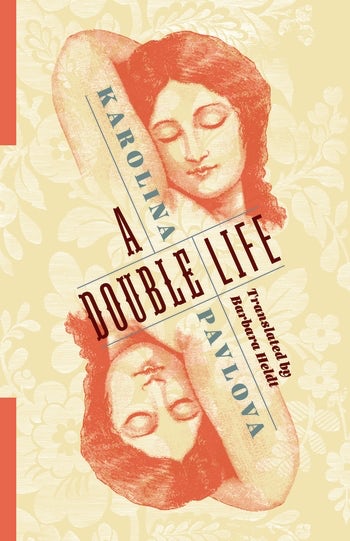
Review 2223: A Double Life

Published in 1848, A Double Life is the only novel written by the Russian poet Karolina Pavlova, who was well known in her time but forgotten by the time of her death. Almost more interesting to me than the novel was the biographical information about Pavlova, who was reviled as a Russian woman for daring to consider herself a poet. I read this novel for my Classics Club list.

Cecily is a young, innocent girl in the top levels of Russian society. Her mother, Vera Vladomirovna, has brought her up strictly to be submissive and ignorant of life. Vera Vladomirovna has noticed Prince Viktor’s interest in Cecily and hopes to marry her to him. But she doesn’t realize that her friend, Madame Volitskaia, intends him for her daughter Olga, Cecily’s best friend.

Upon hearing of the death of a man she never met, Cecily dreams about him that night. These dreams, related in poetry, end each chapter.

The prose narrative is full of satire against polite society, although Cecily doesn’t understand any of it. The poetry is more romantic and mystical, and I didn’t always get the point of it except the end result of it is to awaken Cecily to what life is really like.

The novel is very short, with a strong feminist message for the times. The dream sections are written with a romantic floridity that reminded me of the works of George Sand.

Related Posts

The Victorian Chaise-Longue

Strange Journey

A Footman for the Peacock

Review 2222: Bitter Orange Tree

As Omani university student Zuhour pursues studies and friendships in England, she is haunted by thoughts about the woman she considered her grandmother, whom she neglected and avoided before her death. She revisits her family history, from the time when Bint Aamir, an impoverished relative taken in by her grandfather, was ejected, along with her young brother, from their father’s house at the urging of his new wife.

Back in England, Zuhour befriends Suvoor, a wealthy girl of Pakistani heritage brought up in England. Suvoor is devastated because her sister, Kuhl, has chosen a young man who she deems socially unworthy of their family. But Zuhour grows closer to Kuhl instead of Suvoor.

This novel is a poetic examination of the past and future of this character, where her contemplation of Bint Aamir’s life—in which her father did not permit the only marriage she was asked for—seems to predetermine her own—in which she is in love with her friend’s husband. The most interesting parts for me were the historical ones. The novel refers often to Zuhour’s dreams and sometimes seems dreamlike itself, but I didn’t feel touched by it. I read this book for my James Tait Black project.

Related Posts

A Thousand Splendid Suns

And the Mountains Echoed

In the Shadow of the Crescent Moon

Review 2221: The Expendable Man

Young Doctor Hugh Denismore is driving through the California desert to Phoenix to attend a family wedding when he sees a teenage girl on the highway hitchhiking. He doesn’t want to pick her up but is worried she’ll meet with trouble on the deserted road, so he gives her a ride to Blythe, as he’s not about to cross the state line with her.

On the way, she tells him a pack of lies and claims to be broke, so he buys her a bus ticket to Phoenix when he drops her in Blythe and stops at a motel for the night.

To his dismay, when he reaches the Arizona border the next morning, she is waiting for him and asks for a ride to Phoenix. He drops her off at the Phoenix bus station, but later she finds him at his motel and asks him to give her an abortion. He throws her out.

He has a bad feeling about all of this, but why is he so worried? After her body is found murdered in a canal, his fears are confirmed and the reader realizes he’s a Black man. If the police find out he gave her a ride, he’s sure they’ll try to pin it on him. And they do.

Hughes builds up a great deal of suspense in this one, and she also vividly describes 1960s Phoenix. I have liked her way of introducing strong women in the two books I’ve read by her so far. In In a Lonely Place, two women team up to expose a serial killer, and in this novel, Denismore gets vital assistance from Ellen, another wedding guest. I also thought it was a brave and unusual choice at this time to have a Black protagonist. This is a real nail-biter.

Related Posts

In a Lonely Place

The Horizontal Man

Laura

Review 2220: Our Missing Hearts

After reading two pretty good domestic dramas by Celeste Ng, I wasn’t really prepared for a dystopian novel. Although I occasionally read dystopian fiction, it’s not really my thing. And this one gave me more trouble than most.

Bird is an 11-year-old biracial boy whose Chinese mother, a poet, disappeared from the lives of himself and his father years ago. They are living in difficult times because of PACT, a law that requires everyone to watch others for un-American activities and codifies racism against Asians, particularly those of Chinese ancestry. The historical record for many periods has been blacked out, and lots of books are banned. Bird’s mother Margaret’s poem has become a rallying cry for those against this system, especially against the removal of children from the care of parents deemed unsuitable. Bird doesn’t see that his father—demoted from a linguistic professor to a library book shelver presumably because of his marriage—has been trying to protect him by teaching him not to stand out.

After his best friend’s disappearance, Bird receives a message from his mother. He begins trying to remember her and eventually to find her.

My biggest problem with this book is its dual nature. Young adult novels, except really great ones, tend to have a certain style, and the first part of this novel is so much in that style, written from Bird’s point of view, that I finally googled it to see what genre it fell into. Then Bird finds his mother, and the next section is supposed to be Margaret telling Bird about her life. It is not written as dialogue, and there is a lot of information there that a mother would not tell her 11-year-old son. Okay, I get it—it’s her memories, but the novel keeps repeating that she’s continuing her story. And it’s way too long with too much extraneous information that’s inappropriate for this purpose. About her wild days? Her lovers? The bite marks she made on his father’s neck? Come on.

I was about 2/3 through the novel, but it lost me there. This was a DNF for me.

Related Posts

Everything I Never Told You

Little Fires Everywhere

To Paradise

Review 2219: A Pocketful of Rye

When wealthy businessman Rex Fortescue collapses and dies over tea in his office, the police are surprised to find his pocket full of rye. When they figure out how he was poisoned, they realize it must have been over breakfast not tea. That leaves his family in the frame.

His much younger new wife is having an affair, so she is the obvious suspect—that is, until she collapses over tea. Then Gladys, the house maid, is found with the laundry, strangled and with a clothespin on her nose.

Miss Marple arrives on the scene after she reads of Gladys’s death, having trained Gladys to be a maid. She is the one who makes the connection between the deaths and the old nursery rhyme. But then, what about the blackbirds? Could this have anything to do with the Blackbird Mine, over which Fortescue reputedly cheated a partner?

This is one of Christie’s more ingenious mysteries. It hangs together without seeming absurd even though the murders seem deranged. I also thought the ending was quite effective.

Related Posts

Nemesis

They Do It with Mirrors

Sleeping Murder