Review 2218: Romney Marsh

I’m not quite sure what possessed me to look for this little book. I guess it looked interesting on someone ‘s review blog, although I’m not sure whose. It is a short, descriptive book about Romney Marsh as it appeared in 1950 with a little history and some drawings.

After a descriptive section about the marsh and the towns on the coast, it has a section of drawings with short descriptions of the churches on the marsh. Finally, there are a few drawings of marsh features, towns, and more churches. I would have liked the drawings from the final section to have been placed near the appropriate text, but I understand that placement of all the drawings at the back allowed them to be printed on finer paper. It seemed as if the church section might be useful on a tour of churches of the area.

Although I have never been to Romney Marsh, if I ever went there, I would be sure to take this little book along, if only to see how much it has changed in 70 years.

Related Posts

The Rural Life

Notes from a Small Island

Vanishing Cornwall

Review 2217: The Last Remains

Things seem to be in flux for Dr. Ruth Galloway. Her university in Norfolk has decided to close its archaeology department. Detective Harry Nelson’s wife Michelle has finally left him, and he wants Ruth and Kate to move in with him. But Ruth is reluctant to leave her cottage and doesn’t know what to do.

In a wall of a building being renovated, a skeleton is found. Ruth identifies it as modern because of a plate in its leg, and it turns out to be a woman missing for 20 years. Nelson is dismayed to learn that their friend Cathbad was present at an archaeological campout from which she disappeared all those years ago.

It is still the time of Covid. Cathbad nearly died from it and is having problems recovering. As Nelson’s team questions the former owners of the building where the skeleton was found and the participants of the campout, DC Tony Zhang is exposed to the virus and must isolate.

Nelson’s team finds that the victim, Emily Pickering, was having an affair with Leo Ballard, the archaeology professor leading the campout. He took her to the train station early Monday morning on her way home, but there were puzzling sightings of her on CCTV in other places that day.

Ruth has made a trip to Grimes Graves, ancient mines where the campout took place, and noticed she got a lot of chalk on her pants. The cloths wrapping Emily’s remains also being coated with chalk, Ruth plans to return to Grimes Graves to take soil samples. But she has a lot to deal with at the university, helping with protests initiated by David Brown, who, if the department closes, wants her to move to Uppsala with him.

This is another excellent mystery in this series, and followers may be happy to know that the inertia in the relationship between Ruth and Nelson finally gets unstuck. I won’t say in which direction.

Related Posts

The Locked Room

The Night Hawks

The Lantern Men

Review 2216: Classics Club Spin Result! Miss Mole

I don’t know what readers in 1930 would have thought of Miss Mole—maybe found it a little shocking—but I thought it was delightful. I read it for the latest Classics Club Spin.

Miss Mole is a forty-something spinster of little means. Of yeoman stock, she was well educated but left with little when her parents died. Since then, she’s been working in various genteel, poorly paid positions. When the novel opens, she’s a companion for Mrs. Widdows, but she has difficulty sometimes hiding her true nature under the submissive aspect her employers expect, and she’s fairly sure she’s going to lose her position soon. She goes to tea with Mrs. Spenser-Smith, a prominent citizen in town who is also her cousin. Lillia Spenser-Smith would like her relationship with shabby Miss Mole to remain a secret, so she helps her get a position as housekeeper with the chapel rector Mr. Corder, as she is worried about his two daughters and the incursions of Patsy Withers, who would like to be their stepmother.

Miss Mole finds the Corder household an unhappy one. Corder is an energetic pastor, but at home he expects his family to see no fault in him and he pays no attention to the state of his children. Everything must revolve around him. His oldest daughter Ethel is restless, horsy, and prone to bad temper. She has been supposed to have been running the household but has been paying more attention to her charities. Cousin Wilfred soon appreciates Miss Mole’s sense of humor, but young Ruth is at first mistrusting. Miss Mole decides to help Ruth even though she dislikes Mr. Corder.

Mr. Blankinsop, an acquaintance from Miss Mole’s former lodging, comes to tell Mr. Corder that he is changing churches because he disagrees with him. Although he seemed to want to avoid Miss Mole at the lodging, he begins to seek out her company. She thinks he is in love with a helpless married woman at his lodging.

Energetic Miss Mole does her work well and the Corders’ lives improve, but she has a secret that threatens when a minister of a neighboring chapel, Mr. Pilgrim, appears.

Miss Mole is a great character—intelligent, cynical, but with an ability to find joy in life, coupled with a tendency to lie but also to speak her mind.

Related Posts

Sally on the Rocks

Chatterton Square

Cluny Brown

Review 2215: Demon Copperhead

Everyone has been raving about Demon Copperhead, but I’ve had a more mixed reaction to it. This is because the novel is an update for Dickens’s David Copperfield, which is one of my favorite books.

In one way, this is a good match, because both Dickens and Kingsolver are political writers with social consciences. Dickens’s target was the effects of industrialization on poor children. Kingsolver’s in this novel is the effects on the people of Appalachia of what she sees as a war on agriculture.

Damon Fields, named Demon Copperhead because of his red hair, is a young Melungeon (I had to look it up) boy at the start of the novel. His father died before he was born, and his teenage mother has a very weak control of her sobriety. Residents of Lee County in Southwestern Virginia, they live in a single-wide mobile home owned by the Peggots next door. The kindly Peggots provide most of the stability in young Demon’s life.

Readers familiar with David Copperfield will be familiar with the plot, for it follows that book almost exactly. Although they are very poor, things are going fairly well and Demon’s mother has been sober for two years when she meets Stoner, soon to become Demon’s abusive stepfather. It goes mostly downhill from there, with Demon, after a brief career as a high school football hero, becoming addicted to oxy after an injury.

I couldn’t help noticing differences from Dickens, though. For one thing, the McCob family, Kingsolver’s equivalent of the Micawbers, are not the feckless, lovable, comic characters of Dickens, but a couple who, as Demon’s foster family, illegally send him to work instead of school, illegally charge him rent, and steal his money. (The Micawbers send David to work, too, but that assumed to be at the behest of his stepfather.) That leads to the biggest difference. Although Kingsolver can depict sympathetic characters, she doesn’t really do funny ones, Dickens’s gift. Further, the very young Demon at the beginning of the novel lacks the absolute innocence of young David that makes him so endearing. Demon’s narrative is too cynical.

Finally, Dickens is more willing than Kingsolver to let his story make his political points. Still, it’s a gripping novel with a serious message about the rural addiction problem, the lack of services for rural citizens, and the mistreatment of the poor. Although I read this novel before it made the list, Demon Copperhead is part of my James Tait Black project.

Related Posts

Unsheltered

David Copperfield

The Lacuna

Reading Thirkell’s Barsetshire Series in Order: #27 Close Quarters + #26 A Double Affair Wrap-Up

We’re counting down to the end here with only three books to go. My thanks to the loyal followers who have continued to comment even if they haven’t been able to read the books.

  • Liz Dexter
  • Penelope Gough
  • Renee

In A Double Affair, I believe I caught Thirkell in a continuity error for the first time. We’ll see how she finishes off the series.

The next book is Close Quarters, and I’ll be posting my review on Thursday, August 31.

And here’s our badge.

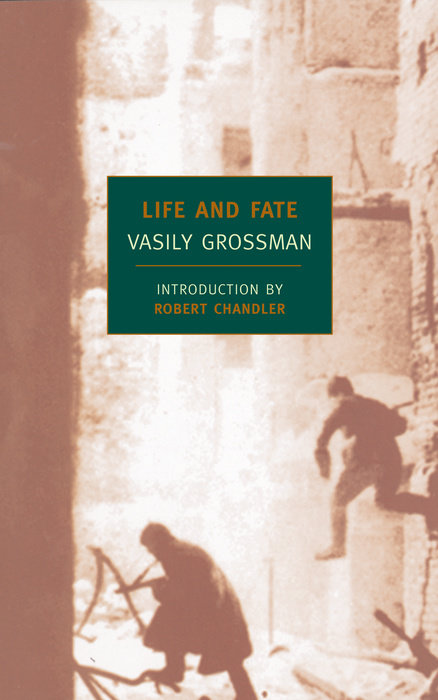
Review 2214: Life and Fate

Finished in 1960, Russian author Vassily Grossman’s Life and Fate was confiscated by the NKVD (predecessor of the KGB) and had to be smuggled out to be published in Europe. Taking War and Peace as its model, it is about the pressures of totalitarian governments during the siege of Stalingrad. It centers around one extended family, the Shaposhnikovs, but it also includes some of the German officers and others, visiting a variety of wartime settings: a besieged plant in Stalingrad, a German concentration camp, a scientific institute in Moscow, a Russian tank corps, and so on.

Because of its broad scope and length (more than 800 pages), it has a lot of characters, maybe a dozen of whom we visit and revisit, but others whom we see only once or twice. Some of the ones we revisit are Krymov, a commisar who is the ex-husband of Yevgenia Shaposhnikova; Viktor Shtrum, a famous physicist married to Lyudmila Shaposhnikova; Pyotr Novikov, a tank commander in love with Yevgenia; Yevgenia herself, who is worried about both Krymov and Novikov; Sofya Levinton, a doctor and friend of Yevgenia on her way to a German gas chamber. There is an appendix to the book listing hundreds of characters, but it doesn’t list most of the male characters’ first names or patronymics, so at times I wasn’t sure who the characters were talking about.

Although the Russian characters are uniformly patriotic, almost all of them live in fear, remembering the Terror of 1937 when many people were disappeared or deported to labor camps. Those times aren’t really over, as several characters run into trouble for minor infractions or no infraction at all, resulting in imprisonment and torture for some, demotions or exile for others. One character is labeled an enemy of the state for reporting that a soldier on his own side shot at him. In addition, bureaucracy gets in the way of people trying to do their war work.

This novel is powerful at times, but because of its structure, I didn’t really feel much connection to any of the characters except maybe Novikov, who spends hundreds of pages yearning for Yevgenia, not knowing she has returned to Krymov. It wasn’t until I was well into the book that I realized it was a sequel to Grossman’s Stalingrad, and it refers back to events that presumably occurred in that book, but it’s hard to know whether reading it first would have helped.

Also, Grossman occasionally takes a paragraph or two, sometimes a whole chapter, to philosophize on some subject. That’s a kind of polemic writing I don’t appreciate.

Related Posts

Sofia Petrovna

The Raven’s Children

Punishment of a Hunter

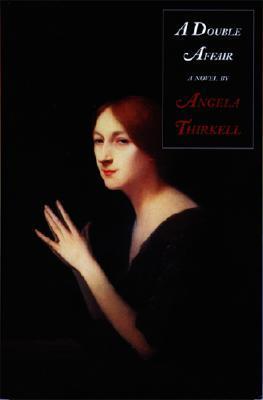
Review 2213: #ThirkellBar! A Double Affair

I have to start out with a spoiler for the book before this one, so if you haven’t read Never Too Late and plan to, skip now to the second paragraph. A Double Affair begins with the wedding of Miss Merriman, called Merry by her friends, to Mr. Choyce. Merry has appeared in many of the novels as the devoted secretary/companion to both Lord Pomfret and Lady Emily Leslie, and she deserves a happy ending. (Readers may recall that early in the series she had an unrequited love.) The wedding is described in much more detail than any of the others—if they are described at all—so Thirkell must have thought so, too.

Then we briefly return to the subject of Edith Graham, still eighteen after three books. And here, I think Thirkell has made a continuity error, for Edith is returning from a trip to America after having returned two books ago. I noticed this particularly because I read the beginning of this book out of order, so in my mind she had just returned and she was returning again. So, at the end of Never Too Late, I looked for an indication that she was going abroad again, but there was none—just her plan to go to agricultural school.

Thirkell gets over this, sort of, by saying she abandoned her studies to go to America with Uncle David and Aunt Rose, but never once is there a reference to two trips to America. Thirkell even has her say that she thinks her temperamental problems were caused by this trip, but she had those same problems two books ago when she returned the first time.

In any case, I’m a little tired of Edith and her temper. At the beginning of the book, she still has three admirers—George Halliday, the farmer; John Crosse, the banker and Lord Crosse’s son; and Lord Mellings, the young heir of Lord Pomfret. However, she seems to lose her temper if some man isn’t paying attention to her at all times.

This is a good time to look at the problems of George Halliday. His father died in the last book, and now his mother is feeling lonely. He is working hard and is sometimes irked because when he gets home, his mother wants attention, whereas he wants to work on the books or just relax. Finally, she goes for a visit to her daughter Sylvia at Rushwater, where Sylvia and Martin feel much the same. But Mrs. Halliday has a surprise for everyone.

This novel will finally dispose of the affections of George, John, and Edith, but in what combination?

Although I enjoyed keeping up with these characters, this is the first time I’ve felt that Thirkell lost track of her plotting a bit. Also, I don’t want to spoil any romantic surprises, but I’ll just say that she cheats a bit in this one.

Related Posts

Never Too Late

Enter Sir Robert

What Did It Mean?

Review 2212: Crimes of Cymru: Classic Mystery Tales of Wales

This latest British Library Crime Classics collection features mystery and crime short stories written by Welsh authors or located in Wales. The stories were written from 1908 to the mid-1980s, and some of them are quite eerie in nature.

For example, in the 1936 story “Change” by Arthur Macken, holiday makers scoff when Vincent Rimmer tells them lights are on all night in the cottages of Tremant to keep the fairies away. Yet later a child is apparently exchanged by the fairies. Or is he?

In “The Way Up to Heaven,” Roald Dahl (born in Wales) tells the story of Mrs. Foster, whose husband purposefully torments her by being late even on the way to her flight to Paris to see her grandchildren for the first time. She figures out a way to take care of that problem.

In “No More A-Maying” by Christina Stead, the lies of two children with a guilty secret create an injustice in rural Wales.

Although most of the earlier stores are more traditional, “Water Running Out” by Ethel Lina White explains how Harvey deals with his aunt, who has been preventing his marriage to Annie for years by blackmail.

And another attempt to prevent marriage is perpetrated in “The Chosen One” by Rhys Davies. Rufus, whose family has occupied his cottage for hundreds of years, gets a note from his eccentric landlady, Audrey P. Vines, telling him his lease is up and she’s throwing him out.

This was one of the more entertaining and atmospheric of these collections that I have read. I usually like them, but prefer getting into a longer work.

I received this book from the publishers in exchange for a free and fair review.

Related Posts

The Edinburgh Murders and Other Tales of Scottish Crime

Final Acts: Theatrical Mysteries

Murder at the Manor

Review 2211: Horse

This novel tells the story of a famous racehorse and the people connected to him evoked through some objects—his own skeleton and three portraits of him. Although the main characters in the novel are fictional, many of the historical characters are not. The horse, Darnley, who is renamed Lexington, is still considered one of the best racehorses of all time, and many of his offspring have been champions.

In 2019 Theo is a Nigerian graduate student of art history at Georgetown. He plucks a painting out of the trash of his neighbor. It is of a horse, and he recognizes that it is well painted, so he decides to write an article about having it cleaned and valued.

Jess is the head of a lab at the Smithsonian that cleans and articulates animal skeletons for display and study. She has recently located the skeleton of the famous race horse Lexington for a scholar studying equine bone structure when Theo brings in his cleaned painting. Jess recognizes it immediately as one of Lexington painted by Thomas J. Scott, a 19th century horse painter.

In 1850, 13-year-old Jarrett is a slave working with horses for Dr. Warfield in Lexington, Kentucky. Jarrett’s father, Harry Lewis, is a well-known horse trainer who has bought his own freedom and is saving to buy Jarrett’s. Jarrett is with Alice Carneal when she gives birth to Darnley, the horse that will be renamed Lexington. After a promise from Warfield to give Darnley to Harry instead of his yearly wage, Jarrett develops a close relationship with the horse.

Thomas J. Scott is a young artist who specializes in painting horses and is hired by Warfield to paint some of his horses. While he is there, he paints a copy of his picture of Darnley and gives it to Jarrett. Later, he returns to paint an older Lexington.

These are the characters whose points of view are used to tell the story of Lexington. Brooks’s story is based on what is known of the real horse and characters with some inventions. It’s an interesting story with vivid descriptions of the races, of 19th century New Orleans, and of the racing industry of the time. It also has strong themes of the effects of slavery, racism, and cruelty to animals.

Related Posts

Horse Heaven

The Sport of Kings

People of the Book