Review 2185: The Transit of Venus

The Transit of Venus spans the 1950s through the 1970s. It is a modernist exploration of the love affairs, both unconsummated and consummated, of the characters surrounding two Australian sisters in England, Caroline and Grace Bell.

The novel begins when Grace Bell is engaged to Christian Thrale. Grace is a few years younger than her sister Caroline, who is 21. Both are staying with the Thrales when Ted Tice, an astronomy graduate, arrives to plan the placement of a new telescope with Professor Sefton Thrale, Christian’s father. Ted, who is shabby and unprepossessing at the time, falls in love with Caroline at first sight.

Caroline, for her part, falls in love with Paul Ivory, whose play is being produced and who has just become engaged to Tertia Drage, the daughter of a neighboring lord. Caroline and Paul have an affair, but Paul drops her for Tertia, choosing position and wealth over love.

Caroline is devastated. She goes off with a friend of the Thrales, a middle-aged roué who has been bedding Tertia, but she ends up in London, working at a poorly paid government job and leading a bleak existence. All the while, she is loved by Ted Tice.

As the years go by, most of the main characters of the novel are overtaken by love. Caroline and Paul rekindle their affair for a time, but Caroline eventually happily marries a wealthy American philanthropist, Adam Vail. Christian becomes briefly obsessed with a young secretary, while Grace falls deeply in love with her son’s noble doctor. Grace and Caroline’s difficult older half-sister marries, to their relief, but then is robbed and abandoned by her husband.

Until the ending of the novel, I felt that the novel was a fairly detached examination of these various relationships in terms of the dynamics of who holds the power. Then Caroline learns a secret that makes her re-examine her entire adult life and made me re-evaluate my liking for the book. It turns everything on its head and makes the novel a great one.

Related Posts

Outline

Old Filth

Stoner

Review 2184: Literary Wives! The Harpy

Today is another review for the Literary Wives blogging club, in which we discuss the depiction of wives in fiction. If you have read the book, please participate by leaving comments on any of our blogs.

Be sure to read the reviews and comments of the other wives!

My Review

Lucy writes copy from home and is raising her two small sons, having given up greater career ambitions upon motherhood. Although bored, she is reasonably content until she finds out her husband, Jake, has been having an affair with an older coworker.

Lucy, whom we eventually learn grew up with a physically abusive father and a psychologically abusive mother, has always been fascinated by harpies. She is immediately filled with rage, yet she is also embarrassed by the concern of her friends once she realizes they all know, and in some ways she seems to find fault with herself. She thinks she is a poor housekeeper and a poor mother, although it seems clear that Jake doesn’t do much work around the house and that she is a loving mother.

The couple make a deal that she can hurt Jake three times in return for him hurting her. But the hurting seems to have two effects—it seems to bring out more savagery in Lucy and it seems to make Jake behave as if everything is all right.

I didn’t exactly enjoy this novel, although it provides insight into modern suburban life as well as abusive relationships. Frankly, it made me feel a little squeamish at times.

What does this book say about wives or about the experience of being a wife?

Literary Wives logo

Although this novel makes observations about marriage in crisis and dissolution, it also makes precise observations about the tedium, aggravations, and isolation of modern marriage and motherhood. Jake seems to think that after Lucy has had her three cracks at him, everything should go back to normal. For her part, Lucy realizes that when she forgave her father years ago for abusing her mother, her feelings became diluted. So, this novel is about Lucy recognizing and affirming her rage. Although that doesn’t seem to be a good thing for their marriage, no one seems to figure this out.

Related Posts

The Vegetarian

The Leviathan

His Only Wife

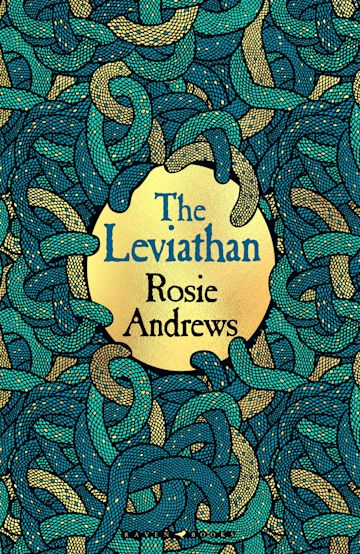
Review 2183: The Leviathan

In 1703, someone has awakened, someone Thomas Treadwater has been watching over for 60 years.

In 1643, Thomas is on leave from the Parliamentary army, on his way home because of an urgent summons by his sister Esther. When he arrives home, he finds many of his father’s sheep dead and his father felled by an apoplectic fit.

Thomas is disturbed to find that Esther has incriminated a servant girl, Chrissa Moore, for witchcraft, blaming her for the state of their father and claiming that the girl has had relations with him. Worse, he finds that Joan, a long-time servant, is also incriminated. Almost immediately after Thomas arrives, Rutherford, an officer of the court, arrives to escort Esther to make a statement, and Thomas finds that Joan and her mother have been arrested as well as Chrissa, who is refusing to speak.

Esther goes down to the jail to see Joan but says she and her mother wouldn’t speak to her. When Thomas goes down to the jail, Chrissa asks him to speak to Lucy Bennett in Norwich. Then he discovers that Joan and her mother are dead, poisoned by hemlock.

Although I figured out part of what was going on almost immediately, thus begins a truly gothic story that involves an ancient legend, a family secret, and the poet John Milton. It’s full of adventure and is rivetting.

Related Posts

The Nature of Monsters

Melmoth

The Silent Companions

Review 2182: The Love Child

I guess I can say I’ve been theme reading lately with no plan to do so. By this I mean that I’ve been accidentally reading books with something unusual in common within weeks of each other. For example, I never read any books set in Sri Lanka (except one historical romance I read several years ago), yet within weeks I ended up reading two literary novels set there, one in the 80s and one more recently. Similarly, last summer I read two books set in Madagascar. Now, who would think that there were two books about an imaginary person who comes to life? Yet, a few weeks ago I reviewed Miss Hargreaves for the 1940 Club, and here is another novel on the same subject.

The Love Child is a different kettle of fish from Miss Hargreaves, though. The latter is an amusing romp, while the former looks more seriously at the fate of women in post-World War I England, where there was a surplus of them by nearly two million.

With the death of her mother, Agatha Bodenham (considered middle aged at 32) finds herself unexpectedly lonely. She and her mother have been very reserved and have not engaged in society, so she has no friends.

She remembers having an imaginary friend when she was a girl, a friend named Clarissa whom she romped with until her mother told her she was too old for such things. She begins by remembering the games she played with Clarissa, and eventually Clarissa reappears as an 11-year-old girl. Clarissa is a graceful, delicate girl, completely Agatha’s opposite. Agatha plays make-believe games with her and enjoys herself. But slowly Clarissa becomes visible to others.

When called upon to account for Clarissa’s existence, Agatha is confused and says she is her “love child.” No one believes this, but everyone assumes Clarissa is some relative.

Problems begin, though, when Clarissa starts to have a mind of her own.

This novel is quite a sad story, maybe, depending on how you understand the ending. It rests on then-current beliefs about how the lack of motherhood might affect women (it was published in 1927) and in the fate of unmarried women. I found it sometimes flagging for me but was interested to see how it ended.

I received this book from the publishers in exchange for a free and fair review.

Related Posts

Miss Hargreaves

Strange Journey

Miss Plum and Miss Penny

Review 2181: #ThirkellBar! Enter Sir Robert

Enter Sir Robert is the last of the Thirkell Barsetshire books that I read before, so I’ll let my previous review stand as a good plot synopsis and use this post to point out things I noticed this time around.

The ending of this novel made me laugh out loud. I don’t want to give anything away, but I’ll just say that Sir Robert Graham has been referred to in most of the books of the series but has not once appeared. In this novel, he is retiring, and his wife, Lady Agnes, arranges for him to become a church warden and talks about the things he is planning to do. And finally he appears.

Edith, Lady Agnes’s youngest daughter, is the focus of this novel, and although there is no overt romance in this one, because at 17 she’s a bit too young, she meets two delightful young men in their 30’s. (I thought the novel said she was 18, but as she is still 18 for at least the next two books, I’m assuming she is 17 now.) George Halliday is in the difficult situation of running his father’s farm when he knows that his father, who is going downhill in health, would rather run it himself. John Cross is a bank manager leasing a house from the Hallidays.

Toward the beginning of the novel there is an unpleasant little diatribe against foreigners, particularly immigrants, that will strike some chords familiar today, but that’s just a small part of the novel.

Related Posts

What Did It Mean?

Jutland Cottage

Happy Returns

Review 2180: They Do It With Mirrors

I am fairly sure I have never read They Do It With Mirrors before, but as I recently watched a TV adaptation, it was difficult for me to judge how easy it would have been to predict the outcome. I suspect it wouldn’t be.

Jane Marple has not seen her old school friend Carrie Louise for many years, but their mutual friend Ruth thinks something is not right, so she asks Jane to visit if invited. Carrie Louise is a frail woman whom others yearn to protect. She was left with a fortune after the death of her first husband. Her second husband left her for a dancer. Her third husband, Lewis Serrocold, is using wings of her massive home as a rehabilitation center for young criminals.

When Jane arrives, she finds quite a few people residing in or visiting the main house. Carrie Louise’s granddaughter Gina is there with her American husband Walter. Carrie Louise’s daughter Mildred is widowed and living there. Alex and Stephen, the two sons of Carrie Louise’s second husband, are there (well, Alex soon arrives on a visit), and they all get a surprise visit from Christian Gulbrandsen, an executor of the estate trust and Carrie Louise’s stepson. He is there to talk to Lewis, who is momentarily away, but Miss Marple sees them conferring outside when Lewis returns home.

After dinner, Christian has gone to his room to write letters when one of the inmates, Edgar Lawson, strikes up an argument with Lewis Serrocold and starts flashing a gun around. Edgar sometimes says different important men are his father and has moments of confusion and paranoia. This time he says Serrocold is his father and has been spying on him. The two go into his office, from which the others can hear the argument. They hear a gun fired outside, and then the gun in the office is fired, but when they get into the office, both men are fine. Later, though, Christian Gulbrandsen is found shot to death.

When questioned by the police, Lewis tells them Christian suspected Carrie Louise was being poisoned, her arthritis symptoms being similar to slow arsenic poisoning. And sure enough, when the police check a bottle of tonic that Serrocold told her not to take, it’s poisoned.

Soon there are two more deaths, and insights are needed from Miss Marple.

There are a lot of characters in this story and perhaps they’re not as vivid as Christie’s usually are, but she has set us an entertaining puzzle to solve.

Related Posts

4:50 from Paddington

Sleeping Murder

Murder at the Vicarage

Review 2179: A Shock

If I hadn’t been reading A Shock for my James Tait Black project, I certainly would not have picked it out based on its description on the back cover: “a rondel of interlocking stories . . . both deracinated and potent with place, druggy but shot through with a terrifying penetration of reality.” How pretentious.

The stories are unusually linked, by characters but also by stories told in a pub. Although I found some of them interesting, I did not find them emotionally engaging, and the explicit sex in some of them is not my thing.

Notice that I haven’t said what they are about. That’s because it’s hard to describe, and a short recap of each story wouldn’t help. Although not exactly magical realism, some of the stories, while apparently set in reality, become a little fantastical.

And that’s what I have to say about that.

Related Posts

In a Strange Room

Sudden Traveler

Thunderstruck and Other Stories

Review 2178: Triptych

I have to admit, I looked for this first Will Trent novel after getting hooked on the TV series. Just a little warning: if you have already watched the series, the TV folks have made one major change from the book that may surprise you.

In Atlanta, young teenage girls have been found after being raped, beaten, and having their tongues either partially or completely bitten off. Detective Michael Ormewood is called out to a similar case, only this time the woman is dead, and she’s not a teenage girl but a middle-aged prostitute.

The next day, Ormewood meets Will Trent, a Special Agent with the Georgia Bureau of Investigation. He will be working the case with Ormewood. Will is unusual because he is dyslexic, although he tries to keep this problem a secret.

In the meantime, John Shelley has been recently released from prison, where he served 25 years for a similar crime, committed when he was 16. John has always maintained his innocence, right up to his last parole hearing when he wanted to get out before his mother died of cancer. John has been out for only a short time when he learns that someone has stolen his identity, but curiously, used it to apply for credit cards and buy things while keeping a good credit score.

Angie Polaski, a detective on the vice squad, has gotten peripherally involved in the investigation. She has ties to both Ormewood and Trent that she’s keeping secret.

This is a well-written, fast-paced novel that is part mystery, part thriller. It has interesting characters, and I enjoyed it very much.

Related Posts

The Murder Rule

Back to the Garden

Life Sentences

Review 2177: Fortune

Fortune, shortlisted for the Walter Scott Historical Fiction Prize, is set in late 1920’s Trinidad. People have been jumping out of windows in New York, but there is an oil boom in Texas, and Eddie Wade foresees another one in Trinidad.

Sonny Chatterjee has oil seeping into the soil of his cocoa plantation, and his plants are dying. Charles Macleod of Apex Industries has been trying to get an oil lease from him, but he has seen the destruction caused by the large oil companies and refuses to let that happen to the land his father worked so hard to buy. However, Eddie convinces him that his smaller company will take more care and give Sonny a better deal, so Sonny agrees that if Eddie can come up with the $10K to get started, he can. The trouble is, Eddie has no money.

Eddie’s truck breaks down on the way into town, so he walks. Local businessman Tito Fernandes picks him up and trusts him instantly. Even though Tito is in serious difficulties because of his stock market investments, he finds the money Eddie needs.

The back cover of the novel makes clear that the fly in the ointment will be provided by Tito’s much younger wife Ada, and the affair that begins between her and Eddie. This novel is based on a real event—a fire in 1928. Smyth has changed the name of one historical person from Bobbie to Eddie, but it’s not clear just how much else is fictional. Certainly, I found the love triangle aspect uninteresting and unimaginative, but I guess if it really happened . . . .

The fact is that I didn’t actually care about any of these characters. Further, the writing is close to being spare, but it lacks the specificity and vividness of most spare writing, so I can only call it trimmed. It’s more mundane in nature. The setting itself occasionally comes to life but more often does not. I didn’t feel like I knew what it was like to be in Trinidad at this supposedly exciting time.

Related Posts

Sugar Money

The Lacuna

Washington Black