Review 2176: The Duke’s Children

This last of Trollope’s Palliser novels begins with the unexpected death of the Duchess of Omnium, Glencora Palliser. This event begins a series of incidents that makes the Duke even more unhappy.

First, he learns that his daughter Mary has fallen in love with his son’s friend Frank Tregear while Mary and Glencora were traveling in Italy. Apparently, Glencora approved of the situation even though Tregear has neither position nor fortune. The Duke feels that Tregear does not have a position fit for his daughter, so he refuses permission but is upset that Mary is so unhappy.

Then Lord Silverbridge, his oldest son, tells him he has decided to run for Parliament—on the Conservative side, when the Pallisers have been prominent Liberals for generations. This despite the fact that Silverbridge doesn’t seem to have any strong political beliefs at all. However, the Duke is very pleased when Silverbridge tells him he would like to marry Lady Mabel Grex.

Lady Mabel has known Tregear for years, and they pledged to love each other. But neither of them has any money, so Mabel recently released him, only a few months before he met Mary. Although she has had several proposals of marriage, she cannot bear the idea of being married to any of those men until she meets Silverbridge, whom she sees is kind. However, when he proposes to her, she doesn’t want to be too hasty, so she turns him down.

Much to her later regret, Silverbridge, who thinks Mabel has been unkind, meets Miss Isabel Boncassen, the daughter of a prominent American of inferior roots. After a series of misunderstandings, Silverbridge decides he prefers Isabel.

The Duke remembers how his Glencora had been in love with another man when she was talked into marrying him, and that had worked out well. But Mary isn’t yielding, and soon he has two children of whose choices he disapproves.

I found this novel a fitting end to the series, although I was sorry Glencora died. The Duke seems to become closer to his children as a result, though. The interchanges between him and his two sons, Silverbridge and Gerald, are well handled, and it is nice to see all behaving affectionately. I have to admit that I preferred Lady Mabel to Isabel, who doesn’t have much of a personality until the end. However, I enjoyed this series very much.

Related Posts

The Prime Minister

Phineas Redux

The Eustace Diamonds

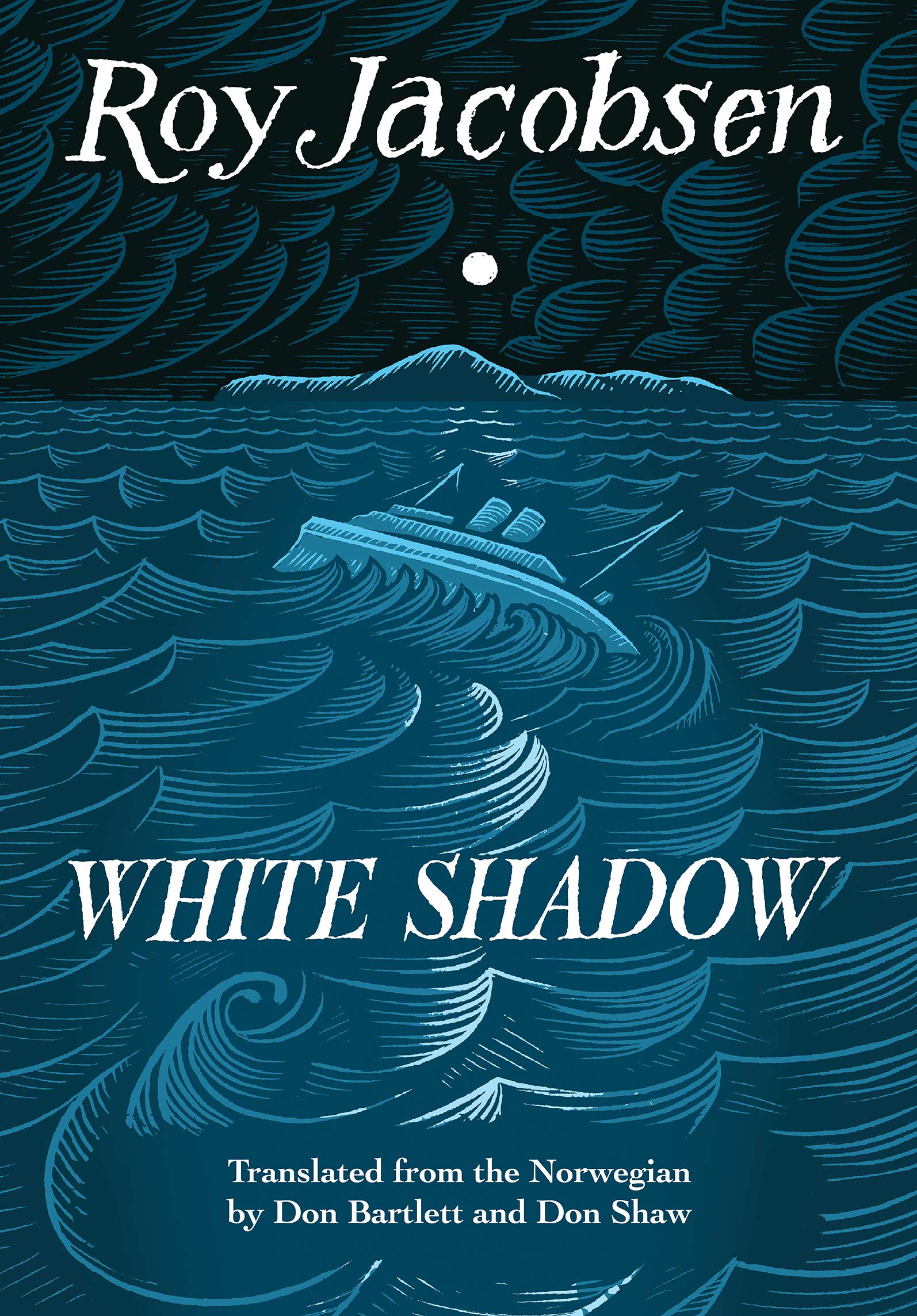
Review 2175: White Shadow

In this second book of Roy Jacobsen’s Barrøy trilogy, it is World War II and the Nazi’s have invaded Norway. The small island of Barrøy, the home of Ingrid’s family, has been evacuated. Ingrid has been living on the main island working in the canning factory, and her family is dispersed.

One day Ingrid defies the Germans and gets on a boat to row back to Barrøy. She goes into her family home without paying much attention to signs that someone has been in it, and it’s as if her brain refuses to see at first that there are dead bodies on the shore. A German ship carrying Russian prisoners has been bombed. She spends a day covering and burying bodies but eventually finds one man alive—a Russian, badly injured, up in the loft of the house.

Ingrid takes care of him but also must keep him safe from the Germans, who are observing her from the main island. She also is trying to bring the farm back into shape and fish to feed them.

The novel takes us to the end of the war, during which Ingrid has a difficult time.

Jacobsen tells this story with his usual pure, spare prose, a moving novel about human transcendence over great difficulty. I just love this series.

Related Posts

The Unseen

We, The Drowned

The Flight Portfolio

Review 2174: The Black Spectacles

Detective Inspector Andrew Elliot is vacationing in Italy when he overhears an English party discussing some poisonings in a town back home. He is struck at first sight by Marjorie Wills. This proves to be unfortunate, because when he returns home, he is assigned the poisoning case and Marjorie is a suspect.

The poisoning case involves someone substituting poisoned chocolates for harmless ones in a local shop. One boy has died. However, this case is soon overshadowed by the murder of Marcus Chesney, Marjorie’s uncle, under bizarre circumstances. Chesney has a hobby horse that people aren’t observant, so he designs a demonstration of his point. During the demonstration, a bizarrely dressed man comes in to the room where Chesney is manipulating objects at a desk and forces a capsule down his throat. Although this is part of the demonstration, it is not part of it for the capsule to be poisoned. Chesney dies and his assistant is found outside bashed over the head. Later, the unconscious assistant is also poisoned.

Present are Chesney’s friend Dr. Ingram, the assistant, Marjorie, and Marjorie’s fianceé, George Harding, whom she met on the trip. Not present is Dr. Joe Chesney, Marcus’s brother, out on a house call.

As Elliot investigates, things keep pointing to Marjorie, but he can’t prove anything. Finally, he asks Gideon Fell for help.

The Black Spectacles is supposedly Carr’s most popular book, even though it doesn’t feature a locked door mystery, his specialty. I enjoyed it a lot, more than the other books I’ve read by Carr, although I immediately picked out the killer and never wavered. Still, I never figured out exactly what was going on during the demonstration.

I received this book from the publisher in exchange for a free and fair review.

Related Posts

The Seat of the Scornful

The Lost Gallows

Sad Cypress

Review 2173: Iza’s Ballad

When Ettie Szȍcs’s husband Vince dies, she is terrified of being left alone in her house in the small town where they’ve lived for many years. So, she is relieved when her daughter Iza tells her Ettie will come to live with her in Pest, in her modern apartment. Iza has always been the light of her and Vince’s lives, a proud defender of her father as a child after he was dismissed from his position as a judge for political reasons, an excellent student who worked against the Nazis during the war, now a respected doctor, a post-Stalinist modern woman. Ettie also has an invitation to stay in her own house with Antal, her ex-son-in-law, who bought it. But even though she still treats Antal like a son, she pays little attention to his invitation. In fact, she is more than a little befuddled by grief.

Iza is self-assured and always tries to do the right thing. However, she allows her mother no input into her own fate. She arranges to sell her mother’s house to Antal and puts her mother on a train directly after the funeral, not even giving her time to attend the little gathering that was planned. When eventually Ettie arrives in Pest expecting to see her furniture and little keepsakes, she finds Iza has sold or given away most of her possessions.

Ettie just wants to be useful. Although a simple soul who is easily frightened, she is still an active woman in her 70’s who is used to doing everything for herself and her husband. In Pest, she thought she could cook and clean for her daughter, but Iza has a housekeeper and doesn’t want Ettie to interfere. Iza believes Ettie should be happy to relax, but Ettie literally has nothing to do.

Iza works hard and then wants time alone or with her friends. It takes a remark from Domokos, Iza’s lover, to make her realize that Ettie is lonely. But even when they try to arrange a treat for Ettie, it’s something they want to do rather than something that would please Ettie.

The introduction to the NYRB edition says the novel asks what to do with the old and talks about Ettie’s inability as a country person to adapt to the city, but I think this novel is more a character study of Iza, a person who always thinks she knows best and is blind to the feelings of others. Her marriage to Antal was her only failure, and she still doesn’t understand why he left, since he was clearly in love with her. It’s a fascinating but sad novel.

Related Posts

Abigail

The Invisible Bridge

Effi Briest

Review 2172: The Seven Moons of Maali Almeida

Just by coincidence, The Seven Moons of Maali Almeida is the second book set in Sri Lanka that I’ve read in a few months. It is part of my Booker Prize shortlist project.

It’s December 1987 and Maali Almeida is dead. He finds himself watching his body being thrown into a lake, but he can’t remember who killed him or why. A photographer, a gambler, an irresponsible and unfaithful gay lover, Maali had a purpose—to reveal the photos he’s taken of the carnage and double-dealing involved in the civil war in the hopes of stopping it.

Faced with a grotesque and bewildering afterlife, Maali is determined to get his two friends, Jaki, who is in love with him, and DD, her cousin with whom Maali was in love, to find his hidden photographs and make sure they are seen. To do this, he has to figure out the inconsistent rules of the In Between, avoid being consumed by the demon Mahakali, and learn how to be heard by humans.

As with Lincoln in the Bardo, I was not enamored of Karunatilaka’s conception of the afterlife nor was I very interested in the philosophical ramifications of Maali’s conversations with other dead people, demons, and animals. However, I was very interested in his depictions of Sri Lanka’s war and got dragged into the action almost despite myself. His humor is not mine, however.

Related Posts

Lincoln in the Bardo

A Passage North

The Cat’s Table

Review 2171: Stories for Christmas and the Festive Season

Although May is an odd time to review a collection of Christmas stories, I didn’t receive a copy of this book until much after the season. This entertaining collection is ordered by when the story occurs during the festive season and includes works by women published during the 20th century. Some of the authors are well known and others are only remembered now for a specific work. The introduction by Simon Thomas discusses each story in turn and tells something interesting about it.

The first story, “The Turkey Season” by Alice Munro, provides insight into a side of the holidays we may not have considered, factory workers processing turkeys. As usual, Munro is a masterly storyteller.

Some of the stories are amusing, such as “This Year It Will Be Different” by Maeve Binchey, about a housewife who goes on strike during the holidays, or “Skating” by Cornelia Otis Skinner, about a woman’s attempt to learn ice-skating. Others start out amusing but have a deeper meaning, for example, “The Christmas Pageant” by Barbara Robinson, about what happens when “the worst children in the world” get involved in the pageant or “Christmas in a Bavarian Village,” which subtly foreshadows World War II.

I especially liked “The Little Christmas Tree” by Stella Gibbons, about how a solitary woman’s Christmas plans are changed with the arrival of some children and “The Christmas Present” by Richmal Crompton, about an unusual gift passed down in the family from mother to daughter. The book finishes with a sprightly monologue by a black maid in “On Leavin’ Notes” by Alice Childers.

I received this book from the publishers in exchange for a free and fair review.

Related Posts

The Mistletoe Murder and Other Stories

A Christmas Carol

A Christmas Party

Review 2170: The Road

When I briefly researched to find out what the second book in John Ehle’s Mountain series was, I came up with The Road. However, the end of the novel indicates that one other book precedes it, and Goodreads lists it as #4, the last one. (Looking back, I see I found a site that recommended they be read in that order, with the last one second.) In any case, the novels don’t seem to be closely linked, only featuring the same families.

The Road begins 100 years after The Land Breakers, in 1876. Weatherby Wright, an engineer born and raised in the mountains, has been tasked with building a railroad from the eastern part of North Carolina up the mountains to the Swannanoa Gap. This railroad will help the mountain dwellers take their crops to market and make medical and other kinds of help available to them. However, no one knows if the effort can be successful.

Most of the novel focuses on Wright and the details of this difficult project. He is dependent mostly on convict labor and hires as the project accountant Hal Cumberland. Another plot is the romance between Cumberland and a mountain girl, Henry Anna Plover.

The novel is powerful at times but at other times reads like a series of anecdotes passed down in the family that don’t really link up into a coherent story. The character of Weatherby is not always involved because of health reasons.

Related Posts

The Land Breakers

Giants in the Earth

Days Without End

Review 2169: The House on Half Moon Street

In Victorian London, Leo Stanhope is leading a difficult existence as a clerk for a hospital mortuary. His only extravagance is a weekly trip to the whorehouse, where he meets Maria, with whom he is madly in love. She is one of only a few people who knows his secret—that he was born a girl but has always believed he’s a boy. At 15, he left a comfortable home to live as a man.

One day the body of a murdered woman arrives at the mortuary. It is Maria, who did not turn up for the date they had for Saturday. Leo is soon brought in for questioning, but he is let go, and he becomes obsessed with trying to find Maria’s killer. He believes that her death may be related to that of another corpse brought in a few days before.

Of course, Leo finds that almost nothing Maria told him about herself was true, and that leads me to the first general discomfort I had with this novel even before Maria’s body turned up. That is, I really hate the trope of a young man being obsessed with a woman who is leading him on, especially one who exhibits stalker behaviors. If that wasn’t bad enough, Reeve puts Leo through so much physical and mental torment before he’s through that it made me very uncomfortable.

I think the mystery was complex and interesting, but Leo, who is self-obsessed and humorless, reminded me a lot of C. J. Sansom’s depressing hero, Matthew Shardlake. At one point, another character tries to point out that he is not only jeopardizing his own life but hers, but he thinks only of himself and continues to go on the same way.

Related Posts

Special Assignments: The Further Adventures of Erast Fandorin

The Gods of Gotham

Rustication

If I Gave the Award

With my review of The Deadman’s Pedal, I have finished reading the shortlisted books for the 2013 James Tait Black Fiction Prize. Therefore, it is time for my feature, where I decide whether the judges got it right. This year the shortlisted choices couldn’t be more different. They range from a very cerebral novel that traces a family history by imitating a classical bagpipe musical form to a less cerebral depiction of a deceptive personality to two novels about young people trying to find their way. Although all of these novels are about personal topics, I have ordered them in this paragraph from the most intellectually removed to the least.

The most cerebral of these novels is The Big Music by Kirsty Gunn. This novel traces relationships between fathers and sons by using a classical form of bagpipe music as its organizing structure. It is a form dependent on repetition and embellishment, so although I found this novel high in concept, it was also a bit fascinating. Still, the repetitions proved a bit much for me.

The next most cerebral of the novels is Leaving the Atocha Station by Ben Lerner. This is a novel about a poet who considers himself a fraud and spends his time arranging his face to look intelligent or thinking of profound things to say. The novel is funny at times, but I found myself getting lost in its logical circumlocutions and I strongly disliked the main character (not that that is necessarily bad).

At the beginning of the award-winning The Deadman’s Pedal, I found myself heartily disgusted by teenage boys and the love critics have for coming-of-age novels, those about boys, anyway. Then as the young Scottish protagonist went to work for the railroad, I got more interested until the book became mostly about adolescent sex.

That leaves me with The Panopticon by Jenni Fagan, although I am not entire satisfied with my choice. I was absolutely rivetted by this story of a vivid young girl who has been failed by the system. However, I also believe that in some ways this book is slighter than some of the others. I will say, though, that of these four authors, Fagan is the only one whose other books I have looked for.