Review 2143: Death of an Author

Death of an Author wasn’t my favorite book by E. C. R. Lorac, but it certainly is a clever one. And Lorac airs that recurring question, Can a women’s writing be differentiated from a man’s? in her book set in the publishing world.

Andrew Marriott, the managing editor of a publishing company, is asked by one of his best-selling authors, Michael Ashe, to invite another of his authors, Vivian Lestrange, to dinner along with himself. Since Lestrange is a recluse, this subterfuge is necessary if Ashe is to meet him. Lestrange accepts, and Ashe is astonished to meet a self-possessed young woman.

A few months later, the same young woman goes to a police station. There she explains that she is Eleanor Clarke, the secretary for the author Vivian Lestrange, and she fears something has happened to her employer, as when she tried to go to work, no one answered her knock.

The police find the house impossible to enter except through a walled door and have to climb a ladder to get in. They find a perfectly cleaned house with no one inside but open French doors with a bullet hole through one. Miss Clarke says that not only is her employer missing but his housekeeper, Mrs. Fife, is not even known at the address she gave Clarke.

Inspector Bond is suspicious of Miss Clarke, and after some investigation shows no proof that Lestrange even existed, he theorizes that she was the author of the Lestrange books and is for some reason spoofing the police. However, Chief Inspector Warner is inclined to believe her, and his belief seems justified when a body with Lestrange’s notebook in his pocket is found burned up in a remote cottage.

After learning about Michael Ashe’s interest in Lestrange, the police look for him, but he appears to be out of the country. However, the timing of his departure makes it feasible for him to be the killer.

The detectives find a possible connection to two brothers, one of whom embezzled funds from a trust both were responsible for and escaped, while the other served in prison for it claiming he was innocent. Could one of the authors be one of these brothers? or both?

Although I had a feeling that the police made a mistake about the brothers, I did not figure out exactly what happened. I’m not quite sure why I didn’t enjoy this one as much as some others by Lorac, though.

I received this book from the publisher in exchange for a free and fair review.

Related Posts

Post after Post-Mortem

Checkmate to Murder

Death of a Bookseller

Review 2142: A Passage North

Readers looking for a fast-paced novel will not find one in Anuk Arudpragasam’s A Passage North. Instead, they’ll experience a novel that’s meditative and introspective.

Krishan returned several years ago to his native Sri Lanka after living away in India during his education. He returned when his relationship with Anjum ended determined to help his people in northeastern Sri Lanka after the end of the Tamil rebellion. However, after two years, he has retreated to the city of Colombo, where he lives with his mother and grandmother.

At the beginning of the novel, he learns of the death of Rani, a woman who had been caring for his grandmother and had helped her come back from a mental and physical breakdown. Rani herself had been severely depressed after the death of both her sons as a result of the war, and the work with his grandmother had begun as a help to her state of mind as well as his grandmother’s comfort. However, after Rani returned for family business to her village in the northeast, she kept delaying her return and finally died by falling into a well.

Krishan decides to attend Rani’s funeral, and this long trip into the northeast of his country gives him ample opportunity to dissect his relationship with Anjum, his own motives in returning to Sri Lanka, the possibility of Rani’s suicide, and many other issues.

Arudpragasam likes long, involved sentences with many clauses, embedded in paragraphs that sometimes continue for pages. His prose is dreamy and meandering. Krishan spends so much of his energy considering all the ramifications of everything that even though he acts, he seems oddly inert.

I found the sections about the recent history of Sri Lanka very interesting, but Arudpragasam assumes a knowledge of the situation there that I do not have.

I read this book for my Booker Prize project.

Related Posts

Burnt Sugar

The Lives of Others

The Sapphire Widow

Review 2141: The Foundling

As a young woman, Bess Bright, a shrimp seller, has a first sexual encounter with Daniel Callard, a merchant. He disappears, leaving her with only a keepsake, half a whalebone heart, and a pregnancy. In 1748 London, she and her father, who already support her lay-about brother, cannot afford to keep the baby, so she takes her newborn daughter to a lottery at a foundling hospital, and she is accepted. She leaves the half heart as an identifier, so she reclaim her daughter.

Six years later, Bess believes she has saved enough money to redeem her daughter. But when she returns to the foundling hospital, she is told that she herself redeemed her daughter one day after leaving her, even identifying the keepsake.

Bess has discovered that Daniel died a few months after their encounter and that he was married. When she goes to consult Dr. Mead of the foundling hospital, he takes her to chapel, where she sees Mrs. Callard. With her is a six-year-old girl that Bess knows immediately is her daughter.

With unwitting help from Doctor Mead, Bess gets a position as a nursemaid with Mrs. Callard. There, she finds a strange household, where no one leaves the house except for the weekly chapel visit. Here the point of view shifts to that of Alexandra Callard, a woman full of fears and given to ritual.

I thought I had read a book by Stacey Halls before, but I was mistaken. I was at first disturbed by the first person narration, because it sounds nothing like a woman of Bess’s time and lack of education. Also, the first person narrative taken up later by Alexandra doesn’t sound like a different person. Hall could have easily avoided this problem by employing limited third person instead.

I got accustomed to the narrative style eventually and was pulled along by the story. However, without saying what it was, I found the ending spectacularly unlikely, especially the sudden change in Alexandra.

Related Posts

Birdcage Walk

The Mermaid and Mrs. Hancock

The Bass Rock

Classics Club Spin #33!

Classics Club has announced another spin. How does a spin work? Members post a numbered list of 20 of the books from their Classics Club lists by Sunday, March 19. The club picks a number, and that’s the book members try to read and post a review of by Sunday, April 30. Anyone can participate who has a Classics Club list registered with the club.

So, here is my list for the next spin:

  1. Isa’s Ballad by Magda Szabo
  2. Cecilia, Memoirs of an Heiress by Fanny Burney
  3. The Book of Dede Korkut by Anonymous
  4. Love’s Labour’s Lost by William Shakespeare
  5. Miss Mole by E. H. Young
  6. Weatherley Parade by Richmal Crompton
  7. Our Mutual Friend by Charles Dickens
  8. A Double Life by Karolina Pavlova
  9. Hero and Leander by Christopher Marlowe
  10. The Tree of Heaven by May Sinclair
  11. The Tavern Knight by Rafael Sabatini
  12. The Prophet’s Mantle by E. Nesbitt
  13. Incidents in the Life of a Slave Girl by Harriet Jacobs
  14. The Passenger by Ulrich Alexander Boschwitz
  15. Merkland, A Story of Scottish Life by Margaret Oliphant
  16. Tis Pity She’s a Whore by John Ford
  17. The Return of the Native by Thomas Hardy
  18. The Moorland Cottage by Elizabeth Gaskell
  19. Les Misérables by Victor Hugo
  20. The Ten Thousand Things by Maria Dermoût

Hope some of you will join me. Have fun with the spin!

Review 2140: Postern of Fate

Postern of Fate is the last of Christie’s Tommy and Tuppence novels. In reading them in order, I chose not to revisit By the Pricking of My Thumbs because I had posted its review several years ago. Since Christie aged these characters along with the years, in 1973, when this book was written, we find Tommy and Tuppence in their 70’s.

The Beresfords have sold their London apartment and bought a house in a small village. This activity has resulted in renovations and clearings out, as apparently the previous occupants made no effort to remove everything. Tuppence finds a lot of old children’s books, and as she’s sorting them, she naturally begins dipping into them. In Stevenson’s The Black Arrow she finds a basic code made from reading only the first letters of some underlined words. It says, “Mary Jordan did not die naturally. It was one of us.” By asking around the village about the history of the house, she finds that Mary Jordan worked for the Parkinsons before World War I. She was thought to be a German spy. Tuppence also finds the gravestone of Alexander Parkinson, the boy who owned the book, who died at fourteen.

Tommy in the meantime has met with some old contacts and found that Mary Jordan was indeed a spy but for the British side, sent to infiltrate a nest of Nazis. It’s believed that papers are still hidden in the house that would affect some people now high in the government.

Although this book has an intriguing premise, I don’t think it was one of Christie’s best. For one thing, early on Tuppence finds an object that is later referenced several times before she figures out the connection. To me, it was all too obvious just from the first reference, but it takes Tuppence another 100 pages or so.

However, Tommy and Tuppence are still a pleasing pair, and there is even some danger. Tommy and Tuppence save the day with the help of their dog, Hannibal, who was himself an entertaining character.

Related Posts

N or M?

By the Pricking of My Thumbs

Partners in Crime

Review 2139: French Braid

In 2010, Serena and her boyfriend James run into her cousin Nicholas in the train station. James is surprised that Serena isn’t quite sure it is him and doesn’t seem to know much about her Uncle David’s family. French Braid explores the roots of this division in the family, beginning in the 50s or 60s.

It begins with a family vacation, the only one the family every took. Robin Garrett isn’t very at home on the lake. He is interested in gadgets but finally finds a fellow vacationer to talk to. Mercy Garrett gets preoccupied with her painting, and neither she nor Robin seem to think there is anything wrong with their 15-year-old daughter Lily hanging out with a college-age boy. Silly Lily thinks her new boyfriend is going to ask her to marry him. We see most of this holiday from the point of view of Alice, the older girl, who is worried about Lily. Mercy is at least attuned to her youngest, eight-year-old David, and notices that something has happened while Robin was teaching David to swim.

As with other Tyler books, the attention isn’t always focused on Alice. The next section is about Mercy and how she gains her independence after David leaves for college. Both his sisters are now married, but Lily has decided she picked the wrong man. Mercy looks for word from David, but he begins his separation right after he leaves for college, and we don’t find out why until the end of the novel.

Tyler employs some of her tropes here—the work-obsessed husband and the ditsy wife for one—and is occupied with the same generations she usually deals with. But her characterizations are always rich and empathetic, her stories always interesting. This one is right up there as she explores the intricate connections of family life.

Related Posts

A Spool of Blue Thread

The Amateur Marriage

Breathing Lessons

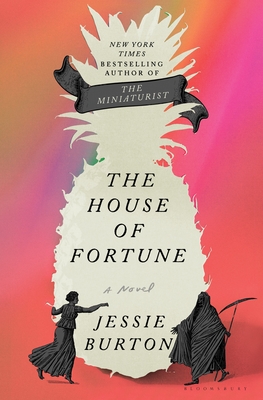
Review 2138: The House of Fortune

It’s 1705, 18 years after the end of The Miniaturist. Nella Brandt is worried about her niece Thea’s future. Although her husband Johannes’s death left them fairly well off, his black servant Otto has not been trusted by Amsterdam businessmen to keep the business running. Instead, Otto has been working for an import company in a low-paying job. They are broke, and the only future Nella can see for Thea is to marry. However, there is the issue of her illegitimate parentage as the daughter of Maris, Johannes’s sister, and Otto, the servant, which the family has kept secret.

Thea has other ideas. She is young and romantic and devoted to the theater, where she has befriended Rebecca, a principal actress. But she hasn’t been spending as much time with Rebecca lately, because she is in love with Walter Riebeeck, a set painter. She disdains Aunt Nella and her attempts at an appearance of respectability, in full teen rebellion.

Nella gets Thea an invitation to a society party in hopes that she’ll meet a young man, and she does meet Jacob van Loos, a young lawyer. At the party, though, Nella believes she senses the miniaturist, whom she has not heard of in 18 years. And Thea receives a miniature of Walter.

Although I didn’t find The House of Fortune quite as fascinating as The Miniaturist, it is still a worthy successor. However, there is so much arguing in the first part of the novel that it put me off, and Nella isn’t sympathetic until later in the novel. Plus, I found Thea to be a spoiled little brat at first and her romantic tragedy all too foreseeable. However, Burton still managed to make the book compelling.

Related Posts

The Miniaturist

The Muse

The Last Painting of Sara De Vos

Review 2137: Summerwater

Summerwater is a novel composed from brief vignettes that at first seem so disconnected as to be short stories. However, connections appear slowly.

Staying in a collection of cottages on an island in a large Scottish loch are a group of disparate people. The novel alternates point of view to tell their stories over one very wet day. In between each of these chapters is a shorter vignette about what is happening in the surrounding forest.

Justine has an obsession for running, possibly to get away from her family. But she has a secret about her running. David and Mary, an elderly couple, are navigating Mary’s growing decrepitude and memory loss. Milly and Josh are an engaged couple working on their sex life, but Millie would just like a bacon sandwich. Lola, a young girl, takes out her father’s xenophobia on a little Ukrainian girl. Alex, about fourteen, stays out in his kayak a little too long. Becky, his older sister, is so bored she wants to burn the place down. Claire is so unprepared when her husband gives her a break from the kids that she can’t figure out what to do with it. And so on.

We’re told at the beginning that there will be a death, which adds to the tension. A couple of the vignettes got old—the one about sex, even though it was funny, and the thoughts of indecisive Claire. Despite the activity, I found the work slow moving and contemplative.

Related Posts

Not the End of the World

Heads of the Colored People

The Spinning Heart

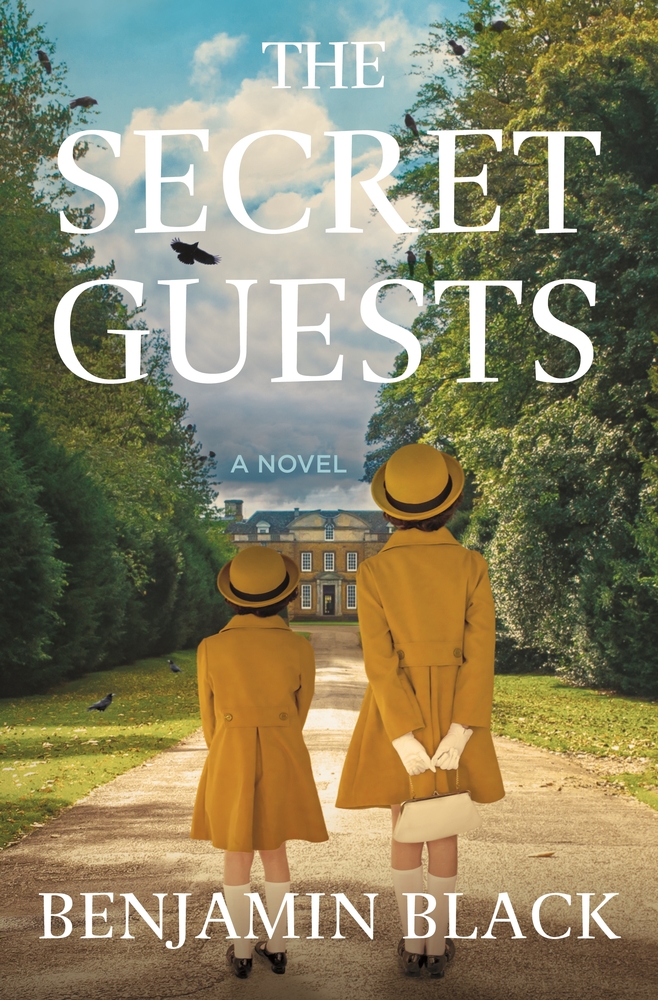
Review 2136: The Secret Guests

A while back, I tried reading a mystery by Benjamin Black, a pen name for the writer John Banville. It made me interested enough to try another book by him.

During the Blitz, the British government decides to send the two princesses, Elizabeth and Margaret, away for safe-keeping. Ireland is selected, presumably because it is neutral. Garda Detective Strafford, who is assigned to security, thinks the choice of Ireland is crazy, because there are still many people in the newly independent Ireland who hate the British, but the British involved don’t seem to know that. Celia Nashe, the MI5 agent assigned, just wants to break through the old boys club and get a decent mission.

So, Celia and the princesses are sent, otherwise unaccompanied, to join the household of the Duke of Edenmore with only Strafford for company, surrounded by a hidden detachment of incompetent Irish army men. Clonmillis Hall proves to be a castle—ramshackle, comfortless, cold, and poorly run.

No, this isn’t Cold Comfort Farm but a pretty good thriller, as the local IRA agent finds out who the girls are and notifies his contacts in Belfast. But first we see the discomfort of Nashe and Strafford, the homesickness and boredom of the girls.

Nothing much about this semi-literary thriller is predictable. The girls are lightly characterized—Elizabeth as reserved and priggish, Margaret as sly and mischievous, but still with sympathy. Although the novel changes point of view, it sticks mostly with Strafford. An interesting, engrossing read.

Related Posts

Christine Falls

Last September

The Fall of Light