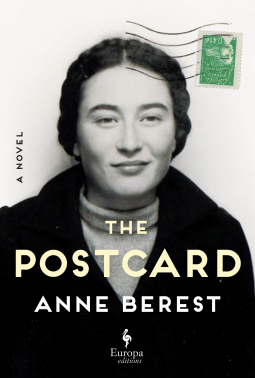
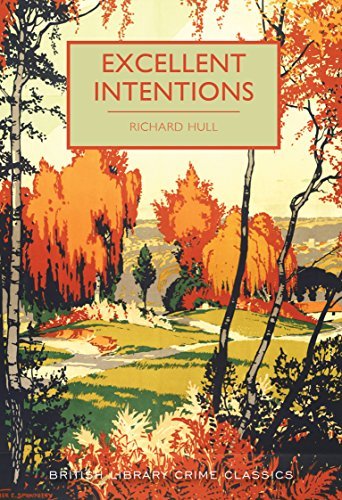
The Best Book for this period is The Leviathan by Rose Andrews!
Review 2190: Bleeding Heart Yard
Detective Inspector Harbinder Kaur has transferred to London, where she is just meeting her two flatmates and her new team. Then she gets a high-profile case—while attending a school reunion, Conservative MP Garfield Rice, called Gary by his friends, has died of an apparent cocaine overdose. The only thing is, his friends say he doesn’t take drugs.
Attending the reunion are some notable figures—Isabelle Ister, a famous actress; Kris Foster, a rock star; Henry Skep, Labour MP—who used to belong to a popular group in school called The Group. Also members of The Group were Anna Vance, a teacher now living in Italy who is in London caring for her dying mother, and Cassie Fitzberbert, Harbinder’s Detective Sergeant. We know right from the beginning that Cassie believes she killed a boy when she was in school.
Of course, it turns out that Gary was murdered by an injection of insulin. His friends find it hard to believe, because Gary was liked by everyone.
There turns out to be more than one line of inquiry. Gary had received several anonymous letters featuring a bleeding heart, and he was regularly meeting other Conservative leaders at a restaurant in Bleeding Heart Yard. Also, the team learns that during exam week before the reunion attendees graduated years ago, a boy named David died when he fell in front of a train, and Gary was the principal witness. Harbinder wonders if David was actually pushed.
The book alternates narrators with members of The Group in first person and Harbinder in third person. I don’t remember if Griffiths used this form of narration in the other Kaur novels, but it began to irritate me. First, the first-person narrators should each sound different, but they don’t. More importantly, with the narration skipping around across very short chapters, the novel started to feel choppy.
So far, I have enjoyed the Harbinder Kaur series, but I didn’t like this one as much, despite it having an unpredictable ending. I still like Griffiths’ Ruth Galloway series best.
Related Posts
Another Classics Club Spin!
Classics Club has just announced another spin. How does the spin work? Club members select 20 books from their Classics Club list and post them in a numbered list by this coming Sunday, June 18. The club then picks a number and that determines which book you read next, attempting to post a review by Sunday, August 6. So, with no further adieu, here is my list for the spin:
- Dust Tracks on a Road by Zora Neale Hurston
- The Deepening Stream by Dorothy Canfield Fisher
- The Princess of Cleves by Madame de La Fayette
- Our Mutual Friend by Charles Dickens
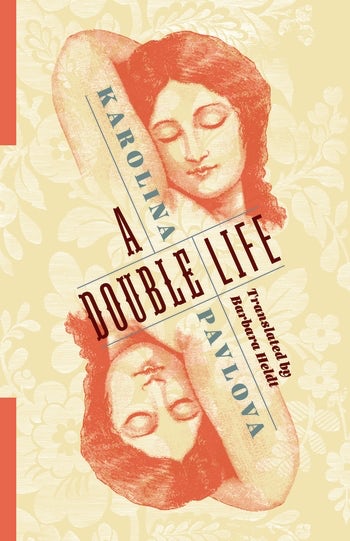
- A Double Life by Karolina Pavlova
- Castle Rackrent by Maria Edgeworth
- The Methods of Lady Walderhurst by Frances Hodgson Burnett
- Incidents in the Life of a Slave Girl by Harriet Jacobs
- Tis Pity She’s a Whore by John Ford
- The Tavern Knight by Rafael Sabatini
- The Tree of Heaven by May Sinclair
- The Passenger by Ulrich Alexander Boschwitz
- Miss Mole by E. H. Young
- Merkland: A Story of Scottish Life by Margaret Oliphant
- The Three Musketeers by Alexandre Dumas
- Cecilia, Memoirs of an Heiress by Frances Burney
- Love’s Labour’s Lost by William Shakespeare
- The Book of Dede Korkut by Anonymous
- The Return of the Native by Thomas Hardy
- The Book of Lamentations by Rosario Castellanos
Are you participating in the spin? Which book would from your list do you hope is picked?
Review 2189: Faith Fox
The cover of my Europa edition of Faith Fox is a little misleading, because although the plot of the novel revolves around a child, the child is a baby, not the young girl shown on the cover. You have to wonder sometimes if the artist ever reads the book or even knows what it is about.
When Holly Fox dies in childbirth, her mother Thomasina can’t bear to see the baby, Faith. The baby’s father, Andrew Braithwaite, seems oddly uninterested in her and anyway works brutal hours in the hospital. So, he decides to take her to his brother Jack, an Anglican priest who runs any experimental farm up in Yorkshire.
Jack is a sort of living saint, whose work barely supports a small community made up of ex-cons and Tibetans. The down side of this is his lack of sense. He trusts everyone, has no concept of a feasible project, and tends to forget the practical aspects of life. His little community lives in extreme discomfort and doesn’t accomplish much. He forgets Faith almost as soon as she arrives and his wife Jocasta has her reasons for avoiding Faith—she has been in love with Andrew since they met, but he could not afford to marry. So, he dropped her and her son off at Jack’s and later got engaged to Holly.
In fact, the only people yearning to see and care for Holly are Andrew’s parents, Toots and Dolly. But they are elderly and Andrew avoids bringing her to visit. Philip, Jocasta’s ten-year-old son, also cares about Faith and worries about her at school, but her care is basically left up to the Tibetans.
In the meantime, Thomasina scandalizes her friends by missing her daughter’s funeral to go to Egypt with Giles, an elderly colonel she just met. And Andrew and Jocasta have revived their affair after he brought Faith up to Yorkshire.
Gardam certainly has a gift for depicting dotty upper-class characters, selfish people, and hopeless charitable projects in the novel, as well as some peculiar lower-class characters. She also clearly understands the workings of grief, both bereavement and the lovesick kind. I’ve discovered Gardam late, but I’m really enjoying her.
Related Posts
Review 2188: Which Way?
Which Way? is an early speculative novel about how a small choice can affect the rest of your life. After a beginning section that introduces us to Claudia Heseltine and gets her to the age of 22, she is presented with a choice of invitations—two by letter and one by phone—for the same weekend. Then the rest of the novel is split into thirds depending upon the invitation she decides to accept.
Claudia is a popular girl with intellectual and cultural interests. She has a close friendship with Hugo Lester, and at the point where the decision comes in, she has promised to visit his family home, and it is clear that he plans to propose to her. So, selecting another of the invitations means breaking her promise.
I found interesting what Benson makes of Claudia’s three fates and how these reflect the times. In two stories she marries, although only in one does she marry Hugo. In one she has a romantic (as opposed to sexual) affair with a married man and in another a full-fledged affair with the same man. All of the stories involve some pain, but Claudia herself changes with the situations she is in, so that in the story where she is faithful to her husband she seems the most superficial and frivolous.
Although, interestingly, she ends up happiest in the story where she remains single, she thinks she has missed the most important things in life—which are, of course, marriage and motherhood. There’s no happy career girl in the novel, although Simon Thomas points out in the Afterword that at her marriage she is much more innocent than he would have expected for the 1920s. In both stories in which she is married, she spends her honeymoon crying after ignoring the vaguely ominous things her mother tries to tell her.
I thought this book was most interesting as a portrait of the times, for the choices that are available and how Claudia views them.
I received this book from the publisher in exchange for a free and fair review.
Related Posts
Review 2187: Dead Woman Walking
I enjoyed Sharon Bolton’s thriller The Craftsman, but I have to say that I had lots more problems with Dead Woman Walking.
Jessica and her sister Isabel are on a hot-air balloon excursion in Northumberland National Park with 10 other passengers when they pass low over a farm and see a man beating a girl over the head with a rock. The man has a rifle, and once he notices them, he starts firing at them. They get away, but then they find that the pilot’s head has been shot off. In trying to flee and land the balloon, they make several mistakes and end up crashing.
The man has followed them through the forest on an ATV, so by the time the police get there, all the passengers that can be found are dead, apparently from the crash. Jessica, however, is missing. The police can’t figure out why she seems to be fleeing rather than trying to contact them, especially as it turns out she is also a police officer.
The plot switches between the investigation by Detective Alex Maldanado, the past history of Jessica and Isabel, and the hunt for Jessica by the murderer. It is written, especially at first, in short chapters and paragraphs which I think are supposed to heighten the urgency but instead irritate. I didn’t really buy that a man firing a rifle from the ground could shoot off the pilot’s head, but even if he could, I found that detail unnecessarily gruesome. There is enough to indicate he’s a ruthless killer.
None of the characters are well defined, even Jessica and Isabel. There are family secrets confusing the issue, and Jessica’s investigation to find out about. And speaking of which, the odds of the balloon going over this particular farm seem very low, even given my knowledge having read the book.
Finally, Bolton has a big reveal at the end, only I guessed it about halfway through the book.
Although Bolton starts with an interesting idea, it’s not a very thrilling book. In fact, it dragged for me in several places.
Related Posts
Review 2186: Eyes of the Rigel
This third novel in Jacobsen’s Barrøy trilogy has Ingrid Barrøy leaving remote Barrøy Island at the end of World War II to find the father of her daughter. Alexander was a Russian prisoner of war whom she rescued after the prison ship, Rigel, sank.
Ingrid only has faint leads as she rows, walks, takes the train, and rides the bus from one place to another in Norway, bringing her infant daughter with her. She starts with the people she left Alexander with after she smuggled him off the island and follows the trail from one person or location to another. None of the people she meets seem eager to help her, and she continually feels that they are lying. Ingrid is surprised to learn that not all people are happy the war is over, and she is naïve about lingering resentments and distrust.
I have been completely entranced by these books and felt that this was a fitting ending to the series. Ingrid is brave and determined, the writing is beautifully spare, the journey difficult and unpredictable.
Related Posts
Reading Thirkell’s Barsetshire Series in Order: #25 Never Too Late + #24 Enter Sir Robert Wrap-Up
I only had one person with me for the last book, so I was hoping we had more participation for Enter Sir Robert, which Thirkell ended with a little inside joke, so I steamed on ahead and hoped that somebody would join me and two of my stalwarts did. For the last five books, I’m in uncharted territory, for I haven’t read any of them. In any case, my thanks to any who are still keeping up or making comments. They are
- Liz Dexter of Adventures in Reading
- Penelope Gough
The next book is Never Too Late, and I’ll be posting my review on Friday, June 30. I hope someone will join me in finding out who is not too late and for what.
And here’s our emblem.
Review 2185: The Transit of Venus
The Transit of Venus spans the 1950s through the 1970s. It is a modernist exploration of the love affairs, both unconsummated and consummated, of the characters surrounding two Australian sisters in England, Caroline and Grace Bell.
The novel begins when Grace Bell is engaged to Christian Thrale. Grace is a few years younger than her sister Caroline, who is 21. Both are staying with the Thrales when Ted Tice, an astronomy graduate, arrives to plan the placement of a new telescope with Professor Sefton Thrale, Christian’s father. Ted, who is shabby and unprepossessing at the time, falls in love with Caroline at first sight.
Caroline, for her part, falls in love with Paul Ivory, whose play is being produced and who has just become engaged to Tertia Drage, the daughter of a neighboring lord. Caroline and Paul have an affair, but Paul drops her for Tertia, choosing position and wealth over love.
Caroline is devastated. She goes off with a friend of the Thrales, a middle-aged roué who has been bedding Tertia, but she ends up in London, working at a poorly paid government job and leading a bleak existence. All the while, she is loved by Ted Tice.
As the years go by, most of the main characters of the novel are overtaken by love. Caroline and Paul rekindle their affair for a time, but Caroline eventually happily marries a wealthy American philanthropist, Adam Vail. Christian becomes briefly obsessed with a young secretary, while Grace falls deeply in love with her son’s noble doctor. Grace and Caroline’s difficult older half-sister marries, to their relief, but then is robbed and abandoned by her husband.
Until the ending of the novel, I felt that the novel was a fairly detached examination of these various relationships in terms of the dynamics of who holds the power. Then Caroline learns a secret that makes her re-examine her entire adult life and made me re-evaluate my liking for the book. It turns everything on its head and makes the novel a great one.
Related Posts
Review 2184: Literary Wives! The Harpy
Today is another review for the Literary Wives blogging club, in which we discuss the depiction of wives in fiction. If you have read the book, please participate by leaving comments on any of our blogs.
Be sure to read the reviews and comments of the other wives!
- Lynn of Smoke and Mirrors
- Naomi of Consumed By Ink
- Rebecca of Bookish Beck
My Review
Lucy writes copy from home and is raising her two small sons, having given up greater career ambitions upon motherhood. Although bored, she is reasonably content until she finds out her husband, Jake, has been having an affair with an older coworker.
Lucy, whom we eventually learn grew up with a physically abusive father and a psychologically abusive mother, has always been fascinated by harpies. She is immediately filled with rage, yet she is also embarrassed by the concern of her friends once she realizes they all know, and in some ways she seems to find fault with herself. She thinks she is a poor housekeeper and a poor mother, although it seems clear that Jake doesn’t do much work around the house and that she is a loving mother.
The couple make a deal that she can hurt Jake three times in return for him hurting her. But the hurting seems to have two effects—it seems to bring out more savagery in Lucy and it seems to make Jake behave as if everything is all right.
I didn’t exactly enjoy this novel, although it provides insight into modern suburban life as well as abusive relationships. Frankly, it made me feel a little squeamish at times.
What does this book say about wives or about the experience of being a wife?
Although this novel makes observations about marriage in crisis and dissolution, it also makes precise observations about the tedium, aggravations, and isolation of modern marriage and motherhood. Jake seems to think that after Lucy has had her three cracks at him, everything should go back to normal. For her part, Lucy realizes that when she forgave her father years ago for abusing her mother, her feelings became diluted. So, this novel is about Lucy recognizing and affirming her rage. Although that doesn’t seem to be a good thing for their marriage, no one seems to figure this out.