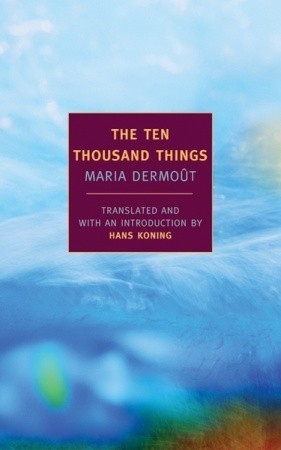
The Best Book for this period is The Ten Thousand Things by Maria Dermoût!
Reviews, reviews, and more reviews

The Best Book for this period is The Ten Thousand Things by Maria Dermoût!

It’s going to be hard to convey a sense of this book without revealing a side to it that doesn’t arise until well into the novel. I will say that for 1967 the novel deals with a key issue in a surprisingly enlightened way, even though it may make modern readers cringe a few times.
Jill Quentin is the wife of Miles Quentin, a distinguished actor. Miles is opening a new play in a spa town during a summer festival. This play was already produced on television, but adapting it for the stage is proving difficult. In particular, Cyril, the actor playing the boy in the play, is not doing well despite having played the part on television.
Smith’s descriptions of the details of the play production as well as Jill and Miles’s relationship are interesting. However, the plot gets going when she befriends two teenage girls, Robin and Kit Thornton, who are staying with their widowed father in the same hotel.
I don’t want to say more, really, except that the novel involves a choice for Jill between romantic love and the love of a deep friendship and asks how important loyalty is in marriage.
I generally liked this book, but there was a point before some revelations when I felt that if it was a more modern book, it could be going somewhere creepy. However, it was not.
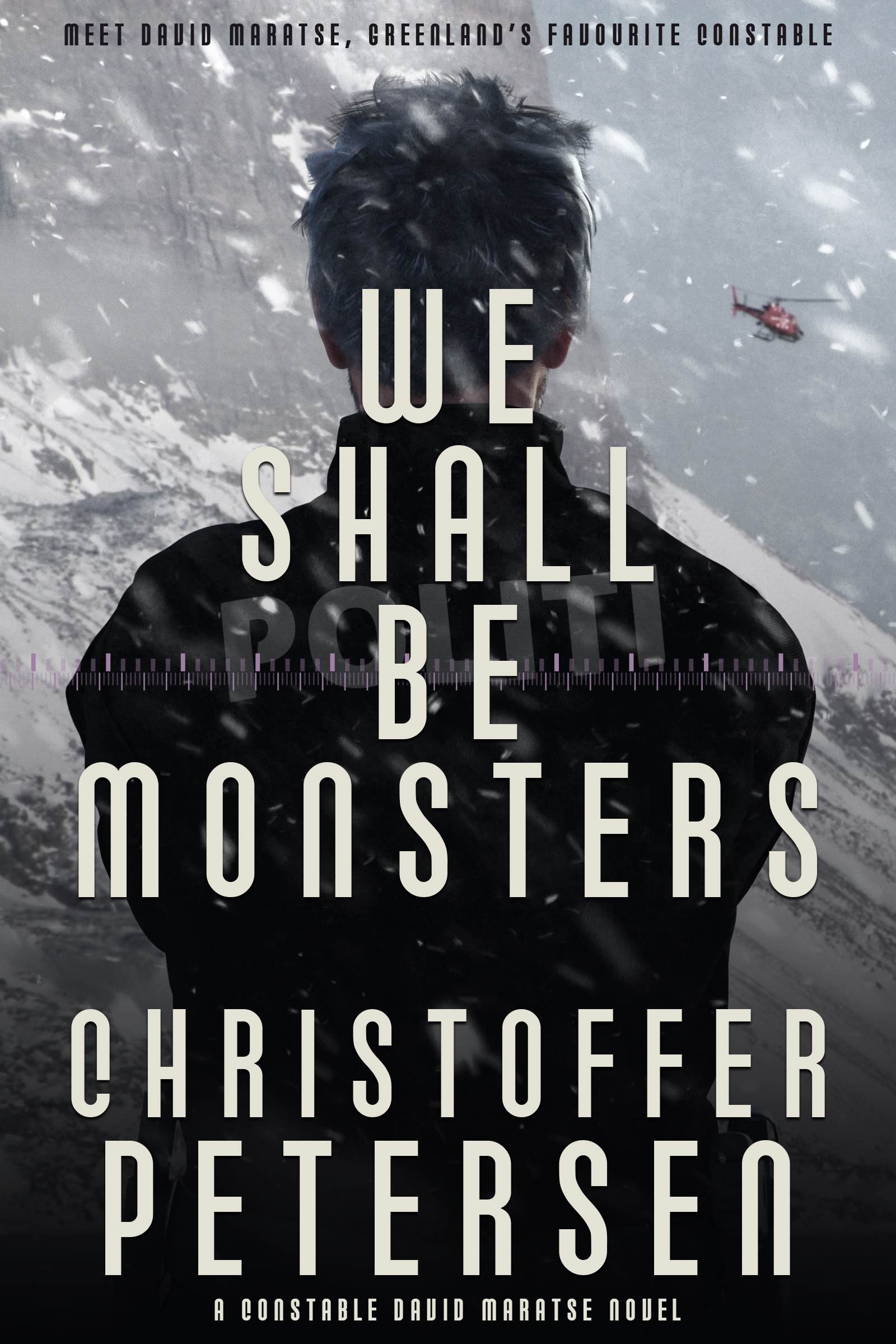
If you are interested in reading this book, you will understand it much better—and there is a warning to that effect in the book—if you read the two books that came before it.
At the end of Blood Floe, retired Constable David Maratse’s friend and lover, Sergeant Petra Jensen, was kidnapped. Now the body of a teenager is found naked, his back embedded with fishing hooks with colored threads attached. Not far away, next to an ice-fishing hole, are Petra’s clothes and a suicide note.
Maratse knows that the use of her Greenlandic name in the signature is a message to him that she did not commit suicide. He arranges a funeral for her so that the authorities won’t realize that he plans to go off on his own to find her—and that’s what he does.
While Maratse is following leads and other police investigate the boy’s murder, there are glimpses of what is happening to Petra. Tensions rise when her captor tells her she will soon be set free, as the readers know that for him setting free means killing.
I was drawn to this series because of its glimpses into life in Greenland, but except for Maratse dressing in white and taking a sled dog team, there wasn’t anything particular to Greenland in this one. It’s a fairly standard thriller.
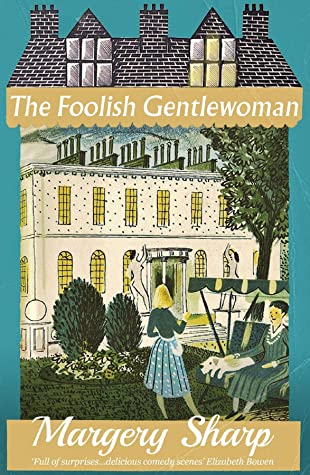
When crusty, prim Simon Brocken goes to live with his widowed sister-in-law Isabel while his home is repaired from bomb damage shortly after World War II, he isn’t expecting to enjoy living so closely with other people. However, the household gets along comfortably together even though the four occupants don’t have much in common. Isabel is kind and generous, although Simon thinks she’s an idiot. Her Australian nephew Humphrey has come to stay, and he is slowly pursuing an understated courtship of Jackie, Isabel’s companion/secretary.
However, something is bothering Isabel, and eventually she tells them what it is. A preacher’s sermon about bad acts in the past being no less bad has made her consider an incident from when she was a girl, when her actions blighted the marital hopes of Tilly Cuff, a poor cousin her family treated a little like a servant. Tilly took a job as governess, and Isabel eventually married Simon’s brother.
Now Isabel thinks she must make amends to Tilly, so she has invited her to stay. But she also intends to give Tilly her entire fortune. Simon is appalled by this but can’t get her to change her mind. Then Tilly arrives, and everyone but Isabel soon realizes that she is actively malicious.
This novel is witty and sharply observant of human nature. It creates a situation that I couldn’t imagine being resolved neatly and that made me want to see what happens.

Well, this is quite a novel. Unfortunately, I don’t know how to explain what it is like without giving too much away. But I’ll try. Let me say that I don’t know whether I liked it, but it certainly is effective.
First of all, you’re not going to find a character in this novel to outright like. Catton has fully realized her characters as flawed people, and she keeps turning back to them and showing another side. There is definitely a villain, though.
Mira is the founder of Birnam Wood, a gardening collective that plants vegetables in unused spaces. Mira is not picky about whether they do this with permission from owners or even steal water or tools to do their work. However, most of the members believe their activities are legal.
Shelley is Mira’s roommate and best friend but also the person in Birnam Wood who does most of the management and publicity work. She is tired of not being listened to or having her contributions unacknowledged.
Mira reads that a landslide near Korowai National Park has cut off one of the accesses to the park, leaving only one road to a nearby town. A prominent businessman, Owen Darvish, who has property in the area that he had been planning to subdivide, took the property off the market because after the landslide it will not sell. Mira decides that this large, unoccupied property in a remote area would be perfect for a major planting operation, so she drives there to check it out.
On the property, though, she is apprehended by Robert Lemoine, an American billionaire who has been in the news because of a deal with Darvish. Eventually, he explains that he is buying the property from Darvish and is interested in donating a large sum of money to Birnam Wood to help ramp up their organization.
Tony, a radical Birnam Wood member who has been away teaching in Mexico, comes back to a meeting. When Mira presents Robert Lemoine’s proposition, he is very much against it but is outvoted. He walks out but decides to go to the area, thinking an article on what Lemoine is doing there would help his attempts to become a journalist.
Lemoine has a secret agenda that none of these characters know about. The novel moves from seeming to be a combination of a study of characters and somewhat of a sendup to a plot full of suspense.
I picked out The Ten Thousand Things from a list of the New York Review of Books publications for my Classics Club list without knowing anything about it. It is an unusual book, but beautiful.
It begins with an extended vivid description of an island in the Moluccas, referring along the way to the island’s stories and myths. It does this for so long that you begin to wonder where it is going, but finally it comes to the story of Felicia. Felicia spends her childhood on the island, visiting her grandmother in the Small Garden, hearing stories about objects and ghosts on the property, and examining her grandmother’s box of treasures, many of them stones with properties or unusual or valuable shells. However, eventually there is a dispute between her grandmother and her mother, so her mother insists her immediate family move to Holland. Felicia’s grandmother gives her some valuable jewelry so she can afford to come back.
She returns a young mother, her husband, who married her for money, having taken all her money and jewels and disappeared when he learned she was pregnant. She has had to take out a loan to return.
Most of the bulk of the novel is the story of her life on the island raising her son Himpies. Although this is not a novel in the magical realism genre, the island, with its tales of ghosts and monsters and its extreme beauty, seems magical. Dermoût spent her childhood on such an island and clearly loved it.
About 2/3 of the way through the novel, which is only about 200 pages long, it abruptly moves to some other characters on the island, then does it again. This is at first surprising, but Dermoût returns to the Small Garden and wraps everything up beautifully.
I think I can fairly describe this novel as haunting—sad and just lovely.

Unfortunately, because my husband and I went on a Christie series TV binge last summer, I eventually remembered how Nemesis was going to end. Otherwise, I hadn’t read it before.
Miss Marple reads an obituary for Mr. Rafiel, a wealthy man whose assistance she requested to prevent a murder in A Caribbean Mystery. Some time later, his lawyers summon her. He has left her £20,000 if she will take on a project for him and get a result. The catch is that he doesn’t say what the project is.
She decides to take the project and a few days later receives tickets for a home and garden tour. At one of the stops, she receives an invitation to stay with three sisters, who have invited her at the posthumous urging of Mr. Rafiel. Here, she begins to get a sense of her mission when she learns from another tour participant, Miss Temple, that a former student, Verity Hunt, had been murdered by Michael Rafiel, Mr. Rafiel’s son, and she had been killed by love. Soon after this conversation, Miss Temple is killed by a falling boulder.
Mr. Rafiel wanted to right an injustice, Miss Marple decides. But can she figure out what it is and finish her mission?
I at first thought the writing of this one was a little choppy—lots of subject-verb-object sentences in a row with no variation. But eventually I got caught up into another clever and interesting tale.
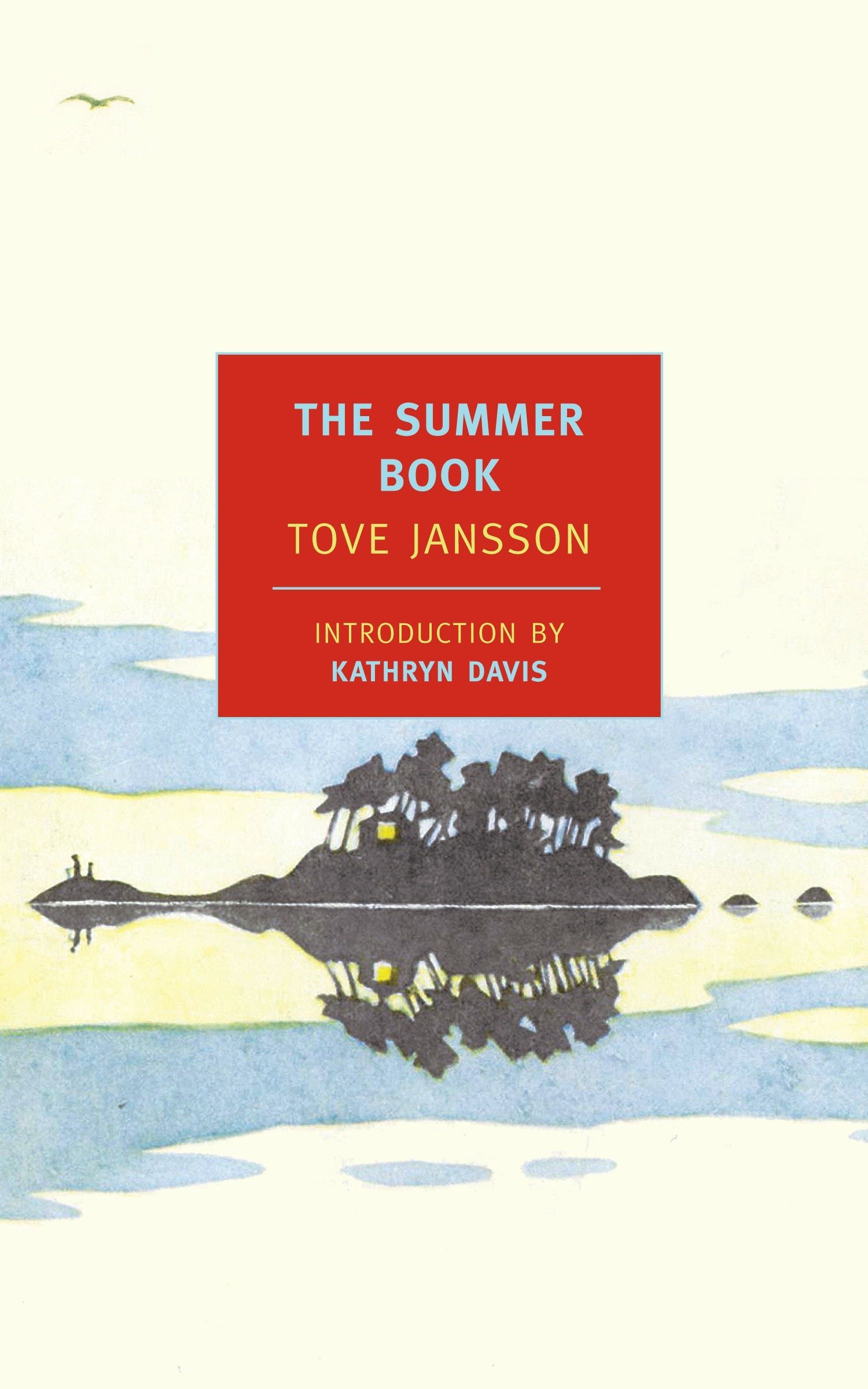
The event that informs The Summer Book has already occurred before the novel starts—six-year-old Sophie’s mother has lately died. Sophie, her father, and grandmother travel early to an island on the Gulf of Finland where they spend their summers.
There isn’t much plot to his novel, which is mostly centered on Sophie and her grandmother. Sophie is changeable and sometimes anxious. Her grandmother, who is not in good health, is usually wise and responsive but can be irritable. In between tales of a visiting neighbor, the construction of a new road and a large, intrusive house, a haunted bathrobe, an unfriendly cat, the construction of a miniature Venice, and some massive storms, Jansson minutely describes the world of the island—the terrain, the insects and birds, the plants.
This is a lyrical novel that implies—most of them are unstated—some truths about life, death, and love.
Jansson spent most of her summers on such an island. She wrote this novel shortly after the death of her mother.
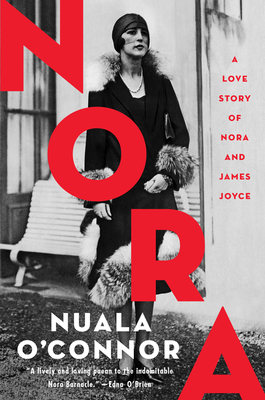
Nora is based on the movements of Nora Barnacle and James Joyce and on their letters, many of which, apparently, were quite explicit.
On an acquaintance of only a few, heated months, Nora Barnacle goes off with James Joyce to live in Europe despite his not believing in marriage. In 1904, she is 20 and has been working in a Dublin hotel after fleeing her family in Galway.
The life she takes on is difficult. Not only are they very poor and have no permanent abode after the job Joyce was promised at the Berlitz school in Zürich turns out to be a scam, but Joyce himself is difficult. He is a drinker and a spendthrift who buys gifts with the rent money. He is a jealous man who may not be faithful himself and likes to hear about the men Nora knew before him. He is selfish and superstitious, usually certain of his own abilities but not always.
As their life continues, Joyce gets work but never stays satisfied with it. He quits gainful employment to pursue fanciful projects. They have to borrow from his friends and family and move from place to place. Although he is gaining literary fame, he has trouble getting his books published without censorship. He leaves Nora home alone with the children to go drinking with friends and sycophants. Then there is the war, and his failing eyesight.
This is a fascinating depiction of a complex relationship. Aside from the difficulties of living with Joyce and a peripatetic life, Nora has to deal with family pressures and a mentally ill child. Yet her relationship with Joyce is one of fierce passion and love. Although I am not comfortable with explicit sex, I was otherwise wrapped up in this story.

Young Helen Manning is astonished when Anthony Fane asks her father for her hand and he agrees. Not only does he agree, but he invites the Fanes and their friends over to celebrate.
The reason Helen is astonished is because she has always been terrified of her father. But her friends, Sir Anthony and his wife, daughter Kay, friends Doctor Henderson, Teddy Fraser, and Bill Brent, accompany Tony to the Mannings for dinner.
All the guests find Manning disturbing, especially when the famous scientist shows them an experiment where he brutally poisons a kitten belonging to the cook, Mrs. Geraint. Unfortunately, a tremendous storm strands them all there for the night.
Bill Brent is awakened at four by a noise downstairs in Manning’s office. When he goes down, he finds Manning dead at his desk with a carving knife between his shoulder blades. The French doors behind him are broken, and the room is in chaos.
This is a lively novel that goes some surprising places, including espionage and hidden family relationships. It has some unlikely plot points, and why everyone’s tires are slashed is never explained. But it’s a quick, fun read.
I received this book from the publishers in exchange for a free and fair review.
Writer and Historian
There is nothing more satisfying than reading a book while sipping a hot cup of tea.
A historical fiction book blog
Emerging as an artist
Liz Dexter muses on freelancing, reading, and running ...
For mostly adult, literary, fiction; focusing on Historical, Biographical, and Women's Fiction.
"Well, there’s so much to read, and I’m so far behind." Wallace Stegner
Read to live and live to read
A bookish blog (mostly) about women writers of the nineteenth and twentieth centuries
A Celebration of Russian Literature
Reading: it's personal
Based in Romania, reading all over the world. Mostly fiction, some memoires and a little bit of poetry.
Adam Burgess
"Vivre le livre!"
"History is a vast early warning system." Norman Cousins
Scottish Book Blogger
"She had read novels while other people perused the Sunday papers" - Mary Elizabeth Braddon
A word after a word after a word is power. --Margaret Atwood
Books • Opera • Art • History
FOR DISCERNING READERS
Your online source for Jane Austen and her legacy
A Community of Classics Lovers
A blog about Irish books, writers, writing and everything in between.
A suggestion a day from the Williamsburg Regional Library

