Review 2084: Babbacombe’s

I asked Dean Street Press to rush me some books so that I could participate in Dean Street Press in December, and they have responded beautifully. Here’s a review of a book I received on Tuesday.

Beth Carson is a little disappointed after leaving school with high honors to take the job her father has arranged at Babbacombe’s, the large department store where he’s been employed for 30 years, instead of going to secretarial school. However, money has always been tight in the Carson household, and she is eager to help contribute.

Despite things being tight, the family is reluctant to take on a paying guest—George’s orphaned niece, Dulcie. But George feels guilty about neglecting her even though he didn’t like her father. When Beth goes to the railway station to collect her, she meets a nice young man after she is tripped up by his dog.

Dulcie turns out to be an unpleasant surprise for the family, but Beth finds herself enjoying her job in the dress department, even though it is at first exhausting. Then one day she is stuck in the elevator with the man from the railway station and finds out he is David Babbcombe, the boss’s son. When Beth learns he doesn’t work but collects an allowance from his father, she says she’d be ashamed to take money she didn’t earn.

Smarting from this, David, who threw away an opportunity at Babbacombe’s once already, goes to his father’s office and asks for a position. His delighted father starts him at the bottom this time instead of the top—in the meat department. He also has a secret from his father, he has submitted plans for a plane he designed to the government.

As David pursues Beth, her scruples interfere. Her father believes people should stay in their places, and she is sure Mr. Babbacombe wouldn’t approve of David dating one of his shop girls. Also not helping is Dulcie, who has decided she wants to marry David.

I’m having an inconsistent reaction to Scarlett’s work, probably because I don’t read too many straight romances. Although I liked another of her Cinderella stories, Clothes-Pegs, I often find the devices meant to keep the couple apart until the end are a little clumsy. In this case, Beth is almost stupidly obsessed by what their fathers will think, and Mr. Babbacombe’s confusion of the two girls doesn’t seem like him at all. Also, it seems to be a trope with Scarlett’s plots to involve a jealous, mischief-making other woman, which is a 50’s cliché. Still, this is pleasant light reading.

I received this book from the publishers in exchange for a free and fair review.

Related Posts

Clothes-Pegs

Summer Pudding

Begin Again

Review 2083: Heads of the Colored People

I read Heads of the Colored People for my James Tait Black project. It is a collection of short stories, many linked by common characters, that explore black identity in the middle class, a hyper-aware Californian middle class.

In “Heads of the Colored People,” what starts out as a somewhat comic clash at Comicon ends up as headlines because of Fighting While Black.

In “The Necessary Changes Have Been Made,” Randolph, one of the few black professors at an HBUC, learns that the problems he has had with his office mate are probably race-related.

In “Belles Lettres,” two highly educated black mothers duke it out by letter over their two schoolgirls.

In “The Body’s Defense Against Itself,” Fatima, one of the schoolgirls now grown, sees a woman in her yoga class who reminds her of her old arch-enemy. This makes her remember her years of body self-hatred.

In “Fatima the Biloquist: A Transformation Story,” Fatima, now a teenager, feels too white, as one of only two black children in her school. She meets Violet, an albino black girl. who offers to teach her how to be black.

And so on.

Some of the stories are funny but usually with a bite, such as “Suicide, Watch,” about a woman so obsessed with social media that she hints at suicide just to see if her numbers go up.

Some of theses stories verge on the bizarre, but I think most people can find something to relate to in them. They are insightful and original.

Related Posts

Sudden Traveler

Travelers

The Beadworkers

Review 2082: Mrs. Lorimer’s Quiet Summer

Liz of Adventures in Reading announced Dean Street Press in December long after I read this book, and the press is trying to get some new books to me in time, but since this one came up in my regular review schedule, I’ll take credit for it!

Because she has been trying to talk her husband Jack into buying it, Mrs. Lorimer is disappointed to learn that a nearby home, Harperslea, has been sold. Now that all their children except Guy are married, and some of them have children, their home, Woodside, is not big enough when they all come to visit, which they are doing this summer. With all the income from her writing, they can afford to move, but Jack refuses to consider it. So, her good friend Gray Douglas, also a writer, will help her out by putting some of the guests up.

Mrs. Lorimer, who tends to be a worrier, is also worried about her son Guy. He has been mentioning a girl quite often in his letters, but Mrs. Lorimer is worried that she won’t be good enough for Guy.

At any rate, when the family shows up, Phillie seems to be the one with the problem. She begins behaving temperamentally, being rude to her husband, dashing off to Harperslea because she’s seen Miss Smellie, one of the new occupants, playing tennis and she wants a game. Then bringing Miss Smellie home to dinner and just abandoning her to her mother and Guy.

Miss Smellie is young and not very prepossessing, and they find out she hates her name, which is Nesta Rowena. So, the family dubs her Rona.

These and other family concerns enliven this charming novel. The novel cover claims the book is autobiographical, and it certainly has some likable and entertaining characters. So far, I have very much enjoyed the novels I’ve read by Clavering.

Related Posts

Dear Hugo

Susan Settles Down

Touch Not the Nettle

Review 2081: The Night Ship

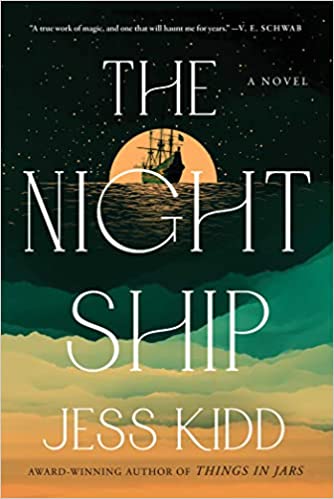
In 1628, Mayken, the child of a wealthy Dutch merchant, sets sail on the Batavia to join her father in the Spice Islands after the death of her mother. She is accompanied by her nursemaid, Imke, but Imke being ill from the beginning of the voyage, Mayken soon has the run of the upper ship. Dressed in raggedy boys’ breeches, she also sometimes explores the depths of the ship.

In 1989, young Gil has gone to live on an island in the Indian Ocean with his fisherman grandfather after his mother’s death. Gil’s mother and her father Joss had been estranged, and Joss doesn’t seem happy to have him. The island is inhabited by fishermen who only live there during the fishing season and by archaeologists exploring the site of the sinking of the Batavia. There are rumors that the island is haunted by a girl who died after the shipwreck.

This novel is utterly fascinating. Kidd does a great job with her characters, especially the enchanting Mayken. The story of the Batavia, an actual shipwreck, is gut-wrenching, but Kidd makes her more modern story almost as interesting. This book is great.

Related Posts

Things in Jars

Himself

The Hoarder

Time for Another Classics Club Spin (#32)

The Classics Club has announced another spin. How does this work? Classics club members select 20 books from their lists and post a numbered list of those choices by Sunday, December 11. On Sunday, Classics Club picks a number, and the club member agrees to try to read the book corresponding to that number and post a review by Sunday, January 29, 2023.

I enjoy taking part in these spins, so here is my list!

  1. The Fair Jilt by Aphra Behn
  2. The Methods of Lady Walderhurst by Frances Hodgson Burnett
  3. We by Yevgeny Zemyatin
  4. The Ten Thousand Things by Maria Dermoût
  5. The Return of the Native by Thomas Hardy
  6. The Saga of Gosta Berling by Selma Lagerlof
  7. A Double Life by Karolina Pavlova
  8. Love’s Labour’s Lost by William Shakespeare
  9. Sleeping Murder by Agatha Christie
  10. Dust Tracks on a Road by Zora Neale Hurston
  11. The Tree of Heaven by May Sinclair
  12. The Deepening Stream by Dorothy Canfield Fisher
  13. The Passenger by Ulrich Alexander Boschwitz
  14. Merkland, A Story of Scottish Life by Margaret Oliphant
  15. The Three Musketeers by Alexandre Dumas
  16. The Princess of Cleves by Madame de La Fayette
  17. Incidents in the Life of a Slave Girl by Harriet Jacobs
  18. The Book of Lamentations by Rosario Castellanos
  19. The Moorland Cottage by Elizabeth Gaskell
  20. Miss Mole by E. H. Young

Review 2080: Death on the Down Beat

Conductor Sir Noel Grampion is shot in the heart during a concert. Because of the angle of the shot, most of the orchestra members are suspects. Since Sir Noel was disliked by most of them and known as a womanizer, the list of suspects is a long one.

D. I. Alan Hope is assigned the case. Possibly wanting to try something new, Sebastian Farr tells the story in letters from Hope to his wife. Aside from the ethical and legal considerations of a husband telling everything about the ongoing case to his wife, let alone in writing, the device is an unfortunate one, for in trying to make the letters seem real, Farr expands the novel to include all kinds of unnecessary information, even things that don’t make sense. For example, he includes a long description of the house he was staying in before the murder. Since he writes to his wife at least once a day, surely he would have done that at the beginning of his visit, especially as the place has nothing to do with the murder.

Next, we’re subjected to maps of the orchestra and a complete list of players. No doubt about it, this is a puzzle mystery, in which readers are swamped with information, even some pages of the score.

Unbelievably, not a single member of the orchestra is interviewed by the police. Instead, Hope asks them to write about themselves. So we have to read page after page of mostly colorless letters that all say, “I don’t know nuttin’,” which in itself is hard to believe. Farr seems to think that musicians are either looking at the score or the conductor. The reality is that they are usually looking at both at the same time, so it’s hard to believe that no one could have seen who shot him. These letters start around page 90 and before that, we have no details about any of the suspects, although we have read several concert reviews to little purpose. After the letters, Hope goes back through one by one and makes comments on the individuals, forcing us to flip back and forth if we care to pair up the letters with Hope’s remarks. I didn’t.

When the second set of letters began, because Hope/Farr hasn’t eliminated more than a few of the many (about 60) suspects, nor do most of them have anything about them that distinguishes them from anyone else, I threw up my hands and skipped 50 pages to the last letter. There I read the identity of the killer and the name meant nothing to me. I started to read the explanation, and I got so bored I just quit reading.

I understand Sebastian Farr is a pen name for a renowned music critic of the time. I commend the novel in a small way for originality but believe he should have stuck to reviews.

I received this book from the publisher in exchange for a free and fair review.

Related Posts

The Lost Gallows

Antidote to Venom

The Red House Mystery

Review 2079: Partners in Crime

I decided to read all of the Tommy and Tuppence novels in order when I read that they were Christie’s favorite sleuths. Partners in Crime is the second book in the series, set six years after the first.

Tuppence is beginning to be bored when Mr. Carter, Tommy’s boss, asks him to take six months off his work in the Secret Service to reopen the Blunt Detective Agency, which the department believes is connected with espionage. They are to look for a Russian blue stamp on a letter and further contacts.

Partners in Crime is not exactly a collection of short stories, but it is about a series of crimes Tommy and Tuppence solve in between tussles with the bad guys. Each case takes up one or two chapters. The book also has a running theme of either Tommy or Tuppence taking on the persona of a different detective from literature in each case. Unfortunately, I didn’t know who most of the detectives were, so I missed some jokes.

Some of the mysteries are laughably obvious, but others are more difficult. The novel suffers slightly from the problem I find with short detective fiction—not a lot of time to develop plots, red herrings, and characters. However, Tommy and Tuppence are funny and charming, so I enjoyed the book.

Related Posts

The Secret Adversary

The Man in the Brown Suit

The Seven Dials Mystery

Reading Thirkell’s Barsetshire Series in Order: #19 County Chronicle + #18 The Old Bank House Wrap-Up

I think I have lost all my other readers from one reason or another, but I persist. If you happened to read any of the books coming up, don’t hesitate to make comments. I hope to have some steadfast commenters. I am still enjoying these books—in fact, The Old Bank House was one of my favorites—and don’t quite understand yet why her post-war ones aren’t considered as good (although I have recollections of one coming up about an election that wasn’t as interesting). As of now, there are only 11 more books in the series.

Thanks to the people who continue to participate:

  • Liz Dexter
  • Historical Fiction Is Fiction
  • Yvonne of A Darn Good Read

Our next book is County Chronicle. I will be reviewing it Friday, December 30, so if you have read it, or want to read along, please join me.

And here’s our little badge.

Review 2078: The Silver Collar

Antonia Hodgson states in the Notes to The Silver Collar that she intended to write this novel from the very beginning of the Thomas Hawkins series. The Silver Collar is the fourth book in the series.

It’s 1728. Things are going well for Thomas Hawkins and his beloved Kitty Sparks, but Thomas begins to feel discontented because he is being supported by Kitty’s wealth and her pornographic bookstore. Then the couple quarrel because Thomas learns she has secretly been seeing Magistrate Gonson, who recently got him unjustly convicted of murder.

After they argue, Thomas stomps out. He returns to find out belatedly two things—Kitty is pregnant and Magistrate Gonson has conspired to help her mother, Lady VanHook, kidnap her.

Thomas knows that Kitty is terrified of her mother, whose intentions are twofold—to take over Kitty’s fortune and to torment Kitty. Finding her pregnant adds some spice. Thomas gets help from Jeremiah, a black man whose little daughter is enslaved by Lady VanHook, and from Sam and Gabriela Fleet. They find that Kitty has been incarcerated in an insane asylum, but that’s just the beginning of this fast-moving, adventurous novel.

There was one place where the pace slowed to a slog, and that was in reading Jeremiah’s letter, which was too long and went into too much extraneous detail. Hodgson created a trap for herself when she gave him speech problems, because this section would have worked much better as a dialogue. However, in all, this was an exciting entry in the series.

Related Posts

The Last Confession of Thomas Hawkins

A Death at Fountains Abbey

The Devil in the Marshalsea