For this period, there’s a tie for Best Book: A Town Called Solace by Mary Lawson and Hester by Margaret Oliphant!
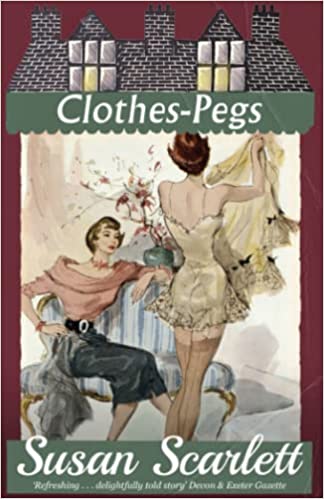
Review 2050: Summer Pudding
After Janet Brain’s employer’s office is bombed in the Blitz, she travels to the village of Worsingford where her mother and sister Sheila have made their new home. She has never been there before, but she makes a new friend on the train, Barbara Haines. Barbara’s reactions to some things she says should tell Janet that something is going on, but she doesn’t notice.
Janet arranged for her mother to move out of London into the country because her doctor urged her to make her mother get some rest without telling her she has a bad heart. Sheila was supposed to be doing the housework. But when she arrives at the cottage, she finds her mother more worn than ever and Sheila, beautiful and spoiled, doing absolutely nothing. Janet had planned to join the WAAFs but realizes she can’t leave her mother with Sheila.
Janet learns that Sheila agreed to teach Iris, the daughter of their neighbor and landlord, Donald Sheldon, months ago but has not kept her promise. So Janet goes over to Sheldon’s to offer her services. She is attracted to Donald, a widower, but finds him acting oddly when she tries to bargain for her pay. Donald also has a housekeeper, Gladys, who is jealous of him.
As Janet gets to know Donald, he alternates between seeming to care for her and seeming to disapprove of her even though she can’t figure out what she’s done. She doesn’t realize that Sheila has been telling lies.
Although the Furrowed Middlebrow books often involve some light, understated romance, they usually have other things going on as well. This is the first book I’ve read under this imprint that is a standard romance, with most of the action devoted to keeping the couple apart until the end. How good a romance is depends on how well you do this, and in this case, I think Scarlett (a pen name for Noel Streatfeild) doesn’t always handle it well. Characters over-react to other characters’ comments, for example. The situation isn’t too badly handled, though, and the book makes nice light reading. Straight romance novels are not usually my genre, though.
I received this book from the publisher in exchange for a free and fair review.
Related Posts
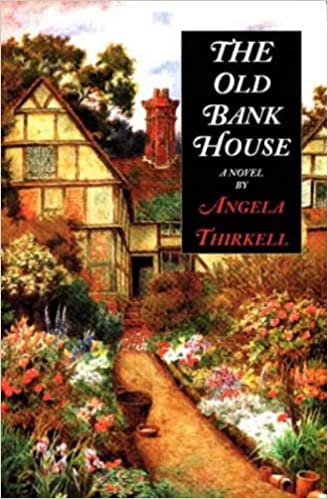
Review 2049: Hester
When I was reading Hester, I reflected that it might more aptly be named Catherine. However, at the time it was written (published in 1883), many novels were named after their young and beautiful heroines. Catherine is neither young nor beautiful, but almost every action in this book refers back to her.
When Catherine Vernon was a young woman, she was engaged to marry John Vernon, her cousin and co-owner of Vernon’s, the family bank. The entire community is proud of Vernon’s, which is considered more trustworthy even than the Bank of England. John jilted Catherine to marry a gentle foolish woman, called Mrs. John in the novel. Later, John got the bank into financial difficulties and fled, presumably also embezzling some money. Although Catherine never had anything to do with the workings of the bank, she used her personal fortune to rescue it and took over its management.
Some years later, John Vernon has died, leaving his wife and daughter Hester destitute. Catherine has divided one of her properties into apartments and offered them to relatives who need them, so she kindly offers a home to Mrs. John and Hester. Hester, at fourteen, knows nothing about her father’s perfidy and is very proud. She notices that some of Catherine’s dependents are both sycophantic and ungrateful but also that their behavior amuses Catherine. Hester is offended by this and tends to misjudge Catherine. Since Hester is sulky and rude, Catherine misjudges her, and they proceed to misunderstand each other.
Catherine has brought two young cousins in to learn to run the bank, and by the time Hester is a young woman, they are in charge of it. Henry is a hard worker and is grateful to Catherine for the opportunity, but he is only moderately intelligent and depends on Edward for difficult decisions. Catherine has come to love Edward like a son and has given him a place to live in her own home. What she doesn’t know is that his apparent regard is false. He is bored at the bank and wants to be able to make his own fortune (presumably using the bank’s money to start it). He also misjudges Catherine and thinks she spies on him.
Hester grows into a beautiful independent woman who is used to being ignored and disregarded. However, she has an unusual relationship with Edward, who ignores her when Catherine is around because Catherine doesn’t like her but exchanges cryptic looks and comments with her.
The reader knows this behavior is ungentlemanly as is his two-faced behavior with Catherine, but while the steadfast Harry proposes to Hester and is refused, and she is briefly attracted to a young stockbroker, grandson to her neighbors, she eventually falls in love with Edward.
This is an insightful novel about complex human relationships. I really think Margaret Oliphant, especially with this novel, is right up there with George Eliot and Dickens. The Introduction to my edition calls Hester Oliphant’s masterpiece, and although I have read and enjoyed several of her books but not all (who could? she was unbelievably prolific), I so far agree.
Related Posts
Review 2048: The Decagon House Murders
Although a mystery should eventually make everything clear, it definitely should not belabor the obvious as if readers are numbskulls. Unfortunately, The Decagon House Murders does so several times. We’re only a few pages in when some members of a university mystery club are introduced and it’s clear that they are using the names of Golden Age mystery writers. But then the novel not only explains this but laboriously tells us who those writers are. Okay, I thought. It’s Japan. Maybe everyone wouldn’t know. But then, just a few pages later, a drawing of the floorplan of the Decagon House appears, labeled Figure 2, and then it is laboriously described—a description that adds nothing to the figure and “(See Figure 2)” is actually included. There are also several excruciating recaps of the clues, not to mention the four- or five-page explanation at the end of everything that happened.
So, here’s the setup. Some members of a university murder club are spending their spring break on an island where more than a year earlier there was a series of murders and the house was burned down, leaving only a utility building called the Decagon House (and an odd utility building it is). After the students depart for the island, some of their colleagues back on the mainland receive letters accusing them of murdering another club member, who died in a drinking party the year before. That person was the daughter of the family that was murdered on the island six months later. These two students, Kawaminami and Morisu, begin looking into the island murders by visiting the victim’s brother Nakamura Kōjirō, where they meet Shimada Kujoshi, a friend of Kōjirō.
The group on the mainland think they are pursing an intellectual mystery—a puzzle—but on the island, the murders have started with the death of Orczy, one of the two women, strangled in her sleep.
We won’t comment on the bad taste demonstrated by the selection of this venue for their meeting so soon after the death of the family. The novel had some surprises, or rather, it successfully led me up some blind alleys, pages and pages before the characters got there. It is interesting, though, that I noticed a Goodreads review claiming this is a “fair play” mystery—that it provides clues for the reader to get the solution. Actually, it hides a key relationship that would give away the motive until after the identity of the murderer is revealed.
The author’s bio claims this novel is a landmark book that revived the puzzle mystery in Japan when it was published in 1987. To me, it feels like a throwback to some of the more primitive efforts of the early 20th century. Anyway, I’m not sure the puzzle mystery needs to be revived.
Related Posts
Review 2047: Booth
Booth follows the lives of the family of John Wilkes Booth, beginning before he is born. Written from the alternating points of view of some of his siblings, it begins when Rosalie, his oldest sister, is a young girl. Her father, a famous actor, is known as much for his drunken bouts and acts of insanity as his theatrical genius. He is often away. Rosalie’s mother is in a state of depression as, one by one, several of her children have died. Rosalie herself is missing the latest one, her favorite brother, Henry.
The family lives on a farm in Maryland that is run by their black servants, the Halls. These servants are slaves—someone else’s that Junius Booth leases, but he also pays them a wage so that they can save up to free themselves. So, the Booth family’s inconsistent stance on slavery comes in right from the beginning.
This book is interesting. It follows the growth of all the Booth siblings through several shocks—the first being the discovery that their father and mother aren’t legally married. They find this out after they move to Baltimore. His legal wife tracks them down all the way from England and follows them on the street shouting horrible things. Some of them develop a fear of sullying the family honor that is eventually forever shattered.
John Wilkes Booth becomes the son favored by their mother, the handsome one, the one who can do no wrong. He is also determined to put his mark on the world but not so interested in working hard to do it.
All of the family members have their difficulties and foibles, which makes it an interesting story. Interspersed between the chapters about the Booths are short ones about Lincoln’s progress as a politician and then as President.
Fowler says she thought of this topic when thinking of the families of our recent mass murderers. That’s exactly what I thought of when reading this novel.
It’s been interesting to see how Karen Joy Fowler has been developing, from the author of a few rather negligible although readable books to what I think is still her masterpiece, We Are All Completely Beside Ourselves. I like that she seems to be adventurous in picking her subjects.
Related Posts
Review 2046: Dear Hugo
Sara Montieth has purchased a cottage in a small Scottish border village because she wants a quiet life. She has chosen the village because it was the boyhood home of her young man Ivo, who was killed in the war, and his brother Hugo.
Dear Hugo is an epistemological novel, consisting of Sara’s letters to Hugo, whom she has never met and who lives in Nairobi. It is about her daily life, the people she likes and dislikes, the events in the village. Although she wanted a quiet life, hers becomes eventful, especially after her cousin, who is newly remarried, asks her to take his 13-year-old son Arthur during his school holidays. It’s even more so after Hugo sends them a puppy.
The letters are written with gentle humor and describe all the village characters, including Miss Bonaly, a disapproving spinster who urges Sara not to hire Madge Marchbanks, an unwed mother, to help with the housework, and kindly, perceptive Mrs. Keith, who knew Ivo and Hugo as boys.
This is a nice, gentle novel of village life. It didn’t end quite the way I was hoping for, but I enjoyed it very much.
Related Posts
Review 2045: A Town Called Solace
I enjoyed Mary Lawson’s Crow Lake a great deal, but I can say for A Town Called Solace that at some point, I became so interested in it that I had a hard time putting it down to get other things done. This novel is set in 1972 and in memories of 30 years earlier.
Eight-year-old Clara is nearly stunned with anxiety. Her 15-year-old sister Rose ran away from home several weeks ago. Clara’s mother is prostrate from grief, and Clara stays looking out the window, because Rose told her she’d send her a message and she doesn’t want to miss it. She takes comfort in going next door to feed Mrs. Orchard’s cat, as she asked her to do when she went into the hospital. The only thing is, a strange man has appeared in Mrs. Orchard’s house.
That man is Liam. Clara’s parents haven’t told her that Mrs. Orchard died and left everything to Liam, a neighbor from her previous home she took care of when he was four. Liam has recently split from his wife and on hearing of his inheritance, quit his job and traveled all the way to far northern Ontario to Solace. His plan is to fix up the house and sell it, but he slowly becomes involved with people in the community.
Liam, who has always had trouble forming relationships, understands that Clara believes her parents are liars because they didn’t tell her about Mrs. Orchard, so he extends her the peace of his home when he is out so that she can feed and play with the cat, and the courtesy of not lying to her. Periodically, the novel returns a few months in time to Mrs. Orchard’s last few days and her memories of that time when Liam was four years old.
I absolutely loved this book. It is about loneliness and the difference that love and understanding can make in a life. It is empathetic without being mawkish or manipulative. It’s also about ordinary people trying to make their way through life. It’s lovely.
Related Posts
Review 2044: Crook O’Lune
Crook O’Lune is named for a crook of the Lune River in the remote fells of Lancashire. Here, Chief Inspector Robert Macdonald has chosen to take his holidays, staying with his friends Giles and Kate Hoggett. Macdonald is looking for a farm to buy for his retirement.
For his part, Gilbert Woolfall has just inherited his uncle’s farm at High Glimmerdale, called Aikengill, and is trying to decide what to do with it. His commonsense tells him to sell it, since his career is in Leeds, but he wants to keep it.
Almost as soon as he settles down to examine some old papers, he has a series of visitors. Betty Fell wants to marry Jock Shearling, but they don’t want to live with her parents. She asks if she and Jock can look after the house for him, but in Gilbert’s mind, that depends on the housekeeper, Mrs. Ramsden, who can’t decide whether to return to her family or stay. Then the Rector, Mr. Tupper, arrives indignant that Gilbert’s uncle left nothing to the church. Gilbert knows that his uncle felt there was something suspicious about an ancient grant by the family to the local school and church that was reappropriated for another community, so he is not inclined to help Mr. Tupper. Finally, his neighbor, Daniel Herdwick, wants to buy some property.
Although it seems that we’re never to learn much about Macdonald (except that he wants to own dairy cows), I enjoy Lorac’s books because they focus a little more on characters than the usual Golden Age mysteries do and because the crimes aren’t over-complicated and unlikely. This one also has a lot of descriptions of this area of England, enough to make me want to go there. In that respect, It reminds me of some of the Molly Clavering books and their setting in the Scottish borderlands.The night after Gilbert returns to the city, two things happen: there is a fire in his cellar that kills Mrs. Ramsden, who was supposed to be away for the night, and some sheep are stolen from the valley.
Macdonald begins investigating certain aspects of the case, like who the stranger seen in a wild area of the fells might be or which way the sheep could have been driven out of the area.
I received this book from the publisher in exchange for a free and fair review.
Related Posts
Review 2043: The True Deceiver
Katri and Mats Kling are village outcasts. Katri has strange yellow eyes, and although she is very intelligent, she is brusque and has no people skills. Mats, her younger brother, is more accepted but seems lacking intellectually and is treated like the village idiot.
Katri wants two things—to find a stable home for Mats and get enough money to build the boat he wants. To do so, she has her eye on Anna Aemelin, an elderly illustrator of children’s books who is known for her drawings of fluffy bunnies.
By offering to deliver Anna’s mail and supplies, Katri begins to strike up a relationship with Anna and is soon working in her house as a servant. Katri sees herself as scrupulously honest, and when she begins managing Anna’s finances, she sees that Anna is being cheated by almost everyone. But Anna doesn’t want to see some things.
This is an odd little book about deception and self-deception but also about an unusual kind of friendship. Katri is accompanied everywhere with a wolf-like dog, while Anna is compared to the fluffy bunnies covered in flowers that she draws all over her meticulous forest floorscapes. But by the end of the novel, the dog has run away, and Anna has stopped painting bunnies.
Related Posts
Review 2042: The Maid
Dear Nita Prose,
For a good example of a narrator who doesn’t understand social cues, read Eleanor Oliphant Is Completely Fine and try harder.
P. S. Do you think it’s likely that a person being questioned by the police would, when asked about another person, sit there and think about every conversation they had with them, taking about six pages to do so? I don’t.
P. P. S. I did not finish reading your book.