Review 2003: The Museum Guard

I have been a big fan so far of Howard Norman’s quirky novels. However, I had a slightly more mixed reaction to The Museum Guard.

DeFoe Russet has lived in the Lord Nelson Hotel in Halifax ever since his parents died in a freak Zeppelin accident when he was eight. As a boy, he was cared for by his uncle Edward, if you can call it that. Edward is an irresponsible, gambling, drinking womanizer with a lot of opinions.

DeFoe works as a museum guard in the small Glace Hotel, where his uncle also works when he bothers to show up. DeFoe is very much in love with Imogen Linny, the caretaker for the local Jewish cemetery. However, although they are lovers, Imogen is difficult and seems often to tolerate DeFoe.

DeFoe doesn’t seem to realize how stuck he is in his life. He has no plans except to continue working as a museum guard and to persist with Imogen. He is interested in listening to the tours of the museum given by Miss Dello, a local professor, and likes to think about the paintings.

Edward has been making himself obnoxious about DeFoe’s relationship with Imogen, whom DeFoe has kept from meeting Edward. But Imogen has recently become fascinated by a painting in the museum, Jewess on a Street in Amsterdam by Joop Heijman. Then there is a fateful meeting between Imogen and Edward in the museum. Imogen essentially dumps DeFoe and begins spending a lot of time with Edward, who without permission lets her into the museum at night to be with the painting. Soon, the novel takes a bizarre turn as Imogen begins to believe she is the woman in the painting.

The novel is set mostly in 1938 and 1939 against the background of what is happening in Nazi Germany. DeFoe tells us on the first page that he steals the painting for Imogen, and the novel is about what causes him to do that and what happens afterwards.

I guess this novel is about stepping out of ordinary life. However, a lot of time is spent on DeFoe’s obsession with Imogen, maybe a bit too much, and the novel just gets weirder as it goes along. I’m not saying I disliked it, just that it wasn’t one of my favorites of Norman’s novels.

Related Posts

The Bird Artist

The Haunting of L.

The Northern Lights

Review 2002: Water Weed

American Virginia Carew has been living and traveling in Europe when she meets an old friend, Glenn Hillier, who has been in England studying architecture. Glenn makes a date to meet her and her father for lunch but then cancels. He seems to be in the party of a wealthy and beautiful but much older widow, Mrs. Fenmore, whose friends call her Cuckoo.

Glenn keeps missing appointments, and then Mrs. Fenmore’s daughter Pam invites Ginny to stay. Ginny observes that Glenn is madly in love with Cuckoo and being kept in line by her ill health.

But shortly after Ginny goes to stay with her English cousins, Cuckoo is found strangled. Glenn is missing and presumed to be the murderer. Only Ginny is certain he is innocent.

I’m really enjoying these Alice Campbell mysteries. I liked this mystery even better than Juggernaut. It has a persistent, feisty heroine and a clever plot. I was only disappointed by Ginny’s ultimate romantic choice. She should have stuck to the reporter!

I received this book from the publisher in exchange for a free and fair review.

Related Posts

Juggernaut

Some Must Watch

The Iron Clew

Review 2001: The Heron’s Cry

In this second Matthew Venn mystery, DSI Jen is at a party when she meets Nigel, who says he wants to talk with her professionally. He apparently decides she is too inebriated and tells her he’ll call her.

The next day he is found stabbed to death with a shard of glass from a vase made by Eva, a glassmaker, in her studio at Westacombe, a farm owned by wealthy Frank Ley. Also living on the premises is Wesley, another artist, and the Grieve family, who work the farm and dairy.

When Jen goes to question her friend Cynthia, the hostess of the party, she finds herself faced with a stiff and uncooperative person. Soon, the team finds out that Nigel was investigating the suicide of a young man and trying to find out whether the mental health system was at fault. It turns out that Cynthia’s husband Roger was dismissed from a position elsewhere as a result of a similar suicide. Soon, though, Wesley is found dead at the Woodyard, Matthew’s partner Jonathan’s workplace, also stabbed with a shard of glass, and Eva has been tricked into discovering the body.

On the personal front, Matthew’s estranged mother is coming for her birthday dinner to his home with Jonathan. Matthew is anxious.

Although I enjoy Cleeves’s Vera and Jimmy Perez series, I’m still not sure about this one. Matthew is so stiff and self-contained that he seems to have no personality. I just don’t feel I’m getting to know him.

Also, although Cleeves’s mysteries are hard to guess, I don’t think she gives any clues to the identity of the murderer in this book, which doesn’t seem quite fair.

Related Posts

The Long Call

Too Good to be True

The Sleeping and the Dead

Review 2000: #ThirkellBar! Miss Bunting

Miss Bunting is another re-read for me. I’ve looked over my original review, which seems fine, so use the link for the plot synopsis. One thing I notice is that because of reading the books in order and thereby getting to know the characters better, I found the ending of this novel more affecting than I did the first time.

So, here are my observations from this time through. First, I noticed the subtleties of the class distinctions. Although I mentioned in my first review that Thirkell’s usual upper-class characters are flustered at having the wealthy and vulgar Mr. Hill thrust his way in amongst them (and thrust he does, appearing several times uninvited), Jane Gresham is shocked when he implies that he considers himself better than his landlady Mrs. Merivale, who is educated and middle class and whose daughters have better marriage prospects than Heather Hill does. Of course, Heather’s ambitions are different than Mrs. Merivale’s. I myself was surprised to find the Middletons, who seemed fully accepted in Before Lunch, being considered socially inferior (mostly by Lady Fielding, who’s a real snob). Toward the end of the novel, Lady Fielding reflects that men like Mr. Hill have taken over, and there won’t be room for people like them. Lord Fielding reassures her, but she’s not far wrong.

This novel is sad in more ways than one, but particularly affecting is Jane’s situation, not knowing whether her husband is dead or alive. I won’t give the other reason away.

Related Posts

Marling Hall

The Headmistress

Before Lunch

Review 1999: Edith Trilogy Read-Along: Dark Palace

The Edith Trilogy Read-Along calls for the second book to be read during July. This second book, Dark Palace follows Edith and the fate of the League of Nations from 1931 through the end of World War II. Although most of it is set in Geneva, Edith also visits Australia and the United States.

This novel begins roughly one year after the close of Grand Days. Edith and Robert have been married about a year, but Edith feels she has misunderstood Robert’s character. For one thing, he is not really dedicated to the success of the League, and she sometimes finds him crass. She takes the opportunity of Ambrose Westwood’s return to Geneva and Robert’s departure to cover the Spanish Civil War to rekindle her unusual affair with Ambrose.

At the League, she is considered an expert on protocol but still does not have an official title. At the beginning of the novel, she and other League officers are excitedly preparing for the conference on disarmament they are hosting.

This novel, like many middle novels in a trilogy, has a less focused plot than the first. Edith, at one point, considers moving back to Australia and visits the newly founded Canberra to fish for a job. But Canberra barely exists, and her fellow Australians don’t seem impressed by her accomplishments. The novel skips in an episodic way through several events during the war.

There are times in the novel when Edith’s didacticism is really annoying. What the novel does have, however, is a deeply affecting conclusion.

Related Posts

Grand Days

A Town Like Alice

All the Light We Cannot See

Review 1998: The Glass Hotel

A woman, Vincent, falls into the sea at the beginning of The Glass Hotel. Then the narrative returns to the past, covering about 20 years in time.

As a young woman, Vincent works as a bartender in an expensive hotel in Caiette, a small, isolated village on Vancouver Island. One day a strange message is painted on one of the lobby windows. Vincent is sure that her brother Paul, also employed by the hotel, did it because of his behavior and because she pulled a similar prank in high school. However, she doesn’t discuss it with him because shortly thereafter she meets Jonathan Alkaitis, the wealthy owner of the hotel, and leaves with him.

To get away from Caiette, Vincent has become Alkaitis’s much younger trophy wife. At least, she is pretending to be his wife. They aren’t actually married. Although there are other plot lines in this novel, most of the action centers around the discovery that Alkaitis has been running a Ponzi scheme.

There are a lot of characters in this novel, but Mandel doesn’t do much to make readers interested in them. In fact, I was struck about halfway through the novel when Alkaitis remarks that Vincent is interesting. There is very little dialogue in the novel, and frankly, Mandel hasn’t done much to show that she nor, really, anyone else is interesting.

Frankly, most of the characters in this novel are morally bankrupt. I was going to say excluding the investors, but actually they had to be either clueless or greedy, because most people would know the returns Alkaitis was paying were unlikely.

The last few pages of the book were really good, but do they make the rest worth reading? All I can say is I found the novel slow moving, and I kept putting it down. I didn’t hate it, but I didn’t much like it, either.

Related Posts

The Fall of Princes

The Big Short: Inside the Doomsday Machine

The Vanishing

Review 1897: The Metal Heart

On the Orkney Islands in 1942, a German U-boat attack on Scapa Flow leads the British to fortify the seaway’s defenses using Italian prisoners of war as labor. The Italians are located on the small island of Selkie Holm, one avoided by the islanders because of its evil reputation. However, twin young women, Con and Dot, also live there, having moved to a ruined bothy after events on Kirkwell that are not at first explained. Con is afraid, though, of Angus MacLeod.

When the Italians arrive, one falls overboard, and Dot dives in to save him. His name is Cesare, and he begins working in the camp commander’s office and trying to find ways to help the girls. However, he is stopped by the brutality of guard Angus MacLeod.

I liked Lea’s The Glass Woman, and I also like her apparent preference for placing novels in remote northern locations. However, I just wasn’t feeling it here. I felt as if the characters were being put through their paces, not as if the story evolved naturally. I also felt a certain sense of manipulation. Although I was interested to find out why the girls’ parents had vanished, I wasn’t very interested in the love story. I read about half the book, then stopped.

Related Posts

The Glass Woman

The Tolstoy Estate

The Girl from the Channel Islands

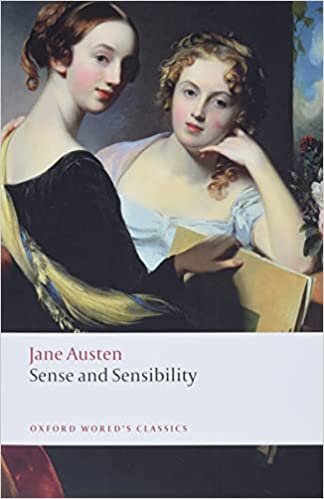
Review 1896: Sense and Sensibility

When I was making up my current Classics Club list, I realized I hadn’t reread any Austen for a while. So, I picked Sense and Sensibility.

When Mr. Dashwood was dying, he made his son John promise to take care of his second wife and daughters, since he was unable to leave them anything due to an entail. John makes this promise with good intentions and tells his wife he will give each of them £1000, but she talks him out of each of his suggestions until he gives them nothing.

On a very small budget, then, Mrs. Dashwood must find a new home for herself and her three daughters, Elinor, Marianne, and Margaret. Just as things are getting unbearable at the shared home, a relative of Mrs. Dashwood, Sir John Middleton, offers the women a cottage in Devonshire at a low rate.

Elinor regrets leaving her home all the more because she has developed what she believes is a shared attachment with her brother-in-law, Edward Ferrars. But Mrs. John Dashwood wants her brother as far away from Elinor as possible. Both she and her mother plan for him to marry well.

Relocated to their new home, the Dashwoods find their neighbors, the Middletons, and Mrs. Jennings, Mrs. Middleton’s mother, to be almost overly friendly.

One day Marianne and Margaret are caught out in a rainstorm and Marianne sprains her ankle skidding down a grassy hill. A gentleman rescues her, and he, Mr. Willoughby, becomes a frequent visitor. It is clear he is attracted to Marianne, and she, having fully adopted the ideals of Romanticism, shows plainly that she’s in love with him. Meanwhile, Elinor wonders why she isn’t hearing from Edward.

This novel is about two sisters who deal with unhappy love affairs in opposite ways and the result. It has vividly believable characters, some funny, and in its own way constitutes a sharp social satire. This novel is one of my favorites by Austen.

Related Posts

Persuasion

Mansfield Park

Sense & Sensibility