Review 1778: #ThirkellBar! The Brandons

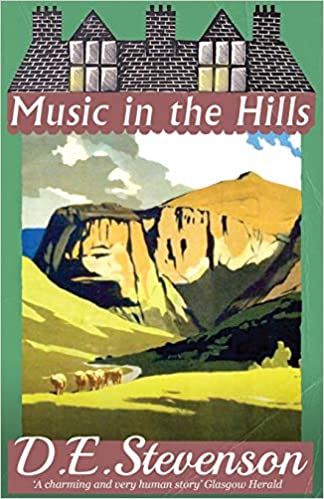
Although I know the season is busy, I hope some others of you joined me in reading The Brandons for Reading Thirkell’s Barsetshire Series in Order.

Mrs. Brandon attributes her good temper and blooming if languid looks to having been many years a widow. She also likes to imply that she was unhappily married even though she had just started to be bored by her husband when he died. Whatever the reason, she is charming and captivating enough to make men fall devotedly in love with her, including the vicar, Mr. Miller, and his pupil, Mr. Grant, who is the same age as her son Francis.

Mrs. Brandon’s elderly aunt by marriage, Miss Brandon, has been holding the bequest of her money and hideous house over Francis’s head for years, hinting when she is displeased—which is almost always—that she will leave it to someone else. Francis doesn’t want it, but when she summons them all to her house, Mrs. Brandon feels that they must go. There she finds that Miss Brandon has been ill and is actively mistreating her companion, Miss Morris.

At her house they also find Mr. Grant, who it turns out is a cousin in the same situation as Francis, alternately promised and denied a legacy that he doesn’t want. Part of the novel deals with what happens when Miss Brandon dies.

Thirkell is brilliant at describing the silliness of infatuations, and here she does not spare Mrs. Brandon’s admirers. A delight of this book is its conversations, especially those involving such eccentric characters as Mrs. Grant, Mr. Grant’s mother, who patronizes others about her life in Italy and constantly embarrasses her son with her lack of manners and clanking jewelry. Some favorites reappear in this novel, including Mrs. Morland and Tony, Lydia Keith, and Noel Morton.

Thirkell continues to entertain us with her witty and charming novels.

Pomfret Towers

Summer Half

August Folly

Review 1777: In the Eye of the Sun

Best of Ten!

Recently, I remembered liking Ahdaf Soueif’s The Map of Love, so I decided to see if she had written anything else. What I turned up was In the Eye of the Sun, which her Wikipedia page confusingly calls her debut novel, even though she wrote one earlier.

In the Eye of the Sun is the story of the maturing of a young Egyptian woman, told over a period of 13 years. The daughter of two university professors, Asya wants to get a Ph.D. in English literature and teach at Cairo University. The novel looks back to 1979 when she is studying for her General Certificate of Secondary Education before beginning at the university and follows her until shortly after she finishes her Ph.D.

Although the novel deals with many subjects—cultural collision, Near Eastern politics, family, sexuality among them—it primarily concerns Asya’s relationship with Saif, who eventually becomes her husband. Asya meets Saif early in her university career and falls madly in love with him. The two want to marry, but her parents insist that they wait until she graduates. They don’t even allow them to become engaged for a couple of years.

At first, their relationship is intense, even though it does not involve intercourse because Saif wants to wait. However, Asya feels him pulling away from her as soon as they are engaged. She has caught him in a few pointless lies, but she doesn’t challenge him with them. However, he stops wanting to discuss anything of substance. Asya does not attempt any kind of discussion of these issues, though, before they are married. Nor does she discuss them with anyone else.

At their marriage, things become even more complicated, because Asya finds sex so painful that after a few attempts Saif stops trying. They never fully consummate their marriage. Even when Asya begs him to try, Saif seems more content to treat her as a sort of doll, picking out clothes and buying jewelry for her. Their marriage becomes even more difficult when he takes a job in Syria while she goes to attend a university in Northern England. There, she finds the surroundings cold and uncongenial and her studies in linguistics difficult.

This novel is quite long, but it is involving and extremely honest. Although a primarily sympathetic character, Asya can be quite annoying in her personal contradictions, for she doggedly continues intellectual disagreements while seldom broaching personal issues. She is brilliant while being occasionally terribly neurotic. I strongly felt that this was an autobiographical novel. If so, Soueif’s honesty is extraordinary.

The Map of Love

The Wife

Under the Lemon Trees

Review 1776: Strangers

Anita Brookner is a writer I’ve sometimes considered reading but never have until now. I read Strangers for my James Tait Black project.

Paul Sturgis is a 72-year-old bachelor who leads a routine life. He has always wanted a family, but after his last girlfriend, Sarah, left him, he resigned himself to bachelorhood. Since his retirement, he has felt lonely and purposeless. He routinely visits an elderly cousin, but he always feels that he bores her. She asks him no questions and constantly talks about her social engagements.

He takes a trip to Venice and meets Vicky Gardner, a woman some years younger than he. In London they meet again and develop a sort of acquaintance that is characterized again by her talking about herself and asking favors but not asking about him. She is a free spirit of no fixed abode who asks him to take charge of some luggage.

He also meets his old girlfriend Sarah again. She is now a widow, and although she is 10 years younger than he, she has changed from an active, decisive woman to an old lady who is always thinking of her health. She also never asks him any questions.

Most of this novel is concerned with Paul’s ruminations about his situation and the past and his yearning for real company and a different kind of life. Although it is well written, it seemed slow moving and repetitive. The cover reviews refer to its wry humor, but I guess I missed it, because it just seems sad. Paul is eventually galvanized into action, but it takes a long time, and I’m not convinced that the new life he chooses will be much different from the old one.

Sweetland

The New Sweet Style

Outline

Review 1775: My Lover’s Lover

At the beginning of My Lover’s Lover, I thought O’Farrell was writing an updated version of Rebecca, and indeed she references the movie early in the book. However, if she had that in mind at all, she moves away from it.

Lily meets Marcus at a party and feels an attraction to him. When he mentions that he needs a flat mate, she asks if she can take the room. However, when she goes to see it, she is surprised to find it still full of another woman’s possessions. She takes the room in the renovated Victorian warehouse with Marcus and his friend Aidan, but she becomes obsessed with Marcus’s old lover, Sinead. Although he refuses to talk about Sinead, Lily understands him to have told her Sinead is dead. Once Lily and Marcus become lovers, Sinead begins haunting her, appearing in the flat.

But Sinead isn’t dead. Once Lily finds that out, she goes to see her to ask her what happened. Then the story is told of the beginning and the end of their relationship.

This is another beautifully written, insightful tale by O’Farrell. Sadly, I think I have now read all her books. I’m going to have to wait for the next one to come out.

After You’d Gone

The Distance Between Us

This Must Be the Place

Review 1774: The Silent Companions

In the mid-1800’s, a badly burned Elsie Bainbridge is confined to an asylum. She is said to be dangerous. She cannot speak and has not been able to tell what happened to her. Her doctor suggests that writing her version may save her from being executed.

In 1635, Josiah and Anne Bainbridge excitedly begin preparing for the arrival at their home, The Bridge, of King Charles and Queen Henrietta Maria. Josiah decides, however, that their daughter Hetta will not participate in the festivities. Hetta was born with a deformed tongue, and Anne blames herself, because she took herbs to conceive when her doctors said she could not.

Elsie’s written account begins when she arrives at The Bridge to live there after her husband’s unexpected death. She finds the house decrepit and the people in the neighborhood unwelcoming. Then she and her companion, Sarah, find the silent companions, some wooden cut-out figures that appear lifelike.

This novel seemed as if it was going to be a good old creep fest. It was certainly a ghost story, but I prefer something—I was going to say that could actually happen, but that’s silly. I guess I prefer something more subtle without freakish gory events.

As far as the approach taken to the material is concerned, although all the chapters except the ones set in the asylum are supposed to be written, the later ones as Elsie’s account and the earlier as a diary, neither of them are convincing as such.

Although I make a final caveat that I don’t believe the doctor’s treatment reflects psychiatric treatment of the times, I am not saying I disliked this novel. I thought both stories were compelling, but not so much so that I didn’t think of these things while I was reading it.

The Poison Thread

This House Is Haunted

The Séance

Review 1773: A Civil Contract

Remembering back quite a few years to the last time I read A Civil Contract, I didn’t classify it as a favorite Heyer. As I was younger then and more romantic, I was disappointed in its plain and prosaic heroine. Now that I am more mature, I look at it with completely different eyes.

Adam Deveril is a dashing captain who has been serving in the Peninsular wars when he is abruptly called home because his father unexpectedly died. This death makes Adam Lord Lynton and leaves him heir to a huge amount of debt. Although the family has never been wealthy, Adam has had no idea just how his father’s spending habits and mismanagement have put the estate into debt.

Adam thinks there is no solution but to put his townhouse and the family estate on the market. Being a proud man, he ignores his businessman’s recommendation to look for a wealthy bride.

Adam also feels obliged to inform Lord Oversly of the state of affairs, since Adam had been hoping to wed his beautiful daughter, Julia. Oversly acknowledges that Adam can no longer be considered eligible to marry Julia but remarks that he and Julia probably aren’t well suited anyway. However, both Adam and Julia are heart-broken.

Oversly says he thinks he can help Adam. Soon, Adam is surprised to receive a visit from Jonathan Chawleigh, a wealthy but vulgar businessman. Chawleigh suggests that Adam’s financial problems can be solved if only he would marry Chawleigh’s daughter Jenny.

Adam’s pride does not permit him to consider this offer, but he agrees to meet Jenny. He finds her plain, plump, and matter-of-fact as well as poorly dressed. He does not even realize he has met her before, for she is a schoolfriend of Julia’s. Almost against his will, he marries her.

Maybe I’m giving away too much, but this is the story of how a young man learns to throw away his romantic illusions and begin to appreciate his thoughtful, supportive, affectionate wife. Thus, its intent is a little more serious than most of Heyer’s novels, and it also has a great deal to say, off and on, about the state of Europe at the time.

I had to laugh, because this time through I found myself impatient with Adam and Julia’s romantic yearnings and appreciated Jenny’s good qualities and hidden heartache a good deal more. The book is also not lacking in Heyer’s usual amusing dialogue, although most of it is between other characters than the two main ones.

The Convenient Marriage

Cotillion

Friday’s Child

Review 1772: The Fall of Light

The Fall of Light is like all the Irish epics rolled into one, minus the gruesome murders. It’s the tale of Dierdre of the Sorrows applied to one family.

It’s the early 19th century, and Francis Foley is moving on again. Throughout his life, he has become angry at his fate and moved from one place to another. This time, he’s had a great argument with his wife, Emer, and she left the house. Now, he and his four sons are on the run, because he broke into the lord’s house, stole his telescope, and burned the house down.

They have been heading west, for Francis believes they will make their home on the Atlantic Ocean. But when they reach the River Shannon, Francis, always hasty, never to be denied, says they must cross it where they are without looking for a bridge or ford. They cannot even see the other side. And in that fateful crossing, Francis is swept away from his sons Tomas, the twins Finbar and Finan, and Teige, who is only 10.

One by one, the brothers lose each other, and the story becomes each one’s journey to find a family and a place in the world, through famine and terrific hardships. This is a lyrical, lush story that makes the journey of a family into a tale of mythic proportions.

Four Letters of Love

History of the Rain

This Is Happiness

Review 1771: Umbrella

Some of the reviews of Umbrella refer to modernism, as in “a magnificent celebration of modernist prose.” This kind of encomium shivers me timbers. And then I think, isn’t modernism over? Aren’t we into postmodernism now? Apparently not.

Umbrella has a plot, but don’t expect the book to leap into action, because it’s more concerned with its devices. Self uses few paragraphs, and the ones he inserts aren’t necessarily making the expected division, some of them positioned in the middle of a sentence. Self uses three points of view, but they shift without warning, sometimes in the middle of a word. Stream of consciousness is used abundantly and confusingly, and Self loves his allusions, most of which I did not get. What Self isn’t very concerned with is being easy on his readers.

The novel is inspired by Oliver Sach’s Awakenings. In 1971, psychiatrist Zack Busner realizes he has a group of patients who are post-encephalitic, and they are stuck repeating activities that are meaningful to them but at such fast or slow speeds that they are difficult to detect. He gets permission to administer L-DOPA to them, and they unfreeze, or wake up. Among them is Audrey Death, the oldest patient in the mental hospital.

Aside from following Dr. Busner as a young psychiatrist, we also follow him as an old man. We see from Audrey’s point of view as a girl and a young woman and from her young brother Stanley’s during World War I.

Sometimes the narrative gets carried away into ridiculous flights that last for pages, such as the one involving Stanley falling into a subterranean existence. I didn’t know what to make of it. Although critics have foamed at the mouth in admiration of this novel’s style, I’d call it self-indulgent. I had to make two attempts before I finally managed to read this novel.

This is one of the books I read for my Booker prize project.

Ducks, Newburyport

There but for the

As I Lay Dying

Review 1770: The Stone Circle

Forensic archaeologist Ruth Galloway is called back out to the wooden circles on the Norfolk coast because bones have been discovered there, along with a hagstone. Ruth thinks they are quite likely those of Margaret Lacey, who went missing at the age of 12 in 1981. And so they prove to be. Ruth is also sure the bones have been moved recently from a more loamy soil.

Ruth has received a letter similar to the ones that arrived during her first case set near the stone circle. So has DCI Nelson, Ruth’s occasional lover and the father of her daughter Kate. Nelson had decided to leave his wife Michelle for Ruth when Michelle announced that she was pregnant. Nelson’s son Charlie has just been born.

One of the suspects in Margaret’s disappearance had been John Mostyn, but his crippled mother gave him an alibi. Now John lives by himself, a hoarder and a collector of stones, but Margaret’s family think he is harmless. Soon, though, he is found murdered.

The Stone Circle is another excellent mystery by Elly Griffiths. I am even more interested in Ruth’s private life, and the mystery itself is a good one.

The Dark Angel

The Chalk Pit

The Woman in Blue