Day 1034: Ulverton

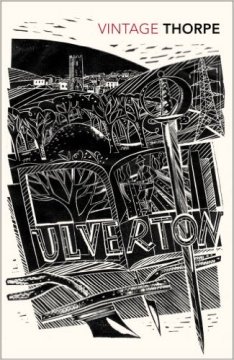
Cover for UlvertonBest Book of the Week!
We’re now more familiar with novels written as related short stories, but Ulverton was written in 1992 and may be the first novel of this kind. The novel covers 300 years of English history and is set in one place, the fictional village of Ulverton. Other hallmarks of this unusual novel are that each chapter is written in a distinctly different voice and the chapters are written in different formats, from a tale told in an inn to the captions from a photographic display to the script of a documentary.

In 1650, the novel opens with the return of Gabby Cobbold from the Cromwellian wars. He meets the narrator, a shepherd named William, on his way home, but William does not have the courage to tell him that his wife, Anne, thinking he was dead, has remarried Thomas Walters. Gabby explains that he was away earning money to support the farm. Gabby disappears, and William is sure that Thomas and Anne killed him. But three hundred years later, Gabby gets his own back against a descendent of Thomas.

In 1689, the foolish Reverend Brazier tells the story of a strange night out on the downs, when he, William Scablehorne, and Simon Kistle were making their way through a snowstorm. As related in his sermon, they were apparently attacked by the devil and Mr. Kistle went mad.

Diary entries made in 1717 reveal a farmer’s preoccupation with improvements to his property and begetting an heir. Since his wife is ill, he does not touch her but begins trying to impregnate the maid.

In 1743, Mrs. Chalmers writes letters to her lover while shut away after childbed. Apparently having read her letters, her husband gets his doctor to keep her isolated longer.

And so it goes, stopping in about every 30 years, so that we sometimes hear of characters again. Through time, names are repeated and the story of incidents changes.

On occasion I had problems with the vernacular, although I tried to stick with it. The most difficult stories for me were the 1775 letters of Sarah Shail to her son and one side of the 1887 conversation between a man plowing and two boys. Sarah Shail is illiterate and is dictating her letters to John Pounds. However, this chapter has its own humor as Sarah is writing to her son Francis, who apparently answers her abusively, to the indignation of Pounds, who begins adding threats to the letters. Pounds’ spelling is so bad, though, that the letters are sometimes incomprehensible. In the case of the plowman, his dialect is so thick that I kept rereading parts of it but was unable to understand very much.

This was just one chapter, though. Overall, I found this novel deeply original and interesting. The countryside is so integral to the story that it features almost as a character. The writing is lovely, and the novel contains a great deal of drama and humor.

Related Posts
The Wake

Harvest

The Quickening Maze


Day 994: The Lovers of Yvonne

Cover for Lovers of YvonneThe Sieur Gaston de Luynes is a soldier of fortune whose fortunes haven’t worked out so well at the beginning of The Lovers of Yvonne. Almost destitute, he was lucky enough to be hired by Cardinal Mazarin to teach his nephew Andrea de Mancini arms. But in the first chapter of the novel, the Cardinal fires Luynes after Andrea becomes drunk, blaming Luynes for his nephew’s behavior.

More dangerously, Andrea, who is a very young man, has been challenged to a duel. The Cardinal orders Luynes to make sure the duel doesn’t occur. The only way Luynes can see to honorably do that is to injure the other combatant, Eugène de Canaples, first. So, he duly insults Canaples and then handily beats him in a duel, making sure to wound him.

However, this fight attracts a mob, which chases Luynes with the object of hurting him. He is only able to escape by jumping into the carriage of a woman passing by. He falls madly in love with this woman, who unfortunately is Yvonne Canaples, the sister of his victim.

If this weren’t bad enough, the Cardinal informs him that he has arranged a marriage between Yvonne and Andrea. He tells him he will see him hanged if he finds him anywhere near Choisy, where the de Canaples live. But Luynes likes Andrea, so when invited to go along with him, he does. It’s a good thing, too, because several other suitors are on the way there, most notably the Marquis de St. Auban.

This novel is Sabatini’s first, and it is full of intrigue, sword fights, and kidnappings. Sabatini had only lived in England ten years before writing it, but the English is impeccable, his sixth language. Although Sabatini was himself disappointed in this novel, it is entertaining.

Related Posts

La Reine Margot

The Black Tulip

Merivel: A Man of His Time

Day 958: Merivel: A Man of His Time

Cover for MerivelIt wasn’t until I started reading Merivel for my Walter Scott prize project that I realized it was a sequel to Rose Tremain’s better-known novel Restoration. I hadn’t read Restoration in 20 years, but I decided not to reread it first. I only remembered that it was about a doctor who got caught up in the debaucheries of the court of Charles II.

Merivel is a picaresque novel, like its predecessor. In its bawdy exuberance, it reminds me a bit of Tom Jones or Tristam Shandy. It begins in 1683, when Robert Merivel is living alone on his estate, an older man suffering from melancholy. His young daughter Margaret spends much of her time with the neighbors, who have four daughters. He is lonely and feels his life has had little purpose. He discovers his original manuscript (presumably the text of Restoration), which he refers to as the Wedge, but he doesn’t have the energy to read it.

On a whim, he decides that since Margaret is going on a trip with her friends to Cornwall, he will journey to the court of Louis XIV in Versailles and offer his services as a physician. To do this, he gets a letter of introduction from Charles II.

It is difficult to describe the plot of this novel. It doesn’t have a central concern except the feeling of its hero of having accomplished nothing. Merivel has many adventures, including falling in love with a woman he meets at Versailles and dueling with her husband, but they are all related in a semi-comic, mocking manner. Merivel, who seems ready to fall into every folly, is a sort of hapless anti-hero who hasn’t grown up much from the first novel.

Behind the scenes, we see that England is faltering. The poor are getting poorer as the court indulges itself. Merivel, who remains aware of the plight of others, can’t help observing that Charles II seems to feel no responsibility for this. Although this novel is not one of my favorites on the Walter Scott Prize short list, it certainly seems to reflect the time period in which it is set.

Related Posts

Viper Wine

The Sun King

The Nature of Monsters

Day 861: The Witches: Salem, 1692

Cover for The WitchesIn The Witches, Pulitzer-winning nonfiction writer Stacy Schiff takes another look at 1692 Salem and its witch hunt. She explores the climate of New England at the time, particularly its paranoia and excessive religiosity, and why it was open to such an over-reaction. The book also explores the ramifications for the region for years to come.

Schiff quickly points out that much of what is “known” about the witch trials is apocryphal. There was no black slave, for example, but an Indian servant. Schiff reconstructs the events from what she can find, many of the official documents having been destroyed at later times, and the accounts, even of the official note takers, varying considerably from one another and interjecting opinion and descriptive wording that should not have been permitted.

The incident began with one household, where some of the children were subject to screams and contortions. This household was that of Samuel Parris, the minister of Salem Village. The girls were a niece, daughters, and a servant, all teens or pre-teens. Schiff is fairly charitable in ascribing the state of these children to a condition that was later diagnosed as hysteria (a condition itself fraught with controversy), which generally affected young women leading restricted lives with little hope of change. Later, we hear of another householder who handled a similar condition severely and eliminated it. But Parris soon established it as witchcraft, and an even larger group of girls and other people who became afraid of being accused themselves were on their way to a lot of attention. As one of them put it (whose remark was ignored), “We must have some sport.”

They had their sport all right. By the end, 19 people and 2 dogs were hanged for witchcraft. Some of the girls would have gone on from there, but the colony finally declared there would be no more prosecutions and the behavior eventually stopped.

This is a fascinating book that explores such topics as permissible evidence, assumption of guilt, the treatment of people who protested their innocence versus that of those who admitted guilt, and the behavior of certain of the principal leaders of society. It finds parallels to other events much more recently in our past.

Related Posts

Cleopatra, A Life

Véra (Mrs. Vladimir Nabokov)

Mayflower: A Story of Courage, Community, and War


Day 837: Highwayman: Winter Swarm

Cover for Highwayman: Winter SwarmHighwayman: Winter Swarm is a novella-length story that appears to be an episode of a larger novel. This confused me a little until I read that the publisher, Endeavor Press, was publishing electronic novels in installments.

Samson Lyle is a former Roundhead major who is now a highwayman, doing his best to sabotage the efforts of Oliver Cromwell and particularly General Goffe. Lyle’s disaffection came about because of his refusal to participate in Goffe’s massacres of Catholics in Ireland. Lyle’s goodwife was killed in battle after this incident, and Lyle believes the death was no accident. Since then, he has been a bandit, seeking revenge.

Lyle, known as the Ironside Highwayman, is assisted by a teenage girl, Bella, whom he rescued as a young girl from prostitution, and a tavern owner, Eustace, whose live he saved. He also has various informants around the countryside.

The novella opens with a daring theft of the strongbox containing the back pay for the Middlehurst garrison. Later, Lyle attacks the salt detail, knowing Goffe cannot get through the winter without salt to preserve the meat.

This novella is mildly enjoyable as an old-fashioned swashbuckling adventure. If I understand what the publishers are doing correctly, I’m not sure how well it will work. As the first installment, the novella spent time on exposition that may have to be repeated, but it spent little time on characterization. In the tricks Lyle plays on the soldiers, it reminds me just a bit of the first book in Dorothy Dunnett’s Lymond Chronicles, but there is no way to judge whether the series will develop any depth. In general, I felt the approach to be unsatisfying, even though I like the idea of reading a novel in serial form, like the Victorians did. But this episodic approach, which probably doesn’t assume people will read the episodes in order, is not the same thing. It reminds me more of episodic graphic novels, without the pictures.

Related Posts

Viper Wine

The Candlemass Road

Captain in Calico

Day 742: Witch of the Glens

Cover for Witch of the GlensKelpie is about fourteen or fifteen and only remembers a gypsy life traveling with Mina and Bogle. They use her to steal and read the crystal, for she has second sight. Mina keeps promising to teach her witchcraft without actually showing her any. Still, they are often accused of being witches and hounded out of town.

Then one day she pretends to fall in front of a party of young men only to find she has actually injured herself. Although they catch her stealing from them, they are amused by her and take her home with them. The young men are Ian, Cameron, and Alex, returning from Oxford to their home north of Inverlochy.

Kelpie stays at Glenfern with Ian’s family, eventually as a servant, but they treat her kindly. She begins to feel affection for the children, especially little Mairie, and is dismayed when Mina and Bogle reappear. Mina threatens to curse the family if Kelpie refuses to come with them, and since Kelpie believes in Mina’s power, she goes.

The Highlands are in turmoil because Argyll has been commissioned to secure the area for the Calvinist Covenant against King Charles. Argyll’s troops are more prone to burn villages and murder innocents than to fight armies. But Montrose is trying to raise men to fight for the king. Mina sends Kelpie on a perilous task, to steal some hair or a personal possession from Argyll so he can be hexed.

Kelpie’s adventures take her all over the Highlands. When she joins the followers of Montrose’s army, she is happy to meet Ian and Alex again, but she has seen Alex strike Ian down in the crystal, so she is wary of him.

This is an enjoyable novel for tweens and teens full of likable characters and nasty villains, some history, lots of adventure, and another feisty Watson heroine. Kelpie begins re-evaluating her moral choices through the examples of others and the kindnesses she receives during her travels.

Related Posts

Lark

The Loon Feather

Treasure Island

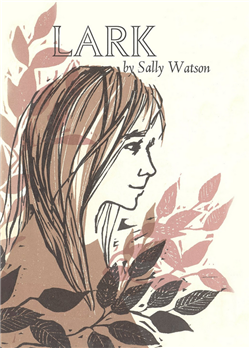
Day 715: Lark

Cover for LarkJust an aside to start. When I was in high school, I had a job at the public library. There I discovered lots of authors I may not have come across elsewhere, and one of them was a writer of books for teens and preteens who specialized in historical novels featuring likable, feisty heroines. I read every one the library had.

Years later, I would try to remember who this author was to see if I could find some of her books and discover whether I still liked them as much. But all I could remember was she had a relatively common name that started with W. I searched Amazon for children’s books with authors beginning with a W. There are a lot of them. Then one day just awhile ago, a word popped into my head, “Lark.” A Google query accomplished the rest. I found a wonderful page on a site specializing in children’s books called “Stump the Bookseller” where you could ask exactly that kind of question, and more than one person asking about the author of a historical novel with a character named Lark. The author was Sally Watson. A little more searching found she is back in print.

* * *

Elizabeth Lennox has not been called by her nickname of Lark since her Uncle Jeremiah came and took her away from her family. He always thought she would make a good wife for her cousin Will-of-God if she was just raised correctly. Since he is one of Oliver Cromwell’s officers and Lark’s father was away fighting with the Royalists, he could do what he wanted. So, he took Lark away and she has been living miserably in a Puritan household ever since. She has no desire to marry Will-of-God, whom she dislikes. She deliberately tries to appear young so that her uncle won’t realize how close she is to being marriageable.

Lark has had nowhere else to go, since her family had to leave for the continent after their property was confiscated. But one day she receives word from her sister up in Scotland, so she decides to go there, not realizing how far away the Highlands are from southern England. She sneaks out of the house in the middle of the night and sets off.

James Trelawney is a young Royalist who disguises himself as a Roundhead to run errands and pass messages in the interests of Charles II. He comes along as Lark is being accosted by a Puritan man after singing a Cavalier song on the road. James takes her for a child, for she looks much younger than her thirteen years. After tossing the Puritan into the river, he reluctantly agrees to take her north, but only because she seems to be too young to leave on her own and she won’t tell him who she is. The two of them have adventures involving intrigue, capture, travels with gypsies, and other exciting incidents.

When I reread a children’s or young adult book, I try to evaluate how interesing it is for both the adult and the intended audience. I don’t think Lark has as much to offer an adult as some of the old classics I’ve reread recently, such as The Secret Garden or Anne of Green Gables. However, I did enjoy it as a bit of light reading. It is written for girls around ten to thirteen or fourteen years old. Although I loved it as a sixteen-year-old, older teens today may be a bit too sophisticated for it. I’m not sure. Still, it has plenty to recommend it, a good background in the history and a pleasant way of presenting it—through James’ confusion about his own loyalties—adventure, humor, and light romance. It is much more innocent than many of today’s books for teens, but that’s not necessarily a bad thing.

Related Posts

Anne of Green Gables

The Loon Feather

Swamplandia!

Day 707: Don Quijote

Cover for Don QuijoteI know. This is not the spelling of “Quixote” most people are accustomed to seeing, but it is the one used in my Norton Critical Edition, translated by Burton Raffel. And a sprightly translation it is.

Don Quijote is the story of an old man who has studied the popular chivalric romances so much that they have addled his brain. He declares himself a knight errant and takes to the road seeking adventure. Accompanying him is a neighboring farmer, Sancho Panza, who he has convinced to come with him as his squire in exchange for a share in certain rewards. In particular, Sancho has his heart set on the governorship of an island.

Don Quijote doesn’t just look for adventure. In the first book, he hurls himself at every passer by, convincing himself that windmills are giants, a barber is a knight, an inn is a castle. Above all else, he worships his lady, the beautiful Dulcinea, whom he has never met but whom Sancho remembers as a muscular peasant girl.

Don Quijote is both a parody of the chivalric romances and a satire against the Spanish conquistadores. Its most important distinction is that it is considered the first modern novel. I found volume one to be amusing in a sort of slapstick style, as Don Quijote’s adventures always go wrong and end up with him and Sancho Panza being beaten up.

Volume two was a little too much of the same, though. In a bit of metafiction, Cervantes lists some of the things readers criticized from the first volume and then attempts to avoid them. So, for example, the two adventurers are not beaten up as often. However, both volumes contain long disquisitions on such topics as marriage, poetry, chivalry that don’t all translate well into modern times.

Finally, after Don Quijote had himself lowered into Montesino’s Cave to see its wonders and then fell asleep and dreamt a bunch of nonsense and never even saw the cave, I had to stop. Quijote was in the midst of recounting his ridiculous dream, which he took for reality, and it seemed to go on and on. I leafed ahead, looking for the end of it, never found the end, and finally lost patience. I fully believe, since apparently someone else published a book about our hero after the first volume came out, that Cervantes only brought Quijote back out on the road so that he could kill him off at the end.

Related Posts

People of the Book

The Black Tulip

Othello

Day 653: Viper Wine

Cover for Viper WineTo say that Viper Wine is an unusual novel is to make an understatement. The novel is based on events in the lives of historical characters, but its narrative style is wildly creative, including many anachronisms and quotes from both modern and historical sources, even computer code. It seems occasionally to blur the time between centuries.

In 17th century England, Venetia Digby was once the renowned beauty Venetia Stanley, but she is getting older. She is not exactly vain so much as humiliated by her loss of distinction and the pitying glances she thinks she detects. Her husband Sir Kenelm loves her as much as ever and thinks she looks fine, but she believes he doesn’t actually see her.

Kenelm is a sort of Renaissance man, a scholar, soldier, and adventurer. It is true that he spends a lot of time on his experiments and books. He has some other occupations he must be more careful of. He is an alchemist, and even though the Queen, Henrietta Maria, is Catholic, the Digbys’ Catholic religion must be observed with discretion.

Venetia has begged Kenelm to make her a preparation to restore her youth, but Kenelm doesn’t think she needs one and refuses without explaining to her how harmful such a preparation could be. Venetia finally sneaks off to try an apothecary’s concoction named Viper Wine that is made from snakes, and apparently some kind of opiate. Whether it really improves her looks or she just thinks it does is not clear, but soon, many of the ladies at court are sneaking off to find the same apothecary. Later she starts using something similar to Botox.

http://www.netgalley.comAs Venetia exuberantly pursues a renewed career at court and Kenelm continues his studies and adventures, Eyre reminds us by little digs and a sort of melding of time periods that people haven’t changed in their extreme remedies for aging. This novel is written with a zippy postmodern irony that adds energy and liveliness to the story of how the famous beauty’s autopsy after her death showed she had “very little brain” (not a spoiler, as her death is mentioned in the book blurb).

Related Posts

The Nature of Monsters

Queen Anne: The Politics of Passion

Look at Me

Day 643: The Orenda

Cover for The OrendaBest Book of the Week!
The Orenda is a powerful novel about the death of a people. At times it is difficult to read, but do not let that stop you from experiencing this novel.

Father Christophe, one of the first French priests to evangelize the Indians of Canada west of Kebec, finds himself at the beginning of the novel captive to a group of Huron warriors. The group is returning from a trading expedition, but they recently attacked a family of Ojibway, their enemies. Bird, the leader of the party, is seeking revenge for the killing of his wife and daughters by the same group. He keeps one young girl, Snow Falls, to be his daughter but kills the rest of the family.

The novel is narrated in turn by Bird, Father Christophe, and Snow Falls. Father Christophe, whom the Hurons call the Crow, finds life in the village brutal and the customs of the people barbaric, but he is determined to learn the people’s language and convert them.

Bird continues to grieve for his wife and addresses his sections of the book to her. He is concerned about the problems of the village and his people, and not least with his difficult new daughter.

Snow Falls is determined to escape and to at all times demonstrate her defiance.

The novel covers about ten years, during which things go well and then badly for this group of Huron people. A combination of disease from contact with the French and the hostilities between the Hurons and their enemies eventually have results that presage what will happen on a larger scale throughout North America.

The novel paints a fascinating picture of the daily life among the Huron and of the misconceptions and misunderstandings between the native people and the Europeans. It is a wonderfully involving book.